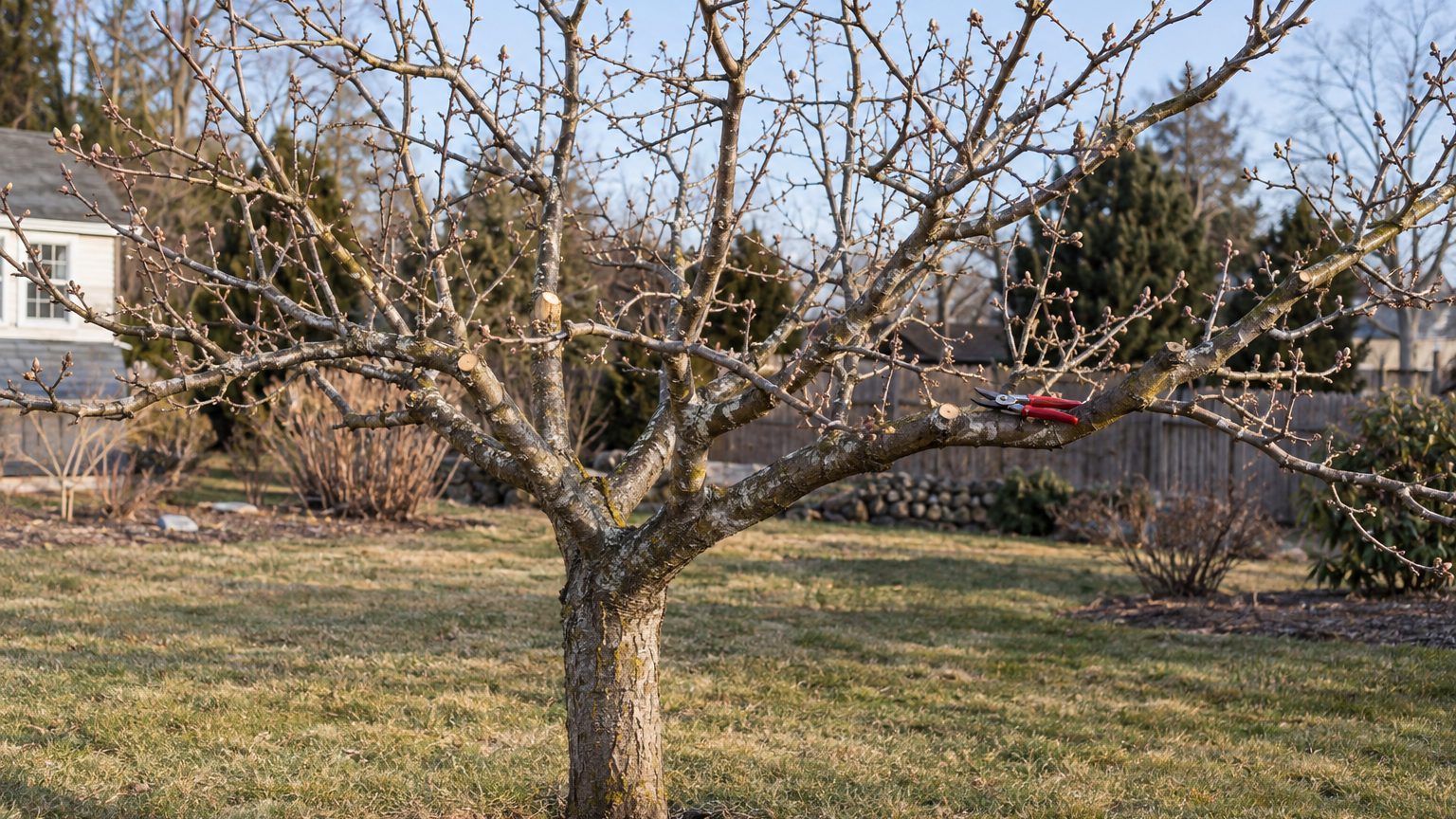
In the quiet weeks when snow still sits on the north side of the barn, the bare branches of an apple tree show every crossing limb and every crowded spot. That is the moment to reach for the pruners. In Vermont, fruit trees are pruned while they sleep, in late winter into early spring.
When to Prune Fruit Trees in Vermont

Dormant pruning of fruit trees in Vermont runs March into April, with the tree still bare and the buds closed. Cutting then leaves the least mark on winter hardiness and tree health, and wounds start to heal as growth resumes.
Fall and early winter are skipped, since new growth stimulated by a cut may not harden before the cold arrives.
| Fruit tree | When to prune in Vermont | Why |
|---|---|---|
| Apples and pears | March into April, while dormant, ahead of the peaches | Cuts made before the buds swell heal as growth starts, and these trees tolerate being pruned first. |
| Peaches and nectarines | Late in the dormant window, closest to bloom | Their flower buds are easily hurt by cold, so they wait until last. |
| Cherries and plums | March into April, while dormant | The same late winter window protects hardiness and tree health. |
| Young trees | March into April, while dormant | Shaping happens before the buds open, and bare-root trees go in during April or early May. |
Apricots follow the same dormant rhythm. They are generally hardy through winter but turn tender as temperatures climb in late winter, so a cut made early in the window is gentler than one made after a warm spell. Vermont spans hardiness zones 3b to 5b on the USDA system, so a Champlain Valley orchard wakes up sooner than a hillside in the Northeast Kingdom. Let the tree set the pace.
Vermont — the year and the numbers
- State
- Vermont
- USDA zones
- 3b-5b
- Last spring frost
- April 30 to May 10
- First fall frost
- October 3 to October 13
- Annual rain
- 38 in
- Lawn zone
- cool-season
- Source
- NOAA NCEI 1991-2020 Climate Normals, 32F freeze probabilities · Burlington
How to Tell Your Fruit Trees Are Ready to Prune
The tree gives clear signals, and they matter more than any date on the wall.
- The tree is bare of leaves, which means it is dormant and ready for cuts.
- The hardest part of winter has passed, so the wood will not be hit by deep cold right after you cut.
- The buds are still tight, because pruning belongs before they swell.
- Snow and frozen ground no longer block your footing, so you can reach every branch safely and see the whole shape of the tree.
- For a peach, bloom feels close, which tells you to leave it for last while apples and pears go first.
If the buds have started to swell and open, the window for dormant cuts is closing, and the job moves to a light touch only.
When to Prune Peach and Apple Trees in Vermont
Apples can be pruned early in the dormant season, once the worst of winter is behind you. The wood is bare, the structure is easy to read, and the tree has plenty of time to seal its cuts before growth begins. That makes the apple the tree to start with.
Peaches wait. Their flower buds are easily hurt by cold, so pruning is saved for last, close to bloom. Cutting late lets you see which buds survived the winter and trim with that in mind.
Dormant pruning is done in late winter into early spring. Keep it light, because severe pruning then weakens the tree. Most of the work belongs in winter or spring, when the tree is resting and can take the cuts.
Where to Get Fruit Tree Advice in Vermont
Local growers know how a particular slope or valley behaves, and help is close by.
- University of Vermont Extension offers guidance on fruit tree care, so check in before the dormant window opens.
- Your county extension office can talk through the conditions on your own property, which is worth a call before you make the first cut.
Common Questions
Can You Prune Fruit Trees in Fall in Vermont?
Fall is avoided, and so is early winter. A cut can push new growth that has no time to harden before the cold arrives, and that tender wood is the first to suffer.
Should You Plant Fruit Trees in Fall in Vermont?
Fall planting is not done here, because the winters are too cold for a newly planted fruit tree. Plant in April or early May, as soon as the frost has left the ground, and set bare-root trees while they are still dormant.
Is Burlington’s Frost Date the Same Across Vermont?
No. Burlington, on Lake Champlain, has a last spring frost between April 30 and May 10, which is earlier than in much of the northern part of the state. The Green Mountains and the Northeast Kingdom run substantially shorter, so watch your own trees for swelling buds.