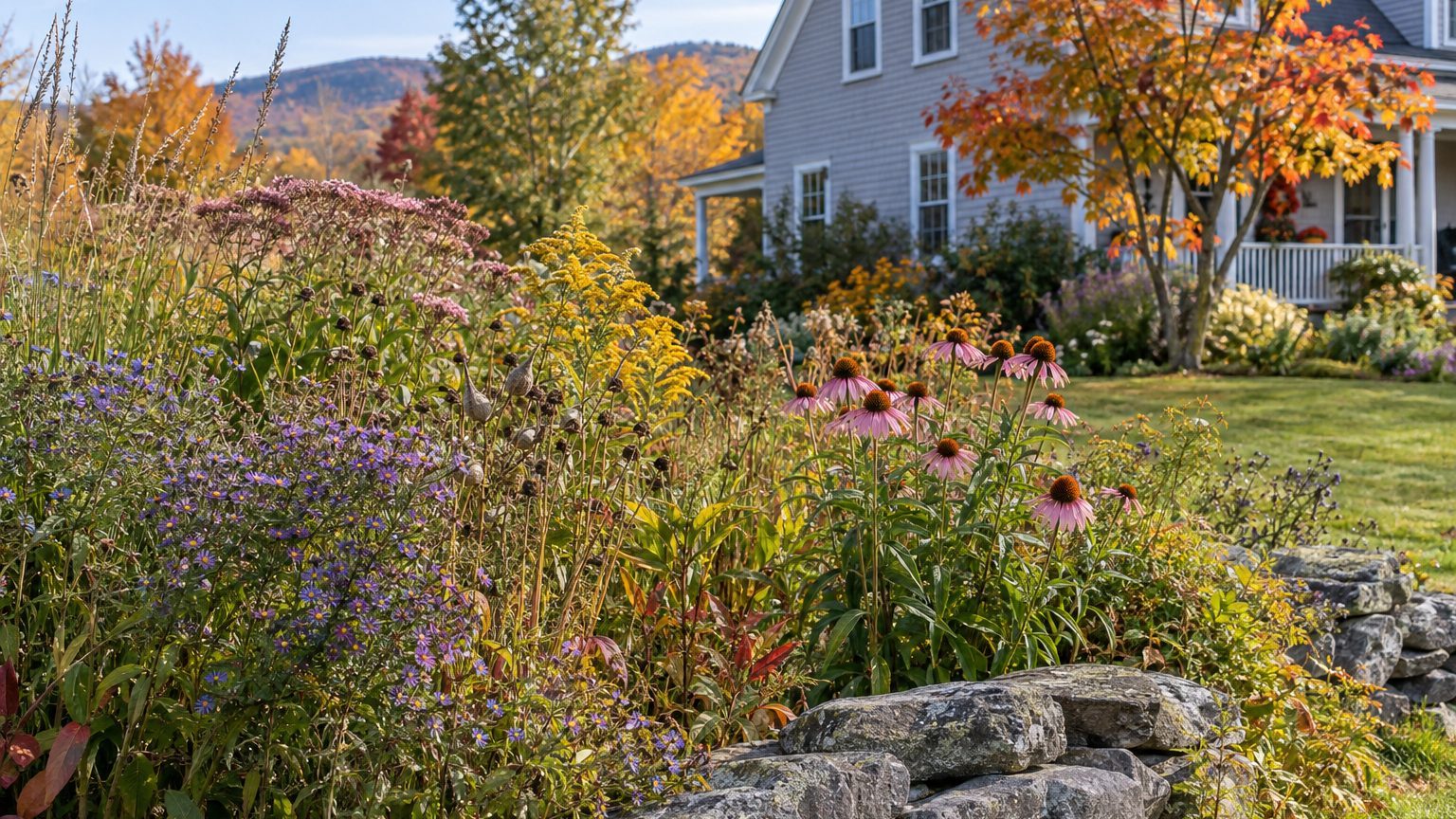
Wildflower seed scattered on a cold November garden bed looks like a mistake, yet it is how many native meadows begin. In Vermont, sowing can be done in fall, after the weather turns cold, or in spring, as early as the soil can be worked. Each has its own reasons and its own gestures.
When Is the Best Time to Plant Wildflower Seeds in Vermont?

Sow in October and November, or in April and May, and the seed will meet the cold and moisture it needs. The year runs like this.
- In October and November, scatter seed for a fall (dormant) seeding. The seeds do not come up in fall, they wait in the soil and germinate the following spring.
- Through winter, the cold, moist ground does the work for many native seeds, which need that chill before they will germinate.
- In January and February, a seeding is still worth doing if the fall window slipped by, since the seeds still get winter cold.
- In April and May, sow as early as the soil can be worked, using seed that spent the winter in a cold, dry place.
- After a spring sowing, keep the soil moist until the seeds germinate, because dry ground stops them before they start.
At Burlington, on Lake Champlain, the last spring frost falls between April 30 and May 10, and the first fall frost between October 3 and October 13. The Green Mountains and the Northeast Kingdom run substantially shorter, and hardiness zones across Vermont range from 3b to 5b on the USDA system. Fall sowing is the easier path for most natives, since winter handles the chilling for you.
Vermont — the year and the numbers
- State
- Vermont
- USDA zones
- 3b-5b
- Last spring frost
- April 30 to May 10
- First fall frost
- October 3 to October 13
- Annual rain
- 38 in
- Lawn zone
- cool-season
- Source
- NOAA NCEI 1991-2020 Climate Normals, 32F freeze probabilities · Burlington
How to Sow Wildflower Seeds in Vermont
Good sowing is mostly about giving small seeds clear ground and firm contact with it. The steps run in this order.
- Before sowing, remove the sod and weeds from the bed. Grass and weeds crowd out seedlings that are small and slow to start.
- Prepare the soil surface so it is bare and loose enough to take seed. Seed that lands on bare earth reaches the moisture it needs.
- On sowing day, broadcast the seed by hand across the bed. Spreading it by hand lets the seed fall evenly instead of clumping in one patch.
- Right after scattering, press the seed against the soil without burying it. Most native wildflower seeds are sown on the surface or barely covered, and pressing in gives them contact without cutting off what they need to germinate.
- In spring plantings, water regularly so the seed stays moist until it sprouts. A fall seeding gets its moisture from winter snow and rain, so it needs no watering.
Annual wildflowers can bloom in the first year. Native perennials often take a year or two, so a bed that looks quiet in its first summer is behaving normally.
Wildflowers That Grow Well in Vermont
Native wildflowers suit Vermont because they are adapted to the regional climate and can survive adverse conditions. Native plants are also far more attractive to pollinators than non-natives, according to research.
The species below are named in extension advice from the region, and they suit a mixed meadow.
| Wildflower | How it does in Vermont | Why |
|---|---|---|
| Lanceleaf coreopsis (Coreopsis lanceolata) | Drought tolerant, grows well in heat and humidity | Host plant for butterfly and moth larvae |
| Purple coneflower (Echinacea purpurea) | Long summer bloom, tolerates infertile soil | Seeds feed birds and it mixes well with grasses |
| Bee balm (Monarda fistulosa) | Long summer bloom, drought tolerant | Tubular flowers attract hummingbirds |
| Black-eyed Susan (Rudbeckia hirta) | Fast grower, bloom extends into fall | Good for early meadow establishment and self-seeds freely |
A meadow made of grasses and native wildflowers becomes functional and self-sustaining over time. Choosing a regional mix of native species gives you a bed that fits Vermont’s conditions from the start.
When to Sow, Water and Mow Wildflowers in Vermont
The year breaks into a few tasks, each tied to a season. A fall sowing leaves the watering to winter, while a spring sowing asks you to keep an eye on the soil.
Mowing comes last, after the flowers have finished and the insects have moved on.
| Task | Best timing in Vermont | Why then |
|---|---|---|
| Sow in fall | October and November | Winter cold and moisture lift the dormancy of many native seeds |
| Sow in late winter | January and February | Seeds still get enough cold if the fall window was missed |
| Sow in spring | April and May, once the soil can be worked | Seedlings get a start before summer heat |
| Water seedlings | After a spring sowing, until the seeds sprout | Seeds sown in spring must stay moist to germinate |
| Mow the meadow | Late in the season, after monarch migration | Protects butterflies and other insects |
Native wildflowers bloom from June through September, beginning with coreopsis and columbine in late June and ending with goldenrods and asters, so mowing waits until the show is over.
Where to Get Wildflower Advice in Vermont
For native species suited to your site or a soil test, University of Vermont Extension and your county extension office are the places to ask.
- The state extension service offers guidance on native wildflowers and meadow planting, and its advice is worth reading before you order seed.
- Your county office can help with a soil test, which is worth doing before you prepare the bed.
- Go in fall if you plan to sow before the ground freezes, so the bed is ready for seed.
Common Questions
Can You Plant Wildflower Seeds in Winter in Vermont?
Yes, in January and February, as long as the ground can be reached. The seeds sit through the remaining cold and sprout in spring.
Do Wildflowers Bloom the First Year?
Annual wildflowers can bloom in their first year. Native perennials often take a year or two, so patience is part of the plan.
How Should You Store Wildflower Seed Until Spring?
Keep it in the refrigerator or another cold, dry place over winter, as extension advice recommends. Then sow it as early in spring as the soil allows.