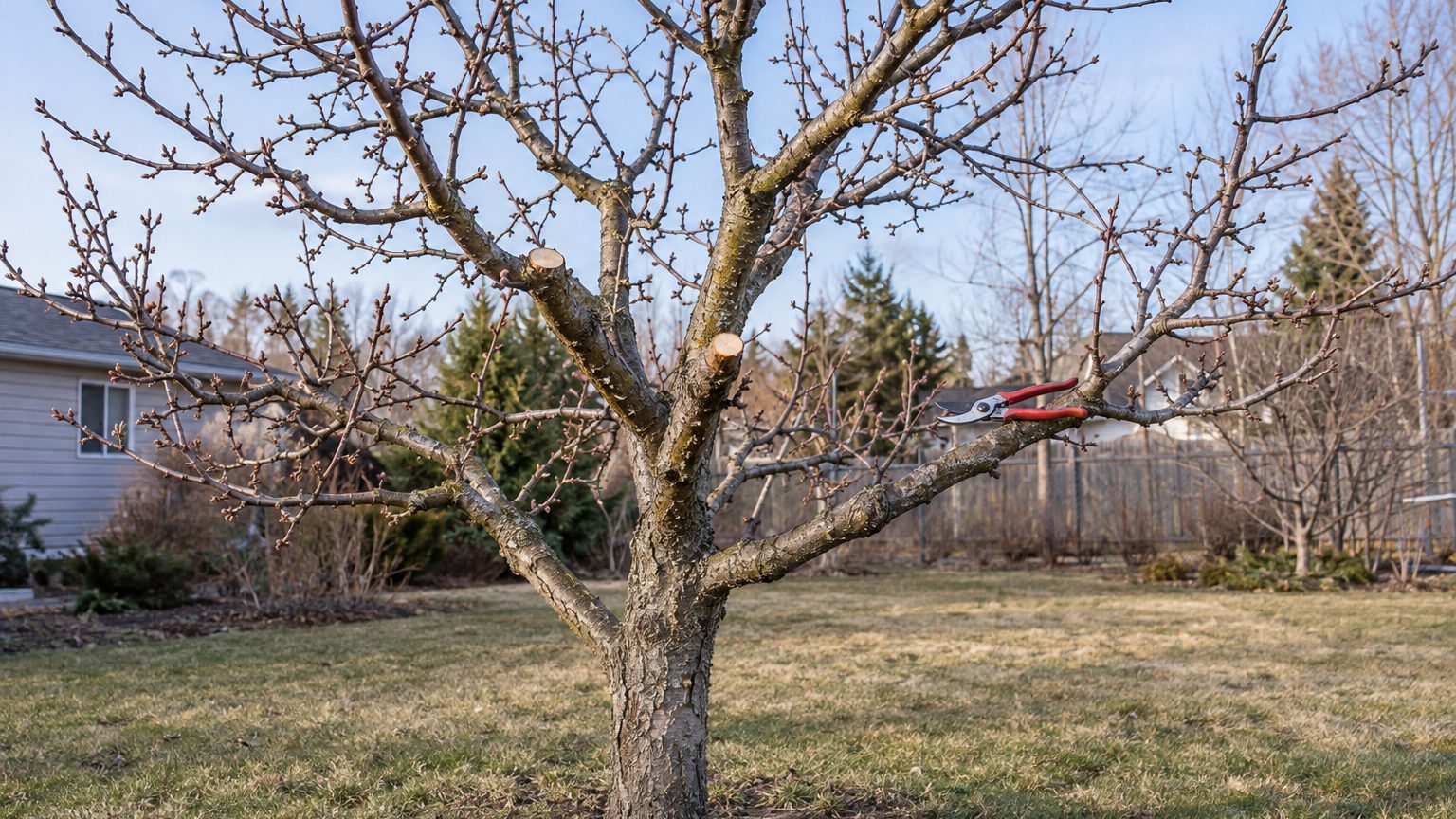
When the snow starts to pull back from the base of the apple tree and the branches are still bare, the pruning saw comes out of the shed. In New Hampshire, fruit trees are pruned while they sleep, in late winter into early spring, before the buds open. That timing protects the tree through the cold that can still arrive.
When to Prune Fruit Trees in New Hampshire

Dormant pruning of apples, pears, peaches, cherries and plums happens in March and April. Wait for the tree to be at rest and the buds to stay tight. Pruning in fall or early winter is avoided, because new growth may not harden before the cold.
| Fruit tree | When to prune in New Hampshire | Why |
|---|---|---|
| Apples and pears | March into April, while dormant, apples first | Cuts made at rest least affect winter hardiness and tree health |
| Peaches and nectarines | April, last of the fruit trees, closest to bloom | Flower buds are easily hurt by cold |
| Cherries and plums | March into April, before the buds swell | Dormant cuts let the tree heal as growth starts |
| Young trees | March into April, once the tree is dormant | Early shaping sets the framework while the wood is still easy to guide |
Summer pruning in late July or August is a lighter option for small corrections. Severe cuts at that time weaken the tree, so most of the work belongs in winter or spring. Springs run later in the hills and in the north of the state than in the southeast, so a tree in Coos County will wake up after one near Portsmouth. Go by the tree, and check with your county office.
New Hampshire — the year and the numbers
- State
- New Hampshire
- USDA zones
- 3b-6a
- Last spring frost
- April 16 to April 27
- First fall frost
- October 13 to October 26
- Annual rain
- 40 in
- Lawn zone
- cool-season
- Source
- NOAA NCEI U.S. Climate Normals 1991-2020, 32F freeze probabilities · Manchester
How to Tell Your Fruit Trees Are Ready to Prune
The tree gives clearer signals than the calendar, and a few minutes of looking before you cut pays off.
- The branches are bare, with every leaf gone, which tells you the tree is fully at rest and can take cuts without pushing tender growth.
- The hardest part of winter has passed, since cuts made while severe cold is still likely can leave the wood vulnerable.
- The buds are still tight and closed, so you are working before the tree has spent energy on new growth.
- The wood is no longer frozen stiff, because branches cut on a mild day are easier to handle cleanly and less likely to split.
- Peach buds are plump but not yet showing color, a sign that the tree is near bloom and ready for its turn at the end of the line.
If buds have already begun to swell on an apple or pear, the window is closing, so start with those and leave the peaches for last.
When to Prune Peach and Apple Trees in New Hampshire
Apples are pruned first, in the middle of the dormant season. They tolerate cold well, and cuts made in March heal as the tree wakes. Peaches wait until last, in April and close to bloom, because their flower buds are easily hurt by cold. Cutting early would expose them to a hard night.
That order makes a simple rhythm for a yard with both. Start with the apples and pears while the weather is still wintry, move to cherries and plums, and finish with the peaches once you can see how the buds came through the cold. Any buds that look damaged tell you how much fruiting wood you can afford to remove.
Summer pruning in late July or August can handle a few stray shoots on an apple. Keep it light, since heavy cutting at that time weakens the tree. Leave the structural work to the dormant season.
Where to Get Fruit Tree Advice in New Hampshire
Local conditions vary from the seacoast to the White Mountains, and a nearby expert can tell you how the season is running in your town.
- University of New Hampshire Extension offers articles on tree selection, planting and care, and it is a good first stop before the cutting begins.
- Your county extension office can answer questions about your own trees, so call in late winter before the buds begin to swell.
Common Questions
Can You Prune a Fruit Tree in Fall in New Hampshire?
Fall is a poor choice. A cut invites new growth, and that growth may not harden before the cold arrives. Wait until the tree is dormant in late winter.
Can You Plant a Fruit Tree in Fall in New Hampshire?
Fruit trees are not planted in fall here, because the winters are too cold for a newly planted fruit tree. Plant in April or early May, as soon as the frost has left the ground. Bare-root trees go in while dormant, before the buds open.
What Is the Last Spring Frost Date in New Hampshire?
At the Manchester airport, the last spring frost falls between April 16 and April 27. Gardens outside town usually see it somewhat later, and even later at elevation, so check with your county office.