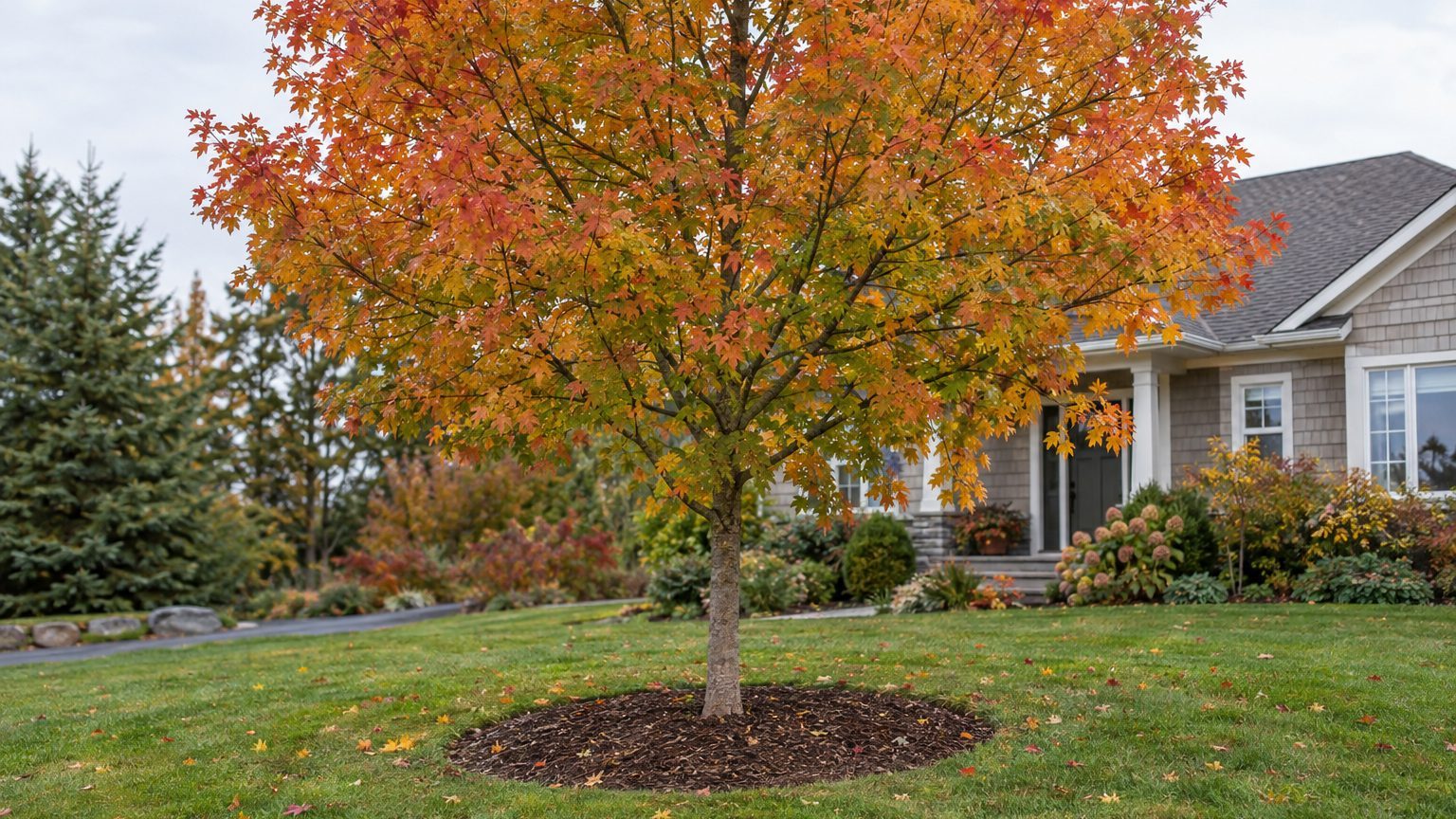
Bare branches in March and a soft, thawing yard are the first sign that tree-planting season in Nova Scotia is close. For shade and ornamental trees the main window runs April to May, with a fall window in September and October. Fruit trees go in during spring only.
When Is the Best Time to Plant Trees in Nova Scotia?

Spring is the best season for planting shade and ornamental trees in Nova Scotia, with a fall window as a backup, and the year breaks down like this.
- In April, once the frost is out of the ground, you can set container and balled-and-burlapped trees in the soil.
- Through May, planting continues while the soil is cool and moist, and the roots grow before summer heat arrives.
- In late May or early June, container and balled-and-burlapped trees can still go in, though the window is closing.
- In July and August, hold off. Heat and dry soil stress new roots, and summer is the hardest time to plant a tree.
- In September and October, fall planting works for many trees, as long as it is finished before the end of October.
- After planting in fall, water the tree regularly until the ground freezes.
Nova Scotia has no local extension page on tree timing, so these dates follow the nearest comparable climate. Confirm local timing with a garden centre, a garden society or the provincial gardening groups.
The type of plant matters too. Container-grown trees can go in most of the year if you keep them watered, but they settle best in the dormant season. Magnolia, dogwood, tuliptree, sweet gum, red maple, birch, hawthorn, poplars, cherries, plums and many oaks do better planted in spring than in fall.
At the Halifax Stanfield reference station, the last spring frost falls on average around May 7, and the first fall frost around October 18. Those are midpoints, so frost can come later in spring or earlier in fall, and upland or northern districts run weeks behind Halifax. The reference city sits in Canadian hardiness zone 6b, a Canadian rating that does not convert to a USDA zone.
Nova Scotia — the year and the numbers
- State
- Nova Scotia
- Hardiness zones
- 6b
- Last spring frost
- May 7
- First fall frost
- October 18
- Annual rain
- 55 in
- Lawn zone
- cool-season
- Source
- Environment and Climate Change Canada — Canadian Climate Normals 1981-2010, station HALIFAX STANFIELD INT'L A · Halifax
When to Plant Fruit Trees in Nova Scotia
Plant fruit trees in April or May, as soon as the frost has left the ground. A bare-root tree should go in while it is still dormant, before the buds open, which usually means April or early May.
Fall planting is not an option for fruit trees here. The winters are too cold for a newly planted fruit tree to get established.
| Kind of fruit tree | When to plant in Nova Scotia | Why then |
|---|---|---|
| Bare-root | April to early May, once the soil can be worked | The tree is dormant and the buds have not opened |
| Container-grown | April to May | Roots grow into cool, moist soil, and the tree settles best when dormant |
Bare-root stock is usually less expensive than container trees, and it establishes well when planted on time. If the ground is still frozen in April, wait for it to thaw rather than forcing a hole into frozen soil.
Best Trees to Plant in Nova Scotia
Match the tree to your site. Sun, soil drainage and winter exposure decide more than any list, and the trees below are ones that regional guidance names for cool, northern climates like this one.
| Tree | How it does in Nova Scotia | Why |
|---|---|---|
| Paper birch | Suits cool sites with plenty of light | It adapts to a variety of soils but needs full sun |
| Aspen | Does best in an open, sunny spot | It is shade-intolerant and survives best with full sunlight |
| Red maple | Fits many soils | It adapts to a variety of soils |
| Eastern redbud | Works in a sheltered corner | It is on the edge of hardiness, so protect it from drying winds and ice that breaks brittle limbs |
Sugar maples are handsome, but they dislike road salt, compacted soil and heat, so keep them away from driveways and salted roads. Magnolia, tuliptree, oak and ginkgo are better planted in spring than fall. Apricot trees are generally hardy through the winter, but they quickly become tender as temperatures rise in late winter. The plum-apricot hybrid Spring Satin does not tolerate the freeze-thaw cycles of late winter.
When to Plant, Water and Prune Trees in Nova Scotia
Planting, watering and pruning each have their own moment. The table sets them side by side, and the main rule is to work with the tree while it is dormant or while the soil is workable.
| Task | Best timing in Nova Scotia | Why then |
|---|---|---|
| Plant shade and ornamental trees | April to May, or September to October | Roots grow in cool, workable soil, away from summer heat |
| Plant fruit trees | April to May, never in fall | Winters are too cold for a newly planted fruit tree |
| Water a young tree | Regularly after planting, and in fall until the ground freezes | New roots need steady moisture before winter |
| Prune fruit trees | March to April, while dormant | Pruning late in winter least affects winter hardiness and tree health |
Prune before the buds swell, and avoid pruning in fall or early winter, because new growth may not harden before the cold. Apples go first and peaches last, since peach flower buds are easily hurt by cold. The page on pruning fruit trees in Nova Scotia covers the details.
Where to Get Tree Advice in Nova Scotia
Nova Scotia has no county extension offices, so advice comes from the province and from local gardeners. Both can help with choosing a tree for your site or testing your soil before you dig.
- The Nova Scotia Department of Agriculture is the place to ask about tree choice and soil testing, ideally in late winter before planting begins.
- A local garden centre or garden society can tell you how your district compares with Halifax, so ask in March before the soil thaws.
Common Questions
Can You Plant a Tree in July in Nova Scotia?
You can, if the tree is container-grown and you water it faithfully, but it is a hard season for new roots. Waiting for April, May or fall gives the tree a much easier start.
Should You Remove the Burlap from a New Tree?
Remove or fold back the burlap and any wire basket once the tree sits in the hole, so roots can spread freely into the surrounding soil. Keep the root flare at the soil line when you backfill.
Is Fall a Good Time to Plant Trees in Nova Scotia?
For many shade and ornamental trees, yes, as long as planting is finished before the end of October. Choose spring for the trees that dislike fall planting, and keep fruit trees for spring only.