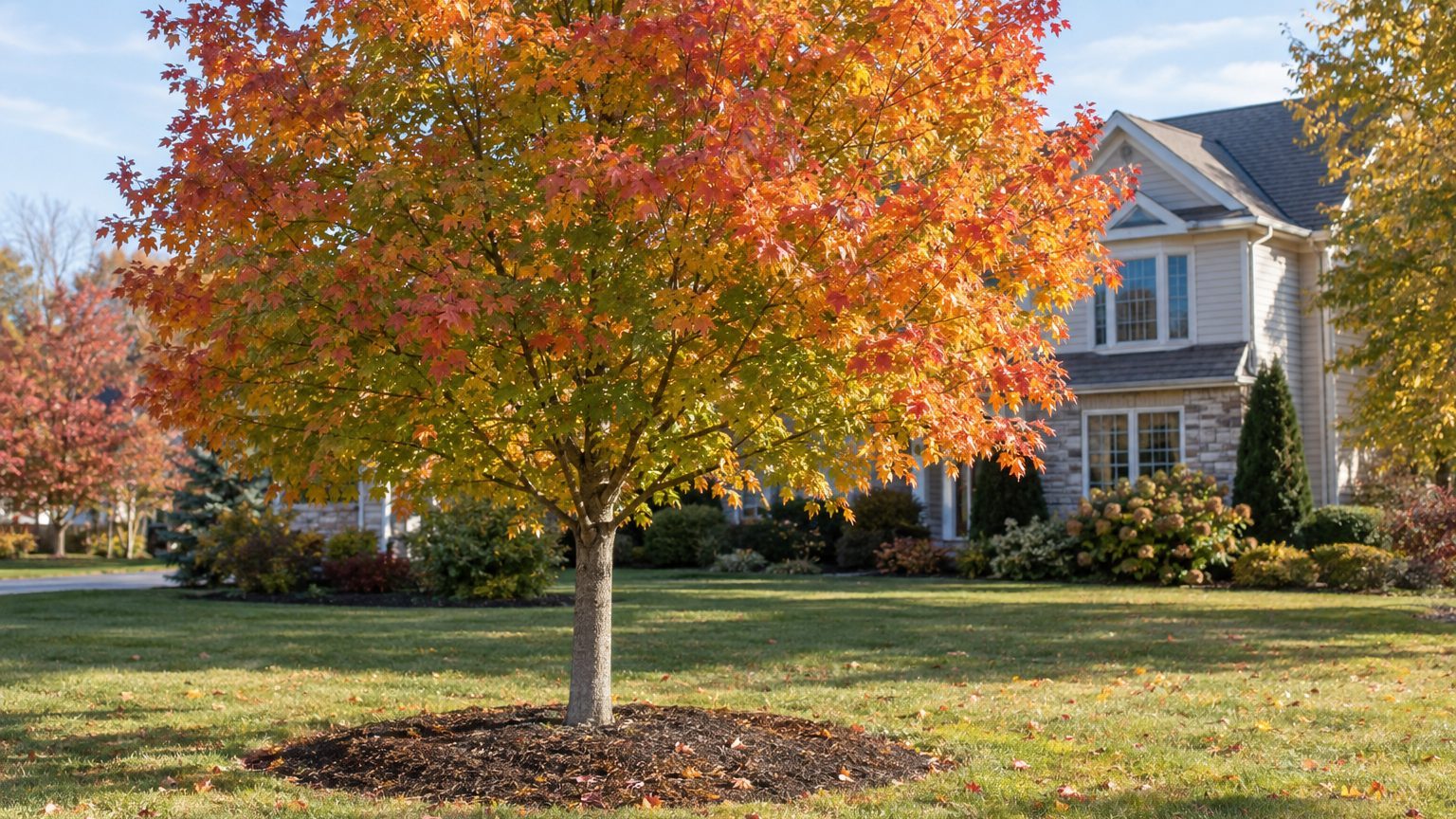
Spring buds swelling on a bare maple and the first fall leaf drop both mark a planting window for a new tree in New Jersey. Shade and ornamental trees go in during early spring and again in fall. Fruit trees lean toward early spring. Each tree type has its own timing, and the sections here sort them out.
When Is the Best Time to Plant Trees in New Jersey?

Shade and ornamental trees do best planted in March and April or in October and November, when the tree is dormant or the soil is workable and roots can grow.
- In late winter, February can work for a container or balled-and-burlapped tree as long as the soil is not frozen.
- In March and April, planting before new growth begins gives roots a full season to settle ahead of summer heat.
- Through the summer, hold off, because heat and dry soil stress new roots more than at any other time.
- In October and November, soil that is still warm lets roots keep growing while the top of the tree rests.
- In December, planting is still possible on days when the ground is not frozen.
Container-grown trees can go in most of the year if you water them, but they settle best in the dormant season. Magnolia, dogwood, tuliptree, sweet gum, red maple, birch, hawthorn, poplars, cherries, plums and many oaks do better planted in spring than in fall. For reference, at the Newark airport the last spring frost falls between March 29 and April 6, and the first fall frost between November 4 and November 16. In spring, suburban and rural yards often see frost lingering longer, and in fall it tends to arrive sooner, so check your own county. New Jersey spans USDA hardiness zones 6a to 7b.
New Jersey — the year and the numbers
- State
- New Jersey
- USDA zones
- 6a-7b
- Last spring frost
- March 29 to April 6
- First fall frost
- November 4 to November 16
- Annual rain
- 47 in
- Lawn zone
- transition-season
- Source
- NOAA NCEI U.S. Climate Normals 1991-2020, 32F freeze probabilities · Newark
When to Plant Fruit Trees in New Jersey
Fruit trees go in during March and April. Bare-root trees should be planted in early spring, while they are dormant and before the buds open.
Container-grown fruit trees follow the same spring window, and November planting can also work when you would rather plant in fall.
| Kind of fruit tree | When to plant in New Jersey | Why then |
|---|---|---|
| Bare-root | March to April | Planted dormant, before the buds open |
| Container-grown | March to April, or November | Roots settle in the dormant season |
Plant a bare-root tree soon after it arrives and keep the roots from drying out. In fall, a container tree needs regular water until the ground freezes. Pruning comes after planting and has its own timing, covered on the page about when to prune fruit trees.
Best Trees to Plant in New Jersey
Trees that tolerate rough conditions suit many New Jersey yards, where winters are cold and summers can run hot and dry. Where a site already has tree cover, shade-tolerant choices make more sense than sun lovers.
Mixing conifers such as white pine with hardwoods is a sound plan on larger lots.
| Tree | How it does in New Jersey | Why |
|---|---|---|
| Ginkgo | Large shade tree with bright yellow fall color | Tolerates adverse growing conditions |
| London planetree | Medium to large shade tree | Very tolerant of adverse conditions |
| Thornless honeylocust | Large tree for wet or dry spots | Tolerates both wet and dry soils |
| Eastern hemlock | Fits sites with existing tree cover | Shade tolerant |
| Sugar maple | Works under or near other trees | Shade tolerant |
American holly and white pine give winter color. Your final pick depends on the room, the sun and your zone.
When to Plant, Water and Prune Trees in New Jersey
The yearly rhythm is simple. Plant while trees rest, water a young tree while the soil is not frozen, and prune fruit trees late in the dormant season.
| Task | Best timing in New Jersey | Why then |
|---|---|---|
| Plant shade and ornamental trees | March to April, or October to November | Roots grow in workable soil without summer heat |
| Plant fruit trees | March to April | Bare-root trees go in dormant, before the buds open |
| Water a young tree | Regularly after planting, while the soil is not frozen | New roots need steady moisture to settle in |
| Prune fruit trees | February to March, when the tree is dormant | Cuts are made before buds swell |
Skip pruning fruit trees in fall or early winter, because new growth may not harden before the cold. Peaches are pruned last, from late March, since their flower buds are easily hurt by cold, while apples go first.
Where to Get Tree Advice in New Jersey
Rutgers Cooperative Extension offers local, tested guidance on tree choice and planting, and each county has an office to ask.
- The Rutgers New Jersey Agricultural Experiment Station publishes fact sheets on planting and tree care, useful before you buy.
- Your county extension office can help match a species to your yard and arrange a soil test before planting day.
Common Questions
Can You Plant a Tree in Summer?
You can if the tree is container-grown and you water it faithfully, but the work is harder on the plant. Dry soil and heat strain young roots, so spring and fall are kinder.
Should You Remove the Burlap from a Balled-and-Burlapped Tree?
Yes. Cut away the burlap and any wire basket from around the top of the root ball once the tree is in the hole, so roots can spread freely and the trunk is not girdled later.
Do Bare-Root Trees Need Special Care Before Planting?
Keep the roots moist and out of sun and wind until planting day. Plant while the tree is still dormant, since bare-root trees are set out before the buds open.