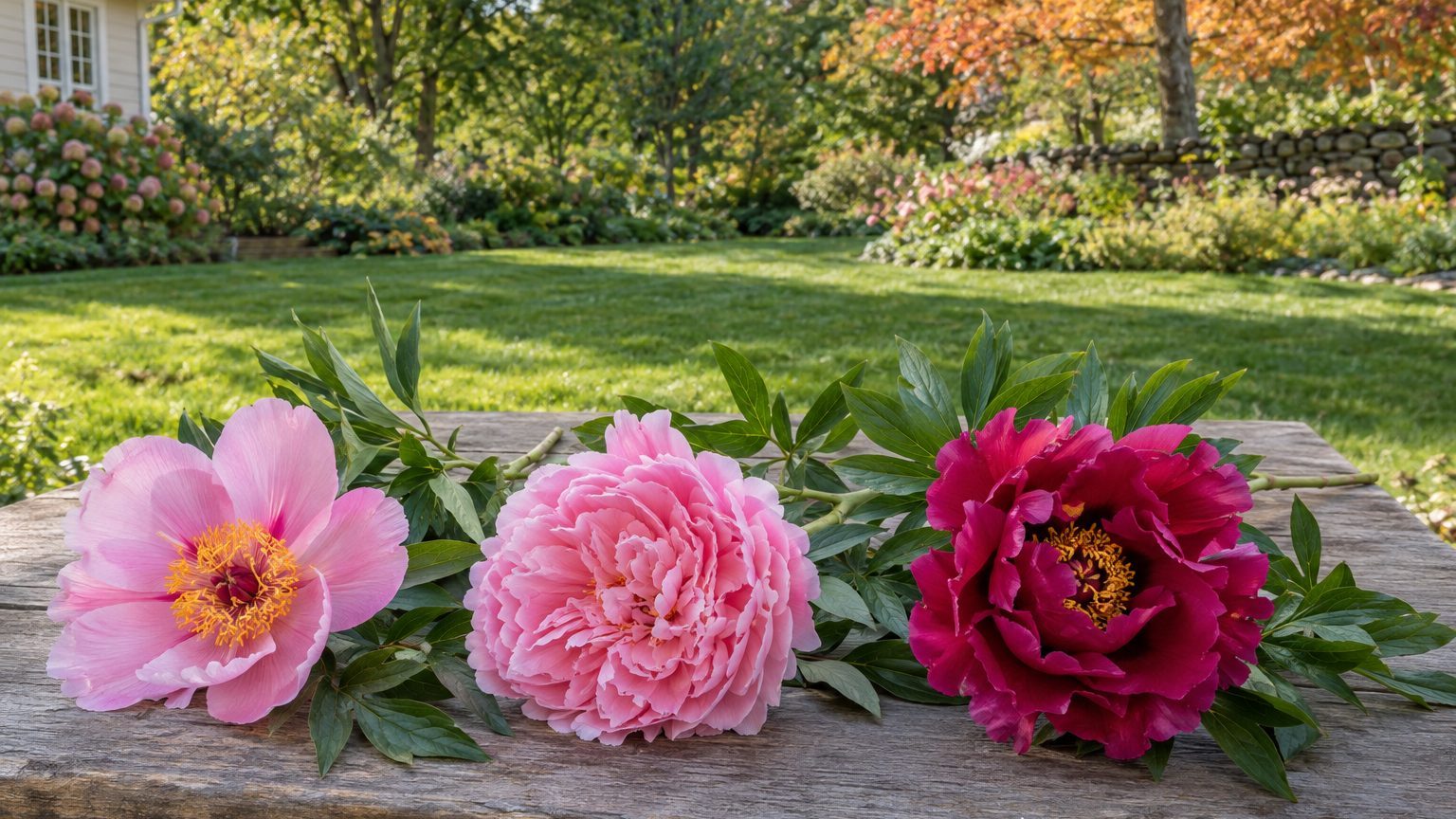
A peony in bloom is a good reason to walk the yard in spring, and in North Carolina the plant and its site matter. Plants that flower early, with single or Japanese blooms, handle the Southern warmth far better than the heavy doubles that fill catalogs.
Best Peonies to Grow in North Carolina

Single, Japanese, and early-blooming herbaceous peonies do best here; tree peonies offer a woody alternative for gardeners who want a shrub. Peonies need a cold winter rest to flower, and under the USDA system North Carolina spans zones 5b to 8b, so the milder parts of the state can leave them flowering poorly. Choosing types that bloom before the heat arrives helps with warm springs, but it cannot replace the cold winter rest peonies need.
Single Peonies

Singles have petals around a center of stamens, and they usually perform much better in the South than the doubles do. Their flowers are lighter, so they cope with spring rain and warm days without collapsing.
Japanese Peonies

Japanese types look like singles with a tuft of narrow petal-like segments in the middle. They share the single type’s Southern track record and rank among the region’s stronger performers. Plant them where they get full sun.
Early-Blooming Cultivars
Early bloomers open before hot weather sets in, which is the whole advantage in this climate. They are also less prone to botrytis blight, the gray mold that blackens buds in warm, damp springs. When a label gives a bloom season, lean toward early.
Kansas
Kansas is a double, which makes it an exception worth knowing. Its large, early flowers are a watermelon red that holds its color through bloom time, and it is a double that does well in the South. If you want a double, start here.
Tree Peonies
Tree peonies are deciduous shrubs with woody stems, and they tend to bloom earlier and larger than herbaceous peonies. Their woody branches support the large flowers, so mature plants usually need no staking. They handle full sun to partial shade, which suits yards with an afternoon tree shadow.
Herbaceous Peonies
Herbaceous peonies are the classic garden type. They die back to the ground every year and have no standing stems, so you start fresh each spring. Choose early singles or Japanese forms from this group, and stagger cultivars so the show lasts longer.
North Carolina — the year and the numbers
- State
- North Carolina
- USDA zones
- 5b-8b
- Last spring frost
- March 23 to April 5
- First fall frost
- October 30 to November 8
- Annual rain
- 44 in
- Lawn zone
- transition-season
- Source
- NOAA NCEI U.S. Climate Normals 1991-2020, 32F freeze probabilities · Charlotte
How to Choose a Peony for a North Carolina Garden
Start with what bothers you most in your own yard: summer heat, a mild winter, or the time you have for upkeep. Those factors point toward different peony types, with overlap among the recommendations.
A named cultivar also gives you more assurance of hardiness and quality than a plant sold only as double pink or single white.
| Your situation | What suits it in North Carolina | Why |
|---|---|---|
| Hot, humid summers | Early-blooming single or Japanese cultivars | They flower before the heat and are less prone to botrytis blight |
| A warm spring after a cold winter | Singles and Japanese types | These bloom types handle warm Southern springs better than doubles |
| You want a double | Kansas | An early double that does well in the South |
| Little time for upkeep | Tree peonies | Their woody stems usually need no staking once mature |
| A long season of flowers | A mix of early and late cultivars | Staggered bloom times extend the show |
Tree peonies take full sun to partial shade, while herbaceous types want full sun, so your light may settle the choice before anything else does.
Which Peonies Suit Different Parts of North Carolina
Winter cold and spring timing shift as you move across the state, and that changes how much risk you can take with a variety.
- Blue Ridge mountains: Winters are colder and spring arrives later, so peonies get the cold rest they want. Doubles and later-blooming cultivars have more room to perform here.
- Charlotte and the Piedmont: Summer heat arrives fast, so early singles and Japanese types are the safe base, with a double like Kansas as the extra.
- Coastal plain: Spring comes earlier and winters are milder, which makes the cold rest the weak point. Stay with early-blooming singles and Japanese types, and expect lighter flowering in the mildest spots.
Zones differ across these areas, so check your own county before you spend on an expensive plant.
Peony Buying Mistakes to Avoid in North Carolina
Choosing a Heavy Double
The fix is simple. Pick early-blooming singles or Japanese types, and if you love doubles, choose Kansas.
Planting the Crown Too Deep
Peonies like cold weather, so plant the crown with the root plate and buds right at the soil surface. A peony set too deep may bloom poorly or not come up at all. A newly planted peony may also skip bloom the first spring, so do not dig it up in disappointment.
Buying Without Knowing the Adult Size
A potted tree peony looks small in the store but matures into a shrub, so it can crowd a bed planned for a perennial. Read the tag before you buy and leave room. Be wary of plants sold only as double pink or single white, and look for named cultivars instead.
Where to Get Peony Advice in North Carolina
NC State Extension offers peony guidance for North Carolina gardeners.
- Its Gardener Plant Toolbox lists herbaceous peony types, so check it before choosing a cultivar.
- Your county extension office can tell you how your zone and soil compare with the rest of the state, so call before planting.
- Extension agents can look at a plant that fails to bloom and help you work out why, so bring photos.
Common Questions
When Should You Plant Peonies in North Carolina?
Plant or divide them in late September or October, so the roots settle before winter. Avoid the heat of summer.
When Do Peonies Bloom in North Carolina?
Most flower in April and May. Depending on the cultivar and the weather, they can also open as early as March.
When Should You Cut Back Peonies in North Carolina?
Cut herbaceous peonies back to the soil surface in November, after frost. October and December also work. Tree peonies keep their woody stems and are never cut back.