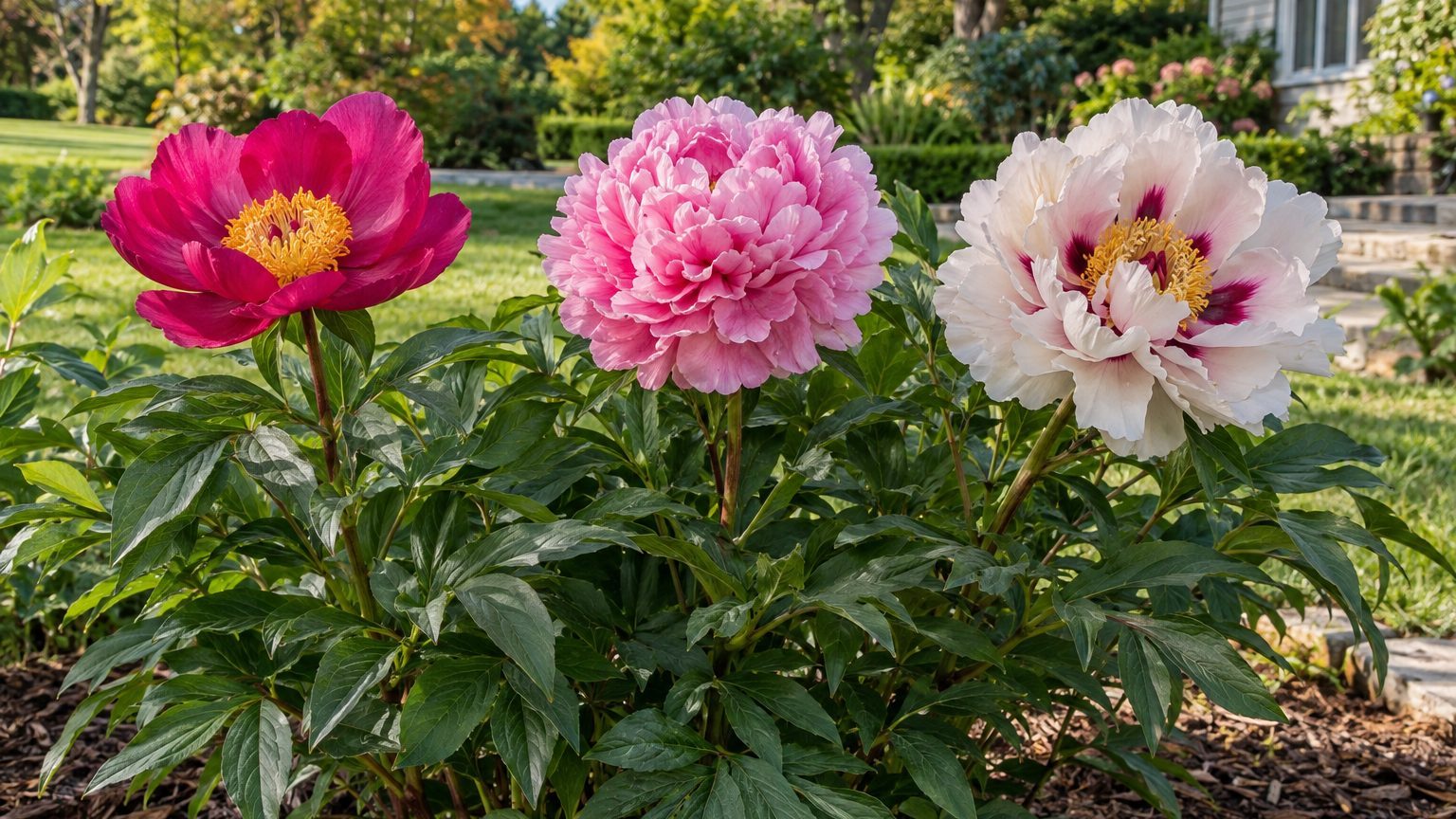
Peony stems pushing up red through bare soil announce spring in an Illinois yard, and established plants are long-lived. The state’s cold winters give peonies the rest they need, so garden peonies, intersectional hybrids and tree peonies all have a place here. Choosing between them comes down to the space, the light and how much upkeep you want.
Best Peonies to Grow in Illinois

Herbaceous and intersectional peonies are the easiest to grow here, and tree peonies and woodland types fill the gaps. Peonies need a cold winter rest to flower, and Illinois supplies it, with USDA hardiness zones running from 5a to 7b. The mild-winter problem is not an Illinois one.
Herbaceous Garden Peonies

This is the classic peony of most home gardens, usually the common garden peony, P. lactiflora. It dies back to the ground every fall and sends up new growth each spring.
It comes in many flower forms and colors, and it is a long-lived perennial whose foliage stays attractive well after the blooms fade. Early, mid-season and late cultivars stretch the show over several weeks.
Intersectional Peonies

Also called Itoh peonies, these are hybrids of the garden and tree peonies. They are grown the same way as herbaceous types and die back to the ground each fall.
If you want something a little different from the standard garden peony without learning new care, this is the easy step up.
Tree Peonies
Tree peonies are woody deciduous shrubs. They go dormant in winter and renew growth each spring on the woody stems, which makes them a different job from the herbaceous kinds.
Once mature, the woody branches usually hold the big flowers without staking.
Woodland Peonies
The woodland peonies, P. japonica and P. obovata, are the ones for shade gardeners. Reach for them under trees or along a north-facing wall where a sun-hungry garden peony would sulk.
Fernleaf Peony
P. tenuifolia is noted for finely cut, fern-like foliage and crimson red flowers. It suits a gardener who wants texture in the bed as much as bloom.
P. officinalis and P. peregrina are also grown for their red flowers.
Illinois — the year and the numbers
- State
- Illinois
- USDA zones
- 5a-7b
- Last spring frost
- April 11 to April 22
- First fall frost
- October 24 to November 3
- Annual rain
- 38 in
- Lawn zone
- cool-season
- Source
- NOAA NCEI 1991-2020 Climate Normals, 32F freeze probabilities · Chicago
How to Choose a Peony for an Illinois Garden
Start with the conditions you actually have: how much shade, how much time, and how tall a plant you can live with. Every peony here gets its cold rest, so the choice is about habit and upkeep rather than survival.
Match the plant to the spot before you fall for a photograph.
| Your situation | What suits it in Illinois | Why |
|---|---|---|
| Cold winters | Herbaceous or tree peonies | Peonies need a cold rest to flower, and these types go dormant over winter |
| Little time for upkeep | Herbaceous or intersectional peonies | They are the easiest to grow and share the same culture |
| Shady spot | Woodland peonies | P. japonica and P. obovata are best suited to shade |
| Long bloom season | A mix of early, mid-season and late cultivars | Blooms stretch over several weeks |
| Tall plant without staking | Tree peonies | Woody branches support the large flowers once mature |
| Fine, fern-like foliage | Fernleaf peony | P. tenuifolia has finely cut leaves and crimson flowers |
If red flowers are the goal, P. officinalis is a good place to look. Flower form is a separate choice, covered in the questions at the end.
Which Peonies Suit Different Parts of Illinois
Illinois stretches a long way from north to south, and winters grow milder as you head down the state. That shifts how much cold rest your peonies get and which types are the safest bet.
- Chicago area and northern Illinois: Winters are at the cold end of the state’s range, which is what peonies want. Herbaceous, intersectional and tree peonies all fit here.
- Central Illinois: Peonies typically start blooming here in early May. This is comfortable territory for any of the common types.
- Southern Illinois: Winters are milder, so local experience is useful when choosing among peony types. Favor reliable herbaceous cultivars and keep planting depth exact.
Wherever you garden, a sheltered suburban yard and an exposed rural field can behave differently, so a nearby gardener’s experience is a good guide.
Peony Buying Mistakes to Avoid in Illinois
Planting Outside the Window
Planting or dividing in September, or October at the latest, gives the roots time to settle before winter. Roots have also stored food reserves by then, helping divisions reestablish before winter.
Wait until September, or October at the latest, rather than planting in spring or summer. A newly planted or transplanted peony may not bloom the first spring even when everything is done right, so patience matters.
Planting Too Deep
A peony planted too deep may bloom poorly or not come up at all. Keep the eyes, the pink buds on the root, near the soil surface.
Planting depth is worth checking when a healthy-looking plant gives only leaves. If a clump has refused to flower, check its planting depth and reset it shallower during the planting window if the eyes sit too low.
Ignoring Adult Size
A small potted tree peony looks harmless, but it grows into a woody shrub. Placed too close to a walk or window, they can crowd the space and become awkward to move.
Read the plant tag for mature height and width, and leave room for the full-grown shrub.
Where to Get Peony Advice in Illinois
Local advice settles questions about cultivars, soil and timing in your own yard, where conditions vary from one county to the next.
- University of Illinois Extension publishes peony guides and seasonal garden articles, handy before you shop for fall planting.
- Your county extension office can answer questions about local soil and which cultivars do well nearby, and fall is a good time to ask.
Common Questions
When Do Peonies Bloom in Illinois?
Peonies bloom from May into June, depending on the species and cultivar. Early, mid-season and late types let you spread the display across the season.
When Should You Cut Back Peonies in Illinois?
An herbaceous peony is cut back after frost, in October or November, or in March or April if you prefer to wait until spring. A tree peony keeps its woody stems and is never cut back.
What Flower Forms Do Peonies Come In?
Peonies are sold by flower type, running from Single to Full Double. Single flowers have guard petals around many pollen-bearing stamens. Japanese and anemone types sit between single and double, and semi-double flowers show no clear line between guard petals and petaloids. Full double flowers have stamens and carpels fully changed to petaloids.