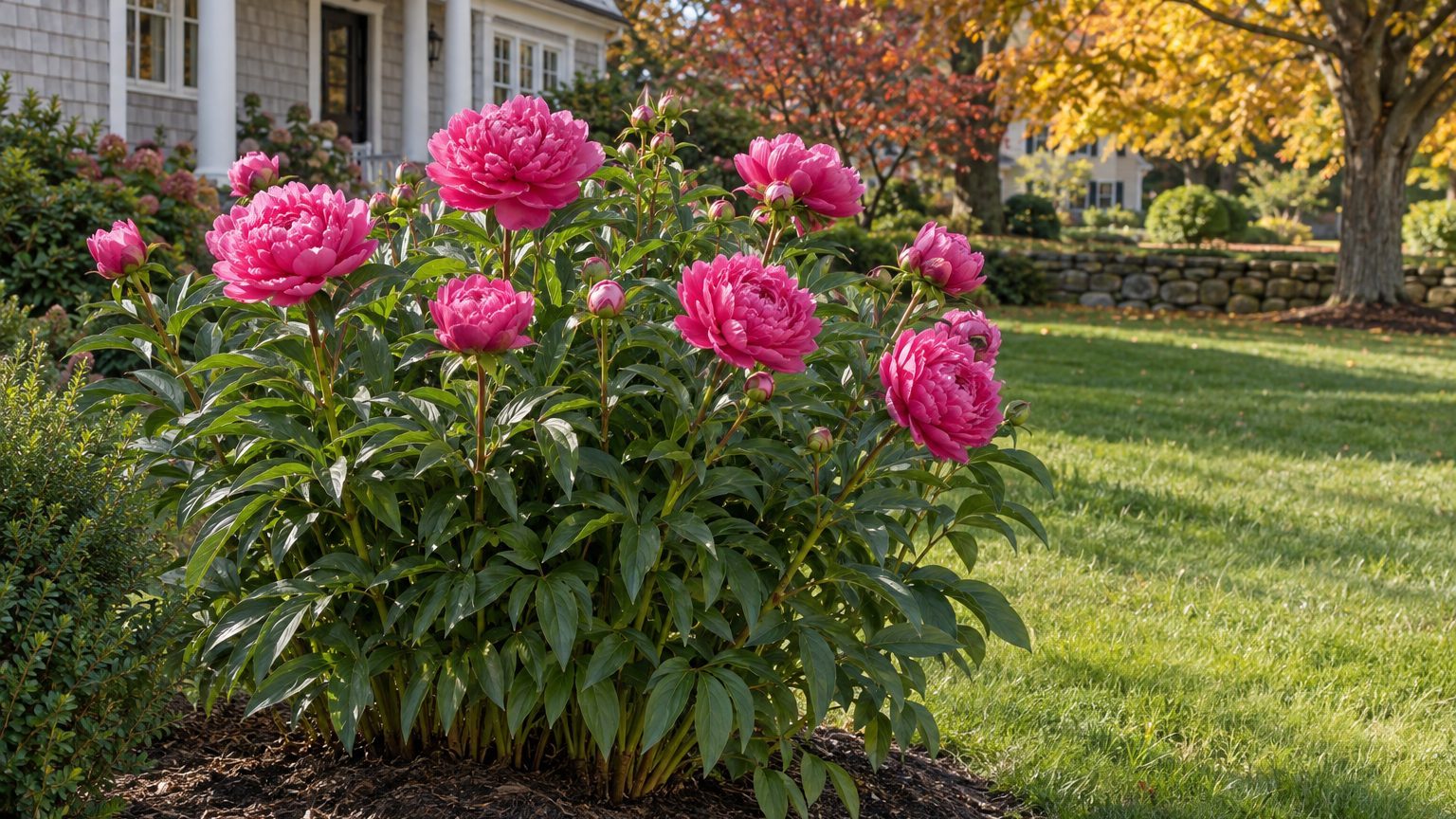
Peony stems poke up red and tight in Rhode Island’s spring beds, then open into the big, scented flowers that signal late spring. Getting there starts months earlier, with roots set in the ground in late summer or early fall.
When to Plant Peonies in Rhode Island

Plant or divide peonies in August or September, and October works as a fallback. Here is how a peony’s year runs in Rhode Island, from the first sprouts to the cold rest it needs.
- In early spring, red shoots push up once the ground thaws; in Providence, the reference last-frost window runs from April 7 to April 17. Gardens inland or away from the water usually see it a week or two later, so check your own county.
- In May and June, the flowers open, with the timing shifting by peony type.
- Through summer, the foliage keeps working to feed the roots for next year’s buds.
- In August and September, it is time to plant or divide, so the roots settle well before the ground gets cold.
- In October, planting is still possible, and Providence’s reference first-frost window runs from October 24 to November 3. Outside the city, it often comes sooner.
- From November into December, the herbaceous tops die back and can be cut down, while the roots start the cold rest that sets next spring’s flowers.
Rhode Island spans USDA hardiness zones 6a to 7b. Spring planting is possible too, but flowers may arrive a year later.
Rhode Island — the year and the numbers
- State
- Rhode Island
- USDA zones
- 6a-7b
- Last spring frost
- April 7 to April 17
- First fall frost
- October 24 to November 3
- Annual rain
- 48 in
- Lawn zone
- cool-season
- Source
- NOAA NCEI U.S. Climate Normals 1991-2020, 32F freeze probabilities · Providence
Which Peonies Grow Best in Rhode Island?
Peonies suit Rhode Island well. They need winter cold to bloom, a good stretch of chilly winter weather, and a Rhode Island winter delivers that easily. Summer heat is rarely the problem it is farther south.
Four types are generally grown in home landscapes, and each has its own place in the bloom season.
| Peony type | How it does in Rhode Island | Why |
|---|---|---|
| Herbaceous (garden) peony | Reliable in beds and borders | Dies back each year and rests through the cold |
| Tree peony | Does well with some shelter | Keeps woody stems and opens before the herbaceous types |
| Itoh (intersectional) peony | Good choice for later color | A cross of garden and tree peonies that blooms last |
| Woodland peony | Suits shadier spots | White flowers that open first in the season |
Blooms follow a rough order, with the woodland peony first, then tree peonies, then herbaceous, and finally the Itoh hybrids. Mixing types stretches the show across late spring into June. Keep the eyes near the soil surface when planting, since a peony set too deep may bloom poorly or not come up at all.
When to Plant, Cut Back and Feed Peonies in Rhode Island
Peony work clusters into a few seasons. Planting comes in late summer, cutting back comes after the tops die, and feeding follows the plant’s growth. A newly planted or transplanted peony may not bloom the first spring, so patience is part of the job.
| Task | Best timing in Rhode Island | Why then |
|---|---|---|
| Planting or dividing | August to September, or October | Roots establish before winter |
| Cutting back herbaceous peonies | November to December; March or April can also work | The foliage has died back and no longer feeds the roots |
| Enjoying the bloom | May to June | Late spring into June, depending on type |
| Feeding | No blanket schedule: base feeding on a soil test | Plants use nutrients as shoots and buds develop |
Tree peonies keep their woody stems and are never cut back, so only the herbaceous types get the fall or early spring trim. Cut the stems to the ground after the foliage dies back in late fall; if needed, the work can wait until early spring.
How Peony Planting Dates Change Across Rhode Island
The calendar holds across the state, but local conditions nudge the season earlier or later in different corners of Rhode Island.
- Narragansett Bay and the south coast: Water keeps the shoreline milder, so frost tends to come later in fall and leave earlier in spring. August or September is the main planting window here, and October can also work.
- Providence and the inner bay: Warm pavement and buildings hold a little extra heat, so city beds wake up early in spring.
- Northwest Rhode Island, around Burrillville and Foster: Higher, cooler ground gets frost sooner in fall and keeps it longer in spring. Aim for the earlier part of the planting window so the roots settle before the cold arrives.
Whatever your corner, local frost may follow a different schedule from Providence’s reference dates, so watch your own beds.
Where to Get Peony Advice in Rhode Island
For a soil test, a diagnosis of a struggling plant, or a question about a particular bed, the state’s own gardening service is a useful place to turn. University of Rhode Island Cooperative Extension answers home gardening questions for the whole state.
- The extension’s gardening resources cover soil testing and plant problems, and a sample is worth sending before planting day.
- Master Gardener volunteers connected to the extension can help diagnose a peony that will not bloom, ideally with photos of the plant and the spot it grows in.
- A soil test before planting gives you time to prepare the bed before the roots go in.
Common Questions
Why Won’t My Peony Bloom?
A peony set too deep is a common cause, so check whether the buds sit near the surface. A plant in heavy shade, with leaves that look healthy but few buds, points the same way toward a placement problem rather than a disease.
Can You Plant a Peony in Spring in Rhode Island?
Yes, spring planting is possible. Expect the flowers to come a year later than they would from a fall planting.
Do Tree Peonies Get Cut Back Like Garden Peonies?
No. Tree peonies keep their woody stems, so only dead or damaged wood is removed, while herbaceous peonies are cut to the ground after the foliage dies back.