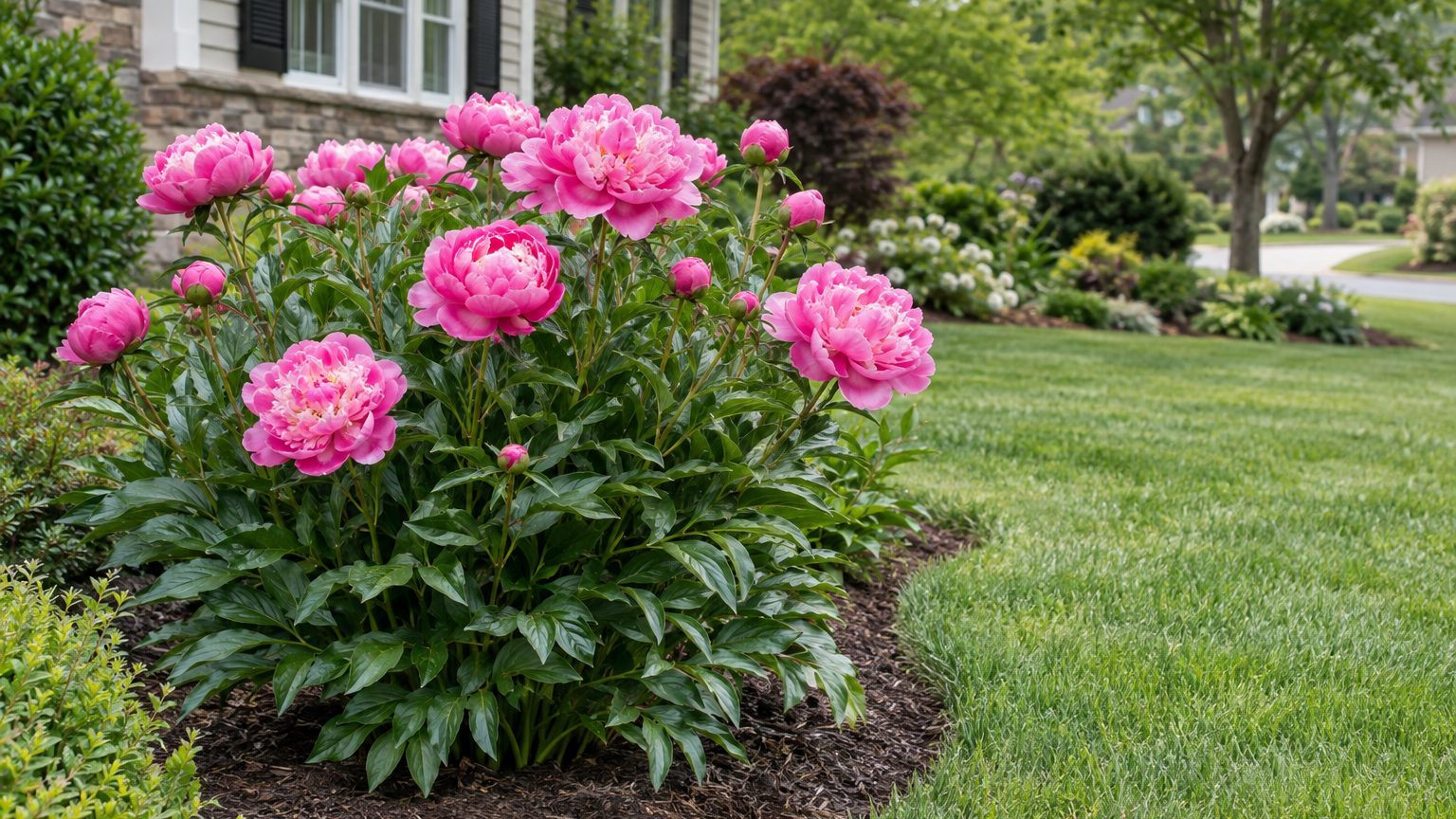
Peony shoots push through the soil in early spring as red-tinged knobs, and fall-planted roots have time to settle before the next bloom season. In North Carolina, planting is a fall job, timed so the roots settle before winter.
When to Plant Peonies in North Carolina

Plant or divide peonies in late September or October, and never in the heat of summer. The year of a peony here runs like this.
- In late September and October, the soil is still warm enough for new roots to grow while the air cools, so the crown settles in before winter.
- Through winter, the plant rests underground, and that cold rest is what sets up flowers for the following spring.
- In early spring, with the last frost in Charlotte typically falling between March 23 and April 5, red shoots emerge and can shrug off a light frost.
- In April and May, the buds open, though some cultivars flower as early as March.
- Through summer, the foliage works quietly to feed the roots for next year, so leave it standing.
- In November, once frost has blackened the leaves, herbaceous types get cut back, and October or December works too if your schedule demands it.
In Charlotte, the first fall frost typically arrives between October 30 and November 8, which is why October planting leaves little slack. These dates describe Charlotte, in the Piedmont, within a state that spans USDA hardiness zones 5b to 8b. Mountain and coastal yards run on a different clock, as the regional section explains.
North Carolina — the year and the numbers
- State
- North Carolina
- USDA zones
- 5b-8b
- Last spring frost
- March 23 to April 5
- First fall frost
- October 30 to November 8
- Annual rain
- 44 in
- Lawn zone
- transition-season
- Source
- NOAA NCEI U.S. Climate Normals 1991-2020, 32F freeze probabilities · Charlotte
Which Peonies Grow Best in North Carolina?
Peonies grow here, but they need a cold winter rest to flower, so they perform best where winters are properly cold. In milder parts of the state they can flower poorly. Spring heat is the other hurdle, which is why bloom type and timing matter.
| Peony type | How it does in North Carolina | Why |
|---|---|---|
| Early-blooming cultivars | Dependable | They open before hot weather arrives and are less prone to botrytis blight |
| Single bloom types | Usually perform well | They handle warm Southern springs better than doubles |
| Japanese bloom types | Usually perform well | They also cope with warm springs better than doubles |
| Double bloom types | Often struggle | They usually fare worse in the South than singles and Japanese forms |
Each plant blooms for about two weeks, so mixing early cultivars with later ones stretches the show across the season. Tree peonies, the shrubby kind with woody stems, are a separate group with their own habits, and the care table below shows how they differ at pruning time. Choose a bloom type suited to Southern springs, then pick the flower color you like.
When to Plant, Cut Back and Feed Peonies in North Carolina
Peony care here follows a seasonal rhythm. Planting time matters because a crown set in too late has little time to root before the cold.
| Task | Best timing in North Carolina | Why then |
|---|---|---|
| Planting or dividing | Late September or October | Roots settle in cooling soil before the winter rest |
| Bloom | April and May, as early as March for some cultivars | Cultivar and spring weather decide the exact opening |
| Cutting back herbaceous peonies | November, after frost has killed the leaves, or in October or December | The dead stems can carry disease if left standing |
| Cutting back tree peonies | Never | Their woody stems stay alive and carry next year’s buds |
Cut herbaceous stems down to the soil surface and clear them away rather than composting them. Before feeding, ask the county office for advice so any fertilizer matches the bed’s needs.
How Peony Planting Dates Change Across North Carolina
The fall planting window holds statewide, but spring comes at different times depending on where the yard sits, and that changes how the plants behave.
- Blue Ridge Mountains: Spring arrives later than in Charlotte, so shoots wake up later and the last frost risk lingers longer. Colder winters here give peonies the rest they want.
- Piedmont around Charlotte: This is the reference point for the dates above, with a moderate winter that still delivers enough cold for good flowering.
- Coastal Plain: Spring comes earlier than inland, so growth starts sooner and blooms open ahead of the Piedmont. Milder winters make flowering less certain, which makes early-blooming singles the safer bet.
If your yard sits in the mountains or near the coast, treat the dates here as a starting point and let your local conditions nudge the schedule.
Where to Get Peony Advice in North Carolina
Local help is easy to reach, and it settles questions about soil, cultivars and problems on your own plants.
- Peony guidance written for the state’s growing conditions is worth reading before you order plants.
- Your county extension center can help, so go in before planting season or as soon as leaves look wrong.
Start with the NC State Extension site, then call the county center to book a soil test before the planting window opens.
Common Questions
How Deep Should You Plant a Peony in North Carolina?
Set the crown so the eyes, the pink buds on the root, sit near the soil surface. A peony planted too deep may bloom poorly or not come up at all. Peonies like cold weather, so the buds need to feel winter rather than hide under a thick blanket of soil.
Will a New Peony Bloom the First Spring?
A newly planted or transplanted peony may not bloom the first spring. The plant spends its early energy on roots, and flowers usually follow once it has settled in. Missing flowers in that first year is not a sign something went wrong.
Can You Divide Peonies in North Carolina?
Yes, and the timing matches planting. Divide in the same fall window, in late September or October, so each piece has time to root before winter. Dividing in the heat of summer stresses the plant and sets back its recovery.