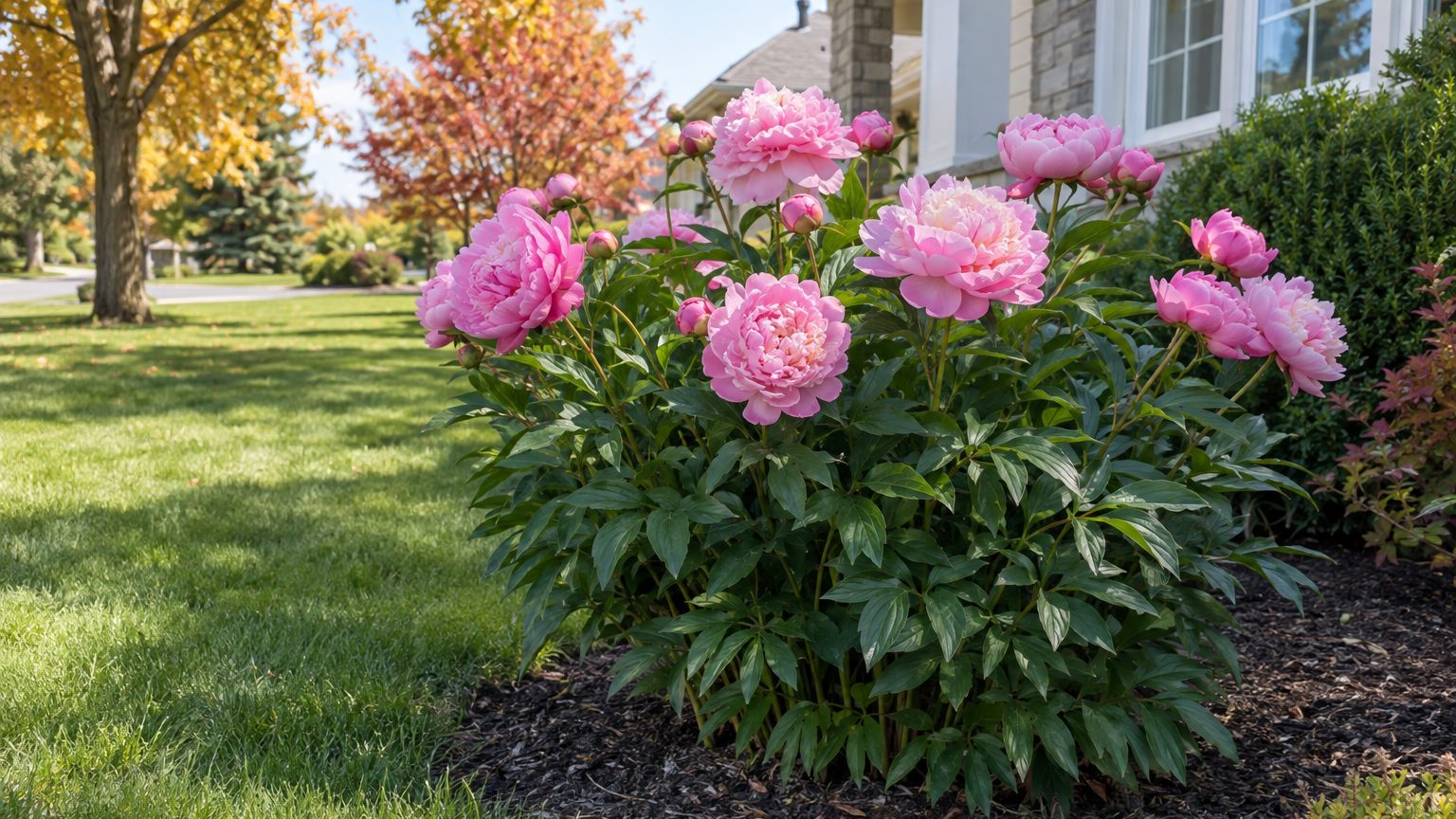
Peony shoots push up red and tight through cold Alberta soil each spring, and the clump you set in the ground the previous autumn decides how well they do. Planting time matters here because winter arrives early and the roots need to settle first. Growing peonies in Alberta comes down to a short autumn window and straightforward seasonal care.
When to Plant Peonies in Alberta

Plant or divide peonies from September into early October, so the roots settle in before the ground freezes. Because Alberta has no local extension page on peony timing, these dates follow the nearest comparable climate; confirm local timing with a local garden centre, a garden society or a provincial gardening group. The rest of the year follows from that planting window.
- In spring, red shoots emerge as the soil thaws, and at Calgary the last spring frost falls around May 21 on average, which means a later frost shows up in about half of years.
- In early June, buds open, and the flowering season runs into early July depending on variety and the weather that year.
- Through the rest of summer, the foliage keeps working, storing energy in the roots for next year’s flowers.
- From September into early October, bare-root divisions and new plants go into the ground, while Calgary’s average first fall frost around September 16 is only the midpoint of the local range.
- In October and November, once a hard freeze has killed the foliage, herbaceous peonies are cut back for the winter.
Calgary sits in Canadian hardiness zone 4a, a rating from the Canadian system that does not match any USDA zone, and districts away from the city can run colder or warmer than that.
Alberta — the year and the numbers
- State
- Alberta
- Hardiness zones
- 4a
- Last spring frost
- May 21
- First fall frost
- September 16
- Annual rain
- 17 in
- Lawn zone
- cool-season
- Source
- Environment and Climate Change Canada — Canadian Climate Normals 1981-2010, station CALGARY INT'L A · Calgary
Which Peonies Grow Best in Alberta?
Peonies suit Alberta well. They need a cold winter rest to flower, and long cold winters give them exactly that, where mild-winter climates often leave them flowering poorly.
Herbaceous peonies and Itoh peonies are the dependable choices for most yards. Tree peonies can be grown too, though they ask for more protection.
| Peony type | How it does in Alberta | Why |
|---|---|---|
| Herbaceous (garden) | Reliable in most yards | Dies back to the ground each fall and regrows in spring |
| Itoh (intersectional) | Reliable, grown like a herbaceous peony | A cross of garden and tree peonies with the same yearly cycle |
| Tree (woody) | Possible with care | Less hardy, so it needs a protected site or winter mulch |
Woodland peonies are also grown in home landscapes elsewhere, but herbaceous and Itoh types are the easier place to start. Pick a sheltered spot for a tree peony, away from open wind, and mulch it over winter.
When to Plant, Cut Back and Feed Peonies in Alberta
Planting, cutting back and feeding shape the peony year. Planting and cutting back have set months here, while feeding needs local guidance.
Depth matters at planting. A peony set too deep may bloom poorly or not come up at all, so keep the buds, called eyes, near the soil surface.
| Task | Best timing in Alberta | Why then |
|---|---|---|
| Plant or divide | September to early October | Roots settle before the ground freezes |
| Feed | Ask a local garden centre whether and when to feed | Local advice can match feeding to your soil and your plant’s needs |
| Cut back herbaceous and Itoh peonies | October or November, after a hard freeze has killed the foliage | Dead leaves can carry disease, so remove them |
Cut stems down to within a couple of inches of the ground and throw the debris out rather than composting it, which helps keep disease from returning. Tree peonies keep their woody stems and are never cut back.
How Peony Planting Dates Change Across Alberta
Alberta covers a lot of ground, and frost dates measured at Calgary say little about districts far from the city. The planting window stays in the same months, but the season starts and ends sooner or later depending on where you live.
- Calgary: The foothills sit close to the Rockies, so plan on the full September to early October window. Plant at the start of it rather than the end.
- Lethbridge and Medicine Hat: Southern Alberta tends to run warmer, so spring growth starts earlier and fall frost tends to come later than in Calgary.
- Peace River country and the north: Spring comes later and fall frost arrives sooner, so aim for the early part of the planting window.
- Canmore and mountain towns: Higher ground runs colder, so shoots emerge later and the window closes sooner than in the city.
A local garden centre or garden society is a better guide to planting time in your district.
Where to Get Peony Advice in Alberta
Local sources can answer peony questions for your area, from timing to soil.
- The Alberta Agriculture and Irrigation ministry publishes provincial gardening information, useful for questions about soil and winter hardiness.
- A local garden centre can tell you which peony types and bare-root divisions suit your area, and when stock arrives for fall planting.
- A garden society or master gardener group in your town can help with problems and local timing, and members often share divisions.
Common Questions
Can You Buy Peonies in Spring in Alberta?
Yes, garden centres usually sell peonies in spring as potted plants, while bare-root plants are sold for planting in fall. Potted plants can go in the ground once the soil is workable, but fall planting gives them time to establish before the following spring.
Why Is a New Peony Not Blooming?
A newly planted or transplanted peony may not bloom the first spring. Give it time to settle, and check that the eyes sit near the soil surface, since a plant set too deep may bloom poorly.
What Do You Do with Peony Flowers After They Fade?
Deadhead the spent flowers after bloom, then leave the foliage in place through summer so the plant can store energy. The leaves come off only in fall, after a hard freeze.