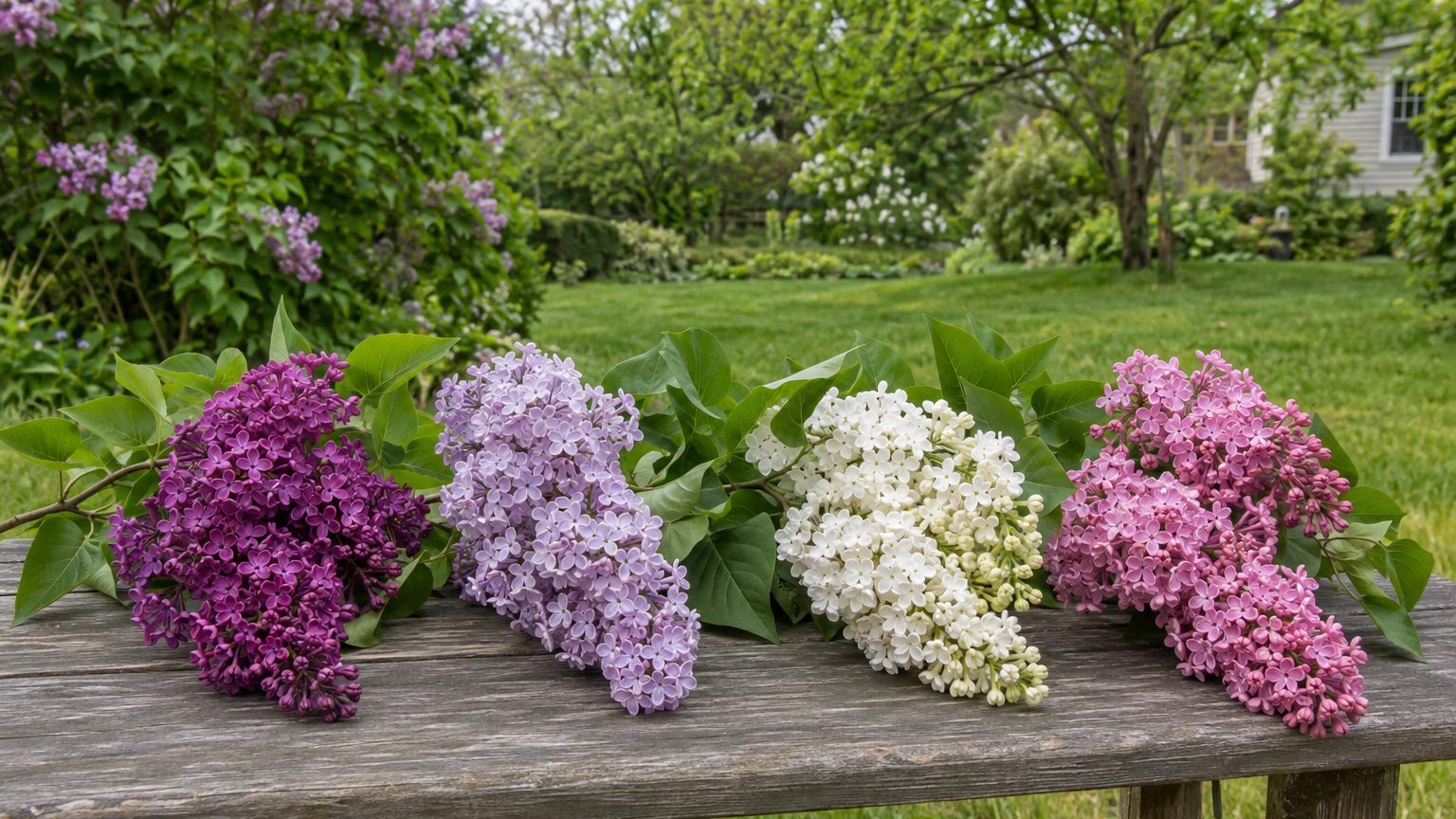
A lilac in full bloom smells like May in Oregon, and the plant behind that scent is not always a true lilac. Small and blight-resistant Syringa lilacs do well here, as do the evergreen California lilacs (Ceanothus) that grow west of the Cascades. Knowing which is which saves you from buying the wrong shrub.
Best Lilacs to Grow in Oregon

Dwarf and disease-resistant true lilacs hold up well in Oregon, and evergreen California lilacs fill in where you want blue flowers on a bigger shrub. The common lilac still has a place in the yard, but its blight problem makes the other choices easier to live with. Each one is below.
Palabin Dwarf Lilac

Syringa meyeri ‘Palabin’ was chosen for its small size and for flowering freely while still young. It grows slowly and takes pruning well, so you can keep it as low as three feet.
Prune it in June, right after the flowers fade, or in May if the bloom finishes early. Lilacs bloom on last year’s wood, and next year’s buds form soon after flowering in summer, so pruning in late summer, fall or winter removes the following spring’s flowers.
Common Lilac

Syringa vulgaris is the lilac most people picture and the one most often planted. In Oregon, most of its cultivars are susceptible to lilac blight, a disease that spoils spring blooms.
Plant one if you love the classic fragrance, but expect to watch the leaves and flowers more closely than you would with the resistant species.
Blight-Resistant Lilac Species
Several species have shown real resistance to blight: Syringa josikaea, S. komarowii, S. microphylla, S. pekinensis and S. reflexa. They make the safer pick if you have lost common lilac blooms to spotted, blackened shoots.
Ask a nursery for these by their botanical names, since the plain label “lilac” usually means the common one.
Blueblossom
Ceanothus thyrsiflorus, also called California lilac or mountain lilac, is an evergreen shrub or small tree that runs from 6 to 20 feet. It carries clusters of pale blue to deep lilac-blue flowers in summer and is the hardiest of the wild lilacs.
Fast growth is a plus. Wet spots are not, because it can develop disease where water collects, so give it a well-drained place.
Victoria Ceanothus
‘Victoria’ is a commonly grown Ceanothus in Oregon. It forms a large, rounded evergreen shrub that can easily reach 10 feet tall and wide, so it suits a corner with room to spread.
Blue flowers appear in abundance from mid-May to early June, which overlaps nicely with the true lilacs.
Oregon — the year and the numbers
- State
- Oregon
- USDA zones
- 4a-9b
- Last spring frost
- March 6 to March 21
- First fall frost
- November 11 to November 27
- Annual rain
- 37 in
- Lawn zone
- transition-season
- Source
- NOAA NCEI U.S. Climate Normals 1991-2020, 32F freeze probabilities · Portland
How to Choose a Lilac for an Oregon Garden
Oregon spans USDA hardiness zones 4a to 9b, a range wide enough for gardeners in different parts of the state to need very different plants. Think first about winter cold, summer humidity and the space you actually have.
True lilacs need a cold winter rest to mature their flower buds, which is why they do best where winters are cold.
| Your situation | What suits it in Oregon | Why |
|---|---|---|
| Very cold winter | True Syringa lilacs | They need a cold winter rest to set their flower buds |
| Hot, humid summer or concern about lilac blight | Blight-resistant species such as Syringa pekinensis | Lilacs struggle in hot, humid summers, and most common lilac cultivars are susceptible to blight |
| Little time for pruning | Palabin dwarf lilac | It grows slowly and flowers freely at an early age |
| Small space | Palabin dwarf lilac | It can be kept as low as three feet |
| Room for a big evergreen | Victoria Ceanothus | It easily reaches 10 feet tall and wide, with blue flowers from mid-May to early June |
Blueblossom suits a roomy bed west of the Cascades where the soil drains well. Keep it out of wet spots, where disease is more likely.
Which Lilacs Suit Different Parts of Oregon
The Cascades split the state into very different growing conditions, and that changes which lilac you should plant.
- Portland and the Willamette Valley: Winters are milder here, and the last spring frost falls from March 6 to March 21. True lilacs and evergreen California lilacs are workable here, so choose by mature size and disease resistance.
- Central and eastern Oregon: This is high desert with a far shorter growing season and colder winters. True Syringa lilacs fit this cold, since they need a real winter rest.
Frost dates from Portland do not carry over to the high desert, so check local conditions before you plant.
Lilac Buying Mistakes to Avoid in Oregon
Choosing Only the Common Lilac
Because the common lilac is so familiar, it often goes into the cart without a second thought. In Oregon, most of its cultivars are susceptible to blight, which can leave you with spoiled blooms and a shrub that needs constant attention.
Look instead at the resistant species, or at Palabin if you want something small.
Planting a Lilac That Needs More Cold than You Get
A true lilac sets its flower buds after a cold winter rest, and hot, humid summers wear it down. In the mildest, wettest corners of the state, you may get a healthy shrub with thin flowering.
If your yard runs mild, consider an evergreen Ceanothus for blue color instead of pushing a true lilac to bloom.
Buying a Pot Without Knowing Adult Size
A small pot hides a lot. A Palabin stays near three feet, while Victoria can reach 10 feet in both directions and blueblossom can climb toward 20 feet.
Check the mature size on the tag and measure the space before you buy, because moving a large shrub later is hard work.
Where to Get Lilac Advice in Oregon
Oregon State University Extension publishes guidance on lilac care, blight and California lilacs for gardens west of the Cascades. Your county Extension office can add advice for your own soil and elevation.
- The Extension website has articles on pruning and blight, which are worth reading before you buy a shrub in late winter or early spring.
- Your county office can help identify a spotted or poorly blooming lilac when you bring a sample in during the bloom season, from April to June.
Common Questions
When Do Lilacs Bloom in Oregon?
May is the usual bloom time. Lilacs can also flower in April or June, depending on the variety and how the spring has run.
Is a California Lilac a True Lilac?
No. Ceanothus carries the name because of its lilac-blue flowers, but it is an evergreen shrub with blossoms in summer. True lilacs belong to the genus Syringa and drop their leaves in winter.
Can You Grow a Lilac in a Container in Oregon?
Palabin is a good candidate. It has been grown as a flowering container plant in trials in the north Willamette Valley, and its small size and slow growth suit a pot.