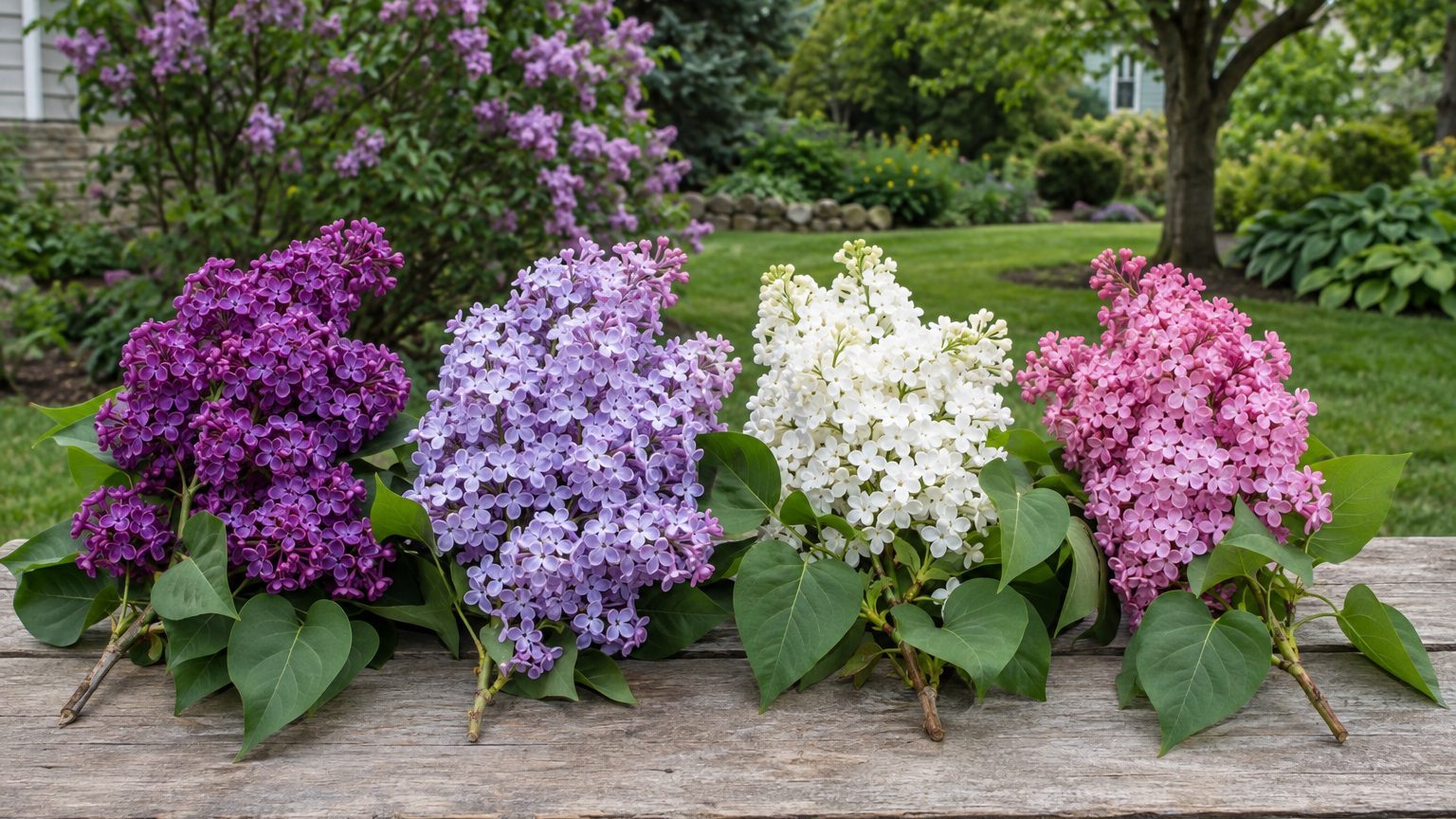
A lilac in full bloom fills a Missouri yard with scent for a short stretch each spring, and the plant you chose decides how reliably that happens. Lilacs do best where winters are cold and summers are mild, so Missouri’s hot, humid summers favor certain types. The right ones hold up through heat, resist disease and fit the space you have.
Best Lilacs to Grow in Missouri

Lilacs need a cold winter rest to mature their flower buds, and they struggle in hot, humid summers. Missouri sits in USDA zones 5b to 7b, so the winters give most plants their chill, while the summers reward heat-tolerant, mildew-resistant lilacs and disease-resistant common lilacs. Compact choices ease the pressure on small yards.
Common Lilac

Syringa vulgaris is the familiar old-fashioned lilac, and its flower buds need winter chill to bloom fully. Missouri’s cold months supply that, but a warm winter can cost you flowers. Borers can be a problem for some cultivars.
Blight-Resistant Common Lilacs

Lilac blight is difficult to control, so resistant plants save you a lot of trouble. Most cultivars of common lilac are susceptible, but ‘Edith Cavell’, ‘Glory’, ‘Ludwig Spaeth’ and ‘Pink Elizabeth’ have shown less disease in gardens. Choose one of these when you buy.
Meyer Lilac
Syringa meyeri has lavender-purple, fragrant flowers in spring. It grows slowly, with dense foliage and a broadly rounded shape, so it stays tidy and neat as a low screen or a foundation shrub without constant trimming.
Palibin Lilac
‘Palibin’ is a compact plant with reddish-purple buds that open to pink flowers. It starts blooming at 1 foot tall, so even a compact plant can carry flowers. It suits a front bed or a spot near a walkway.
Superba Lilac
‘Superba’ is heat tolerant and mildew resistant, with dark pink, single flowers. Those traits fit Missouri’s humid summers, when powdery leaves and stressed foliage trouble many lilacs. It is a sensible pick for the warmer southern part of the state.
Japanese Tree Lilac
Syringa reticulata is often listed as a small tree rather than a large shrub. Its tree form suits a spot where a large shrub would feel too broad.
Missouri — the year and the numbers
- State
- Missouri
- USDA zones
- 5b-7b
- Last spring frost
- April 6 to April 20
- First fall frost
- October 18 to October 29
- Annual rain
- 39 in
- Lawn zone
- transition-season
- Source
- NOAA NCEI 1991-2020 Climate Normals, 32F freeze probabilities · Kansas City
How to Choose a Lilac for a Missouri Garden
Start with the problem your yard presents. Heat, humidity and disease are the usual troubles, and each points to a different lilac. Space and time matter too, since a dense shrub that grows slowly asks less of you than a rangy one.
Common lilacs suit most Missouri yards, and there are suitable varieties for different situations, so pick the lilac that fits your site.
| Your situation | What suits it in Missouri | Why |
|---|---|---|
| Hot, humid summers | ‘Superba’ | It tolerates heat and resists mildew. |
| Little time for upkeep | ‘Edith Cavell’, ‘Glory’, ‘Ludwig Spaeth’ or ‘Pink Elizabeth’ | These common lilacs have shown less disease, and blight is hard to control once it arrives. |
| Small space | ‘Palibin’ or Meyer lilac | ‘Palibin’ is compact, and Meyer lilac grows slowly with dense foliage. |
| Want a small tree | Japanese tree lilac | It is often listed as a small tree rather than a large shrub. |
Missouri usually meets the cold requirement, since lilacs want a real winter rest. A long bloom season is possible by mixing species, because lilac flowering runs from April through June.
Which Lilacs Suit Different Parts of Missouri
Missouri’s winters get milder as you move south, and that shifts the balance between winter chill and summer heat.
- Northern Missouri: Colder winters give lilac buds the long rest they need, so common lilacs and their blight-resistant cultivars feel most at ease here.
- Kansas City area: Spring freezes can linger into April, which is a risk for early blooms. Choose varieties that open later, and plant them where cold air will not pool.
- The Bootheel and southern Missouri: Winters are milder and summers hotter, so heat-tolerant, mildew-resistant picks like ‘Superba’ earn their place.
Which lilac suits you depends on your local balance of winter chill, summer heat and spring frost.
Lilac Buying Mistakes to Avoid in Missouri
Buying a Disease-Prone Lilac
Many common lilacs are susceptible to blight, and the problem is hard to control once it takes hold. The disease can spoil the foliage and flowering display. Buy a resistant cultivar from the start, such as ‘Edith Cavell’ or ‘Glory’.
Ignoring Winter Chill and Summer Heat
A lilac that wants more cold than your yard provides will bloom thinly, and one that dislikes humidity will struggle through a hot, humid summer. In warmer southern Missouri, lean toward heat-tolerant plants like ‘Superba’. Early-blooming Hyacinthiflora hybrids bloom earlier than French hybrids, so their flowers face more freeze risk. At the reference point north of Kansas City, the last spring freeze falls between April 6 and April 20 in most years; gardens elsewhere differ.
Planting Without Knowing Adult Size
A small pot hides what a lilac becomes. A Japanese tree lilac grows into a small tree, while Meyer lilac stays slow and rounded. If you plant the wrong one, you end up pruning at the wrong time. Lilacs bloom on last year’s wood and set next year’s buds in summer, so prune in May or June right after the flowers fade. Pruning in late summer, fall or winter removes next spring’s flowers. An overgrown lilac can be cut back hard in March or April, but it will not flower for a few years afterward.
Where to Get Lilac Advice in Missouri
University of Missouri Extension [link: https://extension.missouri.edu/] is the place to start when a lilac sulks or you want a variety suited to your soil. Staff and master gardeners know local conditions.
- The service offers guidance on lilac selection and shrub care.
- Your county extension office can look at a sample of leaves or stems, and a spring visit works well when problems show.
Common Questions
When Do Lilacs Bloom in Missouri?
Lilacs flower in April and May, and some species keep going into June. Blooming time depends on the species, so planting several kinds stretches the show over a longer season.
Can You Plant Lilacs for a Longer Bloom Season?
Yes. Each type has its own flowering time, ranging from April through June, so combining species gives you flowers for much longer than a single lilac would.
Where Should You Plant a Lilac in the Yard?
Place it where you can enjoy the brief flowering period in May, but where it can fade into the background in summer. A spot near a path or window works well for the scent, with other shrubs or perennials carrying the interest afterward.