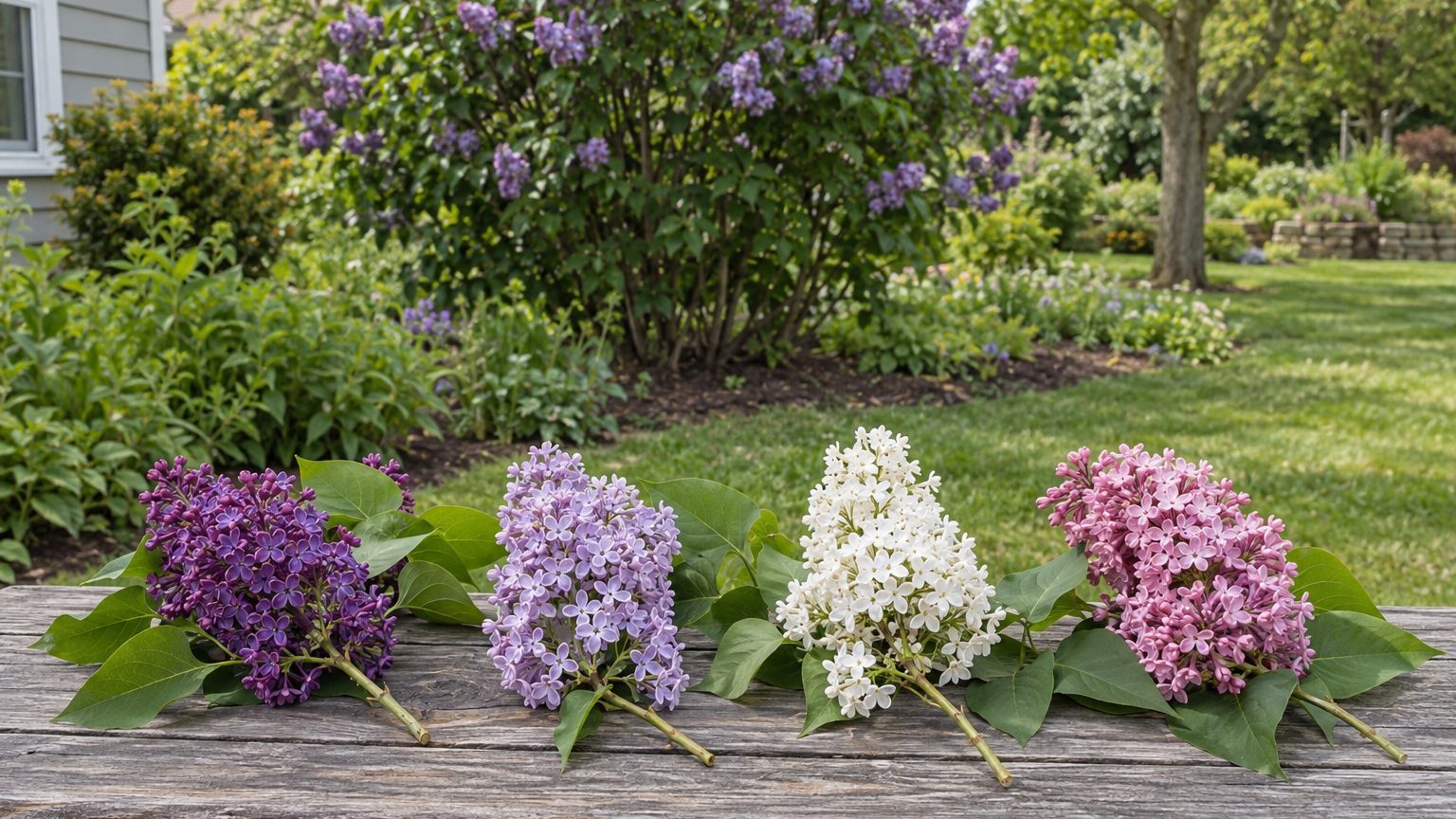
A lilac in full bloom, with its heavy fragrance drifting over the fence, is a lovely part of a prairie spring. In Alberta the flowers open from May into June, and the winters that plenty of shrubs can’t handle are exactly what a lilac wants. The real choice is which kind suits your yard.
Best Lilacs to Grow in Alberta

French lilacs, hyacinthiflora hybrids, dwarf Korean lilacs, Japanese tree lilacs and the reblooming Bloomerang series all suit Alberta. Lilacs need a cold winter rest to mature their flower buds, and the climate here provides it. Calgary sits in Canadian hardiness zone 4a, a rating separate from the USDA system.
French Lilacs

These are selections of the common lilac, Syringa vulgaris, and they are the best known of the group. Hundreds of cultivars exist, in many colors and floret shapes. Sensation has purple flowers edged with white, a good pick if you want something that stands out from the usual single purple.
Give them a sunny spot with good air circulation.
Hyacinthiflora Hybrids

These crosses between Syringa oblata and Syringa vulgaris are well suited to cold climates. They are very vigorous and look much like French lilacs, but they flower earlier.
That early start is the catch. Plant them only where May frosts are less frequent, such as a sheltered spot near the house rather than the bottom of a cold slope.
Dwarf Korean Lilac
Syringa meyeri, also called the little-leaf lilac, usually grows about 5 ft. (1.5 m) tall and just as wide. It is a profuse bloomer, with small, elegant violet blooms in great profusion.
Its compact habit has made it a favorite parent in breeding programs for new lilacs. It fits a smaller bed or a front border where a full-size lilac would crowd the walkway.
Japanese Tree Lilac
The June blooms of the Japanese tree lilac bring the lilac season to a brilliant close. Because it flowers later than the common lilac, it extends the show well after your French lilacs have faded.
That late bloom also means its flowers are less exposed to a stray spring frost.
Bloomerang Series
The Bloomerang series is powdery mildew resistant and reblooms. Mildew resistance means less worry about white film on the leaves in a damp spell, and the rebloom brings another round of color.
It suits a gardener who wants mildew resistance and flowers that return.
Alberta — the year and the numbers
- State
- Alberta
- Hardiness zones
- 4a
- Last spring frost
- May 21
- First fall frost
- September 16
- Annual rain
- 17 in
- Lawn zone
- cool-season
- Source
- Environment and Climate Change Canada — Canadian Climate Normals 1981-2010, station CALGARY INT'L A · Calgary
How to Choose a Lilac for an Alberta Garden
Start with what your yard throws at a shrub, then match the type. Lilacs ask for a sunny site and a real winter, so most of the decision comes down to frost exposure, available room and how much care you want to give.
The table pairs each common situation with the lilac that fits it.
| Your situation | What suits it in Alberta | Why |
|---|---|---|
| Very cold winter | French lilacs | Lilacs are adapted to cold zones and need winter cold to set flower buds |
| Frost-prone spring spot | Japanese tree lilac | It blooms in June, later than the early hybrids |
| Sheltered, warmer corner | Hyacinthiflora hybrids | They bloom earlier, so shelter helps protect the flowers from frost |
| Small space | Dwarf Korean lilac | It stays compact, about 5 ft. (1.5 m) wide |
| Little time for care | Bloomerang series | It resists powdery mildew and reblooms |
| Hot, humid stretch of summer | Bloomerang series | Lilacs struggle in hot, humid summers, and mildew resistance helps |
If your yard is open and sunny with air moving through, French lilacs are worth considering. Put the early hybrids where they are shielded from late cold, and save the small types for beds close to the house.
Which Lilacs Suit Different Parts of Alberta
Alberta is not one climate, and spring frost is where the differences matter most for choosing a lilac. Calgary’s average last spring frost falls on May 21, which is only a midpoint, since in half of years frost comes later.
- Calgary and the surrounding plains: Cold winters suit lilacs here, but early hyacinthiflora hybrids need a sheltered spot because frost can still arrive after they open.
- The foothills: Upland districts run behind Calgary in spring, so later bloomers such as the Japanese tree lilac and French lilacs are safer than early hybrids.
- Peace River country and the north: Northern districts also run behind Calgary, so choose later-opening types and expect the bloom to arrive later in the season.
Wherever you garden, give lilacs a sunny site with good air circulation.
Lilac Buying Mistakes to Avoid in Alberta
Choosing a Lilac Bred for Mild Winters
Lilacs need a cold winter rest to mature their flower buds, so types from warmer climates tend to struggle here and bloom poorly. Stay with lilacs adapted to cold zones, such as French lilacs and the cold-hardy hybrids, and check the plant tag before you buy.
Planting an Early Bloomer in a Frost Pocket
Hyacinthiflora hybrids are hardy shrubs, but their early flowers are easy to lose to a May frost. Planting them in a low spot where cold air settles can cost you the whole season’s bloom.
Pick a sheltered position, or choose a later lilac such as the Japanese tree lilac for the exposed corners.
Buying a Pot Without Knowing the Mature Size
A small potted lilac can grow into a large shrub that overwhelms a doorway or walk. A dwarf Korean lilac usually reaches about 5 ft. (1.5 m), and occasionally as much as 8 ft. across.
Read the tag for the adult size and leave room for it. Cutting an overgrown lilac back hard in late winter will renew it, but it will not flower for a few years afterward.
Where to Get Lilac Advice in Alberta
Alberta has no county extension office, so local help comes from the province and from people who garden nearby. The dates follow a comparable northern climate, so confirm local timing with a nearby source.
- Alberta Agriculture and Irrigation publishes provincial gardening information you can check any time of year.
- A local garden center can tell you which lilacs it stocks have done well in your neighborhood, and spring is a good time to ask.
- A garden society or provincial gardening group can confirm local bloom and pruning timing, and members often share what has worked in your area.
Common Questions
When Do Lilacs Bloom in Alberta?
Lilacs bloom from May into June. The common lilac opens first, and the late lilacs and tree lilacs come into flower in June.
When Should You Prune Lilacs in Alberta?
Prune in June, right after the flowers fade, because a lilac sets next year’s flower buds in summer, soon after it flowers. Pruning in late summer, fall or winter cuts off the next spring’s flowers. Late winter, in March or April while the plant is dormant, also works, at the price of that spring’s flowers.
Can You Cut Back an Overgrown Lilac?
Yes. Cut it back hard in March or April, while it is dormant. Expect no flowers for a few years afterward, since a lilac blooms on last year’s wood.