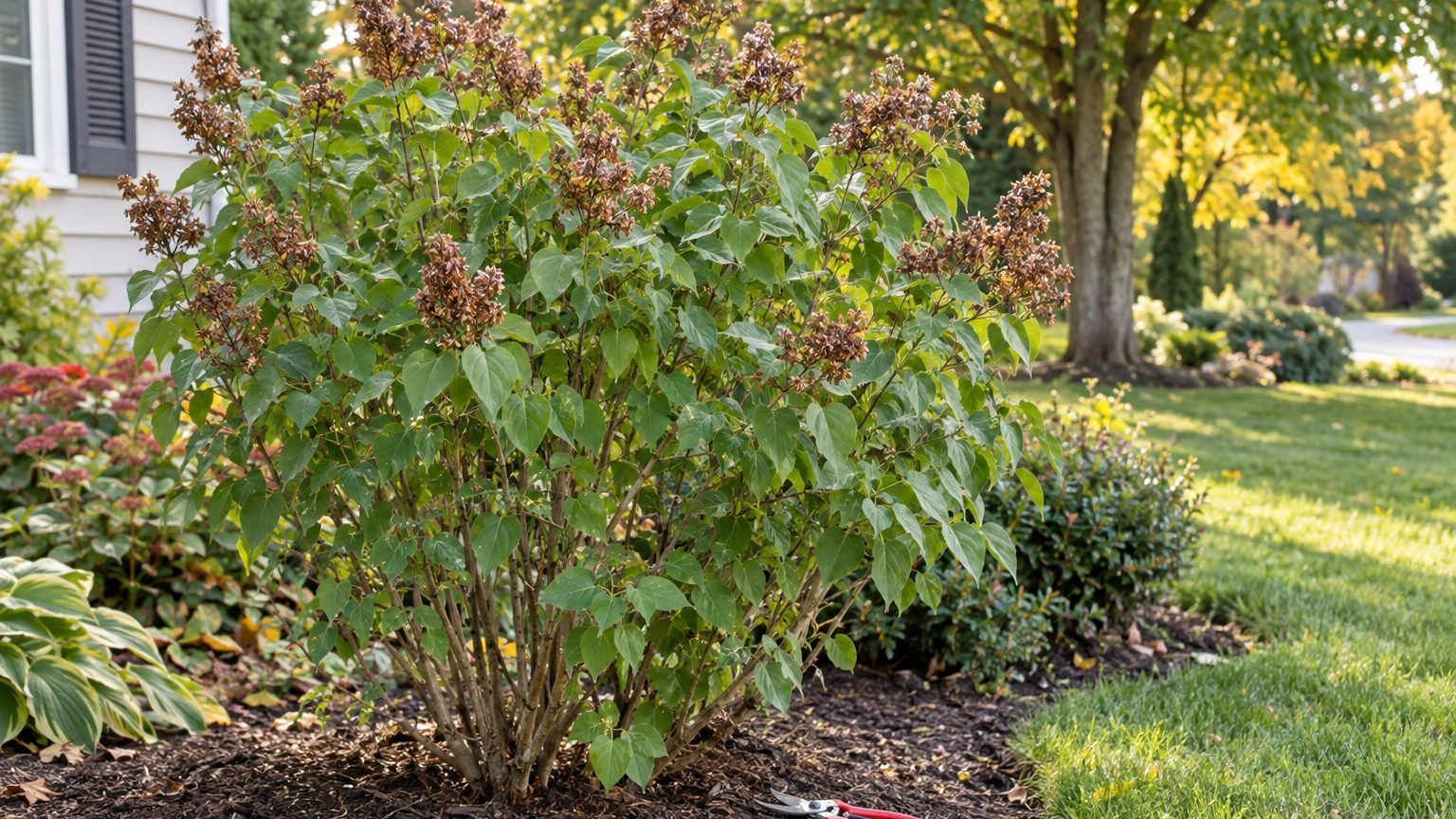
A lilac in full bloom smells like late spring, and soon afterward the same shrub is hanging on to brown, spent flower clusters. That brown stage is the cue. In Wisconsin, the pruning saw comes out just after the flowers fade, before next year’s buds start to form.
When to Prune Lilacs in Wisconsin

Prune lilacs in June, right after the flowers fade. Common lilacs open in May, and the late and tree lilacs carry bloom into June, so the pruning window follows whichever lilac you grow. Buds for next spring form soon after flowering, and cutting then keeps them.
| Type of pruning | When in Wisconsin | Why |
|---|---|---|
| Routine shaping and removal of spent flowers | June, right after the flowers fade | Next year’s flower buds are not yet set, so nothing is lost |
| Thinning cuts on an older lilac | March or April, while the shrub is dormant | Easy to see the structure, but it costs that spring’s flowers |
| Hard renovation of an overgrown lilac | March or April | After a hard cut, the shrub renews itself but skips flowering for a few years |
Late winter is a fallback for ordinary pruning: March or early April works while the lilac is dormant, at the cost of that spring’s flowers.
Wisconsin — the year and the numbers
- State
- Wisconsin
- USDA zones
- 3b-6a
- Last spring frost
- April 16 to April 29
- First fall frost
- October 17 to October 29
- Annual rain
- 35 in
- Lawn zone
- cool-season
- Source
- NOAA NCEI 1991-2020 Climate Normals, 32F freeze probabilities · Milwaukee
How to Tell When Your Lilacs Are Ready to Prune
The shrub gives clearer signals than a calendar page, and they show up in a predictable order.
- Petals turn brown and the flower clusters droop, which means the bloom is over and pruning can start.
- Tight young buds begin to form on the new wood, so finish any cutting in June.
- Late lilacs and tree lilacs still carry fresh flowers in June, so leave them alone until their own blooms fade, even if a neighbor’s common lilac is done.
- A shrub with bare, thick stems at the base and leaves only at the top is overgrown and a candidate for renovation in March or April instead.
Cutting a branch with live flowers on it takes away that display, so wait for brown, not for a date.
Should You Prune Lilacs in Fall or Winter in Wisconsin?
Fall pruning is a mistake. A lilac blooms on last year’s wood and sets next year’s flower buds in summer, so pruning in late summer, fall or winter cuts off the next spring’s flowers. The shrub will not die from it, but the show is gone for the year.
Late winter is different, because it is a deliberate trade. Cutting in March or April while the shrub is dormant gives a clear view of the branches, and it suits a rough reshaping. The price is that spring’s bloom, since the buds on those stems come off with the wood.
A heavily overgrown lilac is the case where that price is worth paying. Cutting it back hard in March or April lets it send up fresh stems, though it will not flower for a few years afterward. Lilacs also need a cold winter rest to mature their flower buds, and Wisconsin winters supply it.
How Lilac Pruning Time Shifts Across Wisconsin
Wisconsin covers hardiness zones 3b to 6a on the USDA system, so the bloom, and therefore the pruning, does not arrive everywhere together. The rule stays the same: prune after your own shrub finishes flowering.
- Northwoods and the far north: Colder springs push bloom later, so watch the flowers fade before you prune.
- Southern Wisconsin, around Madison and Milwaukee: Spring warms sooner, so watch the common lilacs finish flowering before you prune.
- Lake Michigan shore: The lake slows spring warming along the coast, so bloom can lag behind inland yards a short drive away.
Watch the flowers, not nearby yards.
Where to Get Lilac Advice in Wisconsin
Local questions about an old, leggy shrub or one that stopped flowering get the best answers from people who see Wisconsin yards. The state extension service has guidance written for cold-climate lilacs, and your county office can look at a specific shrub.
- Visit University of Wisconsin Extension for lilac guides, and read them before the flowers fade.
- Call or stop by your county extension office in late spring with photos of the shrub, so staff can say whether a light trim or a renovation fits.
- Take a cutting with spent flowers to the office in June if you are unsure what you grow.
Common Questions
Can You Prune Lilacs in Summer in Wisconsin?
Only in early summer, and only soon after the flowers fade. Waiting into July risks cutting off buds that are already forming for next year.
What Lilacs Do Well in Wisconsin?
Lilacs suit cold winters, and they thrive in sunny sites with good air circulation. They struggle in hot, humid summers, so a breezy spot helps. Hybrids of Syringa oblata and Syringa vulgaris are well suited to cold climates.
Why Did My Lilac Not Bloom After Pruning?
Pruning at the wrong time is a common cause, especially a cut in fall or winter that removed the buds. A shrub renovated hard also skips blooming for a few years. Check when the cutting happened and whether the shrub gets full sun.