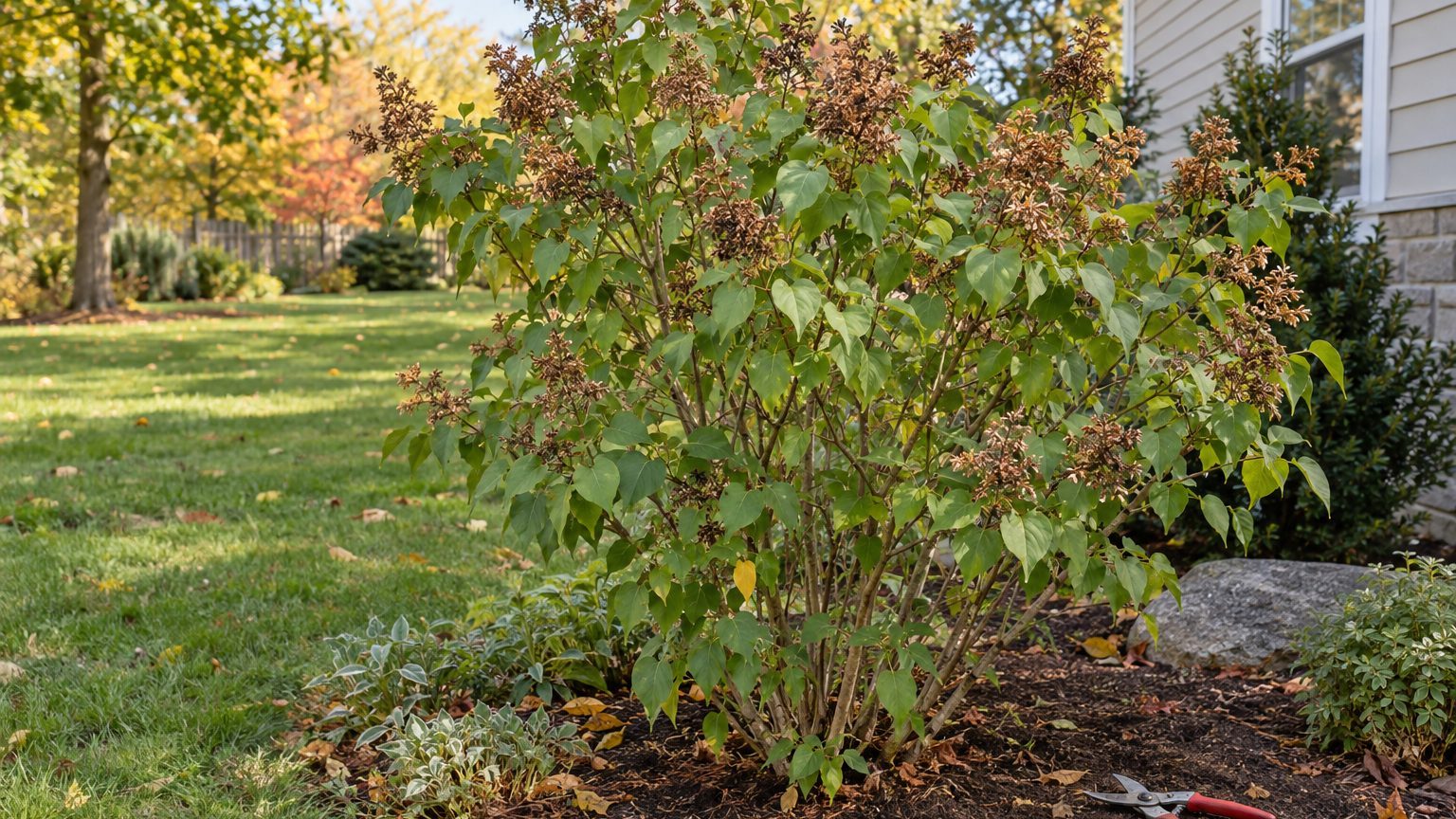
A lilac that sits wrapped in spent, browning flower clusters is telling you the pruning window has just opened. In Washington, that window comes soon after the blooms fade, because the shrub starts setting next year’s flower buds almost at once.
When to Prune Lilacs in Washington

Prune lilacs in June, right after the flowers fade. Pruning can also happen in May when an early bloom finishes sooner. Lilacs here flower mostly in May, and April or June blooms follow the season’s pace. Lilacs bloom on last year’s wood, so cutting later removes next spring’s flowers.
| Type of pruning | When in Washington | Why |
|---|---|---|
| Routine upkeep: deadheading and light shaping | June, right after the flowers fade (May if the bloom finished early) | Next year’s flower buds form in summer, so cuts made soon after flowering leave them in place |
| Thinning an overgrown, older lilac | June, right after the flowers fade | Thinning right after bloom protects next spring’s flowers |
| Reblooming lilacs | Spring, after the main flush | Spring pruning suits reblooming lilacs; once-blooming lilacs are pruned after flowering |
Cutting in July is the usual mistake, since it removes the flower buds for the next growing season. Winter cuts do the same, so even heavy renewal should wait until the flowers fade.
Washington — the year and the numbers
- State
- Washington
- USDA zones
- 4a-9a
- Last spring frost
- February 27 to March 18
- First fall frost
- November 13 to November 30
- Annual rain
- 39 in
- Lawn zone
- transition-season
- Source
- NOAA NCEI 1991-2020 Climate Normals, 32F freeze probabilities · Seattle
How to Tell When Your Lilacs Are Ready to Prune
Your calendar can drift with a cool or warm spring, so the shrub itself is the better clock.
- Flower clusters that turn brown and droop are the starting signal, because the show is over and the shrub is moving on to next year’s buds.
- Petals dropping around the base show that the bloom is ending.
- Fresh green leaves filling in behind the faded clusters show the plant is putting energy into new growth, which is the growth you want to shape.
- Faded flowers are the important signal, because next year’s buds begin forming soon afterward.
- Cut a spent cluster back to healthy leaves without removing the nearby growth.
If the flowers are still fresh, wait. If they are brown and the leaves have filled in, the shrub is ready.
Should You Prune Lilacs in Fall or Winter in Washington?
No. Fall and winter cuts take off the buds that were set the summer before, so the following spring brings few or no flowers. Winter pruning removes those buds and eliminates the next spring’s blooms, a point Washington growers hear again and again from local gardening advisers.
An overgrown lilac still follows the same post-bloom schedule. Renew it with deeper cuts right after the flowers fade, before next year’s buds form. The shrub then rebuilds with fresh stems and returns to bloom afterward.
For a lilac that already flowers well, leave the saw in the shed until the blooms have faded. Light shaping and removal of dead or crossing branches is easiest when the leaves are on, since you can see which stems are alive.
How Lilac Pruning Time Shifts Across Washington
The same rule of pruning right after the bloom holds statewide, but the bloom itself arrives at different times depending on where you garden.
- Puget Sound and the coast: Prune each shrub when its flowers fade; May is possible when bloom finishes early.
- Yakima Valley and the rest of eastern Washington: prune when the flowers fade, and check with your local extension office for the timing there.
- Higher ground in the Cascades foothills and the northeast: Let the fading flowers, rather than a regional assumption, set the pruning date.
Watch your own shrub and let fading flowers set the date rather than the calendar.
Where to Get Lilac Advice in Washington
Local growers have worked out which lilacs thrive near you, and the people who answer questions for a living are easy to reach.
- Washington State University Extension has plant guides for home gardeners, and spring is the best time to browse them while lilacs are in bloom.
- Your county extension office can answer questions about a particular shrub; describe when its flowers faded.
Common Questions
Can You Prune Lilacs in July in Washington?
Do not prune lilacs in July if you want flowers the next spring. Summer cuts that late take off the flower buds for the next spring, so the shrub will have little to show.
What If You Missed the Window and the Lilac Is Already Past Bloom?
If the post-bloom window has passed, wait until the following year and prune right after flowering. Heavy cutting waits until the following year, right after flowering.
Do Lilacs Bloom Well in Washington?
They do best where winters are cold, because the buds need that winter rest to mature. Hot, humid summers are harder on them.