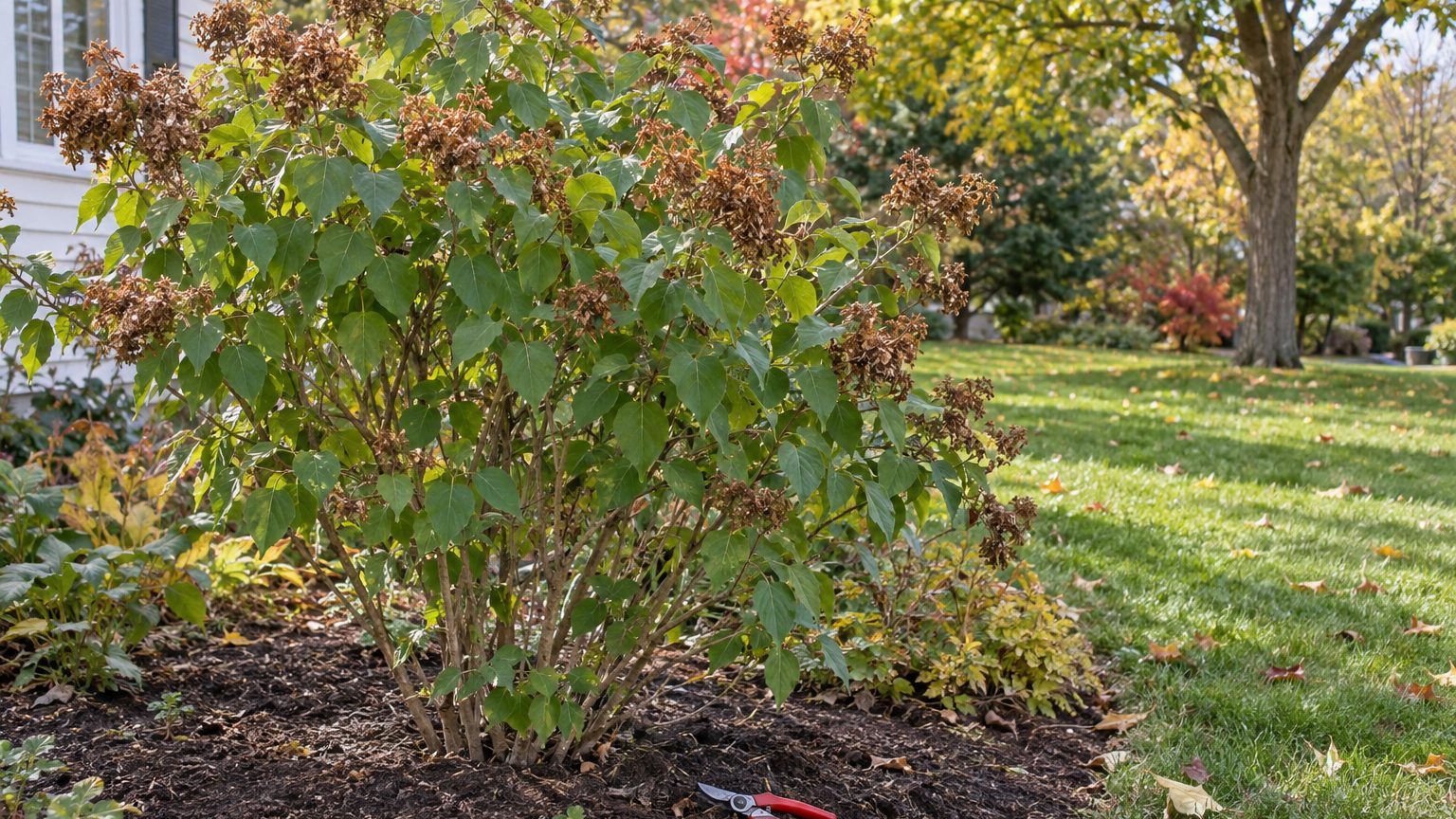
A lilac that looked full of purple in spring is already setting the buds for next year by the time the last cones turn brown. In Oklahoma, pruning is a quick job done right after flowering, and the cold-winter rest these shrubs want is the bigger question for the yard.
When to Prune Lilacs in Oklahoma

Prune right after the last flowers fade. Oklahoma’s spring decides the date, so the sign matters more than the calendar. Lilacs bloom on last year’s wood and set next year’s flower buds soon after they finish flowering, so the window is short.
| Type of pruning | When in Oklahoma | Why |
|---|---|---|
| Maintenance pruning | Right after the flowers fade | The new flower buds have not formed yet, so timely cuts preserve the next bloom |
| Cutting in late summer, fall or winter | Skip these seasons | Stems carry the next spring’s buds and go bare of flowers |
Prune lilacs right after the flowers fade. Climate also shapes every decision here. Lilacs need a cold winter rest to mature their flower buds, and they struggle in hot, humid summers, so a lilac in Oklahoma may flower poorly even when it is pruned perfectly.
Oklahoma — the year and the numbers
- State
- Oklahoma
- USDA zones
- 6a-8a
- Last spring frost
- March 28 to April 10
- First fall frost
- October 29 to November 8
- Annual rain
- 36 in
- Lawn zone
- transition-season
- Source
- NOAA NCEI U.S. Climate Normals 1991-2020, 32F freeze probabilities · Oklahoma City
How to Tell When Your Lilacs Are Ready to Prune
Your own shrub gives the signal, and it arrives a little earlier or later each spring depending on how the weather ran.
- The last flower clusters have faded and turned brown, which means the show is over and pruning can start.
- Petals are dropping from the cones, a sign that the plant is already shifting energy toward next year’s buds.
- The cut stems you remove should be last year’s growth that just flowered, since that wood is what carries blooms.
- New leafy growth is pushing out below the spent clusters, so you can see exactly where to cut without guessing.
- If the shrub barely flowered at all, there is little to remove, and light shaping is all it needs.
Once the cones are brown, do not wait long, because the buds for the following spring are forming soon after.
Should You Prune Lilacs in Fall or Winter in Oklahoma?
No. A cut made in late summer, fall or winter takes off the buds that would have opened next spring. The shrub will not look different on the day you prune, but the pruned branches may stay green and bare the following spring.
A hard reshaping cut in late winter feels tempting, since the branches are bare and easy to see. That cut removes the buds for the coming spring, so it trades flowers for renewal. If a neglected shrub needs real work, wait for the flowers to fade and make the cuts then.
Wood that is clearly dead or broken is a separate matter, and it can come out whenever you notice it, because it carries no buds worth saving.
How Lilac Pruning Time Shifts Across Oklahoma
Oklahoma spans USDA hardiness zones 6a to 8a, and other parts of the state differ from one another in how much cold the shrub gets. The rule stays the same everywhere, prune after the flowers fade, but the odds of a good bloom change from place to place.
- The Panhandle: Winters here are colder than in the rest of the state, which gives lilacs the chilling they want. Lilacs may flower more reliably after a cold winter, and pruning follows when the blooms fade.
- Tulsa and Oklahoma City: Winters are milder, and summer heat and humidity press on the shrub. Lilacs bloom, but results vary from yard to yard, and an early-blooming “Southern lilac” suits these cities better than an old common lilac.
- Southeast Oklahoma: Hot, humid weather is hard on common lilacs in southeast Oklahoma. Powdery mildew follows long humid stretches, and flowering can be thin.
Wherever you garden, your own county’s weather sets the spring calendar, so watch the shrub rather than the date.
Where to Get Lilac Advice in Oklahoma
A lilac that sulks in Oklahoma is common enough that local advice pays off. Oklahoma State University Extension publishes guidance for the state’s yards, and your county office can speak to the conditions in your own town.
- Check the Extension website for lilac and flowering-shrub guidance written for Oklahoma, ideally before you buy a new shrub.
- Call or visit your county Extension office with photos of the shrub if it flowers poorly or the leaves look powdery.
- Ask which lilac varieties do well in your county, then pick your pruning day the morning the last flower clusters turn brown.
Common Questions
Which Lilacs Suit Oklahoma Yards?
Early-blooming varieties sold as Southern lilacs, or lilacs for the South, are the usual suggestion for warm climates. They usually grow and bloom, though they are not as fragrant as old-fashioned lilacs. Hybrids such as ‘Angel White’ and ‘Blue Boy’ are also worth trying. Even low-chill types do their best with a cold winter rest.
Why Is a Lilac Not Flowering in Oklahoma?
Look at when the shrub was last cut and how the winter went. A shrub pruned in late summer, fall or winter, with healthy leaves but no flowers, may have lost its buds to pruning. A shrub left alone, with stems untouched, that still bloomed little after a mild winter may not have received enough cold. Avoid late pruning and keep watching how the shrub responds to winter cold.
Do Lilacs Get Powdery Mildew in Oklahoma?
Long stretches of heat and humidity invite powdery mildew on common lilacs, and it shows as a pale, dusty coating on the leaves. It tends to appear during periods of high heat and humidity. Thinning the shrub right after flowering opens it up, and your county Extension office can confirm the problem from a leaf sample or photo.