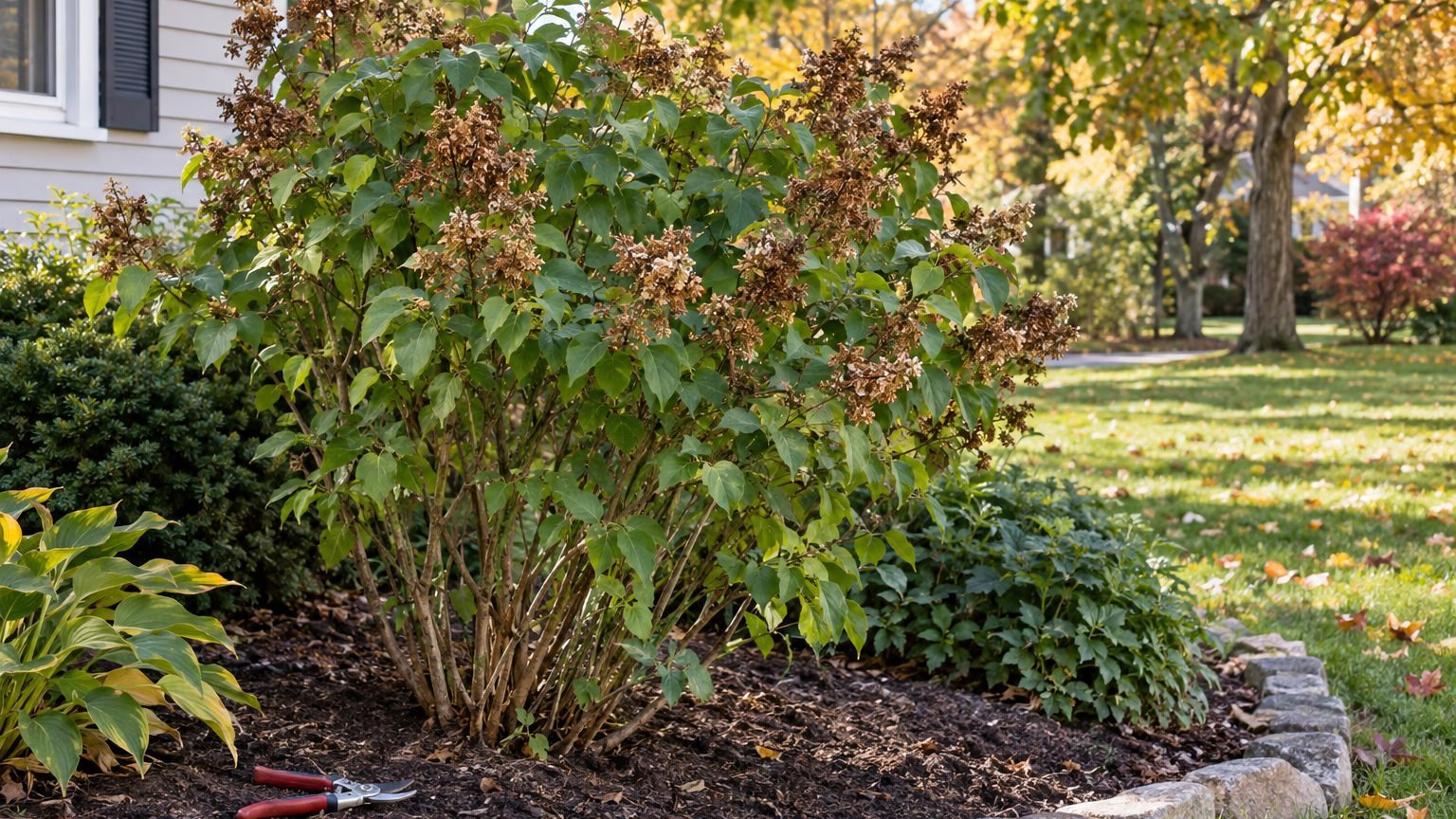
A lilac that has finished flowering looks tired afterward, with brown clusters hanging on and the leaves already doing the work. That is the signal to reach for the pruners.
When to Prune Lilacs in Northwest Territories

Prune lilacs in June and July, right after the flowers fade. The territory has no local extension page for lilac timing, so these months follow the nearest comparable climate. Confirm local timing with a garden centre, a garden society or a territorial gardening group.
| Type of pruning | When in Northwest Territories | Why |
|---|---|---|
| Routine maintenance (spent flowers, crossing or weak stems) | June, July, right after the flowers fade | Next year’s flower buds form soon after bloom, so prune as soon as the flowers fade |
| Thinning an old, overgrown lilac | Late winter | A hard cut works, but the shrub will not flower for a few years afterward |
Lilacs bloom on the previous year’s growth, which is why the window is tied to the flowers and not to a date on the calendar. Late varieties open later in June, and their pruning window slides later with them. Reblooming lilacs follow the same logic of pruning soon after the spring flush, and a local garden centre can tell you how a given variety behaves in your yard.
Northwest Territories — the year and the numbers
- State
- Northwest Territories
- Hardiness zones
- 1b
- Last spring frost
- May 25
- First fall frost
- September 18
- Annual rain
- 11 in
- Lawn zone
- cool-season
- Source
- Environment and Climate Change Canada — Canadian Climate Normals 1981-2010, station YELLOWKNIFE A · Yellowknife
How to Tell When Your Lilacs Are Ready to Prune
The plant gives clearer signals than any date, and they matter most in a short northern season where flowering can start in late May or wait until June.
- The flower clusters turn brown and dry, which means the show is over and cutting will not cost you any bloom.
- Petals have dropped, so removing the spent clusters right after the flowers fade is the time to prune.
- Do not use leaf color as your cue; wait until the flowers fade.
- Use the fading flowers, not new shoots, as the signal to prune.
- Your variety is a late bloomer that is still in flower while neighbors’ shrubs have finished, so wait for your own plant’s flowers to fade.
If you are still looking at fresh flowers, put the pruners away and wait until the display is over.
Should You Prune Lilacs in Fall or Winter in Northwest Territories?
No. Cutting in fall or winter removes the flower buds that formed the summer before, so you lose that spring’s flowers. A lilac pruned in the cold months will leaf out fine and simply have nothing to show.
An exception is a lilac that has grown out of bounds. An overgrown shrub can be cut back hard in late winter, and it will regrow vigorously. Expect no flowers for a few years while it rebuilds, so do this only when the shrub is too tall, too bare at the base or too dense to be worth keeping as it is.
For routine shaping, leave the cold months alone and wait for the flowers to fade in June or July.
How Lilac Pruning Time Shifts Across Northwest Territories
The territory stretches across a long north-south range, and flowering follows the local season, so your pruning window moves with it.
- Yellowknife: prune lilacs right after the flowers fade, in June or July. Prune once the flowers have faded in June or July, following your own shrub and not a neighbor’s.
- Fort Smith and Hay River: prune lilacs right after the flowers fade, in June or July.
- Inuvik: prune lilacs right after the flowers fade, in June or July. Choose a lilac that suits your garden.
In every community the rule is the same: watch the flowers, then cut.
Where to Get Lilac Advice in Northwest Territories
For local help, ask the territorial government and gardeners who grow in your climate. The Government of the Northwest Territories agriculture services are the starting point for questions on what grows in the territory.
- A local garden centre can tell you which lilac varieties have survived winters in your community, so ask before you buy or prune.
- A garden society or territorial gardening group can confirm when lilacs finish flowering where you live, which is worth checking in early summer.
- Territorial agriculture staff can answer broader questions about hardy shrubs, and a call before the next growing season gives you time to plan.
Common Questions
Can Lilacs Survive Winters in the Northwest Territories?
Lilacs need a cold winter rest to mature their flower buds, so they suit cold climates well. The reference city, Yellowknife, is in Canadian hardiness zone 1b, which is a separate system from the USDA zones and does not convert to them. Choose hardy varieties and ask a local garden centre which ones have done well nearby.
What If Your Lilac Is a Late Bloomer?
Late-flowering varieties open after the common lilac, often in the second or third week of June in northern gardens. Wait for the flowers to fade on your own shrub, and use July if the blooms finish later.
Should You Wait for the Last Spring Frost Before Pruning?
No. At Yellowknife the last spring frost falls on average on May 25, and in one year out of two it comes later. That date marks frost risk, not the pruning window, which only opens after the flowers fade.