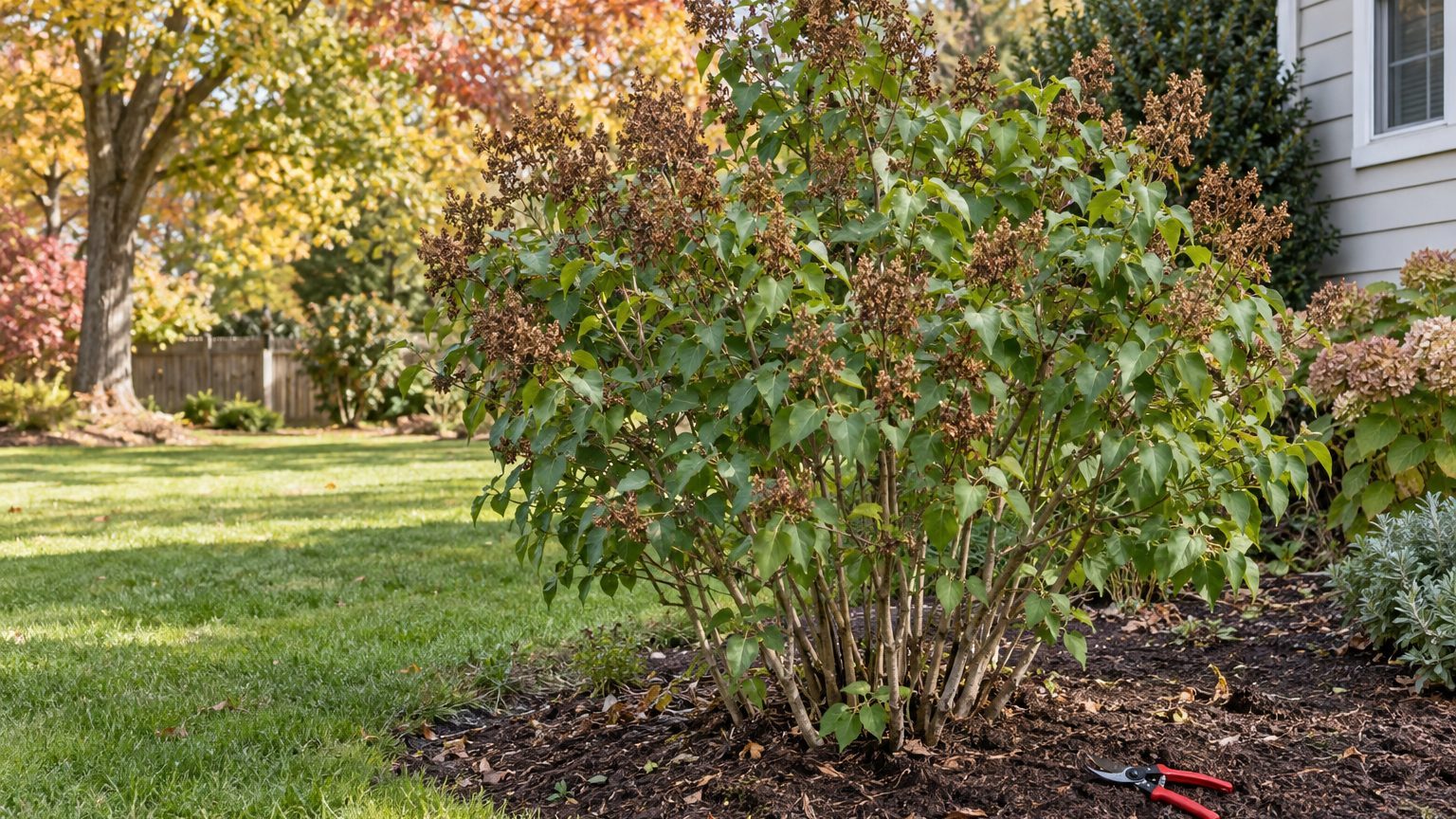
Lilac flowers fade to brown by the end of spring, and that brown is the cue to pick up the pruners. In British Columbia, the cut comes soon after the last blooms drop, before the shrub starts setting next year’s flowers. Timing matters more than technique here, and a few simple signs keep you on track.
When to Prune Lilacs in British Columbia

Prune in June, right after the flowers fade. If your lilac finished early, it can also be done in May. British Columbia has no local extension page on lilac timing, so these dates follow the nearest comparable climate; confirm them with a local garden centre, garden society or provincial gardening group.
The reason is the shrub’s calendar. A lilac blooms on last year’s wood and sets next year’s flower buds in summer, soon after it flowers, so late cuts remove the show before it exists.
| Type of pruning | When in British Columbia | Why |
|---|---|---|
| Yearly shaping and removal of spent flowers | June, or May if the blooms finished early | Pruning right after bloom avoids removing next year’s buds |
| Cuts in July, late summer, fall or winter | Avoid | The buds are already set, and cutting them off cancels the next spring’s flowers |
An old, crowded lilac follows the same after-bloom timing when you thin it. Expect fewer flowers the following spring, because some of the flowering wood goes with the cut.
British Columbia — the year and the numbers
- State
- British Columbia
- Hardiness zones
- 9a
- Last spring frost
- March 18
- First fall frost
- November 10
- Annual rain
- 47 in
- Lawn zone
- transition-season
- Source
- Environment and Climate Change Canada — Canadian Climate Normals 1981-2010, station VANCOUVER INT'L A · Vancouver
How to Tell When Your Lilacs Are Ready to Prune
Your lilac announces its own schedule, and it matters more than the date on the calendar, since a cool spring can push flowering later.
- The flower clusters turn from fresh color to dull brown, which tells you the bloom is over and pruning can begin.
- Petals litter the ground under the shrub, a sign the flowers are spent and the stems can be cut back safely.
- New green leaves are fully open and the shrub looks like foliage rather than flowers, so you can see which stems are dead, crossing or crowded.
- Small green shoots start pushing near the base of the older stems, a reminder that growth for next year’s buds is already underway and the window is closing.
- By July the opportunity has passed, because cutting then takes off flower buds for the next growing season.
Trim the faded clusters just below the flower head, and leave the new growth below it alone.
Should You Prune Lilacs in Fall or Winter in British Columbia?
No. Cutting in fall or winter removes the buds that would open the following spring, so the shrub looks tidy and then fails to flower. The buds are sitting on the stems all winter, invisible and easy to mistake for bare twigs.
A late-winter shaping cut costs flowers in the same way. Whatever wood you remove takes its buds with it, and the bloom shrinks to what is left. If a lilac is overgrown, it is better to wait for the next June and then thin it after the flowers fade. Missing the next bloom is the price of cutting at the wrong time, and you can avoid it by holding off.
How Lilac Pruning Time Shifts Across British Columbia
The province covers coast, interior valleys and cold northern country, so the same June task can slide a little depending on where you garden.
- Vancouver and the Lower Mainland: Spring comes early on the coast, with the last frost arriving on average March 18, though in one year out of two it falls later. Lilacs here flower and finish earlier than inland, so prune as soon as the blooms brown.
- The Okanagan: Inland valleys have colder winters than the coast, which suits lilacs, and spring arrives later. Flowering and pruning slide later with it, so watch the blooms rather than the date.
- Prince George and the northern interior: Northern and upland districts run well behind the coast. Pruning follows whenever the flowers fade, which may be well into June.
The rule stays the same everywhere: cut after the bloom, not before it.
Where to Get Lilac Advice in British Columbia
Local help comes from the province and from neighbors who grow lilacs. The province’s Agriculture and Seafood pages are the place to start for general plant care.
- Local garden centres can tell you when lilacs bloom in your town, so visit in May and ask what the shrubs nearby are doing.
- Garden societies and master gardener groups hold plant sales and workshops in spring, and members can tell you how local lilacs behaved last year.
- The provincial agriculture pages are worth a look before you plan a bigger renovation of an old shrub.
Common Questions
Can You Cut Lilac Flowers for a Vase?
Yes. Cutting blooms in May takes only the current flower heads, and the shrub sets next year’s buds afterward. Cut just below the cluster so you leave the new growth intact.
Do Lilacs Grow Well Along the British Columbia Coast?
They can, but they do best where winters are cold. Lilacs need a cold winter rest to mature their flower buds, and they struggle in hot, humid summers. On the mild coast a lilac may leaf out well yet bloom lightly, while an inland garden usually gives a better show.
Why Did a Lilac Not Bloom After Pruning?
Check when the cut was made and how the shrub is growing. If the pruning happened in July, fall or winter, the flower buds went with the branches. Heavy shade or repeated hard pruning may also explain the missing flowers; correct the pruning after bloom next June.