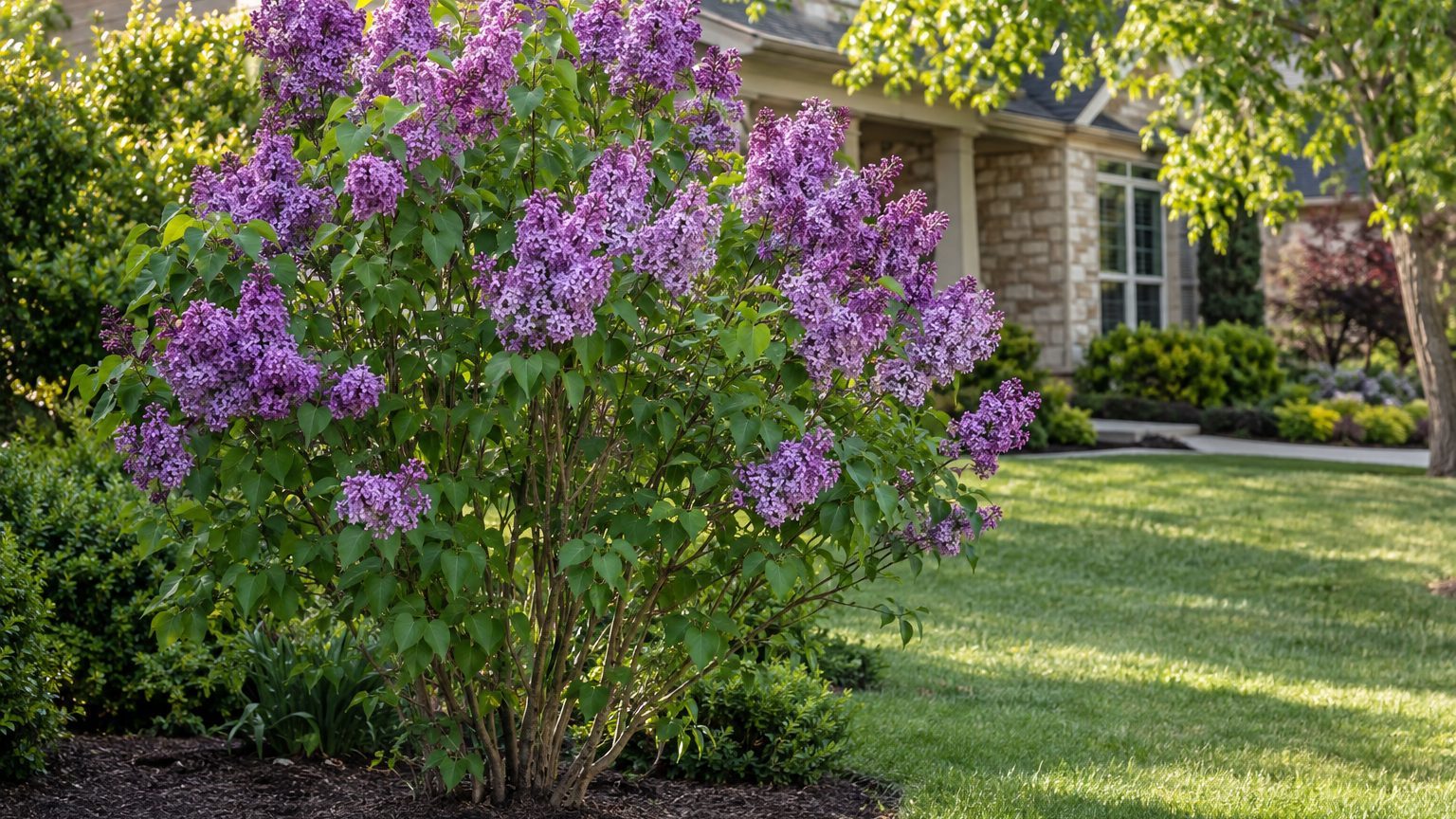
A lilac in a Texas yard is a gamble that pays off best in the cooler corners of the state. Where winters stay mild, the shrub often leafs out well and flowers thinly, if at all.
When Do Lilacs Bloom in Texas?

Lilacs in Texas bloom when the local spring arrives, so the show comes earlier along the Gulf than on the High Plains. A lilac’s year here follows a clear sequence of stages.
- In late winter, buds on a shrub that got enough cold begin to swell as the days lengthen.
- In spring, the flower clusters open on last year’s wood, and Southern types tend to bloom early with less fragrance than the lilacs of cold climates.
- Right after the last flowers fade, the shrub is ready for any pruning, because next year’s buds start forming soon afterward.
- Through summer, the plant sets those new flower buds while heat and humidity push mildew onto the leaves.
- In fall and winter, the shrub rests, and cold nights finish maturing the buds that will open in spring.
At the Houston reference location, the last spring freeze window runs from February 4 to March 1, but frost can still occur outside it. At the Houston reference location, the first fall freeze window runs from December 1 to December 19, reflecting the Gulf Coast’s short winter rest.
The USDA hardiness zone system places Texas somewhere between 6a and 10a, and Houston sits at the mild end. The Panhandle, North Texas and the Hill Country each follow their own calendar.
Texas — the year and the numbers
- State
- Texas
- USDA zones
- 6a-10a
- Last spring frost
- February 4 to March 1
- First fall frost
- December 1 to December 19
- Annual rain
- 52 in
- Lawn zone
- warm-season
- Source
- NOAA NCEI 1991-2020 Climate Normals, 32F freeze probabilities · Houston
Which Lilacs Grow Best in Texas?
Common lilacs struggle across much of Texas, and the reason is the climate. They need a cold winter rest to mature their flower buds, and they do poorly in hot, humid summers.
Types bred for warmer places give you better odds. Even those perform best after a long, cold rest, so expect modest results south of the Panhandle.
| Lilac type | How it does in Texas | Why |
|---|---|---|
| Common lilac (Syringa vulgaris) | Often struggles | High heat and humidity invite powdery mildew |
| Cultivars sold as heat tolerant | Frequently disappoint | They still do not thrive as well as in cooler climates |
| Southern lilacs, also labeled lilacs for the South | Usually grow and bloom | They flower early, though with less fragrance |
| Descanso hybrids | Worth trying | They were developed for warm climates |
| Low chill cultivars | Bloom with little chilling | They still do best with an extended, cold winter rest |
Among the Descanso hybrids, ‘Angel White’ and ‘Blue Boy’ are names to look for at a nursery. Ask for a Southern lilac by that label, and keep expectations realistic if your yard sits near the Gulf.
When to Plant, Prune and Feed Lilacs in Texas
Lilacs bloom on last year’s wood, so the pruning moment matters more than any other date. Cutting at the wrong time removes the flower buds the shrub has already made. Pruning has its own page, When to Prune Lilacs in Texas, so the table keeps to the signs.
| Task | Best timing in Texas | Why then |
|---|---|---|
| Prune | Right after the flowers fade | Next year’s flower buds form soon afterward |
| Hold the shears | Late summer, fall and winter | Cutting then removes the coming spring’s flowers |
| Leave the shrub alone | Through the cold weeks of winter | The cold rest matures the flower buds |
Because Texas climates differ sharply, ask your county extension office for planting advice suited to your area. Before adding fertilizer, have the soil tested so you feed what the soil lacks. A lilac already in leaf and bud should be fertilized only if the soil test shows a need.
How Lilac Bloom Time Changes Across Texas
Texas stretches across several climates, so a lilac bloom shifts with how cold the winter gets and how soon spring warms the soil.
- The Panhandle: Winters are colder here and spring arrives later, so lilacs get more winter rest than in southern Texas and bloom later.
- North Texas and the Hill Country: Spring comes earlier than on the High Plains, but summers are hotter, so mildew and weak bloom become more common.
- Houston and the Gulf Coast: Winters are mild and summers are humid, so bloom comes early when it comes at all, and Southern types are the realistic choice.
Pick the entry closest to your yard and treat the others as neighbors with a different clock.
Where to Get Lilac Advice in Texas
Texas A&M AgriLife Extension serves every county, and the local office can help diagnose a failing shrub or explain how to get your soil tested. The advice there fits your own climate rather than a national average.
- Your county extension office can explain how to collect a soil sample and use the results before you plant or feed.
- Contact the county office before bringing a sample, and ask what photos or plant material will help with diagnosis.
- Ask which Southern lilac or low chill cultivar suits your area before you buy.
Common Questions
How Can You Tell Powdery Mildew from Dust on Lilac Leaves?
Powdery mildew can leave a white coating in warm, humid weather, but wiping the leaf is not a reliable way to distinguish it from dust. Dust can settle on leaves after dry, windy days; if the coating is unclear, ask your county extension office to identify it.
Are Southern Lilacs as Fragrant as Northern Ones?
Southern lilacs usually grow and bloom well, but their scent is lighter than the lilacs gardeners know from colder climates. Plant one near a path or window if you want to enjoy what fragrance it has.
Do Southern Lilacs Bloom Earlier than Common Lilacs?
Yes. Varieties sold as Southern lilacs are early-blooming, so their flowers open ahead of a common lilac in the same yard. That also means a late freeze can catch the buds, so watch the forecast once they swell.