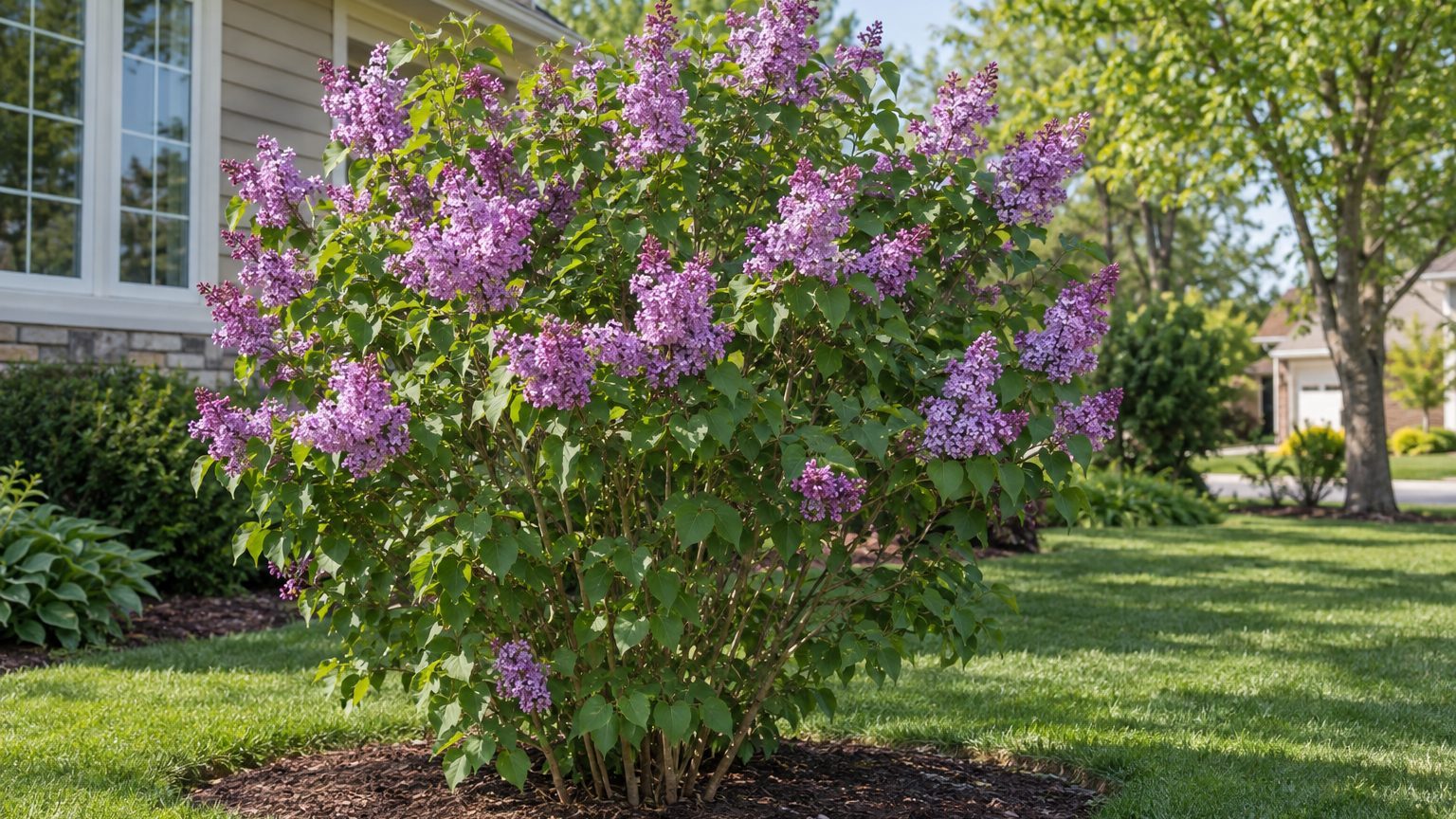
A lilac in full bloom fills a front yard with scent just as the spring garden hits its stride. In Iowa, that show has a predictable window, and the work that protects it follows a predictable rhythm through the year.
When Do Lilacs Bloom in Iowa?

Lilacs bloom in Iowa from April into May, and later species and cultivars carry the season into June. The shrub’s year runs like this.
- In early spring in Des Moines, a freeze can still return until somewhere between April 12 and April 24, so early buds on young growth sometimes meet a cold night.
- In April and May, the flowers open, with early hybrids first and common lilacs following, and the scent peaks while the leaves are still fresh.
- In May and June, right after the flowers fade, is the time for any shaping, because the shrub is about to start next year’s flower buds.
- Through summer, those new buds form on this season’s growth, so the shrub does best when left alone and kept in sun with good airflow.
- In Des Moines, the first freeze in fall arrives between October 14 and October 25, and the buds are already set and wait out the cold on the stems.
- Through winter, the shrub rests in the cold, which is what ripens those buds for the next April.
Those frost dates lean toward the mild end, so colder corners of the state can see frost a little later in spring and a little sooner in fall. The USDA hardiness zone system places Iowa between 4b and 6a, which means a lilac in the northern counties faces a harder winter than one in the south.
Iowa — the year and the numbers
- State
- Iowa
- USDA zones
- 4b-6a
- Last spring frost
- April 12 to April 24
- First fall frost
- October 14 to October 25
- Annual rain
- 37 in
- Lawn zone
- cool-season
- Source
- NOAA NCEI 1991-2020 Climate Normals, 32F freeze probabilities · Des Moines
Which Lilacs Grow Best in Iowa?
Lilacs are a natural fit here. They want a real winter, and Iowa provides one, along with the sunny, open sites they like.
Lilacs need that cold rest to mature their flower buds, and they struggle in hot, humid summers. In the milder south, good airflow and sun help the shrub through muggy stretches.
| Lilac type | How it does in Iowa | Why |
|---|---|---|
| Hybrids of S. oblata and S. vulgaris | Reliable, flowering in mid to late April | Well suited to cold climates, and they open ahead of other lilacs |
| Later species and cultivars | Open after the early types, into June | They stretch the bloom season past May |
| Lilacs in general | Thrive in USDA zones 3, 4 and 5 | They like sunny sites with good air circulation |
Common lilac, Syringa vulgaris, is a familiar shrub, and it sits in the May part of the season. If you plant a mix of early hybrids and later types, the flowers can run from mid-April into June instead of arriving all at once.
When to Plant, Prune and Feed Lilacs in Iowa
Lilacs bloom on last year’s wood and set next year’s flower buds in summer, soon after they flower. That habit decides the calendar. Prune right after the flowers fade, because cutting in late summer, fall or winter removes the next spring’s flowers.
| Task | Best timing in Iowa | Why then |
|---|---|---|
| Routine pruning and shaping | May to June, just after the flowers fade | The shrub has not yet set the buds for next spring |
| Hard renovation of an overgrown lilac | March to April, in late winter | The plant is dormant, though it will not flower for a few years afterward |
| Enjoying the blooms | April to May, with later types into June | Lilacs open in this window |
Choose a spot with full sun and open air, and go easy on fertilizer, since too much nitrogen grows leaves at the cost of flowers. The page for when to prune lilacs in Iowa goes further on cutting techniques.
How Lilac Bloom Time Changes Across Iowa
Iowa is wide enough that spring does not arrive everywhere at once, and lilacs follow the local warmth.
- Northern Iowa: Winters run colder and spring warms later, so lilacs open later than farther south and the show tends to land in May.
- Southern Iowa: Spring comes sooner here, so the early hybrids open earlier, though the longer, muggier summers put more stress on the shrub.
- The Driftless Area in the northeast: Hills and valleys make bloom uneven, with sunny, sheltered slopes opening ahead of low pockets where cold air settles.
Within the same yard, a shrub on the south side of a house can open ahead of another on the north side.
Where to Get Lilac Advice in Iowa
Iowa State University Extension publishes lilac guidance written for Iowa conditions, and the local county office can look at a problem shrub or a soil sample.
- The county extension office can identify a sickly or flowerless lilac if you bring a cutting or clear photos of the leaves and stems.
- Extension staff can explain how to submit a soil sample and what the results mean for your planting spot.
- Before adding any fertilizer to a lilac that blooms poorly, take the soil sample so you know what the ground needs.
Common Questions
Why Is a Lilac Leafy but Not Flowering?
Look at the light and at the leaves. A shrub that grows thick, dark green foliage and few buds, and sits under a tree canopy or beside a tall building, may be short on sun. Moving it or thinning the shade is the lasting fix.
Can You Cut Lilacs for a Vase?
Yes. Cut stems in the cool of the morning as the flowers open, taking them from different branches and keeping the cuts short. Cutting is a light form of pruning, so it should stay modest on a young shrub.
Why Do Lilac Leaves Turn White and Powdery in Summer?
A white, dusty coating on the leaves, especially on a crowded shrub in a damp, shaded spot, usually points to powdery mildew. It looks worse than it is and rarely harms the plant. Opening up the shrub so air moves through helps next summer.