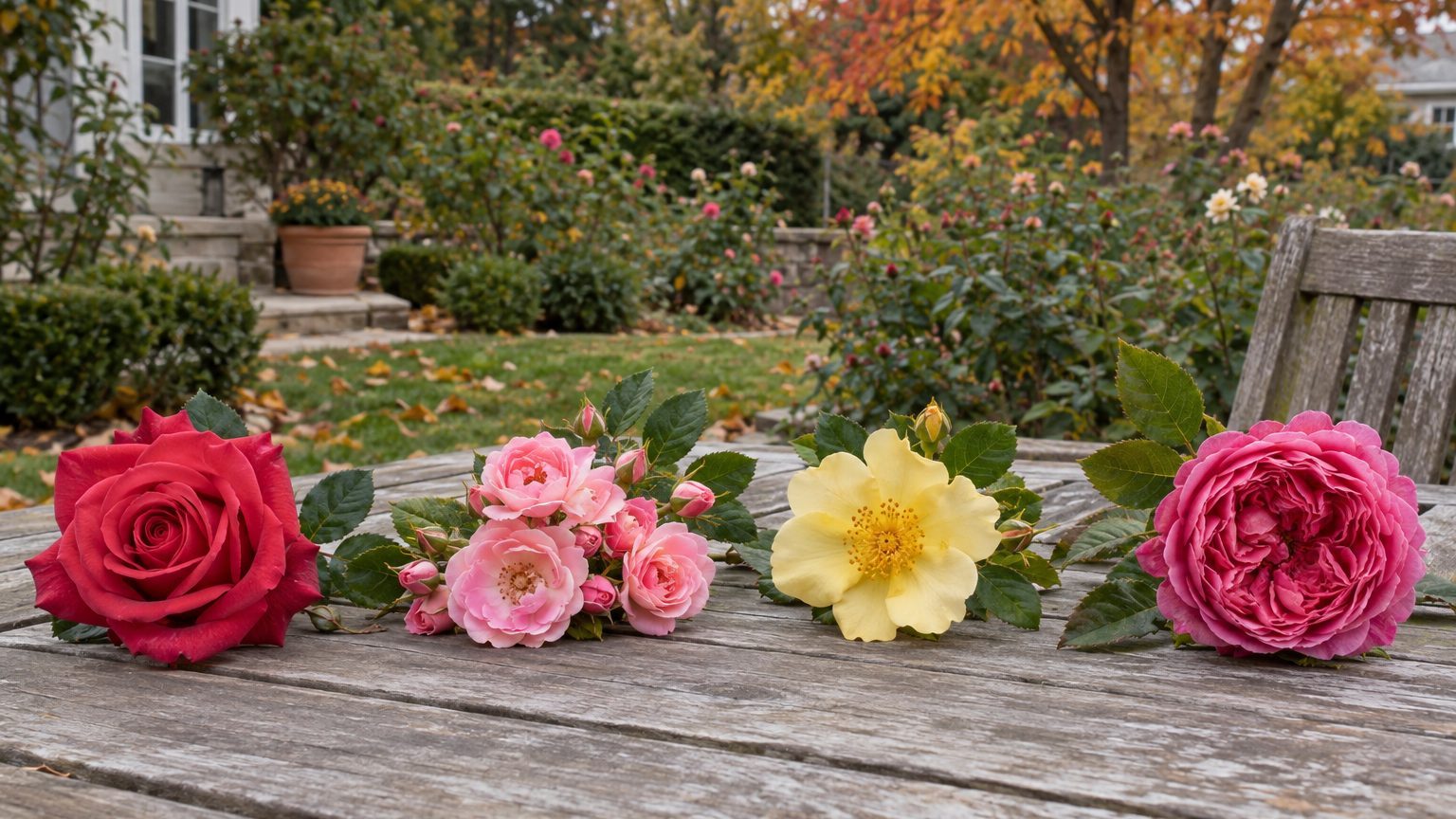
A rose that blooms through a muggy Virginia July with clean, glossy leaves is a rose that was chosen well in the nursery row. Winters here can bite in the mountains and soften at the coast, and summers bring humidity that invites leaf spots.
Best Roses to Grow in Virginia

Roses bred for cold hardiness and disease resistance hold up well across Virginia, because winters swing widely and humid summers favor leaf diseases. USDA hardiness zones here run from 5a to 8b, so a rose that sails through a coastal winter may need help in the mountains.
Knock Out Roses
Humid summers make black spot the usual complaint on roses. The Knock Out series has a reputation for strong black spot resistance, which is why it turns up so often in landscape plantings in this part of the country.
Plant them in full sun with room for air to move through the shrub, and feed from April through August.
Shrub Roses
Home gardeners often choose shrub roses, and they are generally easier than hybrid teas. Repeat-blooming modern shrub roses flower on new growth, so a spring pruning in March suits them. Look for labels that mention disease resistance, since hundreds of cultivars vary widely in how they handle summer humidity.
Old Garden Roses
Heirloom roses, meaning those in existence before 1867, tend to be very tolerant of cold. They also skip the hard annual pruning that many modern roses need, which can spoil their graceful shape and cut flowering.
Many bloom once a year on last year’s wood, so prune them right after they bloom, never in early spring.
Cold-Hardy Roses
A rose rated hardier than your garden’s own zone may need little or no added protection. That gives you a wide margin in much of Virginia and a useful head start in the colder western corners, where a tender rose would need mounding or wrapping.
Own-Root Roses
Own-root roses grow from cuttings rather than being grafted onto another rootstock. They may still need winter protection, depending on how their hardiness compares with your zone. If the canes die back, new ones often come up from the deep roots, so the plant is not lost.
Native Roses
Virginia rose, swamp rose and Carolina rose are native, non-climbing shrubs with pink flowers. They suit looser, more natural corners of the yard. Their site needs still vary, so match each species to the conditions in your yard.
Virginia — the year and the numbers
- State
- Virginia
- USDA zones
- 5a-8b
- Last spring frost
- March 20 to April 3
- First fall frost
- November 10 to November 24
- Annual rain
- 47 in
- Lawn zone
- transition-season
- Source
- NOAA NCEI 1991-2020 Climate Normals, 32F freeze probabilities · Virginia Beach
How to Choose a Rose for a Virginia Garden
Start with the winter you actually get, then think about summer humidity and how much time you want to spend. Hardiness zones in Virginia span a wide range, so check your own zone before shopping.
A rose that suits your zone and resists disease will save you more work than any spray schedule.
| Your situation | What suits it in Virginia | Why |
|---|---|---|
| Cold winters in the mountains | Cold-hardy roses and old garden roses | Old garden roses tolerate cold well, while hybrid teas can take considerable damage |
| Humid, wet summers | Knock Out roses and other disease-resistant varieties | Resistance to black spot keeps leaves on the plant through the season |
| Little time for upkeep | Old garden roses and disease-resistant shrub roses | Old roses skip hard pruning, and resistant varieties need less disease control |
| Winters that could kill a graft | Own-root roses | If canes die back, new ones often come up from the roots |
Miniature roses are among the modern types gardeners pick, but their care needs still depend on the variety. Give them the same attention to disease resistance and sun as any other rose.
Which Roses Suit Different Parts of Virginia
Virginia stretches from the Atlantic to the Appalachians, and the climate shifts with it.
- Virginia Beach and the coast: This is the mild end of the state, so tender modern roses face the least winter risk here. Bare-root planting can start as early as February.
- Blue Ridge and southwest Virginia: Spring arrives weeks later and fall comes earlier, which favors cold-hardy roses and old garden roses. Plant bare-root roses in March or April rather than February.
The hardiness zone on your own plant tag matters more than the region name, whatever the part of the state you garden in.
Rose Buying Mistakes to Avoid in Virginia
Choosing a Tender Rose for a Cold Site
Hybrid teas can suffer considerable damage in cold, exposed spots, and the loss shows up as dead canes in spring. In the colder parts of the state, choose a cold-hardy rose or an old garden rose instead.
Ignoring Disease Resistance
Hundreds of cultivars exist, and they differ widely in susceptibility to disease. A susceptible variety in a humid summer means spotted leaves and repeated treatment. Check the label or ask the nursery, and lean toward resistant cultivars such as the Knock Out series.
Buying a Grafted Rose Where Winter Is Hard
Where winter can kill the canes to the ground, a grafted rose risks losing the named top. An own-root rose, grown from cuttings, can send up new canes from its roots instead. In colder areas, ask whether the plant is own-root before you buy.
Where to Get Rose Advice in Virginia
Virginia Cooperative Extension offers research-based guidance on roses, and your county office can answer questions specific to your soil and microclimate.
- The state extension site is where you can look up rose care and disease information, and it is a good first stop before you shop in late winter.
- Your county extension office can help identify a leaf problem if you bring a sample, and it is most useful once leaves are open in spring.
Common Questions
When Should You Prune Roses in Virginia?
Repeat-blooming roses such as hybrid teas, floribundas and modern shrub roses are pruned in March. February and April also work. Watch the buds: when they swell and the forsythia blooms, it is time.
When Can You Plant Bare-Root Roses in Virginia?
March and April are the preferred months, and February also works in milder spots. Potted roses can go in later than bare-root ones.
When Should You Feed Roses in Virginia?
Feed from April through August, and March also works once the first leaves appear. Feeding stops after summer so soft new growth does not meet winter unready.