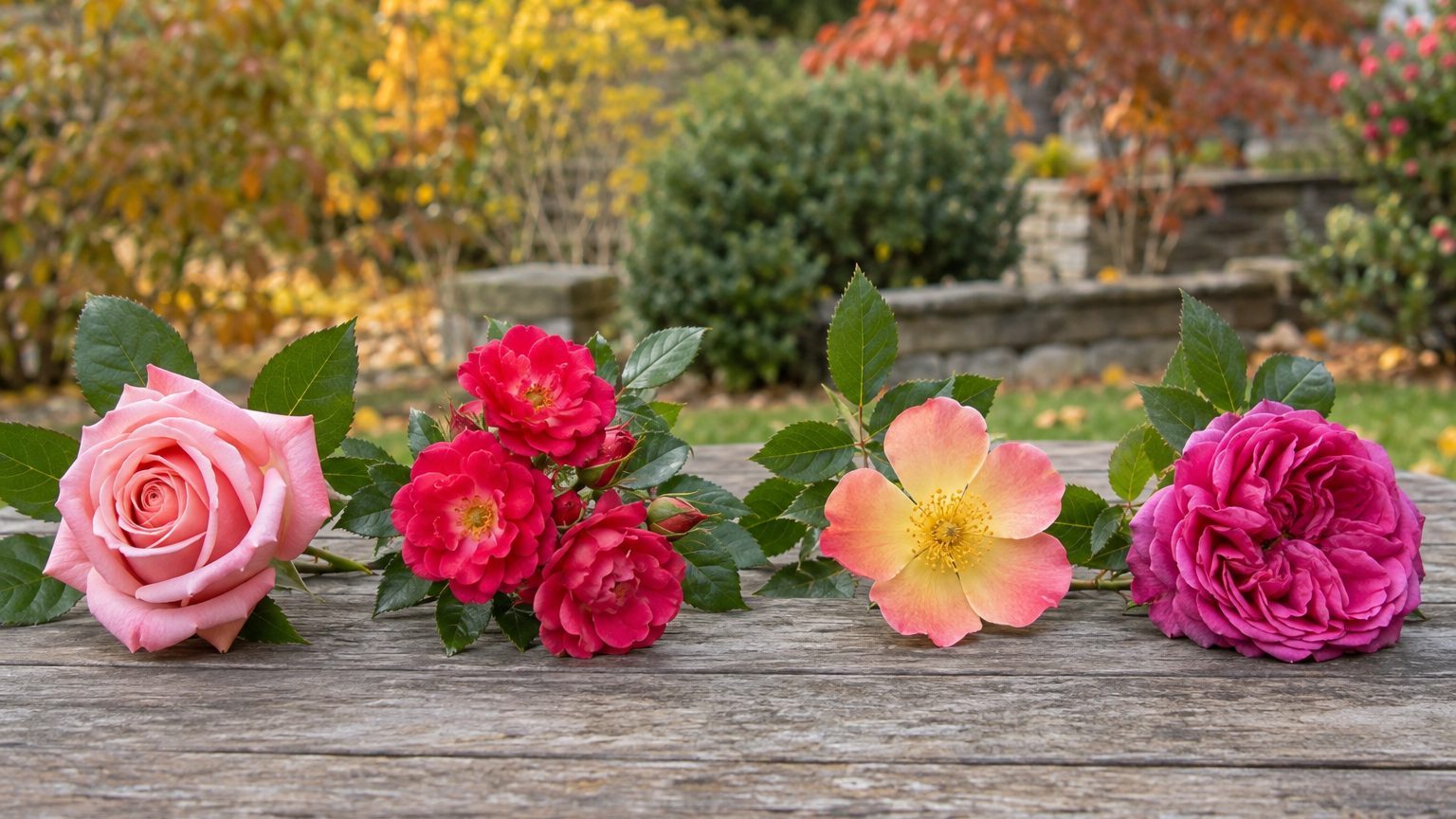
Yellow leaves with black spots, dropping from a hybrid tea by midsummer, are the sign that a rose was matched poorly to the garden. In Mississippi, the roses that stay glossy are mostly shrub types, rugosas, Drift roses and disease-resistant hybrid teas.
Best Roses to Grow in Mississippi

Shrub roses, rugosas, Drift roses and old garden roses are practical choices for Mississippi gardens because they need far less spraying than hybrid teas. Mississippi spans USDA zones 7b to 9a, so winter hardiness still deserves a place in the buying decision. Leaf disease is the real test, and disease resistance can reduce the work it creates.
Shrub Roses
Shrub roses bloom beautifully with few chemical controls needed, which is the main reason to start here. Repeat-blooming shrub roses ask for less spraying than hybrid teas and are pruned in February and March as the buds swell.
Drift Roses
Drift roses are a good match for anyone who likes Knock Out roses. They come in Red Drift, Pink Drift, Apricot Drift, Coral Drift, Peach Drift, White Drift and Popcorn Drift, a white-and-yellow blend, so a whole bed can be planted in coordinated colors.
Rugosa Roses
Rugosas stand out for disease resistance. They are listed as resistant to black spot, powdery mildew and cercospora leaf spot. The named ones are Blanc Double de Coubert, Fru Dagmar Hastrup, Rugosa Alba and Topaz Jewel. Alba Semi-Plena, an alba rose, carries the same resistance.
Old Garden Roses
Old garden roses do not need the hard pruning that many modern roses get, and hard cutting can ruin their graceful shape and cut flowering sharply. Once-blooming types flower on last year’s wood, so prune them right after they bloom, never in early spring.
Hybrid Teas
Hybrid teas are susceptible to black spot and need an effective spray program running before the growing season begins. If you want one anyway, choose a resistant variety such as Pride N Joy, which is listed as black spot resistant.
Floribundas and Grandifloras
Sexy Rexy, a floribunda, and Prima Donna, a grandiflora, are listed as black spot resistant. Iceberg and Julia Child are floribundas that mix well with shrub roses in a formal rose bed.
Mississippi — the year and the numbers
- State
- Mississippi
- USDA zones
- 7b-9a
- Last spring frost
- March 6 to March 22
- First fall frost
- November 7 to November 22
- Annual rain
- 57 in
- Lawn zone
- warm-season
- Source
- NOAA NCEI 1991-2020 Climate Normals, 32F freeze probabilities · Jackson
How to Choose a Rose for a Mississippi Garden
Start with how much time you want to spend on the rose after planting. The amount of spraying can determine whether a rose keeps healthy foliage through summer. Match the type to that effort and the rest falls into place.
Colors, shape and bloom habit come next, since they decide which of the resistant types you will actually enjoy.
| Your situation | What suits it in Mississippi | Why |
|---|---|---|
| Little time for spraying | Shrub roses | They bloom well with few chemical controls |
| Black spot keeps coming back | Rugosa roses such as Topaz Jewel or Rugosa Alba | Resistant to black spot, powdery mildew and cercospora leaf spot |
| You love hybrid tea blooms | Pride N Joy, plus a spray program | Listed as black spot resistant, but hybrid teas still need spraying started before the season |
| You want a color mix | Drift roses | They come in a range of colors and pair well with Knock Out roses |
| You like the old-fashioned look | Old garden roses | They skip hard pruning, which would spoil their shape |
Climbing roses come in many varieties and colors, but they are subject to disease and insects, so give them good air movement and check the leaves regularly.
Which Roses Suit Different Parts of Mississippi
Mississippi stretches from cooler hills in the north to a warmer coast, and that shifts the timing for repeat-blooming roses more than it shifts the choice of variety.
- Gulf Coast: Winters are milder here, so roses wake earlier. Prune repeat-bloomers when the buds swell, which can be mid-February.
- North Mississippi: Winters run colder, so buds swell later. Wait until about mid-March, and favor sturdy shrub roses and rugosas that do not need coddling.
Across the state, let the buds set the day rather than the calendar, and check with your county office for how your own garden compares.
Rose Buying Mistakes to Avoid in Mississippi
Hybrid Teas Without a Spray Plan
Hybrid teas require a rigorous spray program to keep black spot at bay. Buying one on impulse and skipping the spraying costs you leaves, then blooms. Either commit to the program before the season begins or choose a shrub rose or a resistant variety instead.
Hard Pruning Old Garden Roses
Treating an old garden rose like a hybrid tea ruins its shape and sharply reduces flowering, because it blooms on last year’s wood. The replacement habit is simple: leave it alone in winter and tidy it right after the flowers fade.
Counting on Knock Out and Drift to Be Immune
These roses are easy, but they are not invincible. There is no cure for rose rosette disease in cultivars like Knock Out and Drift. Buy healthy plants and inspect them regularly for symptoms.
Where to Get Rose Advice in Mississippi
Mississippi State University Extension supports home gardeners across the state, and your county office can answer questions specific to your soil and neighborhood.
- The state extension site has rose and disease information to read before you order plants in winter.
- Your county extension office can help identify spotted-leaf problems, so bring a sample once symptoms show.
- Ask the county office which varieties do well locally before you buy anything.
Common Questions
When Should You Plant Bare-Root Roses in Mississippi?
February and March are the preferred months. Planting can also be done in January, April, November or December. Potted roses can go in later than bare-root ones.
How Often Should You Feed Roses in Mississippi?
Feed monthly from March through September. Follow the label on a rose fertilizer, or use a soil test to adjust the amount.
Do Shrub Roses Need Pruning?
Repeat-blooming shrub roses are pruned in February and March, as the buds swell. Once-blooming shrubs and old garden roses wait until after they flower.