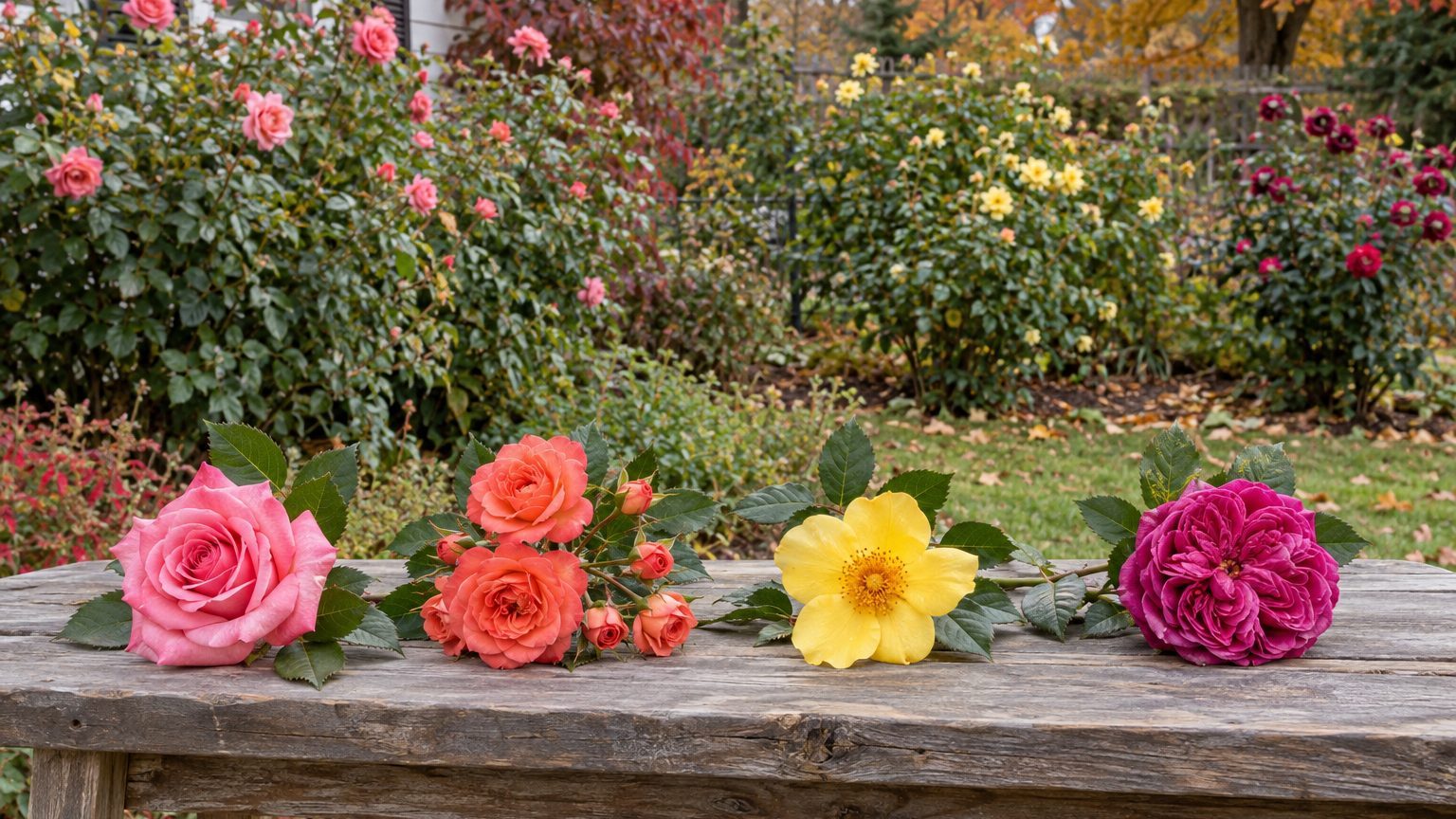
Black spot spreading up from the lower leaves by midsummer is the sign that a rose was bred for a drier place than Georgia. Disease-resistant shrub roses and rugosas are practical choices for Georgia’s humid summers, and Georgia guidance also recommends Drift roses for landscapes. Hybrid teas can grow here too, as long as a spray program stands behind them.
Best Roses to Grow in Georgia

Disease-resistant shrub roses, Drift roses, rugosas and old garden roses do well in Georgia. Humid summers favor leaf diseases, and winters run from USDA zone 6a to 9b across the state, so a tough, low-spray plant serves you better than a delicate one.
Shrub Roses
Shrub type roses bloom beautifully with few chemical controls needed. That makes them the low-effort choice for a front bed where you would rather not be mixing up sprays regularly.
The more susceptible kinds, hybrid teas among them, need an effective spray program in place before the growing season begins.
Drift Roses
Drift roses have been recommended for Georgia landscapes as a companion to Knock Out roses, and they come in a wide color range. Red Drift, Pink Drift (a double pink), Apricot Drift, Coral Drift, Peach Drift and White Drift are all available.
Popcorn Drift blends white and yellow.
Knock Out Roses
Knock Out roses work well as the backbone of a mixed planting. A Georgia public rose garden pairs them with Drift roses and floribundas such as the yellow Julia Child and the white Iceberg.
At home, combine tough shrub roses, low groundcover roses and floribundas for color.
Rugosa Roses
Rugosas offer useful disease resistance in a humid summer. Blanc Double de Coubert, Fru Dagmar Hastrup, Rugosa Alba and Topaz Jewel resist black spot, powdery mildew and Cercospora leaf spot.
The alba rose Alba Semi-Plena carries the same resistance.
Old Garden Roses
Old garden roses do not need the hard pruning that many modern roses get, and heavy cutting can ruin their graceful shape and sharply reduce flowering.
Once-blooming old garden roses flower on last year’s wood, so prune them right after they bloom, never in early spring.
Hybrid Teas
Hybrid teas need a rigorous spray program to keep black spot at bay. If you love the form, choose a resistant one such as Pride N Joy.
Among floribundas, Sexy Rexy resists black spot, and so does the grandiflora Prima Donna.
Georgia — the year and the numbers
- State
- Georgia
- USDA zones
- 6a-9b
- Last spring frost
- March 11 to March 29
- First fall frost
- November 13 to December 1
- Annual rain
- 50 in
- Lawn zone
- transition-season
- Source
- NOAA NCEI 1991-2020 Climate Normals, 32F freeze probabilities · Atlanta
How to Choose a Rose for a Georgia Garden
Start with how much spraying you are willing to do, because that decision narrows the list faster than color or size. Then look at what the planting spot asks of the plant.
Regular feeding belongs on the calendar from March through September.
| Your situation | What suits it in Georgia | Why |
|---|---|---|
| Humid summer, black spot every year | Rugosas such as Blanc Double de Coubert or Topaz Jewel | They resist black spot, powdery mildew and Cercospora leaf spot |
| Little time for spraying | Shrub roses | Shrub types bloom well with few chemical controls |
| You want hybrid tea blooms | Pride N Joy, with a spray program | It resists black spot, but hybrid teas still need spraying before the season starts |
| Mixed front bed with color | Drift roses with Julia Child and Iceberg floribundas | Georgia rose gardens combine them with Knock Outs |
| Old-fashioned look, less pruning | Old garden roses | They do not need hard pruning |
Timing matters as much as the variety. Prune repeat-blooming roses such as hybrid teas, floribundas and modern shrub roses in February and March, as the buds swell. Plant bare-root roses in February or March, though January, April, November and December also work. Potted roses can go in later. Feed monthly from March through September. Without a soil test, a 16-4-8 or 12-4-8 fertilizer is the usual choice.
Which Roses Suit Different Parts of Georgia
Timing and winter exposure shift from the mountains to the coast.
- North Georgia and the mountains: Fall freezes arrive earlier than elsewhere in the state and buds swell later, so prune toward the later end of the pruning window and take extra care with anything tender.
- Atlanta: The city runs warmer than the countryside around it, so a neighbor in the surrounding hills may see frost sooner than you do.
- South Georgia and the coastal plain: Winters are milder and buds swell earlier, so prune toward the start of the window.
Humid summers are a given in every one of these places, which is why disease resistance matters in all of them.
Rose Buying Mistakes to Avoid in Georgia
Hybrid Teas Without a Spray Plan
Hybrid teas are prone to black spot in a humid summer. Either commit to a spray program that starts before the growing season, or choose a shrub rose or a resistant selection such as Pride N Joy.
Planting Only Knock Outs and Drifts
There is no cure today for rose rosette disease in domestic cultivars like Knock Out and Drift. A mixed bed can add variety, but it does not provide a cure for rose rosette disease.
Planting Roses Too Close
A small plant in a nursery pot looks lost in the ground, so many gardeners crowd roses together. Space them 5 to 6 feet apart when you plant in February, so air can move through the foliage in a humid summer.
Where to Get Rose Advice in Georgia
University of Georgia Extension publishes rose guidance written for Georgia conditions, and your county extension office can answer questions about your own soil and bed.
- Visit the extension website in winter, when you are choosing varieties before February planting.
- Call your county office before the March feeding season to ask about soil testing.
- Bring a leaf with spots to the county office in summer, so the disease can be identified before you spray.
Common Questions
Can You Plant a Potted Rose After the Bare-Root Window?
Yes. Potted roses can go in later than bare-root ones, which are best planted in February or March.
Are Climbing Roses a Good Choice in Georgia?
Climbing roses are hardy across the entire state and grow fast, with many varieties and colors. They are subject to disease and insects, so check the plant regularly through summer.
Is Any Rose Resistant to Rose Rosette Disease?
Researchers are studying the wild species Rosa setigera and Rosa palustris, which resist the virus, to understand how their immune response works. Knock Out and Drift roses have no cure once infected.