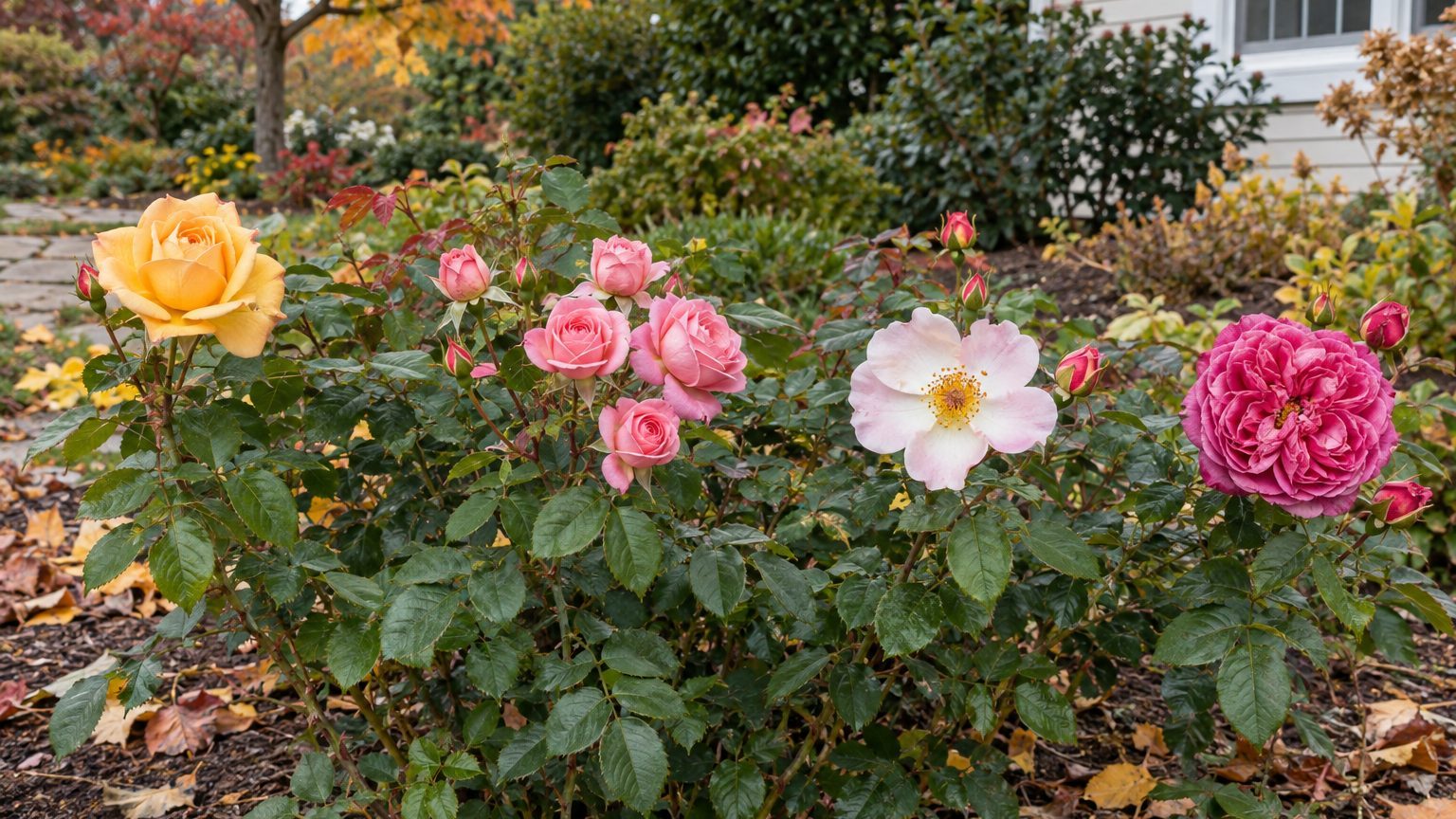
Walk past a rugosa hedge in a Connecticut front yard in winter and it stands untouched, while a hybrid tea nearby is mounded and wrapped. That gap decides which roses suit this state. Hardy shrub roses, rugosas and many old garden roses can handle Connecticut winters, while tender types can still thrive here if you cover them.
Best Roses to Grow in Connecticut

Hardy shrub roses, rugosas and old garden roses hold up best, because Connecticut sits in USDA hardiness zones 6a to 7b and tender roses lose canes without cover. Hardy types generally need less winter protection than classic bedding roses.
Rugosa Roses

Rugosa rose (Rosa rugosa) is cold-tolerant, making it a practical pick for an exposed corner or a property line. The Rugosa rose is hardy in most locations.
Knock Out and Explorer Roses
Hardy shrub roses such as Knock Out or the Explorer series perform well without extra protection. Check each variety’s flowering habit before pruning, because once-blooming roses and repeat bloomers follow different rules. For a yard where roses must look after themselves, start here.
Old Garden Roses
Many old garden roses are extremely tolerant of cold, while hybrid teas can suffer considerable damage. Most bloom once a year on last year’s wood, so the pruning rule differs from the repeat bloomers. Their single flush of fragrant flowers is the trade for that toughness.
Hybrid Teas, Floribundas and Grandifloras
These are not reliably winter hardy and need protection through Connecticut winters. They are still worth growing for cut flowers, since hybrid teas are the classic cutting rose with long stems and a sweet fragrance. Plant them where you can reach them easily for covering.
Miniature and Climbing Roses
Some miniature and climbing roses are reliably hardy, while others need protection, so check the plant tag for each variety. A climber trained on a trellis or arbor also gives a small yard height without taking bed space.
Connecticut — the year and the numbers
- State
- Connecticut
- USDA zones
- 6a-7b
- Last spring frost
- April 2 to April 12
- First fall frost
- October 28 to November 10
- Annual rain
- 44 in
- Lawn zone
- cool-season
- Source
- NOAA NCEI 1991-2020 Climate Normals, 32F freeze probabilities · Bridgeport
How to Choose a Rose for a Connecticut Garden
Start with how much winter work you want to do. A rose bred for a colder zone needs little or no added protection in a milder garden, so a hardy variety is the simplest way to cut chores.
Then look at the spot itself. Roses grow best in direct sun.
| Your situation | What suits it in Connecticut | Why |
|---|---|---|
| Very cold, exposed winter spot | Rugosa rose or an Explorer series shrub rose | Both are hardy and need no extra cover |
| Little time for winter chores | Knock Out or another hardy shrub rose | Performs well without extra protection |
| Cut flowers for the house | Hybrid tea | Classic long stems, but it needs winter protection |
| Small space | Miniature rose or a trained climber | Compact, or grown upward on a trellis, though hardiness varies by variety |
| Milder spot, willing to protect | Tender types with cover in place | Protection gets them through winter |
Roses prefer soil that is rich, loose and well drained. Plant tender roses where you can easily reach them with soil or mulch.
Which Roses Suit Different Parts of Connecticut
Winter cold shifts across the state, and so does the amount of protection a rose needs.
- Litchfield Hills: Cold deepens in the northwest, and freezes linger later into spring. Lean on rugosas and hardy shrub roses, and give any tender rose a thorough winter cover.
- Connecticut shoreline: Along Long Island Sound, in Bridgeport for example, the last spring frost falls between April 2 and April 12. Milder winters make tender roses easier to carry through, though they still need their cover.
- Connecticut River Valley and the inland towns: Winters sit between the shoreline and the hills, so both hardy and protected types are workable. Pruning waits for the buds to swell.
Hardiness can vary locally, so a sheltered wall can suit a rose that a windy slope would not.
Rose Buying Mistakes to Avoid in Connecticut
Buying Tender Roses Without a Winter Plan
Hybrid teas, floribundas and grandifloras lose canes when left bare through a cold winter. Put on protection in November, after several killing freezes, and December works if you are late. Take it off between March and April, once the ground thaws.
Pruning Once-Blooming Roses in Spring
Old garden roses, ramblers and many climbers flower on last year’s wood. A spring pruning cuts off the coming flowers, so prune them right after they bloom instead.
Choosing the Rose Before the Spot
A shady or soggy bed holds back even a hardy rose. Pick a place with direct sun and rich, well-drained soil, then choose the rose to fit.
Where to Get Rose Advice in Connecticut
UConn Extension is the state’s land-grant extension service. Its local centers can answer questions about varieties, winter damage and soil.
- Ask the extension center nearest you about hardy varieties before you buy.
- Check with the center before bringing in a damaged cane or leaf.
Common Questions
When Should You Prune Roses in Connecticut?
Repeat-blooming roses such as hybrid teas, floribundas and modern shrub roses are pruned in March and April, and February also works. A good sign is forsythia in bloom, with the winter protection already off.
Can You Plant a Rose in July in Connecticut?
Yes, if it is a container rose. Potted roses can go in from April through midsummer. Bare-root roses belong in March or April, before growth starts.
When Should You Feed Roses in Connecticut?
Feed from April through July, starting after pruning, again at first bloom and in mid-July. Stop after mid-August so soft new growth does not meet the winter.