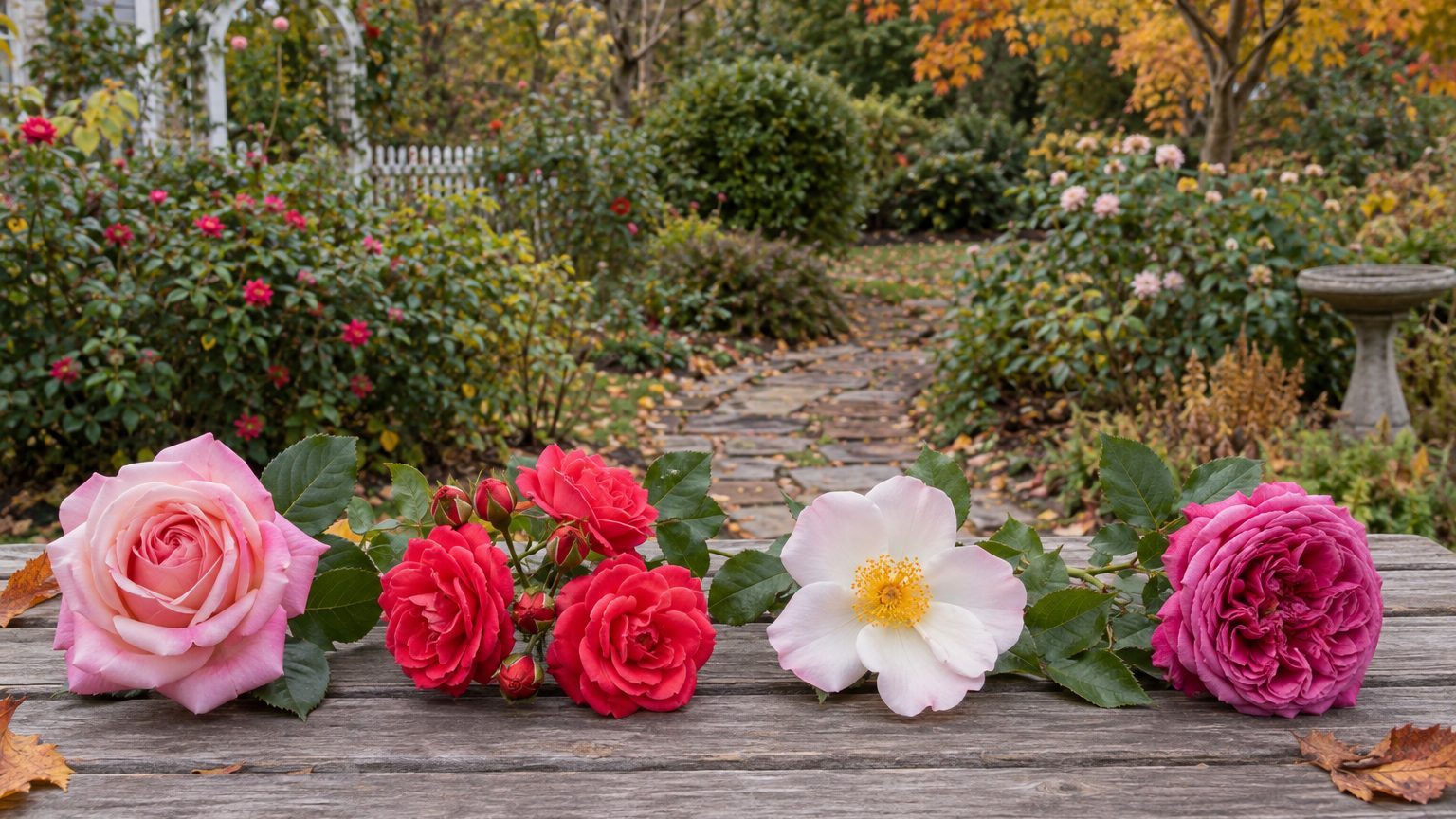
A rose that keeps its leaves into winter and stays clean through a humid summer is a good thing to have by the mailbox. Arkansas gives roses a mild welcome, and the right type makes the rest easy. Disease-resistant shrub roses, Explorer roses and rugosas come closest to that picture, while hybrid teas ask for more work.
Best Roses to Grow in Arkansas

Disease-resistant shrub roses do well here, because winter rarely hurts them and the humid summer is what brings black spot. Roses are quite hardy in all parts of Arkansas, and they are often semi-evergreen most winters. USDA hardiness zones across the state run from 6b to 8a.
Compact Shrub Roses

One compact shrub rose recommended for Arkansas gardens resists black spot and does not need the yearly rigorous pruning that hybrid teas demand. You can still shape it as needed. For a first rose, or a bed you would rather not fuss over, this is a sensible place to start.
Explorer Roses
The Explorer group was bred for roses that are hardy, disease-resistant, repeat blooming and easy to start from cuttings. The flowers are mostly semi-double to double, lightly scented, and they come back through the season. Give them full sun and fertile, moist, well-drained soil.
Most are shrubs, but ‘Louis Jolliet’ is a climber and ‘Charles Albanel’ works as a groundcover.
Rugosa Roses
Rugosa is a hardy, multi-stemmed, disease-resistant shrub rose that spreads by suckers, so give it room. It tolerates drought and poor soil in full sun, which suits a bed that dries out in a hot summer. Many cultivars have single, semi-double or double flowers and fewer prickles.
Hybrid Teas
Hybrid teas are grown for large, fragrant, solitary blooms, and they are the type that pays for it in effort. They need a rigorous spray program to keep black spot at bay. If you love cut flowers and enjoy the routine, they are worth the trouble. Otherwise, other types offer great disease resistance.
Floribundas and Miniatures
Floribundas bear clusters of small flowers, and miniature roses carry small flowers on dwarf plants. Floribundas and miniatures fit beds and pots where a full-size shrub would crowd out its neighbors. They bloom repeatedly, so they are handled like other repeat bloomers at pruning time.
Ramblers and Climbers
Ramblers flower from old wood, and climbers flower from new wood. A once-blooming old garden rose, rambler or climber flowers once a year on last year’s wood. Prune it right after it blooms, never in early spring, or you cut off the coming flowers.
Arkansas — the year and the numbers
- State
- Arkansas
- USDA zones
- 6b-8a
- Last spring frost
- March 12 to March 28
- First fall frost
- November 7 to November 20
- Annual rain
- 50 in
- Lawn zone
- warm-season
- Source
- NOAA NCEI 1991-2020 Climate Normals, 32F freeze probabilities · Little Rock
How to Choose a Rose for an Arkansas Garden
Cold is rarely the deciding factor in Arkansas. Humid summers, hot dry spells, the time you have and the room available shape the choice far more. Start with the problem that would bother you most.
| Your situation | What suits it in Arkansas | Why |
|---|---|---|
| Cold winter nights | Explorer roses | Bred to be hardy and to repeat bloom |
| Humid, rainy summers | Rugosas | Offer disease resistance without the spray routine of hybrid teas |
| Heat and dry spells | Rugosas | Drought tolerant and fine in poor soil in full sun |
| Little time | Hardy garden roses | Need less preparation |
| Small space | Miniature roses, compact shrub roses | Dwarf or compact plants that stay in bounds |
Bare-root roses go in best in February and March, and November, December, January and April also work. Potted roses can go in later than that.
Which Roses Suit Different Parts of Arkansas
The statewide range of USDA hardiness zones from 6b to 8a reflects Arkansas’s varied climate, though roses stay hardy throughout the state. The difference shows up in how much cold or humidity you plan around.
- The Ozarks: Winters run colder toward the northwest, so Explorer roses bred for hardiness and naturally hardy rugosas are comfortable fits. Let the buds, not the calendar alone, tell you when pruning is safe after a hard late winter.
- Little Rock and the Arkansas River Valley: This central stretch suits nearly every type listed here. Hybrid teas are possible if you accept the spray routine.
- The Delta and south Arkansas: Summers are long, hot and humid, so lean on black spot resistant shrub roses and rugosas for heat and dry spells. Choose these over types that need constant spraying.
Wherever you garden, start with disease resistance and add fussier roses only as you gain confidence.
Rose Buying Mistakes to Avoid in Arkansas
Skipping the Spray Plan
Buying hybrid teas without a plan for black spot leaves you unprepared for the rigorous spray program they require. A rigorous spray program is part of growing them. If that sounds like too much, choose a shrub rose with real resistance instead.
Pruning After Growth Starts
Repeat-blooming roses, meaning hybrid teas, floribundas and modern shrub roses, are pruned in February and into March, as dormancy breaks. In Arkansas, lingering snow and ice have pushed pruning to late March, and that worked because the roses were cut hard before new growth was well under way. Prune on the buds, not the date alone.
Feeding into Autumn
Fertilizer belongs in the stretch from first leaves through each flush of bloom, March through August. Feeding can run into September, but stop about six weeks before the earliest frost in your area. Late feeding pushes soft new growth just as the plant should be slowing down.
Where to Get Rose Advice in Arkansas
The University of Arkansas Extension publishes rose pruning notes and disease guidance written for Arkansas gardens. Your county extension office adds local knowledge of soil and pests.
- County extension office: Bring a photo or a cutting of spotted leaves, and go when you first see trouble in summer.
- State extension rose pages: Read the pruning notes in late winter, before the buds swell.
- Local master gardeners: Ask which varieties have held up in your neighborhood before you buy in spring.
Common Questions
Do Roses Keep Their Leaves Through an Arkansas Winter?
Often, yes. Roses in Arkansas are frequently semi-evergreen in most winters, so a rose that holds some foliage is not dying.
How Much Sun and What Soil Do Roses Want?
Full sun and fertile, moist, well-drained soil suit Explorer roses. Rugosas prefer moist, acidic to neutral, well-drained soils but tolerate poor soil in full sun.
Which Roses Work on a Trellis or as a Hedge?
Depending on the cultivar, Explorer roses can serve as a groundcover, on a trellis, as a hedge, as a specimen or in groups. They vary in height, so check the mature size before choosing a spot.