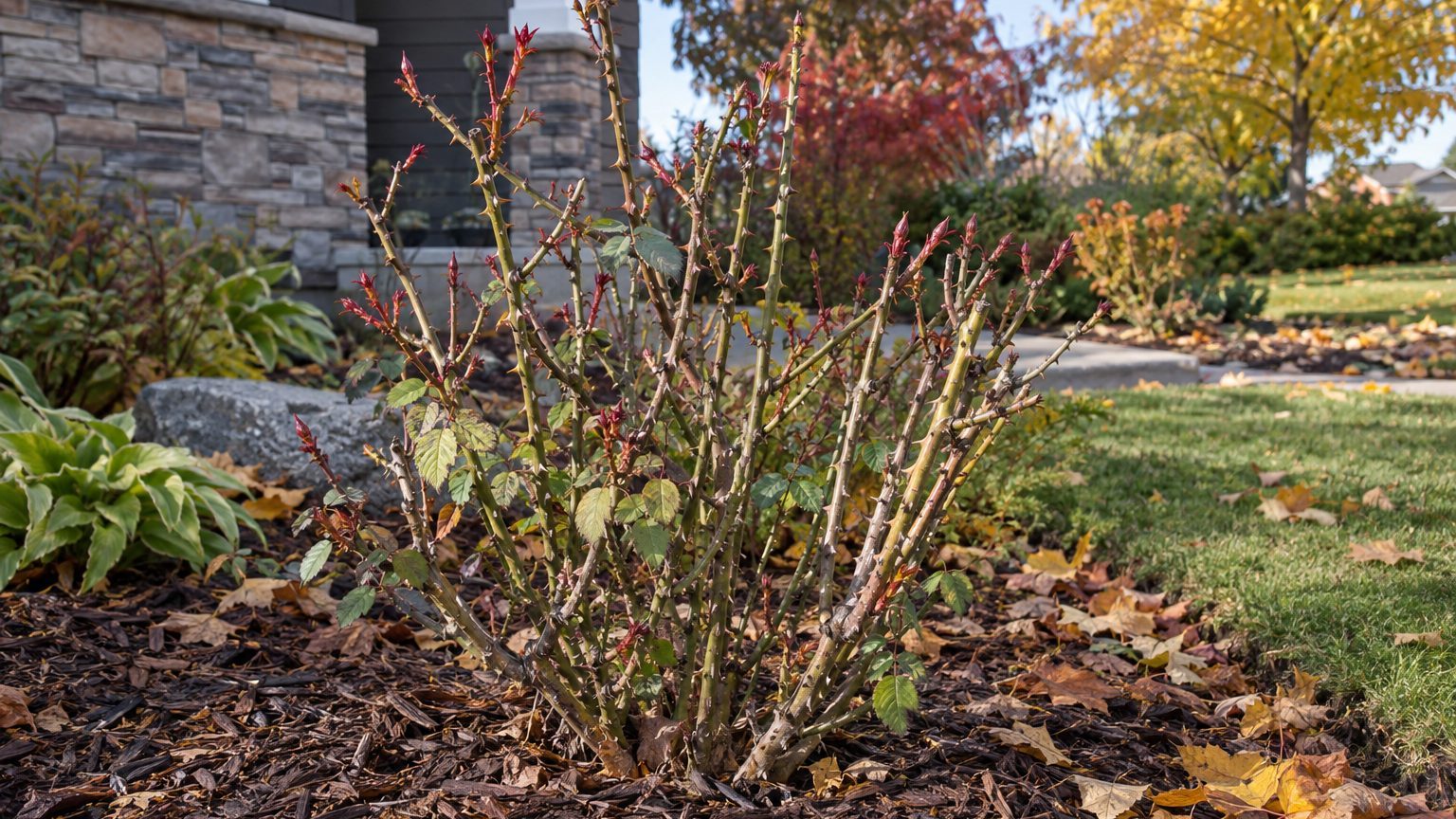
When the snow pulls back from the rose bed in spring, you find canes that look fine and canes that are plainly dead. Pruning roses in Saskatchewan is mostly a matter of waiting for that moment, then cutting in the right season for the kind of rose you grow. Timing differs for repeat bloomers and once-bloomers.
When to Prune Roses in Saskatchewan

Prune repeat-blooming roses in April or May, after the winter mound comes off and the chance of a hard freeze has passed. Saskatchewan has no local rose-timing guidance of its own, so these months follow the nearest comparable climate on the northern plains.
Once-blooming roses follow a different rule. They flower on last year’s wood, so a spring haircut removes the very canes that would have carried the blooms. Wait until the flowers fade, then prune.
| Type of rose | When to prune in Saskatchewan | Why |
|---|---|---|
| Hybrid teas, floribundas, modern shrub roses (repeat-blooming) | April to May | They bloom on new wood, so spring pruning clears winter damage and still leaves a full season of growth. |
| Old garden roses, ramblers, many climbers (once-blooming) | Right after they bloom, never in spring | They flower once a year on last year’s wood, so early cuts remove the flowers. |
Confirm local timing with a nearby garden centre, a rose society or one of the provincial gardening groups, because a spring that comes late in one district can arrive early in another. Whatever the date, the buds make the final call, and the next section explains what to look for.
Saskatchewan — the year and the numbers
- State
- Saskatchewan
- Hardiness zones
- 3a
- Last spring frost
- May 18
- First fall frost
- September 18
- Annual rain
- 14 in
- Lawn zone
- cool-season
- Source
- Environment and Climate Change Canada — Canadian Climate Normals 1981-2010, station SASKATOON SRC · Saskatoon
How to Tell When Your Roses Are Ready to Prune
Looking closely at the canes can save a lot of regret.
- Buds that swell and turn green along the canes say the rose is awake, and you can see which wood is alive and which is not.
- A winter mound that has come off in stages, starting around mid-April, means the canes have been exposed to spring air and you can judge the damage.
- Wood that is dark and discolored is dead, so cut it back to healthy tissue where the inside of the cane turns pale.
- Small, weak stems that barely survived the winter rarely repay the effort, so remove them to let the strong canes take the light.
- A hard freeze that has passed matters because pruning stimulates growth, and tender new shoots do badly in a deep cold snap. At Saskatoon the last spring frost falls on average around May 18, which means that in one year out of two a frost still arrives later, so treat that date as the middle of a window and not as a safe signal.
When the buds are plump and the mound is gone, make your cuts without hurrying.
Should You Prune Roses in Fall or Winter in Saskatchewan?
Leave serious pruning for spring. Hard cuts before the plant has gone dormant invite new growth that the first deep freezes will kill.
Winter protection belongs in November, after several hard freezes, once the rose is fully dormant. Covering too early traps warmth and keeps the plant from settling down. Hybrid teas, floribundas and grandifloras need that mound because they were bred for warmer climates, and Saskatchewan’s winters are harder than they can handle on their own.
Hardy shrub roses are a different story. Knock Out and the Explorer series perform well without extra covering, while the Canadian Artist Series was bred to be winter hardy and disease-resistant. Repeat-blooming varieties still get their pruning in spring.
How Rose Pruning Dates Shift Across Saskatchewan
Saskatchewan is large, and spring does not reach every district at the same time. The April to May window fits the central part of the province best, and it slides later as you move away from it.
- Saskatoon area: Spring arrives here close to the usual schedule, and the hardiness zone is 3a on the Canadian system, which is not the same scale as the USDA zones. Plan on pruning in April or May, once the mound is off.
- Prince Albert and La Ronge: Northern districts run weeks behind Saskatoon, so the mound comes off later and pruning follows the buds later in May.
- Cypress Hills: Upland country also lags behind the central part of the province. Wait for buds to swell instead of pruning to the date you used in a lower-lying yard.
If you live between these places, trust the buds over any date, and your own yard will teach you its pattern over time.
Where to Get Rose Advice in Saskatchewan
Canada has no county extension offices, so help comes from the province and from local growers. Saskatchewan Agriculture is the provincial ministry to start with, and it points toward other gardening resources.
- A local garden centre can tell you which rose varieties came through last winter in your area, and spring is the time to ask, before you cut.
- A rose society or master gardener group can confirm timing for your district, and you can ask at an early-spring meeting.
- Provincial gardening groups can answer questions about hardy shrub roses before you buy and plant them.
Common Questions
When Should You Plant Bare-Root Roses in Saskatchewan?
Bare-root roses go in during April or May, and early in that window is better, ideally by early May. They can also be planted in June if needed. Potted roses wait until severe frost is past, which means late May or early June.
When Should You Feed Roses in Saskatchewan?
Feed in late April and again when the plants reach peak bloom, with the season running from April through July. Stop after July so the canes have time to slow down and mature before winter.
What Should You Cut Off Roses After Winter?
Remove all dead wood, meaning anything dark and discolored, along with injured canes and small, weak stems. Healthy green canes stay, and you can shape the plant lightly once the buds show where the growth will come from.