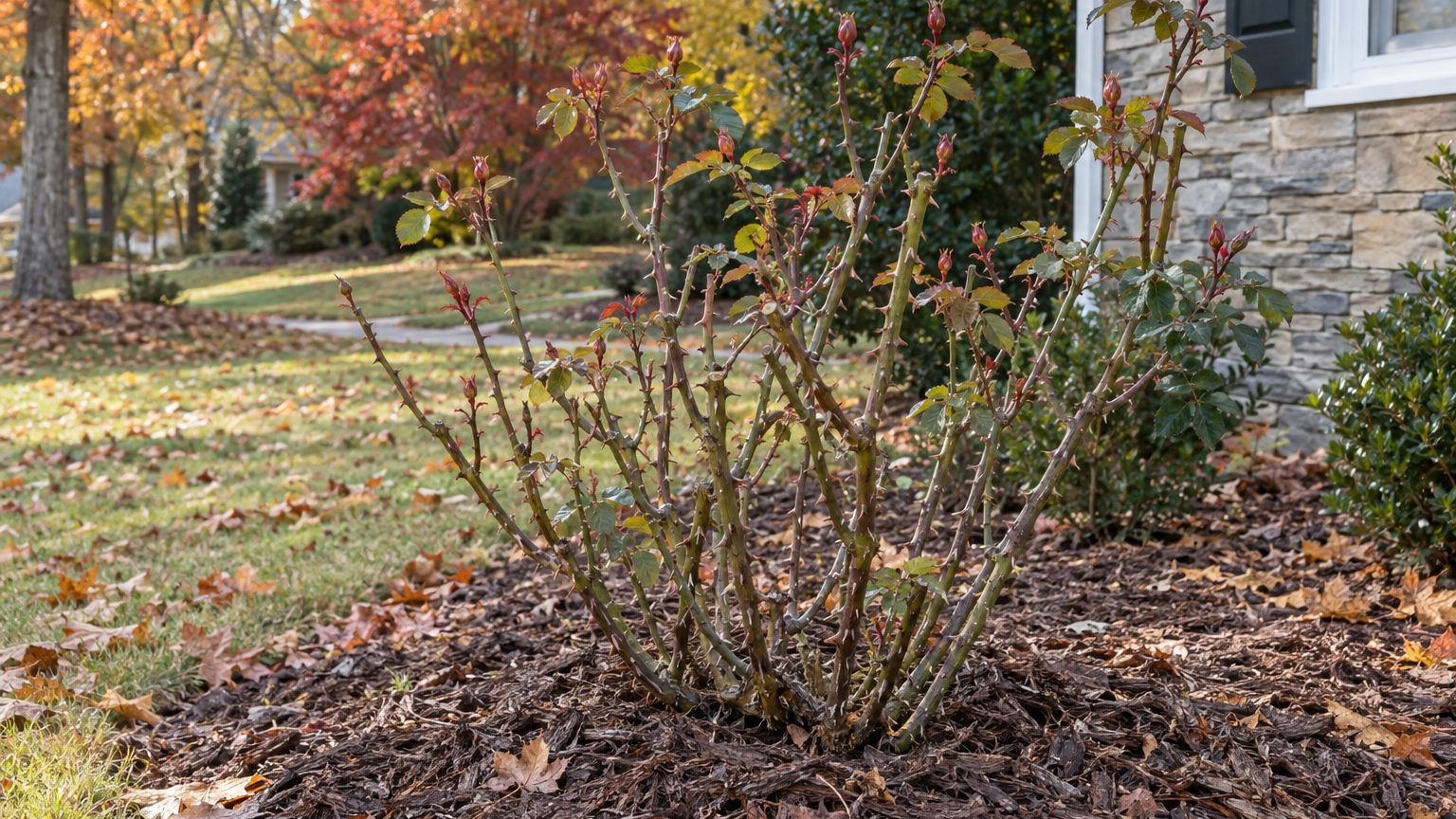
Pruning shears come out of the shed while the garden still looks gray and bare, and the rose canes are only starting to wake up. In North Carolina, that moment arrives in late winter, well before the azaleas and dogwoods bloom. Timing depends on the type of rose, since some bloom on new wood and some on last year’s.
When to Prune Roses in North Carolina

Prune repeat-blooming roses in February and March, from mid-February to early March, as dormancy breaks. Heavy pruning around Valentine’s Day is a familiar rule of thumb across the state, and it works because the canes have not yet started new growth.
Rose bushes typically break dormancy in late February or early March, depending on how the winter went. A mild winter nudges the job earlier, and a cold one holds it back toward March.
| Type of rose | When to prune in North Carolina | Why |
|---|---|---|
| Hybrid teas, floribundas and modern shrub roses (repeat-blooming) | February to March, mid-February to early March | Flowers form on new growth, so a hard cut just as dormancy breaks makes room for fresh canes |
| Old garden roses, ramblers and many climbers (once-blooming) | Right after the spring bloom, never in early spring | They flower once a year on last year’s wood, so a spring cut removes the buds |
Climbers split by habit. Those that flower once belong with the once-blooming row, and the county extension office can confirm the timing for a climber that repeats. Hardy garden roses need less prep in North Carolina, but their pruning time still depends on whether they bloom once or repeat.
North Carolina — the year and the numbers
- State
- North Carolina
- USDA zones
- 5b-8b
- Last spring frost
- March 23 to April 5
- First fall frost
- October 30 to November 8
- Annual rain
- 44 in
- Lawn zone
- transition-season
- Source
- NOAA NCEI U.S. Climate Normals 1991-2020, 32F freeze probabilities · Charlotte
How to Tell When Your Roses Are Ready to Prune
The calendar gives the window, but the plant tells you the day. Walk out to the bed on a mild afternoon in late winter and look at the canes before you cut anything.
- Swelling buds along the canes mean dormancy is breaking, and the cut should go in before those buds turn into leafy shoots.
- Bare, tight canes with no sign of growth mean you still have time, so a cold, wet stretch is a reason to wait until March rather than rush.
- A run of hard freezes in the forecast says to hold the shears, because a fresh cut invites tender new growth that the next cold night can burn.
- In Charlotte, the last spring freeze usually falls between March 23 and April 5, so new growth that starts early can meet one more cold night.
- Canes that have already leafed out call for a quick job, since pruning hard before new growth is well along costs the plant less energy.
Dead, broken or crossing canes can come out any time you spot them, but the real shaping waits for the buds.
Should You Prune Roses in Fall or Winter in North Carolina?
Not hard. In fall and early winter, the only cut worth making is a trim of the longest stems so wind does not whip the bush around and loosen its roots. Take them down a little and leave the rest standing.
The heavy prune belongs to the late-winter window, once dormancy has broken. A severe cut in autumn or midwinter pushes the plant toward new growth that cold weather can damage, and it removes canes that would have protected the crown.
Once-blooming roses follow the same caution, with the extra reason that any cut before their bloom takes flowers with it. Hardy garden roses need less prep, so a light tidy-up and a layer of mulch are usually enough to carry them through.
How Rose Pruning Dates Shift Across North Carolina
The February and March window holds statewide, but where you fall inside it depends on how early spring arrives where you live.
- The Blue Ridge mountains: Spring comes later at elevation, so pruning leans toward March, once the buds swell and the hardest cold has passed.
- Charlotte and the Piedmont: Mid-February to early March fits well, with the swelling buds as the signal to start.
- The coastal plain: Spring arrives earlier near the coast, so the cut can go in at the front of the window, in mid-February.
Within each area, a sunny, sheltered bed wakes up sooner than a shaded corner, so check the buds on each bush rather than pruning the whole yard on one day.
Where to Get Rose Advice in North Carolina
For questions about a particular rose, the state’s land-grant extension system is the place to start. NC State Extension publishes pruning guidance, and every county has a local office with staff who know the area’s soil, weather and common rose problems.
- The extension website carries pruning calendars and rose care pages, and they are worth a look in January, before the cutting window opens.
- Your county extension office can identify an unknown rose or a once-blooming climber, so bring a cane with a few buds or a photo of the bloom.
- Master gardener volunteers attached to the county office often answer questions by phone or email in late winter, which is the moment to ask before you cut.
Common Questions
Can You Plant Bare-Root Roses in North Carolina?
Yes, and February and March are the best months to do it. Bare-root roses can also go in during January, April, November or December, while potted roses can be planted later than bare-root ones.
When Should You Feed Roses in North Carolina?
Start when the first leaves appear, from March through August, and feed again after each flush of bloom. September can still work, but stop about six weeks before the first fall frost so late growth has time to harden.
Do Roses Need Much Winter Protection in North Carolina?
Hardy garden roses need less prep than tender types. The state spans USDA hardiness zones 5b to 8b, so mountain gardens face colder winters than the coast, and a little extra mulch around the base is sensible in the colder parts.