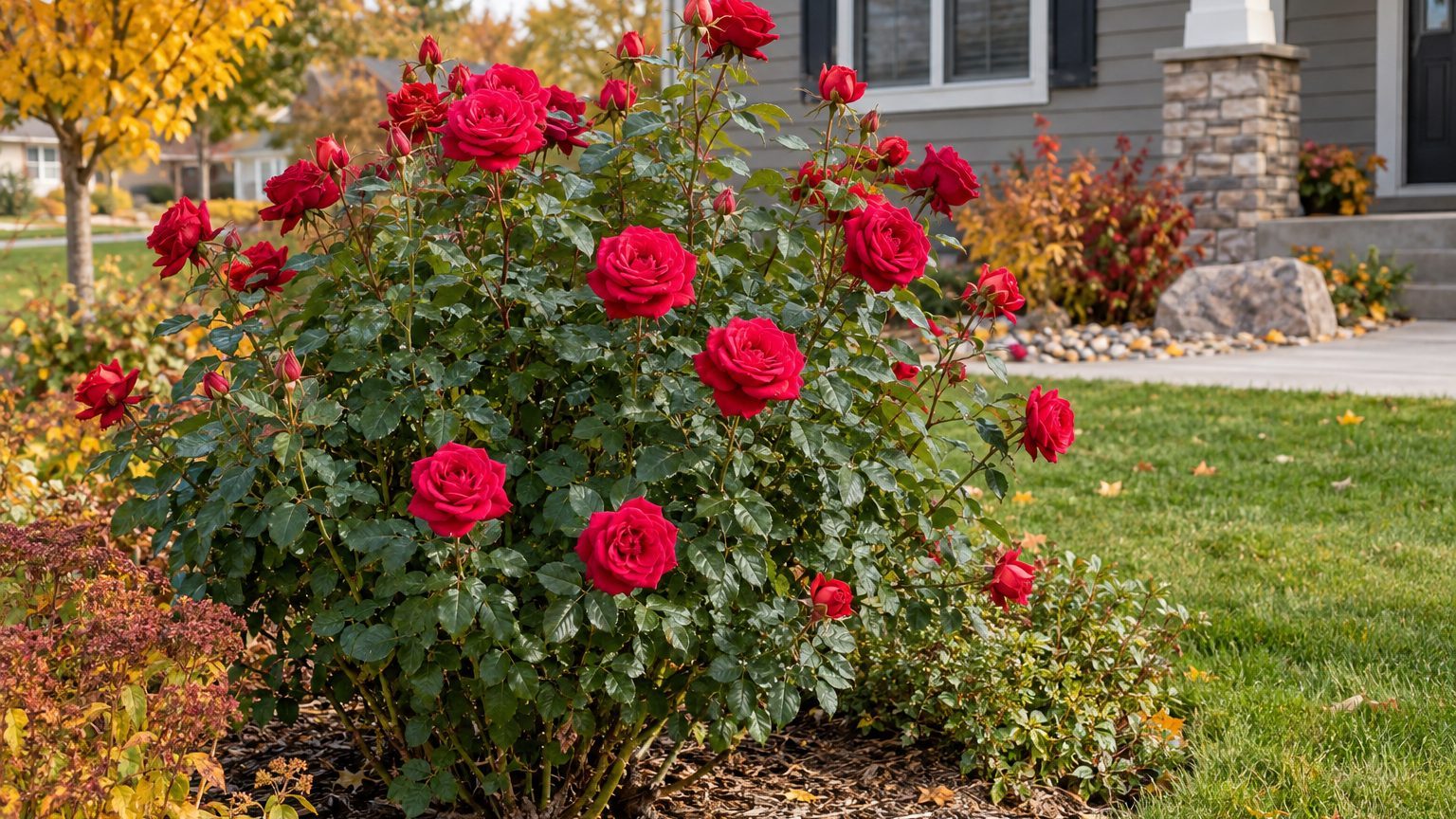
A bare-root rose that goes into cold North Dakota ground in April, while it is still asleep, has a full season to settle in before the first hard freeze. Potted roses wait a little longer.
When to Plant Roses in North Dakota

Bare-root roses go in first, and potted roses follow once the risk of severe frost has passed. The hardiness zone runs from 3a to 4b on the USDA system, so a young rose that sits in frozen ground or meets a late freeze with tender new growth can lose its canes.
- In April and May, plant bare-root roses while they are still dormant, ideally before the trees and shrubs leaf out and no later than early May.
- Through June, a bare-root rose can still go in if spring got away from you, though the earlier plantings establish with less stress.
- In late May or early June, set out potted roses that were started in a greenhouse, once the danger of severe frost is behind you.
- From summer into early fall, the first frost at the reference city (Fargo) usually arrives between September 25 and October 5, so new plants need steady moisture to build roots before then.
- In November, after several hard freezes have put the rose fully to sleep, the canes get their winter protection.
At the Fargo reference point, the last spring frost falls between May 4 and May 15. Gardens in the suburbs and out in the country usually see that last frost later and the first fall frost earlier, often by one to two weeks, so check the dates for your own county before you plant.
North Dakota — the year and the numbers
- State
- North Dakota
- USDA zones
- 3a-4b
- Last spring frost
- May 4 to May 15
- First fall frost
- September 25 to October 5
- Annual rain
- 24 in
- Lawn zone
- cool-season
- Source
- NOAA NCEI U.S. Climate Normals 1991-2020, 32F freeze probabilities · Fargo
Which Roses Grow Best in North Dakota?
Hardy shrub roses handle the winters here with little fuss. Hybrid teas, floribundas and grandifloras were bred for warmer climates and cannot survive northern winters without protection, so they ask for more work every fall.
If that sounds like too much labor, the extension advice is simple: plant hardy shrub roses that do not require winter protection.
| Rose type | How it does in North Dakota | Why |
|---|---|---|
| Hardy shrub roses | Perform well without extra protection | Bred to take cold winters, so no mounding is needed |
| Canadian Artist Series | A reliable choice for northern yards | Bred to be winter hardy and disease resistant |
| Hybrid teas | Survive only with winter protection | Bred for warmer climates, not fully hardy in northern areas |
| Floribundas and grandifloras | Need protection every winter | Not fully hardy in northern areas |
Knock Out and the Explorer series are also hardy shrub roses that do well without extra protection. Old garden roses, ramblers and many climbers flower once a year on last year’s wood, so they are pruned right after they bloom, never in early spring.
When to Prune, Feed and Protect Roses in North Dakota
The rose year follows the plant: uncover in April, prune and feed as growth starts, and tuck the canes in once November freezes arrive. Each task follows the plant’s own rhythm more than the calendar.
Pruning in detail has its own page. These are the key months for repeat-blooming roses such as hybrid teas, floribundas and modern shrub roses.
| Task | When to do it in North Dakota | Why then |
|---|---|---|
| Pruning repeat-blooming roses | April, May | The winter mound is off and a hard freeze is unlikely, so dead, dark and weak stems come out cleanly |
| Feeding | April, May, June, July | A first feeding in late April, another at peak bloom, and none after July so growth can harden before winter |
| Winter protection on | November | The rose must be fully dormant after several hard freezes |
| Winter protection off | April, and it can also be done in May | The mound comes off in stages from mid-April, not all at once |
In North Dakota, the advice for tender roses is to shorten the stems to about 18 inches in early November before mounding. Protecting too early, before the plant is dormant, traps warmth around the canes and invites trouble.
How Rose Care Dates Change Across North Dakota
The season shifts across the state, so read the dates above as a starting point for your own yard.
- Red River Valley: Fargo sits in the valley, and the reference frost dates apply most directly near the reference point. Gardens that sit lower or hold cold air may wake later in spring.
- Bismarck and the central plains: Exposed sites with open wind can dry out canes and delay softening of the ground, so uncovering and planting lean toward the later end of the April to May window.
- Northern border counties: Near the northern border, local frost timing can differ from Fargo, so check with your county before setting out potted roses.
Wherever you garden, watch the buds and the soil. Swelling buds tell you more than any date on the calendar.
Where to Get Rose Advice in North Dakota
For a rose that struggles year after year, local expertise saves guesswork. NDSU Extension publishes rose guidance for the state, and each county has an office staffed to help homeowners.
- Your county extension office can look at a damaged cane or a spotted leaf and help sort out what is going on, so bring a fresh sample in a sealed bag.
- The office can also explain how to take a soil sample and what the results mean for feeding, which is worth doing in April before the first application.
Common Questions
Can You Plant a Rose in Summer in North Dakota?
A potted rose can go in once the danger of severe frost has passed, in late May or early June, and a bare-root rose can still be planted through June. Water new plantings regularly so the roots establish before the first fall frost.
Do Hardy Shrub Roses Need Winter Protection?
Hardy shrub roses let you skip winter protection altogether. Hybrid teas, floribundas and grandifloras are the roses that need mounding each November.
When Should You Stop Feeding Roses?
July is the last month for fertilizer. Stop after July so the plants can slow their growth and harden their tissues before winter.