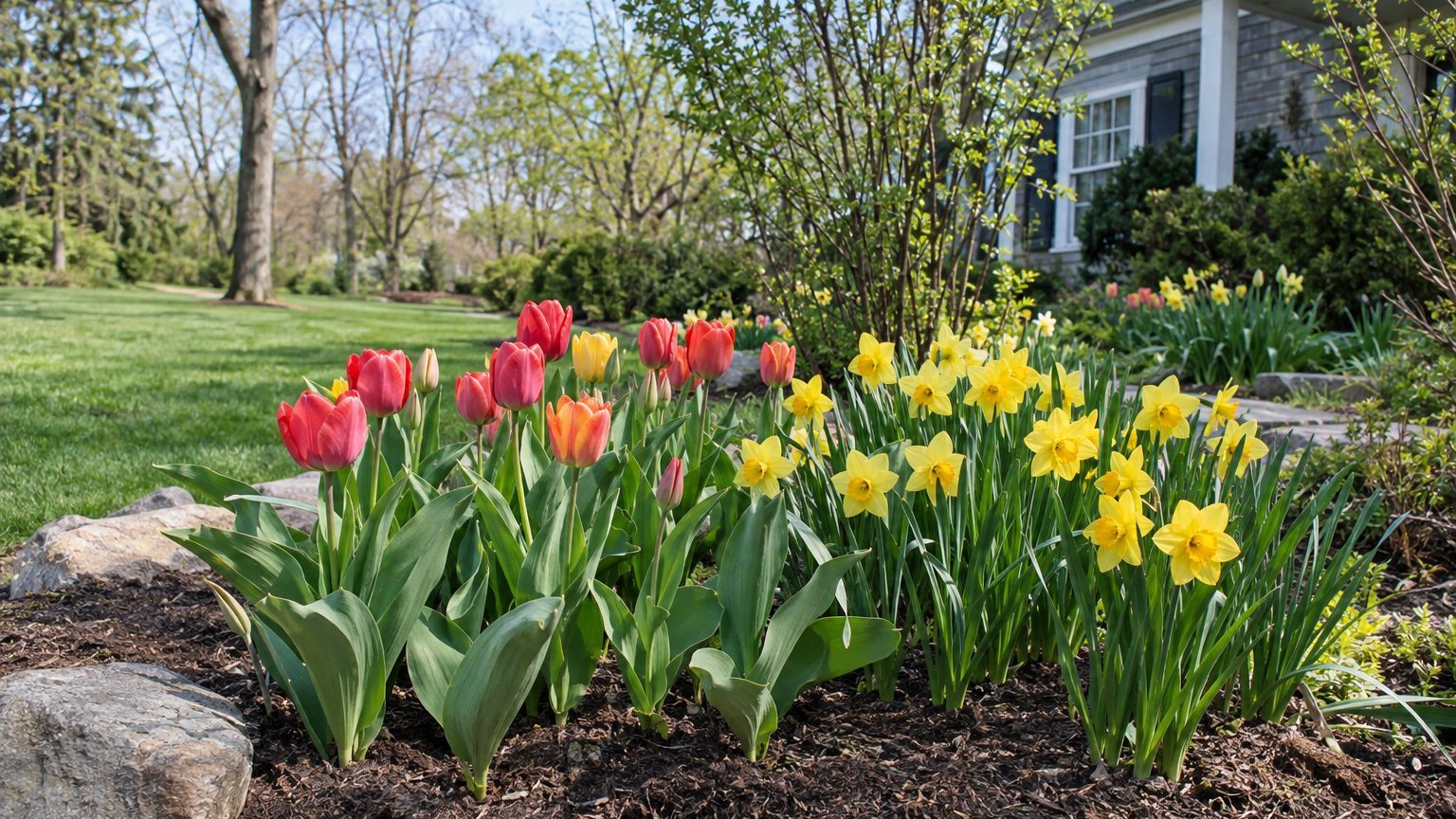
Daffodil leaves pushing through mulch and tulip buds fattening on their stems are a familiar spring sight in some California yards. In others, the bulbs never bloom well at all. Where you garden decides the outcome, because winter cold, not frost dates, is what these bulbs wait for.
When Do Tulips and Daffodils Bloom in California?

Bloom time in California follows the warming of spring, and no set months apply to the whole state. Coastal and southern California is frost-free, while Northern California, the Central Valley and the Sierra do freeze, so a bulb in San Diego and one near Lake Tahoe live very different winters.
| Bulb | When it blooms in California | What sets the timing |
|---|---|---|
| Crocus and daffodils | Follows the first warm spells of spring | Daffodils need no pre-chilling in the way tulips do, and animals leave them alone |
| Tulips | Follows the warming of spring after a cold winter rest | Cold dormancy, about 12 to 16 weeks for most spring bulbs |
| Hyacinths | Follows the warming of spring after a cold winter rest | Chilling in the refrigerator where winters are mild |
| Alliums | Late in the spring bulb season | Winter chill required |
Tulips and hyacinths ask the most of a mild climate. Where winters fall short of the cold they need, chill the bulbs in the refrigerator before planting, and in California, chilling them 4 to 6 weeks before planting gives a better bloom. Plant once the soil has cooled below about 60°F, which keeps the bulbs from sprouting too early in fall.
California — the year and the numbers
- State
- California
- USDA zones
- 5a-11a
- Frost
- none in an average year
- Annual rain
- 12 in
- Lawn zone
- warm-season
- Source
- NOAA NCEI 1991-2020 Climate Normals · Los Angeles
How to Tell Your Bulbs Are About to Bloom
Bulbs announce themselves in stages, and each stage tells you something about what to do next.
- Green tips poking through the soil mean the bulb has rooted and is waking up, so keep mulch loose and leave the shoots alone.
- Leaves that stretch and widen show the plant is gathering energy, which means any pulling or tidying will cost you flowers next year.
- A bud rising between the leaves tells you the flower is on its way, so this is when to check that the soil is not bone dry.
- A bud that begins to show color means bloom is close, and it is a good moment to cut a few stems for a vase if you like.
- Chewed or missing shoots point to voles, squirrels, rabbits or deer, which go after tulips and crocus but pass daffodils by.
Shoots that are slow to appear in a warm yard often mean the bulbs never got enough cold.
What to Do After Tulips and Daffodils Bloom in California
Remove only the faded flowers and leave the leaves in place. Green leaves feed the bulb for next year’s bloom, so cutting or tying them while they are green costs you flowers. Wait until the foliage turns brown before you clear it.
Tulips are often short-lived in the garden, while daffodils last longer and are the more reliable perennial bulb. In a mild California yard, that difference grows, since tulips that never get their full winter rest tend to fade quickly. Many gardeners there treat tulips as a seasonal planting and count on daffodils to come back.
A bulb still sitting unplanted is better in the ground than in storage. Plant it as long as the soil can be dug, and in a mild-winter yard chill tulips and hyacinths first.
How Bloom Time Shifts Across California
California covers coast, valley and mountain climates, and bulbs respond to each one differently.
- Southern California coast: Winters are frost-free, so tulips and hyacinths depend on refrigerator chilling before planting, and according to Iowa State University Extension, alliums need the cold of winter to bloom.
- Central Valley: Winters freeze, which supplies more natural cold for spring bulbs, though summer heat and drought shape how long the plants last.
- Sierra: Freezing winters give bulbs a full rest, and bloom comes later in spring than in the milder lowlands.
- Northern California: Winters are colder than farther south, so bulbs get more of the cold they need and bloom follows the spring warm-up.
Your own yard may sit warmer or cooler than the nearest town, so watch what your bulbs do in their first year.
Where to Get Bulb Advice in California
University of California Agriculture and Natural Resources runs a statewide network of local help, and its advice is written for California conditions.
- UC Agriculture and Natural Resources offers plant guidance for home gardeners, which is worth reading before fall planting.
- Your county extension office can tell you how much winter cold your area really gets, so contact it before you buy bulbs.
Common Questions
Can You Grow Tulips in Southern California?
Yes, with help. Where winters are too mild, tulips are chilled in the refrigerator before planting. Expect them to be short-lived.
Do Alliums Need a Cold Period?
Yes. Alliums need the cold of winter to bloom.
Why Do Squirrels Dig Up Tulips but Not Daffodils?
Voles, squirrels, rabbits and deer eat tulips and crocus, and daffodils are left alone. Planting daffodils in the spots animals visit most is a simple way to keep spring color.