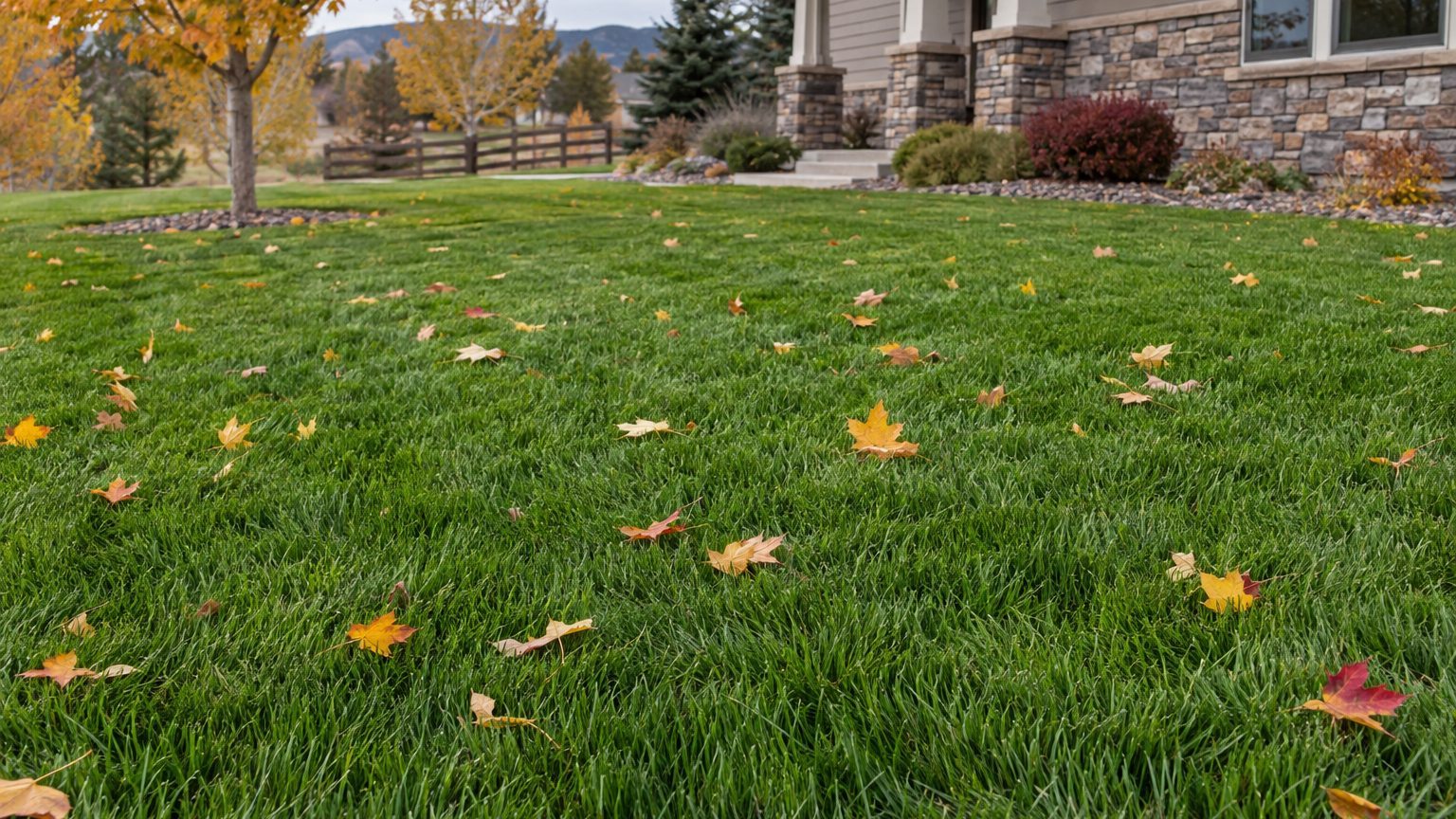
A Wyoming lawn stays dormant through much of the cold season, so the work packs into a short stretch from April to November. Mowing runs most of that stretch, seeding and aeration cluster in late summer, and feeding comes in fall.
What to Do Each Month in a Wyoming Lawn
Cool-season grasses such as Kentucky bluegrass carry most Wyoming lawns, and they grow hardest in spring and early fall. Each month below says what the grass is doing and what it needs from you.
| Month | In the lawn |
|---|---|
| January | Rest. The grass is dormant under snow and frozen ground, so keep foot traffic and plows off it. |
| February | Rest. The lawn stays dormant, making this a good time to sharpen the mower blade before spring. |
| March | Rest, mostly. Thawing ground is soft and easily rutted, so wait on raking and walking until it firms up. |
| April | Put down crabgrass preventer before the soil warms enough for weeds to sprout. Core aeration, dethatching and seeding also work this month, and the first mowing begins. |
| May | Mow as growth picks up. If April slipped by, crabgrass preventer, aeration and seeding still work now. Feeding can work in May, though fall is the main window. |
| June | Mow regularly and start watering deeply as the dry summer sets in. |
| July | Keep mowing and watering. Heat and wind dry the turf fast, so deep soaks beat frequent sprinkles. |
| August | Water through the heat, mow, and begin dethatching and seeding as the nights cool. |
| September | The busiest month for the grass: core aerate, dethatch, seed and feed while the soil is still warm enough to root new seedlings. |
| October | Keep mowing until growth stops. Hold off on seeding, but plan to feed in November. |
| November | Mow one last time if the grass still grows, and give the lawn a final feeding to carry it through winter. |
| December | Rest. The grass is dormant, and the main job is keeping heavy traffic and ice melt off it. |
Seed needs soil at 50 to 65 °F to germinate, which is why spring seeding comes later than you might expect and late summer works so well.
Wyoming — the year and the numbers
- State
- Wyoming
- USDA zones
- 3a-6a
- Last spring frost
- May 7 to May 18
- First fall frost
- September 24 to October 5
- Annual rain
- 15 in
- Lawn type
- cool-season
- Source
- NOAA NCEI 1991-2020 Climate Normals, 32F freeze probabilities · Cheyenne
When Does the Lawn Season Start and End in Wyoming?
Grass wakes up when the soil warms, not when the calendar says spring. In Wyoming that usually means April for the first mowing, with growth really building in May and June. Cool-season turf slows again as soil cools in October and stops by November or so.
Frost dates matter mostly for young seedlings. In Cheyenne, the last spring freeze tends to land between May 7 and May 18, so seed sown in April or early May can get nipped. The first fall freeze usually arrives between September 24 and October 5, which is why August and early September seeding gives roots time to settle.
Elevation stretches all of this. Roughly 130 frost-free days at 6,000 feet leaves little slack, and at higher elevations frost can show up in any month. Treat the dates as a guide and watch your own lawn.
How the Lawn Calendar Shifts Across Wyoming
Wyoming spans zones 3a to 6a on the USDA hardiness map, so the same task lands at different times depending on where you live.
- Cheyenne and the southeast plains: The dates above fit this area best. Wind and dry air make summer watering the main chore.
- Laramie and the high southern basins: Higher ground wakes later and cools sooner. Shift spring work toward May and finish seeding early in the late-summer window.
- Casper and the central basin: Growth starts a little later than on the southeast plains, with hot, dry summers that lean heavily on deep watering.
- Jackson Hole and the northwest valleys: Cold nights and deep snow shorten the season. Frost can come in almost any month, so go slowly with seeding.
Lower, warmer spots can start earlier, and cold pockets lag behind, so adjust the schedule as your own yard behaves.
Lawn Care Timing Mistakes to Avoid in Wyoming
Seeding Too Late in Fall

Seed sown after September has little time to root before the ground freezes. Seedlings that are still tender in a hard freeze often die or heave out of the soil.
Aim for August and September, and if you miss that, spring seeding in April or May is the fallback.
Applying Preventer Too Early or Late
Crabgrass preventer works only if it is down before the weed seeds sprout. Spread it in April, while the soil is still cool. If you wait until the weeds are visible, the preventer does nothing, and May is the last reasonable window.
Watering on a Frost Schedule
Many homeowners start sprinklers in spring because the grass looks green, then waste water while rain and snowmelt still do the job. The real need comes in June, July and August, when dry wind pulls moisture out of the turf. Water deeply then, and ease off as nights cool.
Where to Get Lawn Advice in Wyoming
Local soil, elevation and wind change the details, so a nearby expert helps. University of Wyoming Extension publishes research-based lawn guidance, and your county office can speak to your own valley or town.
- The state extension service has seeding, watering and weed guidance written for Wyoming conditions, useful before you plan a fall project.
- Your county extension office can answer questions about local soil and elevation, so call before buying seed or fertilizer in spring.
Common Questions
Can You Grow a Lawn at High Elevation in Wyoming?
Yes, with realistic expectations. Cold-hardy bluegrass and fescue blends handle short seasons, but expect slower growth, later green-up and the need to protect young seedlings from early frost.
Is It Okay to Mow Dormant Grass in Winter?
Dormant grass is not growing, so there is nothing to cut. Stay off frozen turf as much as you can, since walking on it breaks the crowns and leaves tracks in spring.
Should You Rake the Lawn After Snow Melts?
Lightly, once the ground has firmed up. Raking soggy turf tears it, but a gentle pass in April lifts matted grass and any snow mold so air and light can reach it.