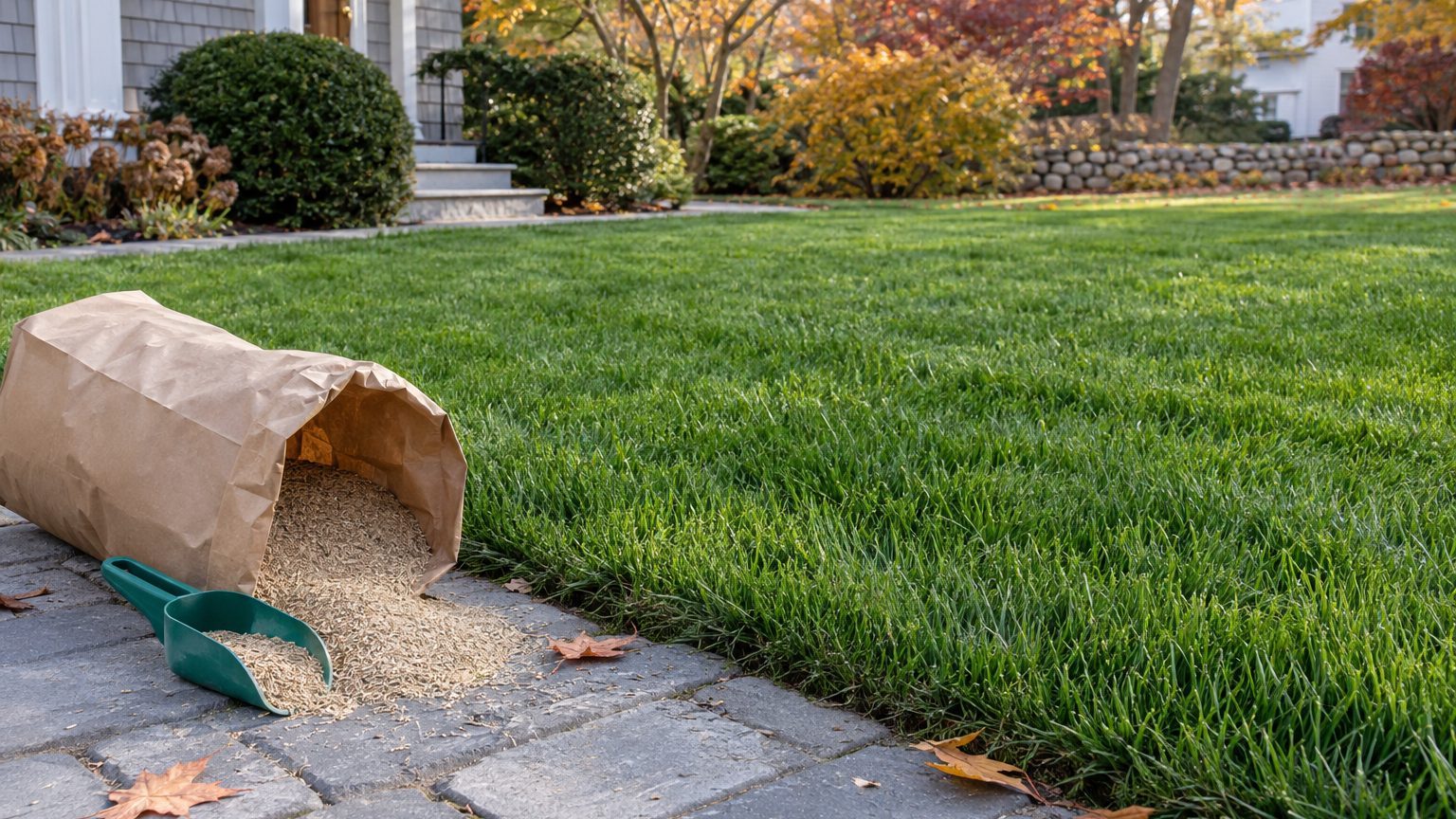
Seed a Rhode Island lawn in late summer and the young grass gets mild days and cool nights to root before winter. Cool-season grasses suit the state, and a blend of Kentucky bluegrass, fine fescues and perennial ryegrass handles most yards. Tall fescue earns a place where the lawn sees heat and traffic.
Which Grass Grows Best in Rhode Island?
Cool-season grasses fit Rhode Island’s winters and grow actively in spring and fall. Warm-season grasses go dormant and brown for much of the year, so they rarely make sense. Here are lawn grasses that fit different yards and levels of care.
Kentucky Bluegrass
Kentucky bluegrass makes the dense, dark green lawn most people picture, and it handles Rhode Island winters without trouble. It spreads by underground stems, so thin spots fill in over time. It wants full sun and a little patience, since it germinates slowly.
Fine Fescues
Creeping red, chewings and hard fescue are the shade and low-fuss choices. They tolerate dry, poor soil and need less fertilizer than bluegrass, which suits the sandy ground near the coast. Their fine blades look best mowed regularly but not scalped.
Perennial Ryegrass

Perennial ryegrass sprouts fast, so it covers bare ground and holds soil while slower grasses catch up. It works well mixed with bluegrass or fescue rather than alone. Hard winter cold can thin it in exposed yards, which is why it plays a supporting role.
Tall Fescue
Tall fescue sends down deep roots and stands up to summer heat, foot traffic and dry spells better than bluegrass. Its coarse, wide blades look different from the finer grasses, and it forms clumps instead of spreading. That can make it harder to blend into a uniform lawn, though it remains a solid pick for a hard-used yard.
Rhode Island — the year and the numbers
- State
- Rhode Island
- USDA zones
- 6a-7b
- Last spring frost
- April 7 to April 17
- First fall frost
- October 24 to November 3
- Annual rain
- 48 in
- Lawn type
- cool-season
- Source
- NOAA NCEI U.S. Climate Normals 1991-2020, 32F freeze probabilities · Providence
How to Choose Grass Seed for a Rhode Island Yard
Start with the light your yard gets, then think about how much wear it takes and how much you want to water and mow. A blend can help cover sunny and shady patches across a yard.
Seeding works best in August and September, and it also works in April and May. Cover seed no more than 0.25 inch deep and press it firmly against the soil so it makes contact.
| Yard situation | Grass that fits | Why |
|---|---|---|
| Full sun, tidy lawn | Kentucky bluegrass | Dense and self-repairing, with regular mowing and watering |
| Shade or under trees | Fine fescues | Tolerate low light and dry soil |
| Heavy foot traffic, kids, pets | Tall fescue | Deep roots and tough blades hold up to wear |
| Bare patches to fill fast | Perennial ryegrass in a blend | Sprouts quickly and shields the soil |
| Little watering or fertilizing | Fine fescues | Thrive on lean care |
If you prefer mowing less often, fine fescues grow slowly and can be left a bit taller. Bluegrass lawns reward steady attention, and mowing is possible from April through November as the grass grows.
Which Grasses Grow Where in Rhode Island
Rhode Island is small, but the salt air and the soil change from shore to inland, and that shifts which grass does well.
- Newport and the Atlantic coast: Salt spray, wind and sandy soil favor fine fescues, which cope with lean, dry ground better than bluegrass.
- Providence and the Narragansett Bay area: Bluegrass and ryegrass blends can suit local yards, while tall fescue helps in hot, trafficked spots.
- Northwest Rhode Island around Burrillville and Glocester: Colder, more wooded land means more shade and an earlier fall chill, so fine fescue blends and early seeding make sense.
Inland and wooded yards generally see frost sooner in fall and later in spring than the coast, so check your own county before timing a seeding.
Grass Seed Mistakes to Avoid in Rhode Island
Choosing the Wrong Grass for the Light
Bluegrass in deep shade thins out and gives way to moss and weeds. Match the species to the light first, and use a fine fescue blend under trees.
Seeding at the Wrong Time
Seed sown in midsummer heat struggles, and seed sown too late may not root before cold arrives. August and September give the best start, with April and May as a fallback. In the reference city of Providence, the first fall frost typically arrives between October 24 and November 3, though inland yards can see it earlier.
Using Too Much or Too Little Seed
Heavy seeding crowds seedlings, which then compete and fall prey to disease. Sparse seeding leaves gaps for weeds. Follow the rate on the bag for the species you chose, spread it evenly, and keep the soil moist while the grass sprouts.
Where to Get Lawn Advice in Rhode Island
Local soil and microclimate vary, so a quick check with a nearby expert saves guesswork. University of Rhode Island Cooperative Extension is the state’s land-grant extension service.
- The extension site offers lawn care guidance and soil testing information, useful before you buy seed.
- Your county or local extension office can answer questions about your own yard, best asked in early summer before the seeding months.
Common Questions
Can You Plant Warm-Season Grass in Rhode Island?
Warm-season grasses go dormant and turn brown through the long cool season here, so cool-season blends are the usual choice. If you want a green lawn across most of the year, stay with bluegrass, fescue or ryegrass.
Should You Mix Grass Seed Types?
Yes, a blend can work well because its grasses bring different strengths to the yard. Sun, shade and wear vary across a yard, and a mix can adapt to those conditions.
When Should You Fertilize a New Rhode Island Lawn?
May and September are the best months for fertilizing, with April and November as fallback. Fall feeding supports root growth after a late-summer seeding.