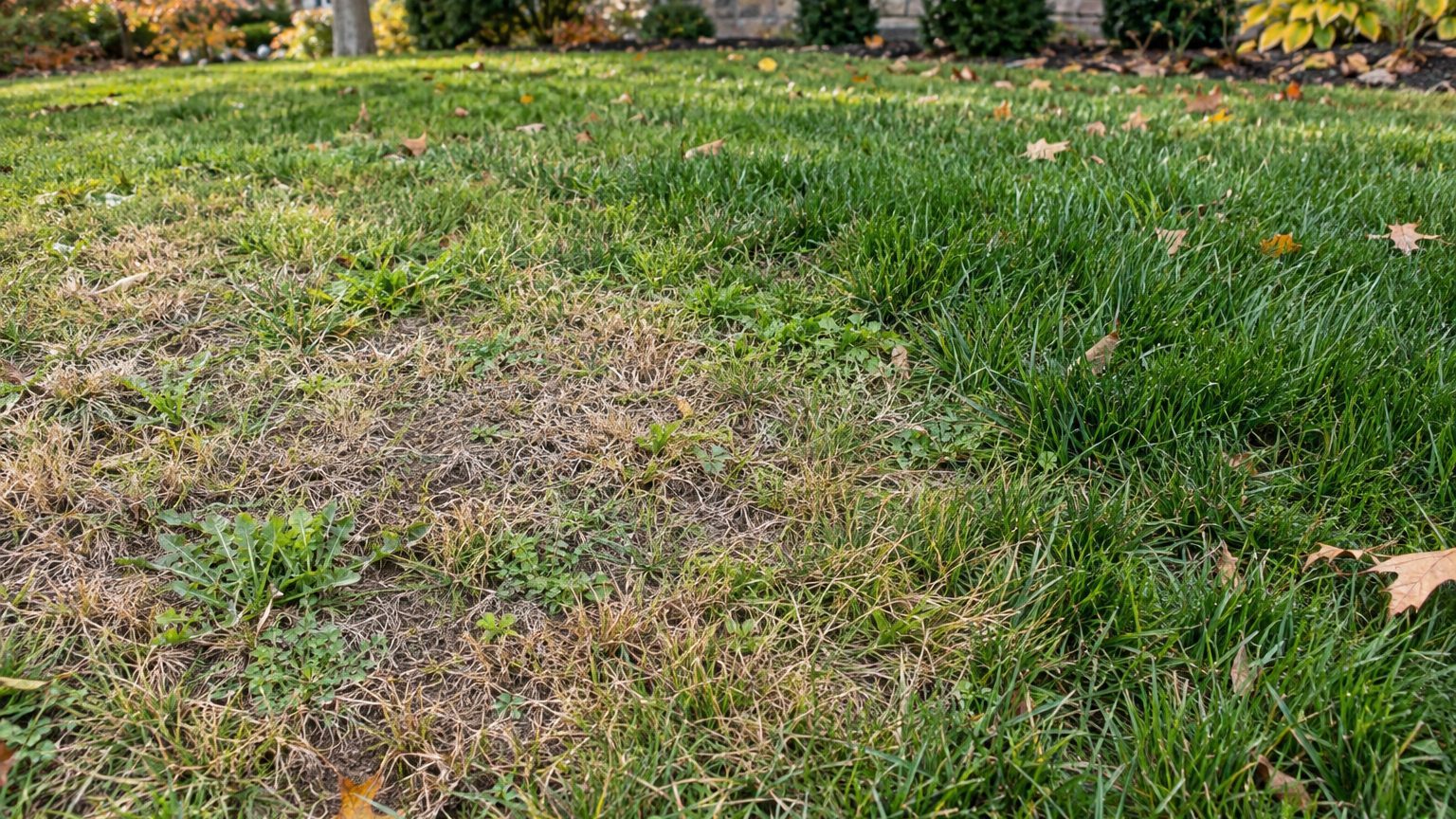
Coarse crabgrass clumps by July and crunchy tan patches in August are familiar sights across Maryland, where humid summers and cold winters put cool-season turf under real strain. Most trouble traces back to a few weeds, fungi and insects, plus a few habits that help them along. Once you know what each one looks like, the fix is usually simple.
Lawn Pests and Diseases in Maryland
Crabgrass

Crabgrass forms light green, coarse clumps that sprawl flat from a central point, mostly in thin, sunny turf. It grows from seed each year as the soil warms, so a pre-emergence preventer goes down in March or April, before the seeds sprout.
Thick grass shades out seedlings, which is why fall overseeding of bare spots pays off the following summer.
Brown Patch
Brown patch is a fungus of hot, muggy weather. Look for roughly circular tan or brown patches, sometimes ringed by a darker, smoky edge on mornings when the grass is still wet. Tall fescue lawns are frequent targets.
Water in the morning so blades dry by evening, and go easy on summer nitrogen, since lush soft growth invites the fungus.
White Grubs
White grubs are plump, cream-colored, C-shaped larvae that chew grass roots in late summer. The turf above them fades, then peels back like a loose rug, and crows, skunks or raccoons may tear up the area looking for a meal.
Tug a handful of the affected grass. If it lifts with almost no roots, dig a small square and check the soil for grubs before treating anything.
Thick Thatch
Thatch is the spongy tan layer of old stems and roots between the green blades and the soil. A layer up to 1/2 inch is healthy, and above that you should dethatch or core aerate.
In Maryland, dethatching fits September. Core aeration works in September or October, and it also works in April if fall got away from you.
Maryland — the year and the numbers
- State
- Maryland
- USDA zones
- 5b-8a
- Last spring frost
- April 3 to April 16
- First fall frost
- October 26 to November 5
- Annual rain
- 45 in
- Lawn type
- cool-season
- Source
- NOAA NCEI 1991-2020 Climate Normals, 32F freeze probabilities · Baltimore
How to Tell Which Lawn Problem You Have
Pair the patch’s appearance with its location and timing before deciding what caused it. A circular spot in a sunny, humid July points somewhere very different from a ragged patch under a maple.
Try the tug test too. Grass that pulls up like a flap of carpet is a root problem. Grass that stays rooted may be stressed by disease or drought, so inspect the blades and soil before deciding.
| What you see | Where and when | Likely cause |
|---|---|---|
| Coarse, light green clumps spreading flat | Sunny, thin turf, summer | Crabgrass |
| Circular tan patches, smoky edge at dawn | Hot, humid spells, wet grass overnight | Brown patch |
| Turf lifts like carpet, few roots | Late summer into fall, animals digging | White grubs |
| Spongy feel underfoot, water runs off | Whole lawn, worse where overfed | Thick thatch |
| Thin, weak grass that never fills in | Under trees or beside buildings | Too much shade |
Shade deserves its own mention because weed, disease and insect treatments do not correct a lack of light. Thinning under mature trees calls for shade-tolerant seed in fall, trimming lower limbs where possible, or a bed of mulch in place of turf.
Where Lawn Problems Are Worst in Maryland
The state stretches from mountain ridges to tidewater, across USDA zones 5b to 8a, so the same lawn problem arrives at different times in different places.
- Western Maryland: Garrett and Allegany counties are mountainous, and spring comes weeks later than in the rest of the state. The growing season is shorter, so fall seeding has less room for delay, but summer fungus pressure is lighter.
- Central Maryland: Around Baltimore, Frederick and the Washington suburbs, heavy clay and compacted soil hold water and slow roots. Brown patch and crabgrass both thrive in the heat that builds over pavement.
- Eastern Shore: Milder winters and long, humid summers favor disease, and sandy ground dries quickly, so drought stress and fungus can show up in the same lawn.
Local conditions in your own yard, such as shade and drainage, can matter as much as your region.
Lawn Care Mistakes That Invite Problems in Maryland
Mowing Too Short
Scalped grass has shallow roots, lets sunlight reach crabgrass seeds and struggles through heat. Mowing is useful from March through November, and the better habit is a high blade setting with a sharp blade, removing only a small part of the height at a time.
Watering Lightly Every Day
Short, frequent sprinkles keep the surface wet, which feeds brown patch and keeps roots near the top. Water deeply and less often instead, mostly in June, July and August, and run the sprinkler in the morning so the blades dry by dusk.
Feeding at the Wrong Time
Heavy summer feeding pushes soft growth that fungus loves. Fall is the better moment, in September, October or November, because roots strengthen before winter. A light spring feeding works in April only if the lawn needs it.
Keep the law in mind too. Maryland homeowners may not apply lawn fertilizer from November 16 to March 1.
Where to Get Lawn Advice in Maryland
Local advice beats guessing, because a fungus, a grub and a drought can look alike from the sidewalk. Local help is close at hand.
- University of Maryland Extension publishes lawn guides on renovation, overseeding and fertilizing, so check it before you plan a fall project.
- Your county extension office can look at a sample or a photo of the damaged turf, so call when a patch first appears.
Common Questions
Is Late October Too Late to Seed a Lawn in Maryland?
Mid-October is the cutoff for fall seeding. Seed that goes down earlier, from August through October, has time to root before cold weather. If you miss it, late winter into early spring also works, though young grass then faces summer heat sooner.
When Can You Lay Sod in Maryland?
September and October are the best months, since cooler air and warm soil help new roots knit in. April and May also work, but a spring sod job needs closer watering as summer approaches.
How Long Should You Keep Mowing in Fall?
Keep mowing through November while the grass is still growing. Stop once growth slows, and leave the lawn at a moderate height going into winter rather than cutting it short for the last pass.