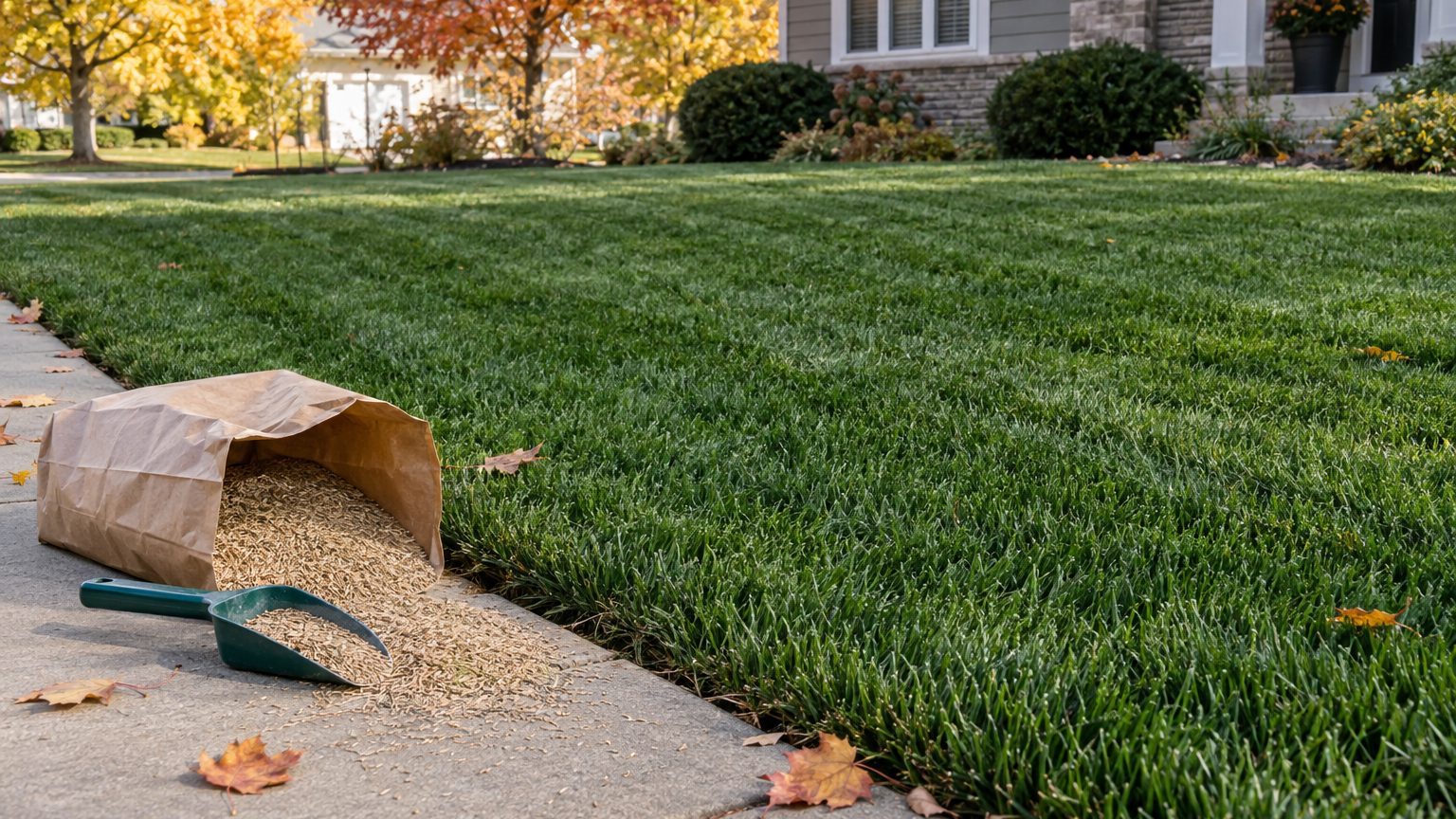
Walk an Iowa lawn in late summer and you can often tell what was seeded years ago by how it looks after the heat: some patches stay green and dense, others thin and go dormant. Iowa sits in the cool-season zone, so the grasses that work here are Kentucky bluegrass, tall fescue, perennial ryegrass and the fine fescues, usually sold alone or blended.
Which Grass Grows Best in Iowa?
Iowa spans USDA hardiness zones 4b to 6a, and cool-season grasses suit its cold winters. Cool-season species grow hardest in spring and early fall, then slow down in July heat. Seeding in August or September, with April and May as a fallback, gives them time to root before winter.
Kentucky Bluegrass
Kentucky bluegrass is a dependable choice across Iowa because it tolerates cold winters. It spreads by underground stems, so thin spots slowly fill in. It wants full sun and regular water through summer, and it is slower to sprout than ryegrass, so be patient after seeding.
Tall Fescue
Tall fescue puts down deep roots, which helps it ride out dry July and August stretches better than bluegrass. It forms clumps rather than spreading, so overseed bare patches instead of waiting for them to fill in. It is a good fit for yards that see dry spells or have trouble with frequent watering.
Fine Fescues
Creeping red, chewings and hard fescue tolerate shade and poor soil better than bluegrass does. They grow fine-textured blades and need less fertilizer and water. Under mature maples and oaks, they are usually the species that keeps a thin lawn going.
Perennial Ryegrass
Perennial ryegrass sprouts quickly, which makes it useful for fast cover and for mixing with slower seed. It usually works better as part of a blend than as the whole lawn. Expect it to thin after severe cold.
Iowa — the year and the numbers
- State
- Iowa
- USDA zones
- 4b-6a
- Last spring frost
- April 12 to April 24
- First fall frost
- October 14 to October 25
- Annual rain
- 37 in
- Lawn type
- cool-season
- Source
- NOAA NCEI 1991-2020 Climate Normals, 32F freeze probabilities · Des Moines
How to Choose Grass Seed for an Iowa Yard
Start with what your yard actually does: how much sun it gets, who walks on it, and how willing you are to water and mow. Those answers narrow the list quickly, and a mix of species can cover a yard with areas of sun and shade.
A blend also spreads the risk. If a species struggles in a hard winter or a dry summer, the others hold the ground.
| Grass | Season | Best fit in your yard |
|---|---|---|
| Kentucky bluegrass | Cool | Full sun, regular watering, a dense lawn that repairs itself |
| Tall fescue | Cool | Sun to part shade, foot traffic, dry summers |
| Fine fescues | Cool | Shade, low fertilizer, less frequent mowing |
| Perennial ryegrass | Cool | Quick cover, mixed into blends for play areas |
If you want a lawn that needs little mowing and feeding, lean on fine fescues. If kids and dogs use the yard daily, tall fescue with some bluegrass is a sturdy pairing. Wherever you plant, cover the seed with no more than 0.25 inch of soil and press it down so it touches the ground firmly.
Which Grasses Grow Where in Iowa
Iowa is a fairly even cool-season state, but winter cold and soil moisture shift the odds a little from one end to the other.
- Northern Iowa: Winters run colder here, so Kentucky bluegrass and fine fescues are suitable options, while perennial ryegrass is often mixed with other cool-season species.
- Central Iowa, around Des Moines: Every cool-season species can work, so choose by sun, shade and watering habits rather than by climate.
- Southern Iowa: Summers are hotter and drier on average, which gives tall fescue more of an edge for yards that go without much water.
Your own yard’s shade and soil matter more than the county line, so treat these as tendencies and not rules.
Grass Seed Mistakes to Avoid in Iowa
Choosing the Wrong Species
Seed that suits a different climate, or a shade blend sown in open sun, eventually fades. Read the label for the species names, match them to your light, and skip anything built around warm-season grasses.
Seeding at the Wrong Time
Summer heat and weeds work against young seedlings in spring, so August and September are the strongest window for seeding. If you miss September, April and May still work as a fallback. Seed sown in spring needs more watering to survive the summer heat.
Too Much or Too Little Seed
Thin sowing leaves gaps where weeds move in, while heavy sowing crowds seedlings and invites disease. Follow the rate printed on the bag for new lawns and use a lighter rate for overseeding. Spread it evenly, then keep the soil surface moist until the grass is up.
Where to Get Lawn Advice in Iowa
Iowa State University Extension offers turf guidance written for Iowa conditions, and your county office can speak to local soil and weather.
- Iowa State University Extension has lawn establishment and weed guides, worth reading before you buy seed in late summer.
- Your county extension office can advise on soil testing before you seed in August or September.
Common Questions
Can You Plant Warm-Season Grass Seed in Iowa?
Warm-season grasses are a poor match for Iowa’s cold winters and rarely hold up. Stay with the cool-season species in this article.
Is a Seed Blend Better than a Single Grass?
A blend usually copes better with a yard that mixes sun, shade and traffic, because each species covers a different weakness. A single species works if the whole yard is uniform.
Do You Need to Aerate Before Seeding?
Core aeration helps seed reach the soil on compacted lawns, and September is the best time for it. It also works in April or May if you are seeding in spring.