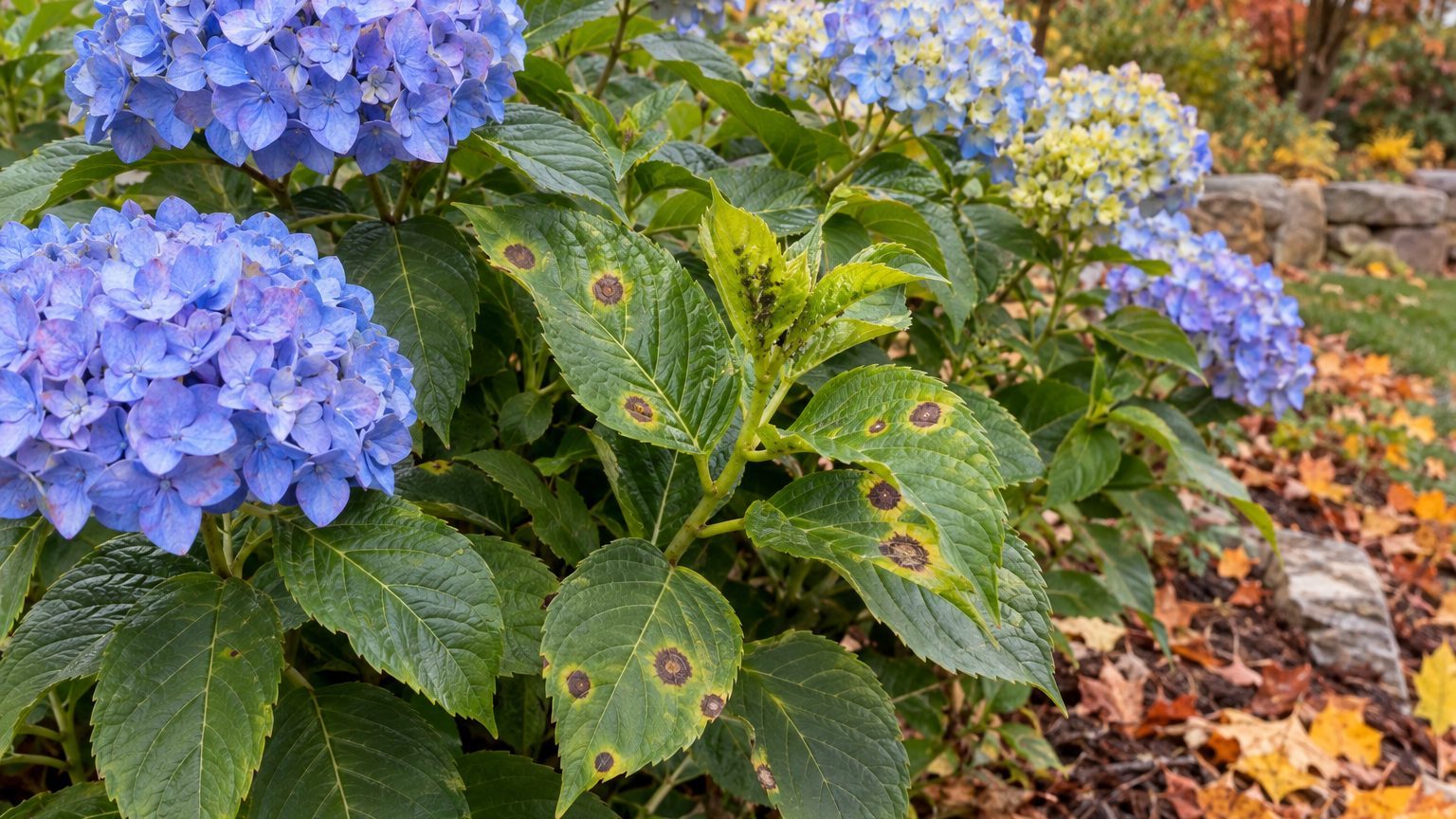
Nevada hydrangeas struggle more from dry heat and hard water than from any single bug crawling the yard. Spider mites, aphids, and the occasional patch of powdery mildew do show up, but sunscorch, chlorosis, and root rot tied to irrigation habits do the most damage statewide. Which problem you’re actually looking at depends on the season, your elevation, and how you water, not just the plant itself.
Hydrangea pests and diseases Nevada: The Short Answer
The USDA Plant Hardiness Zone Map puts Nevada across zones 4a to 10a, a spread wide enough that a hydrangea overwintering fine in Las Vegas can die outright in the high desert near Elko.
Frost data pinned to the Las Vegas airport shows a last spring frost of January 7 to February 1 and a first fall frost of December 8 to December 23.
That reading is a heat-island extreme, not a statewide guide. Elevation pushes frost months earlier in fall and later in spring almost everywhere else in Nevada, so check with your county extension office before setting dates.
Freeze-nipped flower buds
Bigleaf hydrangeas set next year’s flower buds by late summer, and a late cold snap in the mountains kills them before bloom even though the shrub looks green and healthy. Skip the spring hard prune and remove only dead wood after leaves emerge, since flowering depends on which buds survive winter, not on how hard you cut back.
Aphids on new growth
Clusters of small green or black insects gather on tender stem tips and the undersides of new leaves as hydrangeas leaf out, leaving curled growth and a sticky residue called honeydew behind. A strong water spray every few days knocks most colonies off before you need anything stronger, and ladybugs usually finish the job outdoors.
Spider mites in the heat
Fine webbing on leaf undersides and a stippled, dusty look across the foliage signal spider mites, which multiply fastest during the hottest, driest stretch of a Nevada summer. Hosing down the foliage weekly raises humidity enough to slow them, and mulch that keeps roots cool reduces the stress that draws mites in the first place.
Leaf scorch on the sunny side

Brown, crispy edges on leaves facing west or south point to sunscorch, not disease, and it worsens in reflected heat off stucco walls or gravel beds common in Nevada landscaping. Afternoon shade or a spot on the east side of the house prevents most of it, since no spray fixes a hydrangea planted in the wrong light.
Powdery mildew after overhead watering

A gray-white dusty coating on leaf tops, usually starting low on the plant, shows up when overhead sprinklers wet the foliage in the evening and it stays damp overnight. Switching to drip irrigation at the base and watering in the morning clears most cases without a fungicide, since dry leaves by nightfall stop the spores from spreading.
Root rot and yellow leaves

Wilting despite wet soil and leaves that yellow between the veins usually mean either root rot from Nevada’s heavy clay pockets holding water, or chlorosis from alkaline tap water blocking iron uptake. Raised beds with fast-draining soil solve the first problem, and an acidifying soil drench addresses the second.
Nevada — the year and the numbers
- State
- Nevada
- USDA zones
- 4a-10a
- Last spring frost
- January 7 to February 1
- First fall frost
- December 8 to December 23
- Annual rain
- 4 in
- Lawn zone
- warm-season
- Source
- NOAA NCEI U.S. Climate Normals 1991-2020, 32F freeze probabilities · Las Vegas
How to Work Out the Dates for Your Own Yard
Matching a symptom to the right fix starts with ruling out the obvious, in this order.
- Check the calendar first: if it’s June or July and lower leaves look scorched brown, that’s heat and sun, not disease, since Nevada’s prune window for bigleaf hydrangea falls in June and July, right when scorch peaks too.
- Look at the watering method: overhead sprinklers running at night point to powdery mildew, while soggy soil under a drip system running daily points to root rot instead.
- Turn a leaf over: fine webbing or a gritty feel means spider mites, sticky residue and curled tips mean aphids, and a clean, dry underside with brown edges up top means sunscorch.
- Test the soil, not just the leaf: yellow leaves with green veins on a well-watered plant usually trace back to Nevada’s alkaline tap water, not a pest at all.
- Time it against planting season: a new hydrangea set out in January or February that struggles by March is adjusting to transplant shock, not fighting a pathogen.
Run through that order before reaching for any spray, since most common Nevada hydrangea complaints trace back to water and light, not to a living pest at all.
Nevada North to South: How the Dates Shift
Nevada’s timing shifts more with elevation than with straight-line distance, and pests follow the same pattern.
- The high desert and mountains (Elko, Ely, the Tahoe basin): frost arrives months earlier in fall and lingers later in spring, so freeze damage to flower buds matters more here than any insect.
- The Reno-Carson City corridor (Reno, Carson City, Minden): milder than the high desert but still cold enough some winters that bud loss, not mites or mildew, is the main complaint.
- The Las Vegas valley (Las Vegas, Henderson, Boulder City): the mildest ground in the state and the driest air, which favors sunscorch, spider mites, and alkaline chlorosis over any cold-weather problem.
Check the state guide for your own frost window before assuming a Las Vegas timeline applies anywhere north of Reno.
Mistakes Nevada Punishes
Watering on a schedule, not by soil
Automatic sprinklers set to run daily regardless of temperature keep clay soil waterlogged one week and bone-dry the next, and that swing invites both root rot and spider mites in the same season. Check soil moisture with a finger before each watering instead of trusting a timer, since Nevada’s aridity punishes fixed schedules more than it punishes any single pest.
Planting outside the calendar window
Setting a new hydrangea into the ground during a July heat wave instead of Nevada’s January, February, October, or November planting window stresses roots before they establish, and stress draws aphids and mites in the first place. Wait for one of those cooler months and the same shrub settles in with far fewer pest calls.
Treating every yellow leaf as disease
Reaching for a fungicide the moment leaves yellow skips the real Nevada culprit most of the time, which is alkaline irrigation water blocking iron uptake, not a pathogen at all. A soil test and an iron chelate drench solve chlorosis directly, and spraying a healthy leaf for a disease it doesn’t have wastes time and money.
Nevada Extension Offices and County Contacts
The zone and frost numbers above set a starting point, but soil, wind, and local water chemistry finish the picture, and that’s where the county office comes in. University of Nevada, Reno Extension keeps the local calls current for your yard specifically.
- Your state page: the frost dates and the pruning window where you live.
- Which ones hold up here: varieties that take Nevada’s heat and alkaline soil without a fight.
- The planting calendar: the January, February, October, and November windows month by month.
Call your county office before you spray anything, since a five-minute description over the phone usually settles which of these problems you’re actually looking at.
Common questions
Do hydrangeas get powdery mildew in Nevada’s dry climate?
Yes, though less often than in humid states, and it almost always follows overhead watering in the evening rather than showing up on its own. Switching to morning drip irrigation clears most cases without any fungicide.
What causes yellow hydrangea leaves in Nevada gardens?
Alkaline tap water is the most common cause, blocking iron uptake and leaving leaves yellow between green veins even on a well-watered plant. Overwatered clay soil causing root rot is the second most likely cause.
Is it safe to prune away pest-damaged wood in summer?
Removing damaged stems during June or July, Nevada’s bigleaf pruning window, is fine, but cutting back healthy wood at the same time risks removing next year’s flower buds along with the damage.