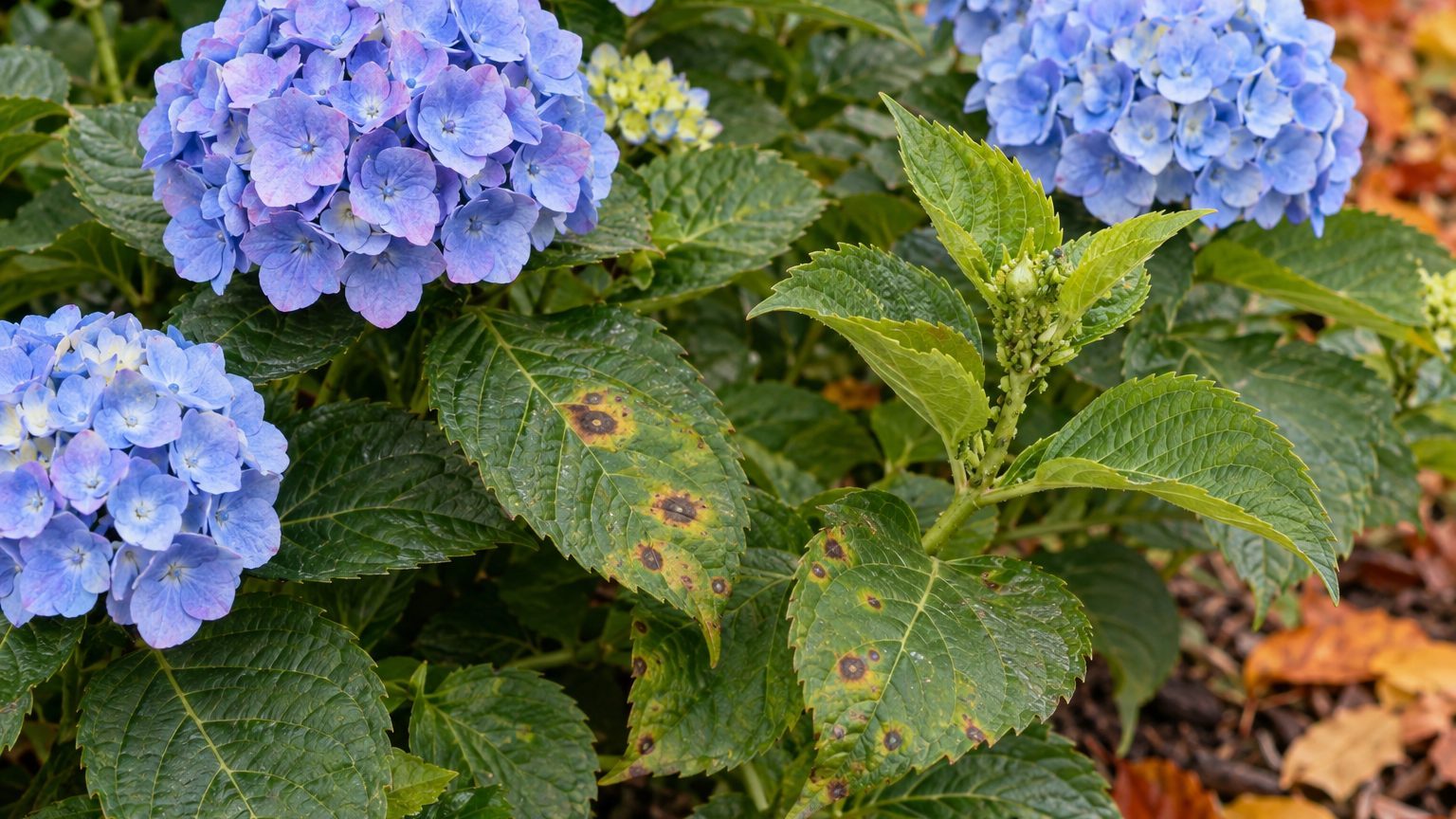
Hydrangeas in Maryland face a handful of recurring problems, most tied to the state’s humid summers and shifting frost windows. Aphids show up on new growth in spring, fungal leaf spots and powdery mildew spread once summer humidity settles in, and botrytis blight follows cool, wet weather into fall. Knowing which one you’re looking at, and when it typically appears, matters more than any single treatment product.
Hydrangea pests and diseases Maryland: The Short Answer
In Baltimore, the reference city used for frost timing across this guide, hydrangea trouble tracks the calendar tighter than most gardeners expect. NOAA NCEI 1991-2020 Climate Normals puts the last spring frost between April 3 and April 16, and that window marks when the first soft growth becomes vulnerable to feeding insects and fungal spores alike.
Slug damage on new shoots
Ragged holes and slime trails show up on the lowest leaves as soon as new shoots emerge, often before the last frost window even closes. Slugs feed at night in damp mulch. A dry mulch layer and evening inspection during the April planting window catch them before shoots harden off.
Aphids on new growth
Clusters of small, soft-bodied insects gather on tender tips right as growth resumes after the frost window closes. They leave curled leaves and a sticky residue that draws sooty mold. A strong water spray every few days, timed to the April or May planting window, usually knocks the population down.
Four-lined plant bug damage
Small, round, sunken spots appear on leaves in late spring, usually before the June pruning window opens. The insect feeds and moves on, so by the time damage is visible, spraying rarely helps. Removing affected leaves and cleaning up garden debris in fall reduces next year’s population.
Powdery mildew on leaves
A white, dusty coating spreads across leaf surfaces once summer humidity settles in, typically after the July fertilizing round. It rarely kills a shrub but weakens it over a season. Spacing plants for airflow and watering at soil level, not overhead, does more than any fungicide applied late.
Cercospora leaf spot
Small purple-brown spots with tan centers show up on lower, older leaves first, spreading upward through late summer. Heavily spotted leaves drop early, which looks alarming but rarely threatens the plant itself. Removing fallen leaves before the first fall frost window limits next season’s spore count.
Botrytis blight in fall

Gray, fuzzy mold covers flower clusters and soft stems after cool, wet weather moves in ahead of the October 26 to November 5 frost window. It spreads fast in crowded plantings. Cutting out affected tissue and improving airflow before that window closes is the gesture that actually works.
Maryland — the year and the numbers
- State
- Maryland
- USDA zones
- 5b-8a
- Last spring frost
- April 3 to April 16
- First fall frost
- October 26 to November 5
- Annual rain
- 45 in
- Lawn zone
- transition-season
- Source
- NOAA NCEI 1991-2020 Climate Normals, 32F freeze probabilities · Baltimore
How to Work Out the Dates for Your Own Yard
The frost window itself is only a starting point, working out which problem you’re actually dealing with means counting forward and backward from it.
- Count forward from the last spring frost: NOAA NCEI 1991-2020 Climate Normals puts Baltimore’s window at April 3 to April 16, so soft new growth appears within two to three weeks after that, which is when slugs and aphids move in first.
- Match new plantings to the April or May window: a shrub set out during that stretch is still adjusting roots through June, so yellowing then is more likely transplant stress than disease.
- Watch humidity after the July fertilizing round: powdery mildew and cercospora leaf spot both need sustained humidity, so symptoms appearing right after that round point to fungal causes rather than insects.
- Hold pruning to June or July: cutting bigleaf wood outside that window removes flower buds and opens fresh wounds right when fungal spores are most active.
- Recheck before the first fall frost: the October 26 to November 5 window is the last realistic point for spotting botrytis blight before cooling weather masks the signs under natural leaf drop.
Run through that sequence once and most of what shows up on a Maryland hydrangea sorts itself into pest, fungus, or ordinary stress, without guessing from a single photo.
Maryland North to South: How the Dates Shift
Frost dates and humidity don’t move the same way across Maryland, and that changes which problem tends to show up first in a given yard.
- Western Maryland (Garrett, Allegany): the mountains push both frost dates weeks later than the state average, which shortens the humid stretch and eases fungal pressure but raises the odds of a late frost catching new growth.
- Central Maryland (Baltimore, Howard, Montgomery): sits closest to the reference window used throughout this guide, with the fullest overlap between the April to May planting stretch and the June to July pruning window.
- The Eastern Shore (Talbot, Dorchester, Wicomico): the bay’s moderating effect keeps both frost dates milder, stretching out the humid season and giving powdery mildew and leaf spot more weeks to spread each summer.
Whichever part of the state a yard sits in, the calendar still starts from the same two windows, just shifted a few weeks in one direction or the other.
Mistakes Maryland Punishes
Pruning bigleaf outside its window
Cutting old wood before June or after July removes next year’s flower buds and leaves fresh wounds exposed right as fungal spores peak for the season. Bigleaf hydrangea sets buds on old wood, so timing the cut to that stated window matters more than the tool used.
Fertilizing straight into fall
A round outside the March, May, or July schedule pushes soft new growth right before the first frost window, and that tender tissue is the first thing aphids and botrytis attack. Stopping after July gives new growth time to harden off before cold weather arrives.
Planting in full sun without airflow
A shrub set out during the April or May window but crowded against a fence or wall traps humidity against the leaves all summer, which is exactly what powdery mildew and cercospora leaf spot need to spread. Spacing at planting time avoids the problem entirely.
Maryland Extension Offices and County Contacts
The zone and frost figures above are a starting point, your county extension office tracks the pest and disease pressure that actually shows up on your street each season.
- University of Maryland Extension: extension.umd.edu lists county offices, current pest alerts, and plant diagnostic clinics.
- Your county office: the nearest branch can confirm whether a leaf spot is fungal or bacterial before you spray anything.
- Master Gardener volunteers: reachable through the same extension network, for a quick photo-based diagnosis before a problem spreads further.
Common questions
Do brown spots on hydrangea leaves always mean disease?
Not always. Sunscorch from full afternoon sun looks similar to cercospora leaf spot but shows up only on the sun-facing side and doesn’t spread the same way. Checking both sides of the shrub before treating helps tell the two apart.
Can I treat pests and diseases at the same time I fertilize?
The March, May, and July fertilizing rounds are a reasonable time to inspect for both, but any treatment should target the actual problem found rather than being applied on that schedule automatically.
Does one bad season mean I should replace the shrub?
Usually not. Most of the problems listed here, from aphids to leaf spot, weaken a hydrangea without killing it, and a shrub given better airflow and correct pruning timing the following year typically recovers on its own.