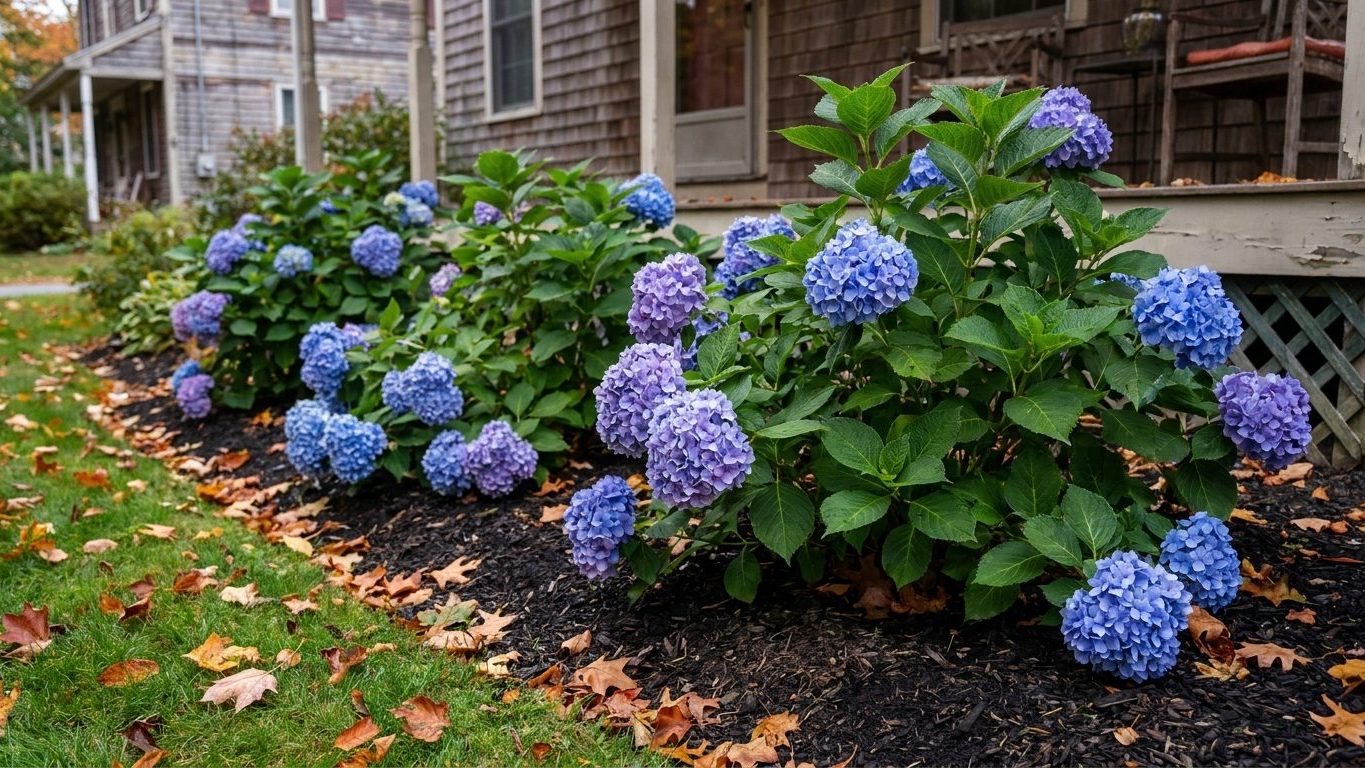
In Maine’s cool, damp climate, hydrangea trouble follows a predictable order: winter cold kills flower buds before any insect shows up, cool spring dampness invites fungal blight, summer humidity brings mildew and leaf spot, and deer browse stems all winter long. Matching the problem to the month keeps you from treating the wrong thing.
Hydrangea pests and diseases Maine: The Short Answer
Portland sits at the mild edge of a state the USDA Plant Hardiness Zone Map places at zone 3b to 6a, and that spread is the reason winter injury outranks any single insect or fungus on a Maine hydrangea. The short list, in the order symptoms show up through the season, runs from winter bud kill through botrytis blight, aphids, powdery mildew, leaf spot, and deer browsing.
Winter bud kill

Cold that dips below the shrub’s hardiness limit kills flower buds set the previous fall, so a healthy bigleaf leafs out but stays bare of blooms. Choose reblooming or panicle types and skip fall pruning to protect old wood through a 3b to 6a winter.
Botrytis blight
Cool, damp spring weather lets gray mold settle on soft new growth, leaving water soaked spots that turn brown and fuzzy on flowers and leaves. Space plants for airflow, water the soil rather than the foliage, and clip off infected tissue as soon as you spot it.
Aphids
Small green or black insects cluster on tender new shoots by early summer, curling leaves and coating stems with sticky honeydew that draws ants and sooty mold. A strong hose spray on most mornings knocks the colony down before it needs anything stronger.
Powdery mildew
A white, flour like coating spreads across leaf surfaces during humid stretches of midsummer, especially where plants sit crowded or in shade. Improve air circulation, avoid overhead watering in the evening, and remove the worst leaves rather than treating the whole shrub.
Leaf spot
Purple brown spots ringed with yellow appear on lower leaves during wet summers, spreading upward as spores splash from soil to foliage. Rake up fallen leaves each fall so the fungus has nowhere to overwinter, and keep fresh mulch under the shrub.
Deer browsing

Deer strip buds and stems through fall and winter when other browse is scarce, leaving ragged, angled damage rather than the clean cut of pruning shears. Fencing or repellent applied before first frost protects the shrub through Maine’s long dormant season.
Maine — the year and the numbers
- State
- Maine
- USDA zones
- 3b-6a
- Last spring frost
- April 22 to May 1
- First fall frost
- October 9 to October 21
- Annual rain
- 48 in
- Lawn zone
- cool-season
- Source
- NOAA NCEI 1991-2020 Climate Normals, 32F freeze probabilities · Portland
How to Work Out the Dates for Your Own Yard
Working out which problem you actually have starts with matching the calendar to the symptom, since Maine’s freeze window frames almost every diagnosis.
- Mark the last spring frost: NOAA NCEI 1991-2020 Climate Normals put Portland’s last spring freeze at April 22 to May 1, so bare stems past that window point to winter bud kill rather than disease.
- Watch the first month of new growth: soft, curling shoots during the May fertilize window suggest aphids, while brown, fuzzy patches suggest botrytis instead.
- Check leaves in midsummer heat: a white film during the June to July bigleaf prune window points to powdery mildew, while spotted lower leaves point to leaf spot.
- Look for ragged stems by fall: clean cuts you made yourself look different from the torn, angled damage deer leave behind on unprotected stems.
- Count backward from the first fall frost: the October 9 to October 21 window marks when most pest activity slows sharply as nights turn cold.
Match the symptom to the month it appeared rather than guessing from a photo online, since the same brown leaf edge can mean three different things depending on whether it showed up in May or August.
Maine North to South: How the Dates Shift
Portland anchors the mild end of Maine’s frost calendar, and every other part of the state pushes those dates in one direction, which shifts which pest or disease shows up first.
- The coast (Portland, Bar Harbor, the immediate shoreline): the ocean holds warmth into fall and delays the first freeze, so botrytis blight and powdery mildew get a longer stretch of humid weather to work with than inland gardens see.
- Interior valleys and lake country (Sebago Lake, Moosehead Lake, the Belgrade Lakes area): cold air settles into these low pockets on clear nights, so flower buds face a harder freeze risk than the official zone number for the area would suggest.
- The north and high country (Aroostook County, the western mountains near Rangeley): winters here reach the coldest end of the state’s 3b to 6a range, so bud kill and deer browsing matter more than fungus, which struggles in a shorter, drier growing season.
Check the state guide for the frost dates and pruning window that match your own county before acting on any of this, since a shrub in Aroostook faces a different calendar than one three hours south on the coast.
Mistakes Maine Punishes
Pruning bigleaf hydrangea in fall
Cutting stems back after summer removes flower buds already set for next year’s blooms, and Maine’s early fall frost leaves the shrub no time to recover before winter. Prune bigleaf hydrangea only during the June to July window while it is actively growing, and leave the old wood untouched once fall arrives.
Skipping winter protection on exposed sites
An unprotected shrub facing open wind and exposed sites loses more flower buds to winter desiccation than to any single hard freeze number on a hardiness map. Wrap stems loosely once the ground freezes solid and pile mulch heavily at the base, since exposure matters as much here as the zone label.
Fertilizing outside the growth windows
Feeding a hydrangea outside its growth windows pushes soft new growth that never hardens before the first fall frost arrives in early to mid October. Stick to the March, May, and July fertilize windows only, and stop feeding entirely once August begins so stems can toughen ahead of winter.
Maine Extension Offices and County Contacts
The zone 3b to 6a range printed on a hardiness map is a statewide average, and University of Maine Cooperative Extension keeps the county-level detail that map can’t show, including soil results and confirmed pest reports for your area.
- Your state page: the frost dates and the pruning window where you live.
- Which ones hold up here: the hydrangea varieties bred to handle a Maine winter without losing next year’s flowers.
- UMaine Cooperative Extension: county offices that test soil, confirm a pest ID, and answer questions specific to your yard.
Common questions
What is the most common hydrangea problem in Maine?
Winter bud kill leads the list by a wide margin, since the state’s 3b to 6a hardiness range means flower buds set in fall often don’t survive to spring, leaving a healthy shrub with plenty of leaves but no blooms.
Do I need to spray for pests every year?
No. Aphids and mild fungal spotting rarely need chemical treatment in a Maine yard. A hose spray for aphids and good airflow for fungus handle most seasons, with stronger measures reserved for a confirmed, spreading problem.
When can I stop worrying about frost damage?
Once you’re past the last spring frost window of April 22 to May 1, new growth is generally safe from a killing freeze, though a late cold snap in a low pocket or northern county can still catch tender shoots off guard.