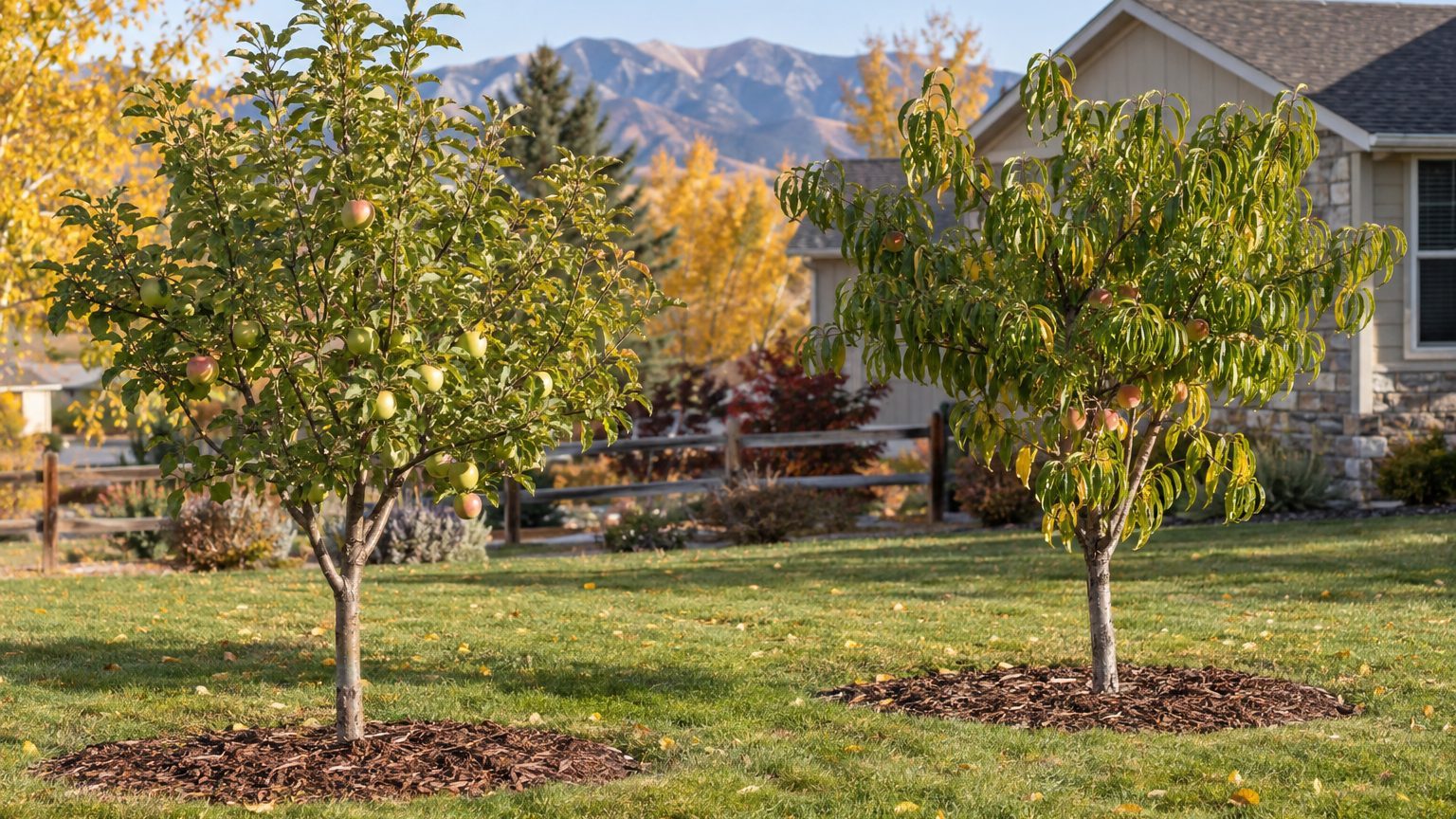
A fruit tree in Wyoming has to sit through winters cold enough to put parts of the state in USDA zone 3a, then flower after a late frost. That narrows the choice to a short list of hardy trees. Apples, tart cherries, pears and crabapples lead it, and peaches take extra care.
Best Fruit Trees to Grow in Wyoming

Hardiness decides the list. USDA zones run from 3a to 6a across the state, so the coldest yards and the mildest ones need different trees. Pick for your own elevation and your own low temperatures, then match the tree to the soil and water you have.
Semi-Dwarf Apples
Apples are the standard home orchard tree, and dwarf trees are the ones usually recommended for home gardeners. Dwarf trees need careful training and staking, though, and they are less cold-hardy than semi-dwarf trees. In a cold yard, a semi-dwarf is the safer pick.
Apples are pruned first among fruit trees, while dormant and before the buds swell.
Apple Rootstocks
The rootstock under the graft matters in a dry climate. Some apple rootstocks resist woolly apple aphid and are reportedly more drought resistant than the others. Ask the nursery which rootstock a tree is on before you buy.
Tart Cherries
Tart cherries are very cold-hardy, which suits a state with zone 3a winters. The fruit goes into jams, syrups and other tart cherry recipes. Cherries settle better when planted in spring than in fall, so plan on spring planting.
Pears
Pears take more selection than apples. Parker and Golden Spice were the best performing pears in northern research plantings, where winters are long and cold like Wyoming’s. They are worth asking for by name.
Crabapples
Crabapples are fairly drought tolerant once established, and they need only 15 to 20 inches of annual moisture, counting rain plus any watering you add. Varieties differ in disease resistance, and some are more susceptible than others. Choose cultivars rated for disease resistance and for higher elevations.
Peaches
Peaches are the touchy one. Their flower buds are easily hurt by cold, so they are pruned last, closest to bloom. Where winters have warm spells, peaches with higher chill hour requirements are typically the better fit. Common rootstocks such as Bailey, Lovell and Halford are relatively cold-hardy, but they struggle in alkaline soil and can develop iron chlorosis.
Wyoming — the year and the numbers
- State
- Wyoming
- USDA zones
- 3a-6a
- Last spring frost
- May 7 to May 18
- First fall frost
- September 24 to October 5
- Annual rain
- 15 in
- Lawn zone
- cool-season
- Source
- NOAA NCEI 1991-2020 Climate Normals, 32F freeze probabilities · Cheyenne
How to Choose a Fruit Tree for Your Wyoming Yard
Start with how cold your yard gets and how much time you want to spend. A tree that suits a sheltered town lot may fail on an exposed ridge.
Elevation changes the math. Roughly 130 frost-free days is what a yard at 6,000 feet gets, and frost can arrive in any month at higher elevations.
| Your situation | What suits it in Wyoming | Why |
|---|---|---|
| Very cold winters | Tart cherry or semi-dwarf apple | Tart cherries are very cold-hardy, and dwarf apples are less cold-hardy than semi-dwarf |
| Little time to give | Crabapple | It is fairly drought tolerant once established |
| Small space | Dwarf apple | It stays compact, but needs staking and careful training |
| Dry yard | Apple on a drought-resistant rootstock | Some rootstocks resist woolly apple aphid and handle dry soil better |
| Short season or high elevation | Parker or Golden Spice pear, or a crabapple chosen for elevation | Both did well in northern trials, and crabapple cultivars vary by elevation |
| Winter warm spells | Peach with a higher chill hour need | It is less likely to wake early and lose buds to a return of cold |
| Alkaline soil | Skip Bailey, Lovell and Halford rootstocks | They are not very tolerant of alkaline soil and can show iron chlorosis |
Peaches are the one tree in that list where the choice depends most on your yard, because bud loss in a cold snap can cost a whole season of fruit.
Fruit Tree Buying Mistakes to Avoid in Wyoming
Buying a Tree Too Tender for Winter
A dwarf apple looks tidy on the nursery tag, but it is less cold-hardy than a semi-dwarf. In a zone 3a yard it can suffer winter damage that a semi-dwarf would shrug off. Match the rootstock and size to your coldest spot, not to the mildest town.
Choosing a Variety That Does Not Fit
Some crabapple varieties are more susceptible to disease than others, and cultivars that thrive at low elevations may struggle higher up. Peaches bring a different version of the same mistake. A low-chill peach tends to wake early in a winter warm spell, and the open buds then freeze. Ask for varieties with higher chill hour requirements.
Buying a Potted Tree Without Knowing Its Adult Size
A small pot hides a large tree. Before you pay, find out what the tree will grow into, whether it needs staking, and whether it is a dwarf or a semi-dwarf. Then measure the spot. A tree crowded against a fence or a power line ends up pruned hard every year, and hard pruning on the wrong schedule costs bloom.
Where to Get Fruit Tree Advice in Wyoming
Local conditions vary a lot between a Laramie yard and a lower valley, so ask people who know your ground. University of Wyoming Extension is the state’s starting point.
- The extension office in your county can tell you which varieties people nearby grow, and a visit in late winter gives you time to order before planting.
- Extension staff can help you read a tree that looks wrong, such as pale leaves with green veins, before you buy a fix.
Common Questions
When Should You Plant a Fruit Tree in Wyoming?
April suits both bare-root and container trees, and it can also be done in March or May. Bare-root trees go in only while still dormant, before the buds open.
When Should You Prune Fruit Trees in Wyoming?
Prune in February or March, after the worst cold and before the buds swell, though April still works. Fall and early winter are avoided, because new growth may not harden before the cold. Peaches are done in February or March.
Can You Plant a Fruit Tree in Summer or Fall?
Summer is the hardest time, since heat and dry soil stress new roots. Container trees can go in most of the year if they are watered, but they settle best in the dormant season. A tree planted in fall is watered until the ground freezes, and cherries and plums do better planted in spring.