Skip to content
  1. Jan
  2. Feb
  3. Mar
  4. Apr
  5. May
  6. Jun
  7. Jul
  8. Aug
  9. Sep
  10. Oct
  11. Nov
  12. Dec
State
Massachusetts
USDA zones
5a-7b
Last spring frost
April 1 to April 8
First fall frost
November 3 to November 14
Annual rain
44 in
Lawn zone
cool-season
Source
NOAA NCEI 1991-2020 Climate Normals, 32F freeze probabilities · Boston

The year in Massachusetts, from the calendar

  1. Jan—
  2. Feb—
  3. MarFeed hydrangeas · Renew an overgrown lilac · Plant roses · Prune roses · Uncover roses in spring
  4. AprSpring bulbs bloom · Plant hydrangeas · Lilacs bloom · Renew an overgrown lilac · Feed roses
  5. MaySpring bulbs bloom · Feed hydrangeas · Plant hydrangeas · Lilacs bloom · Prune lilacs
  6. JunPrune bigleaf hydrangeas · Prune lilacs · Peonies bloom · Feed roses · Mow
  7. JulFeed hydrangeas · Prune bigleaf hydrangeas · Feed roses · Mow · Water
  8. AugSeed the lawn · Plant peonies · Mow · Water
  9. SepPlant hydrangeas · Seed the lawn · Plant peonies · Aerate · Dethatch
  10. OctPlant spring bulbs · Plant hydrangeas · Mow · Plant trees
  11. NovCut back peonies · Protect roses for winter · Mow · Plant trees
  12. DecCut back peonies

From the state frost facts and extension calendars: University of New Hampshire Extension ; University of New Hampshire Extension · Cornell Cooperative Extension (Monroe County) · Clemson HGIC factsheet — Hydrangea · UMass Extension — BMPs for Lawn and Landscape Turf, Appendix B (calendar).

Best Spring Bulbs for Massachusetts

Best Spring Bulbs for Massachusetts

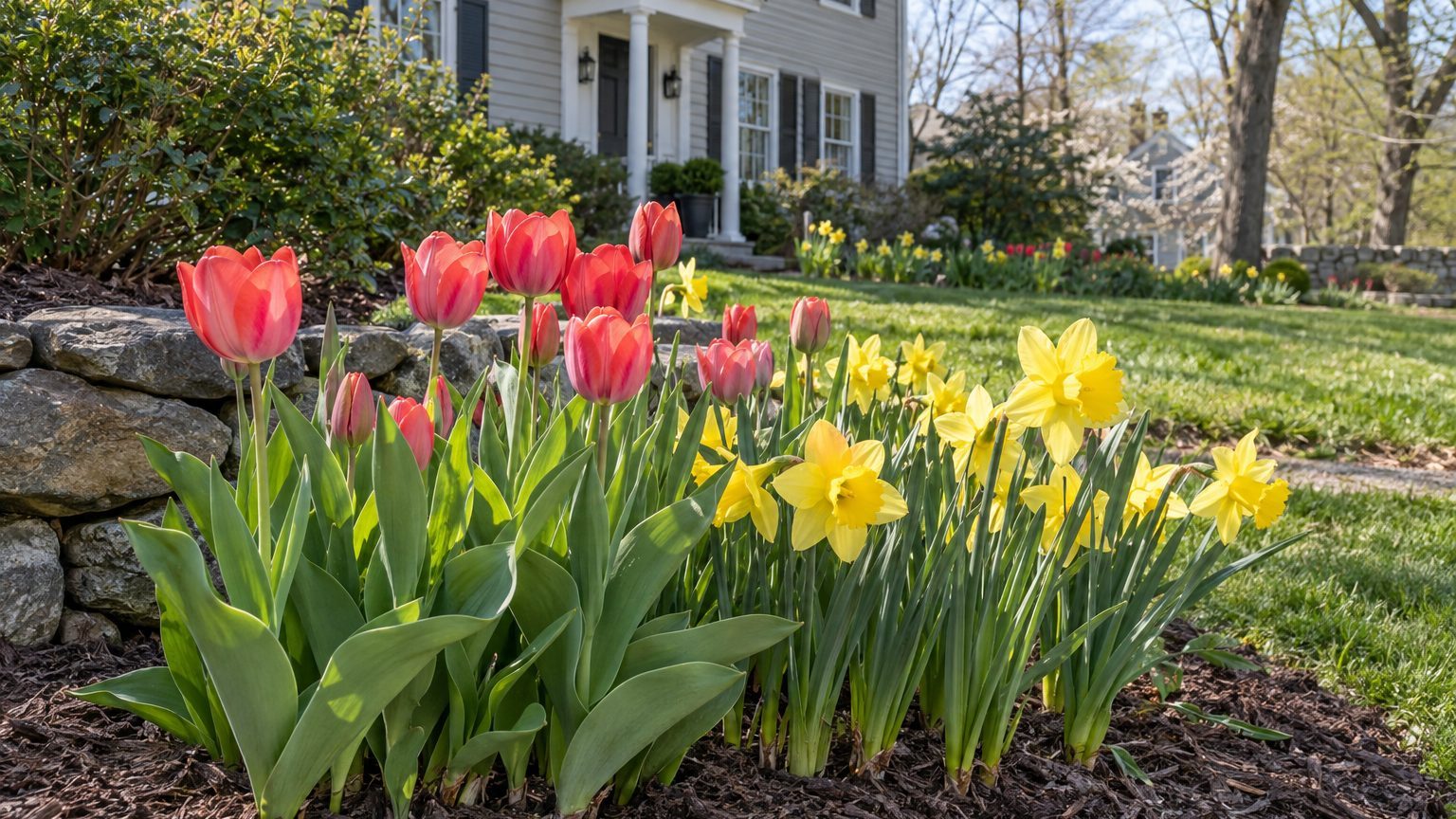
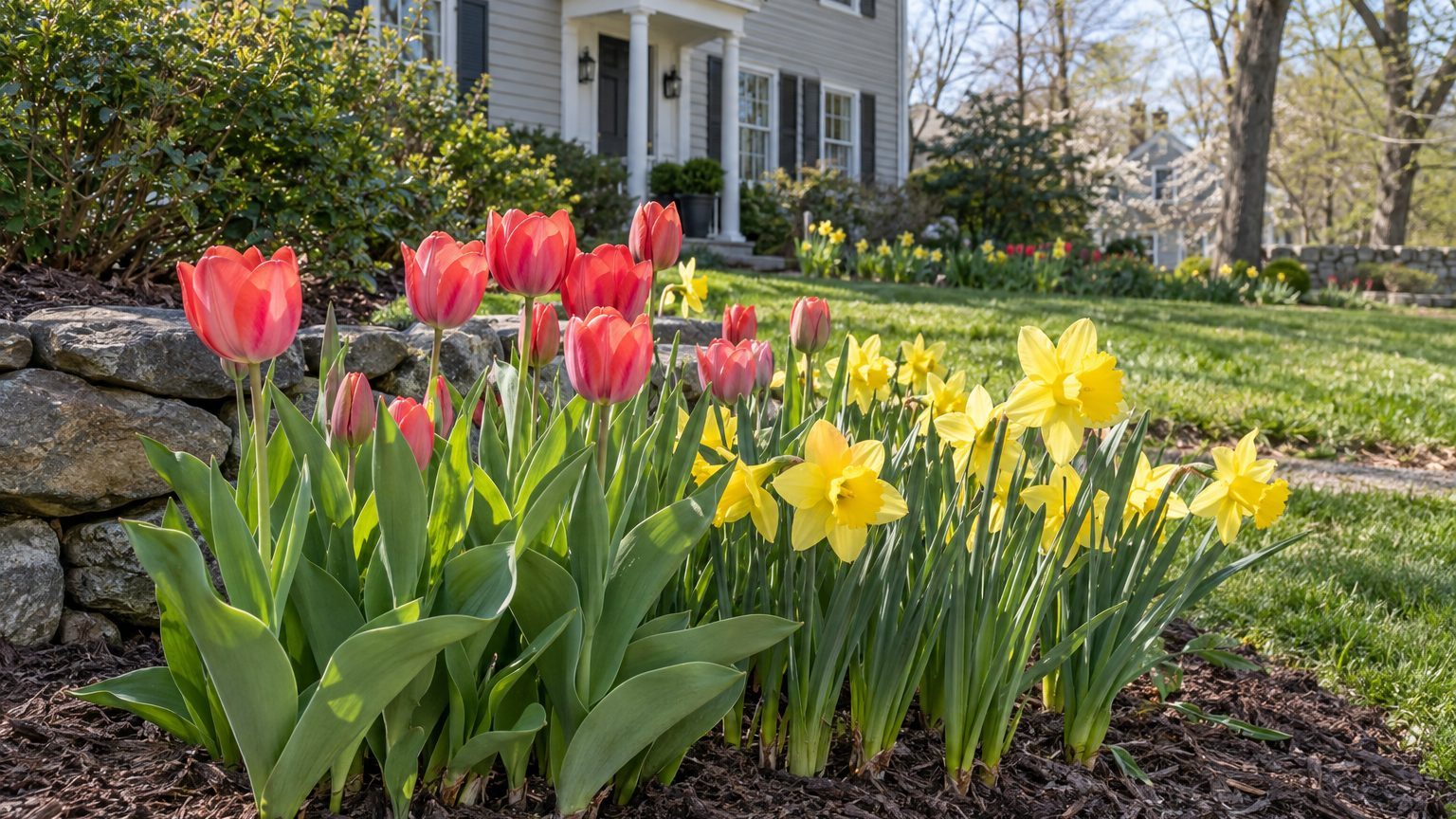
Daffodils shining under a bare maple in April are a Massachusetts regular, and they come back year after year with almost no help. Tulips, crocus, alliums and hyacinths all bloom here too, but they do not all last equally well. The right choice depends on your winter, your wildlife and how much care you want to give.

Best Spring Bulbs to Grow in Massachusetts

Healthy spring bulbs in bloom

Daffodils are the dependable choice, with Fosteriana tulips, alliums, crocus and hyacinths close behind. Massachusetts spans USDA zones 5a to 7b, and every bulb below handles that range. The winter cold here also supplies the chill that most bulbs need before they flower.

Daffodils

Most daffodils are hardy to zone 3, so Massachusetts winters are no threat to them. They last longer than tulips, and they are the more reliable perennial bulb.

Deer, voles, squirrels and rabbits leave them alone. Daffodils also naturalize well, especially in partly shady spots under trees.

Fosteriana Tulips

Most garden tulips fade after a few seasons. Fosteriana tulips perennialize well, which makes them the tulip to pick if you want blooms to return.

Plant them in sun with good drainage. Fence or protect them if animals visit your yard, since tulips are a favorite food.

Alliums

Alliums, the ornamental onions, bloom at the end of the bulb season and carry color after the daffodils fade. They do not need a chill period to bloom, so a mild winter spell does not hold them back.

Crocus

Crocus are small, early and cheerful, tucked into lawn edges or beds. Squirrels, voles and rabbits eat them, so they do best where you can guard them or accept some losses.

Hyacinths

Hyacinths add fragrance near a door or walkway. Like tulips, they need about 12 to 16 weeks of cold to flower, and a Massachusetts winter delivers it without any help from you.

How to Choose Spring Bulbs for Your Massachusetts Garden

Start with what your yard throws at a bulb: cold, hungry animals, shade or a short list of free weekends. Each problem points to a different bulb.

Think about how long you want the planting to last, too. A bed of tulips is a seasonal treat, while daffodils are an investment that keeps paying.

Your situation What suits it in Massachusetts Why
Very cold winter Daffodils Most are hardy to zone 3, far colder than your winter gets.
Deer, squirrels, voles or rabbits Daffodils Animals leave them alone, while tulips and crocus get eaten.
Little time for upkeep Daffodils in a partly shady spot They naturalize well and last longer than tulips.
Tulips that return Fosteriana tulips They perennialize well, unlike many short-lived tulips.
Worry about winter cold Tulips and hyacinths planted in October They need about 12 to 16 weeks of cold, which a Massachusetts winter supplies.
Doubt about chilling Alliums They need winter cold to bloom

Daffodils can also serve as deer training plants. Set them around more tempting plants and animals learn to browse elsewhere.

Which Spring Bulbs Suit Different Parts of Massachusetts

Massachusetts has more climate variety than its size suggests, and a few local differences change what you plant.

  • The Berkshires: Winters bite harder here and spring frost lingers later, so lean on daffodils, the most cold-tolerant bulb. Expect blooms toward the later part of the season.
  • Boston and the waterfront: Milder than anywhere inland, which makes this the easiest place for tulips and hyacinths. They still get the winter cold they need.
  • Inland suburbs: Frost arrives earlier in fall and leaves later in spring than at the shore. Daffodils and Fosteriana tulips are a safe bet, with alliums to finish the season.

Wherever you garden, check your own yard for microclimates such as a warm south wall or a frosty low spot.

Spring Bulb Buying Mistakes to Avoid in Massachusetts

Planting Too Early

Bulbs that go in during warm weather can sprout in the fall, and that tender growth does not survive winter. Wait until the soil has cooled below about 60°F. In Massachusetts, October is the month to plant, so roots form before the ground freezes. If the ground is not frozen, November or December still works.

Expecting Tulips to Last Forever

Many tulips fade after a few seasons, and animals make it worse. A big tulip order near wildlife often means a bare bed by the second spring. Mix in daffodils, choose Fosteriana tulips, or plan to replant tulips as a seasonal display.

Cutting Leaves Too Soon

Tulips and daffodils flower on energy their leaves store. Cutting or tying the foliage while it is green starves the bulb. Remove only the faded flowers and leave the leaves until they turn brown, and next spring’s blooms will be stronger.

Where to Get Spring Bulb Advice in Massachusetts

Local help is easy to find. University of Massachusetts Extension is the state’s land-grant extension service and answers questions about bulbs, soil and pests, with advice tuned to Massachusetts conditions.

  • University of Massachusetts Extension publishes planting guidance and fact sheets, so check it before you order bulbs in late summer.
  • Your county or regional extension office can look at a problem bed or a soil question, so call before planting season starts.

Common Questions

When Do Tulips and Daffodils Bloom in Massachusetts?

Most flower in April and May. The earliest hardy bulbs can open as soon as March, while later varieties bloom in late April and May.

Can You Plant Bulbs in December in Massachusetts?

Yes, as long as the ground can be dug. A bulb still in the bag is better planted late than stored over the winter.

Do All Spring Bulbs Bloom at the Same Time?

No. Spring bulbs bloom in a long succession, from snowdrops and winter aconites at the start of the season to ornamental onions at the end. Planting several kinds spreads the color across the spring.
When Do Tulips and Daffodils Bloom in Massachusetts?

When Do Tulips and Daffodils Bloom in Massachusetts?

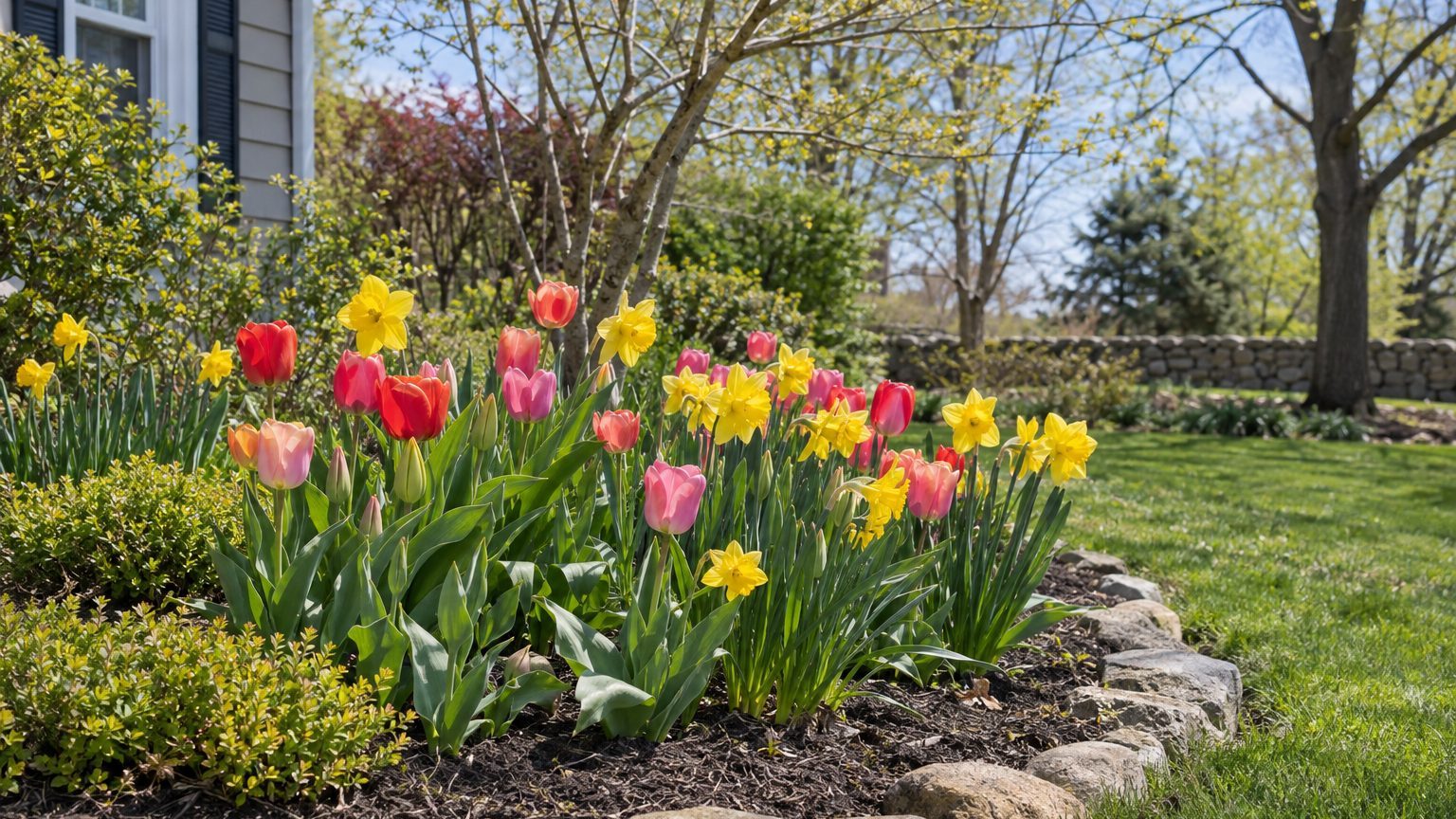
Yellow daffodil trumpets nodding along a mailbox post, then rows of tulips opening along a front walk: spring in a Massachusetts yard arrives in waves rather than all at once. Here is when those two bulbs flower across the state, what to look for before the first color, and what to do once the petals drop.

When Do Tulips and Daffodils Bloom in Massachusetts?

When Do Tulips and Daffodils Bloom in Massachusetts?

Tulips and daffodils bloom in Massachusetts mostly in April and May, and the earliest hardy bulbs open as soon as March. The flowers follow the warming of spring, so a mild stretch pulls them forward and a cold snap holds them back.

Winter does the groundwork. Most spring bulbs need about 12 to 16 weeks of cold to flower, and Massachusetts winters supply it without any help from you.

Bulb When it blooms in Massachusetts What sets the timing
Snowdrops and winter aconites March, at the start of the season How soon the soil warms after winter
Daffodils April to May Spring warmth, once the winter chill is done
Tulips April to May, later types in late April and May Spring warmth and the type you planted
Alliums The end of the spring succession Warmth after winter cold, since they need that chill to bloom

Crocus and hyacinths join the same long succession, and their dates also move with the weather from year to year. Under the USDA hardiness zone system, Massachusetts runs from zone 5a to 7b, so a yard on the Cape and a yard in the hills can sit weeks apart in the same spring.

How to Tell Your Bulbs Are About to Bloom

Bulbs announce themselves well before the first petal opens, and each stage tells you something about the weeks ahead.

  • Green tips poking through the mulch or soil mean the bulb has woken up and is working, so leave the bed alone and keep heavy debris off it.
  • Leaves that open into a clump tell you the plant is feeding itself for the flower, which is why they should never be disturbed.
  • A fat bud rising on a stalk means bloom is close, and a few warm days will push it to open.
  • A bud that begins to show color at its tip means the flower is a short step from opening, so it is the moment to watch for a late frost warning.
  • Nibbled or missing tips on tulips and crocus point to voles, squirrels, rabbits or deer, which eat those two bulbs and leave daffodils alone.

Alliums behave the same way, sending up strappy leaves first and a round flower head later in the succession.

What to Do After Tulips and Daffodils Bloom in Massachusetts

Once the petals fade, snip off only the spent flowers. Removing them keeps the plant from putting energy into seed, and it tidies the bed without touching the part that matters.

Leave the leaves exactly where they are until they turn brown. Tulips and daffodils flower on the energy their foliage stores in the bulb, so cutting green leaves or tying them into neat knots shortchanges next year’s bloom. Plant perennials or annuals beside the bulbs to hide the fading foliage.

Expect the two bulbs to behave differently over the years. Tulips are often short-lived in the garden, while daffodils last longer and are the more reliable perennial bulb. Fosteriana tulips are the exception worth knowing, since they perennialize well.

How Bloom Time Shifts Across Massachusetts

Boston is milder than most of the state, with a last spring frost around April 1 to April 8, so bloom elsewhere tends to run later than what you see along the harbor.

  • Boston and the coast: The water softens the cold, so bulbs here are the first to wake up and the flowers open earlier than inland.
  • Inland suburbs: Frost lingers into spring, so the same bulbs open a little later than they do on the coast.
  • The Berkshires: Cold hangs on longest in the hills, which pushes tulips and daffodils later into April and May than anywhere farther east.

Within one yard, a south-facing wall can bring bulbs up ahead of a shady bed on the other side of the house.

Where to Get Bulb Advice in Massachusetts

Local growers know which varieties handle your town’s soil and spring swings. Two kinds of help are close at hand and cost little to use.

  • UMass Extension publishes home garden guidance on spring bulbs, and its pages are worth a look before you order or plant.
  • A local extension office or master gardener group can answer questions about your own bed, so call in spring while the bulbs are in bloom and you can describe what you see.

Common Questions

Can You Still Plant Bulbs in November or December in Massachusetts?

Yes, as long as the ground can be dug. October is the ideal time, once the soil has cooled below about 60°F, which gives roots time to form without sending up leaves in fall. Late November or early December works as a fallback if the ground is not frozen. A bulb still unplanted goes in as soon as you can dig.

Which Spring Bulbs Do Animals Leave Alone?

Daffodils. Voles, squirrels, rabbits and deer eat tulips and crocus, but they pass over daffodils. Daffodils are even used as deer training plants to protect tender plants that deer love to browse.

Which Bulbs Come Back Year After Year?

Daffodils are the most dependable for returning every spring. They also naturalize well in partly shady areas, spreading into larger clumps over time.

When to Plant Tulips and Daffodils in Massachusetts

When to Plant Tulips and Daffodils in Massachusetts

Tulip and daffodil bulbs look like papery onions in a bag, yet what you do with them in autumn decides how the garden looks in April. In Massachusetts the job fits into a narrow stretch of the fall calendar, set by how fast the soil cools.

When to Plant Tulips and Daffodils in Massachusetts

When to Plant Tulips and Daffodils in Massachusetts

October is the month to plant, with November and December still workable as long as you can push a trowel into unfrozen ground. A bulb needs time to root before winter, and the year runs like this.

  • In early fall, buy bulbs while the selection is good and keep them somewhere cool and airy until planting day, since a firm, heavy bulb is a healthy one.
  • Through the cooler weeks of fall, skip any refrigerator chilling, because Massachusetts winters supply all the cold that tulips and daffodils need.
  • In October, plant once the soil has cooled below about 60°F, which gives the roots time to form before the ground freezes without tempting the bulbs to sprout in autumn.
  • In late November or early December, bulbs that missed October can still go in if the soil has not frozen, and a layer of shredded leaves or bark over the bed evens out the temperature swings of early winter.
  • In late winter, the first green tips push through the mulch, and the flowers follow in April and May, with the earliest hardy bulbs opening as soon as March.

In Boston, the first fall frost tends to land between November 3 and November 14, so October planting finishes before the cold really sets in. Across the state the USDA hardiness zones run from 5a to 7b, and inland towns and the Berkshires get their frost sooner than Boston, which is why the regional notes further down matter.

Which Spring Bulbs Do Best in Massachusetts?

Winters here are cold enough to flower every common spring bulb, so the real differences come from longevity and from what lives in your yard. Voles, squirrels, rabbits and deer shape the choice more than the climate does.

Daffodils are the dependable pick, and tulips are the ones that tempt every animal that passes through.

Bulb type How it does in Massachusetts Why
Daffodils Return and multiply year after year Daffodils are the more reliable perennial bulb, and animals leave them alone
Tulips Often short-lived, and frequently eaten Voles, squirrels, rabbits and deer all go for them
Crocus Bloom well but need protection from nibblers Rodents, rabbits and deer find crocus as appealing as tulips
Alliums Need winter cold to bloom Their flowering depends on winter cold

Hyacinths follow the same fall planting routine as the others. Among tulips, the Fosteriana group is known for coming back well, which makes it the group to look for if you want tulips that last beyond a season or two.

When to Plant, Chill and Care for Spring Bulbs in Massachusetts

The bulb year has only a few jobs, and each has a clear moment. Chilling is the one you can cross off, since the winter does that work for you. Bulbs still sitting in their bag go in as soon as the ground can be dug, because planting late beats storing them over winter.

Task Best timing in Massachusetts Why then
Plant October, or November and December if the ground is not frozen Roots form before the ground freezes
Chill Not needed in the ground Most spring bulbs need about 12 to 16 weeks of cold, and the soil supplies it
Enjoy the bloom April and May, with March for the earliest hardy bulbs Bulbs flower in turn as spring warms
Leave the foliage Until the leaves turn yellow and brown The leaves feed the bulb for next year

After the petals drop, remove only the faded flowers and let the leaves finish their work. Folding, braiding or cutting green leaves robs next spring’s bloom, and a clump of fading foliage is easy to hide behind perennials that leaf out around it.

How Bulb Planting Time Changes Across Massachusetts

Massachusetts has a milder coast and a colder interior, and that gap moves the best planting day within October. Watch the soil temperature in your own yard more than the calendar.

  • The Berkshires: Frost arrives noticeably earlier here, and the soil cools sooner, so aim for the early part of October and get bulbs in before the ground hardens.
  • Worcester and the inland suburbs: Cold nights come before they do along the shore, so plant a little earlier than a Boston neighbor would, still within October.
  • Boston and the waterfront: The harbor keeps this area milder, the soil stays warm longer, and late October or even November planting makes sense as long as the ground is open.

A cold snap that arrives before you have planted is no reason to give up, since the ground can still be dug for weeks after the first frost.

Where to Get Bulb Advice in Massachusetts

Local help is useful when bulbs fail or the soil is a mystery. UMass Extension offers soil testing and plant diagnosis, and its staff know the regional conditions that national advice misses.

  • A soil test tells you the pH and nutrient levels of your bed, and it is most useful before planting, so send a sample in early fall.
  • A local Extension office can identify what is eating or rotting your bulbs if you bring a photo or a sample of the damage.
  • Master gardener volunteers answer questions about drainage and bed placement, and early October is a good time to ask, just before the bulbs go in.

Common Questions

Can You Plant Daffodils Under Trees?

Yes. Daffodils naturalize well, especially in partly shady spots, so the edge of a tree canopy or a woodland border suits them and they keep spreading over the years.

Do Daffodils Keep Deer Away from Tulips?

Daffodils are left alone by deer, so a ring of them around a bed can make the area less inviting to browsing animals. They do not guarantee protection for tulips, which remain a favorite of deer, rabbits and rodents.

Which Tulips Come Back Best?

Fosteriana tulips perennialize well, which makes them a better bet than most hybrid tulips if you want flowers beyond the first spring. Plant them in October like any other spring bulb.

Best Grass Seed for Massachusetts

Best Grass Seed for Massachusetts

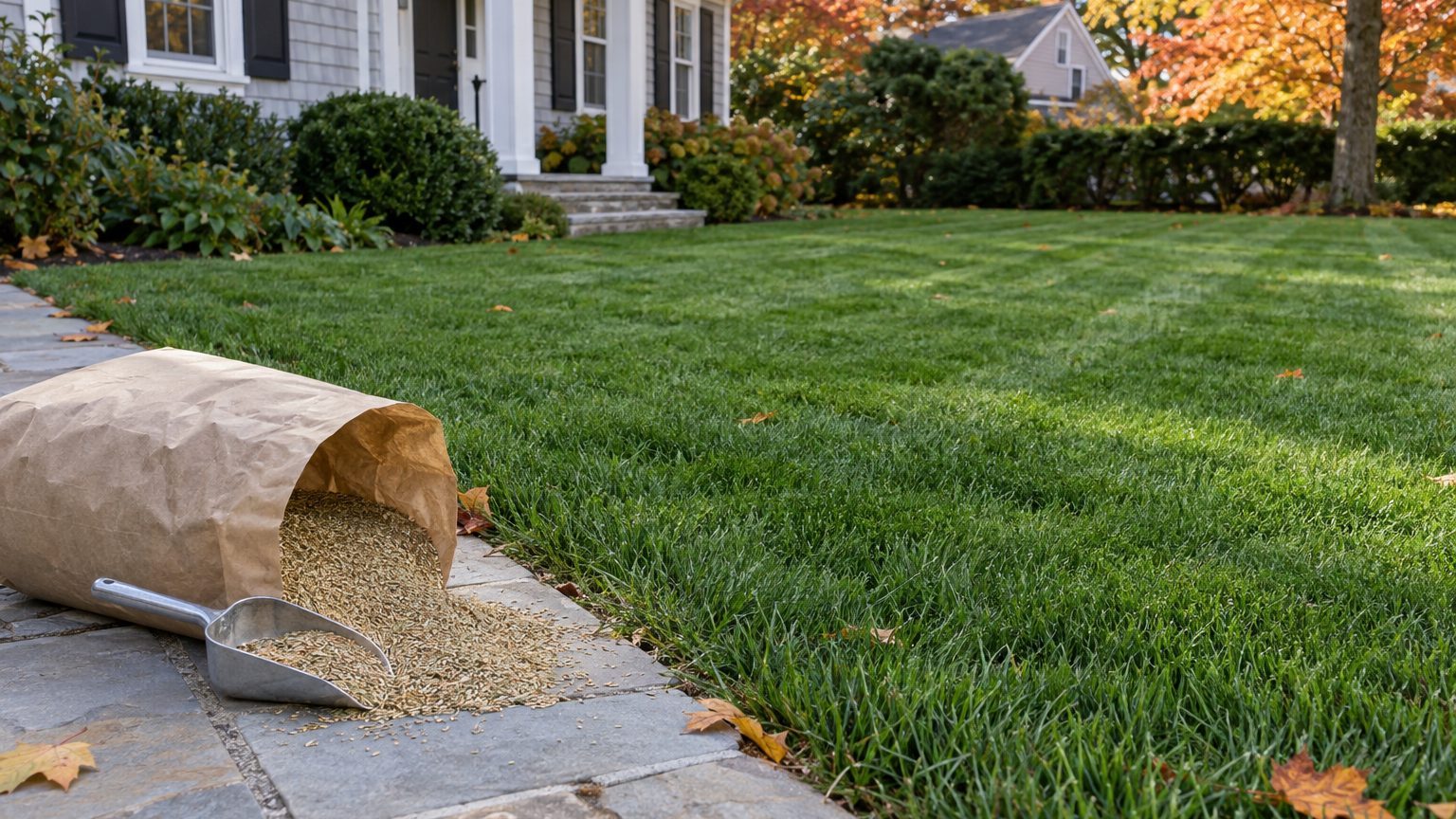
Thin patches along a driveway edge and bare spots where the snow plow piled the winter’s last drifts usually show up each April. Rebuilding that turf in Massachusetts comes down to picking a cool-season grass that suits your light, your traffic and your soil. Four species do nearly all the work in lawns across the state.

Which Grass Grows Best in Massachusetts?

Cool-season grasses grow best here. They put on their strongest growth in spring and fall, slow down in the heat of July and August, and are the standard lawn choices across Massachusetts. Cool-season grasses are the standard choice for Massachusetts winters. Here are the grasses that fit a range of Massachusetts lawns.

Kentucky Bluegrass

Kentucky bluegrass is the classic New England lawn grass. It spreads by underground stems, so it fills thin spots on its own and gives that thick, dark green look. It is slow to sprout, so plan on patience after seeding.

It wants full sun and some regular water in summer. In a dry July it may go dormant and turn straw-colored, but it usually greens up again when cooler weather returns.

Fine Fescues

Creeping red, chewings and hard fescue make up this group. They handle shade, poor soil and dry ground better than bluegrass does, and they get by on less fertilizer and less water.

That makes them a good fit for sandy ground near the coast and for shady lots under maples and oaks. They look finer and softer than most lawn grasses, but they don’t love heavy foot traffic.

Perennial Ryegrass

Perennial ryegrass sprouts quickly, which makes it useful for getting green on bare soil before the cold arrives. It stands up to kids and dogs reasonably well.

Its weak point is winter. In the colder parts of Massachusetts it can thin out after a hard season, so it is often paired with bluegrass or fescue rather than used alone.

Tall Fescue

Tall fescue has deep roots and copes with heat and dry spells better than the others, which is why people consider it for sunny, hard-used yards. The blades are wider and coarser.

It grows in clumps and doesn’t spread to fill gaps, so a damaged patch needs reseeding. In colder hill towns, winter can be rough on it.

How to Choose Grass Seed for a Massachusetts Yard

Start with the light, because it quickly narrows the field. Then think about who uses the lawn, whether you can run a sprinkler through a dry summer, and how much mowing you want to do.

Blended seed combines these species so their strengths can complement one another. Read the species list on the tag before you look at anything else on the bag.

Your yard Grass that fits Why
Full sun, regular watering Kentucky bluegrass Dense, self-repairing turf that spreads into thin spots
Shade under trees Fine fescues Tolerate low light and root competition
Kids, dogs, heavy traffic Perennial ryegrass with bluegrass Quick to sprout, then bluegrass fills in
Dry, sandy or little water Tall fescue or fine fescues Deep roots or low water needs
Low mowing and low feeding Fine fescues Grow slowly and ask for less fertilizer

If your yard mixes sun and shade, as many do, a blend of bluegrass and fine fescues covers both. Watering matters most from June through August, so a lawn you can’t irrigate in those months leans toward the fescues.

Which Grasses Grow Where in Massachusetts

Massachusetts is small, but winter cold and soil type change quite a bit from the Berkshires to the Cape. The same grasses are used across the state, but the mix shifts.

  • The Berkshires: Colder winters and a shorter growing season favor hardy Kentucky bluegrass and fine fescues. Perennial ryegrass and tall fescue are riskier here, so use them sparingly or skip them.
  • Greater Boston and the coast: Milder winters give every species a better chance, including ryegrass blends. Sea air, salt spray and tree cover push many yards toward fine fescues.
  • Cape Cod and the South Coast: Sandy soil drains fast and dries out in summer. Fine fescues and tall fescue handle those conditions with less watering than bluegrass.
  • Pioneer Valley and Worcester County: Inland suburbs sit between the extremes, so a bluegrass and fescue blend with a little ryegrass works well, with frost arriving earlier in fall than at the coast.

In colder towns, sow toward the beginning of the late-summer window so new grass has more time to root before winter.

Grass Seed Mistakes to Avoid in Massachusetts

Choosing the Wrong Grass for the Spot

A sun-loving bluegrass seeded under a maple is likely to thin out over time. The fix is to match the species to the light before you buy, and to read the label for what is actually in the bag.

Seed labeled “sun and shade” may lean heavily on only part of the blend, so check the ingredient list instead of the front of the bag.

Seeding at the Wrong Time

Cool-season grasses sprout best when the soil is warm and the air is cooling, which in Massachusetts means August and September. Seed put down then has time to root before the cold. If you miss that window, May still works, though summer heat and weeds give spring seedlings a harder start.

Most crabgrass preventers interfere with grass-seed establishment, so do not combine them with seeding on the same patch unless the label says they are compatible.

Too Much or Too Little Seed

Thick seed piles crowd each other into weak, disease-prone seedlings, and a sparse scatter lets weeds win. Follow the rate printed on the bag for your species and spread it evenly with overlapping passes.

Cover the seed with no more than 0.25 inch of soil and press it down firmly so it touches the ground. Seed buried deeper than that often never makes it to the surface.

Where to Get Lawn Advice in Massachusetts

Local turf experts can look at your soil, your shade and your problem spots in a way a seed bag can’t. Public extension services cover many common questions and are worth contacting before you buy seed.

  • UMass Extension publishes turf guidance for the state, and its pages are worth reading before late summer, when seeding season begins.
  • Your county or local extension office can point you to soil testing, which is best done before you seed or fertilize.

Collect a representative soil sample and send it in before you buy seed.

Common Questions

When Should You Aerate Before Seeding in Massachusetts?

September is the best time, and it pairs well with seeding because the holes give seed good contact with the soil. If you miss it, May also works.

When Should You Fertilize a Massachusetts Lawn?

May and September are the main months for feeding. Fertilizing in October or November also works if you fell behind.

Should You Put Down Crabgrass Preventer If You Plan to Seed?

Not on the same ground. Most crabgrass preventers used in April can also interfere with grass-seed establishment. If you plan to overseed, wait for the August and September seeding window and handle crabgrass the following spring.

Lawn Problems and Solutions in Massachusetts

Lawn Problems and Solutions in Massachusetts

Straw-colored patches in July, a lawn that peels back like carpet in September, crabgrass crowding the edge of the driveway: Massachusetts yards show their troubles in a fairly predictable order. Most of them trace back to the same few causes, a cool damp spring, a humid summer and turf that is stressed before either arrives. Knowing which problem you have decides what to do next.

Lawn Pests and Diseases in Massachusetts

Red Thread in Cool Wet Weather

Look for pinkish-red threads sticking out of the leaf tips, with patches that look faded and ragged rather than dead. It shows up in cool, damp stretches, mostly on lawns that are short on nitrogen.

The grass usually recovers by itself. Feed in May or September so the turf grows out of it, and keep the clippings light.

Crabgrass in Thin Spots

Crabgrass in Thin Spots — Lawn Problems and Solutions in Massachusetts

Crabgrass is a coarse, light green weed that sprawls flat from a center point and turns purple and then tan with the first frosts. It sprouts where bare soil warms up, so thin lawns and sunny edges are hit first.

A preventer goes down in April, and it also works in May. Once the weed is up, hand-pull small clumps before they set seed and thicken the surrounding turf in fall.

Dollar Spot in Small Straw Circles

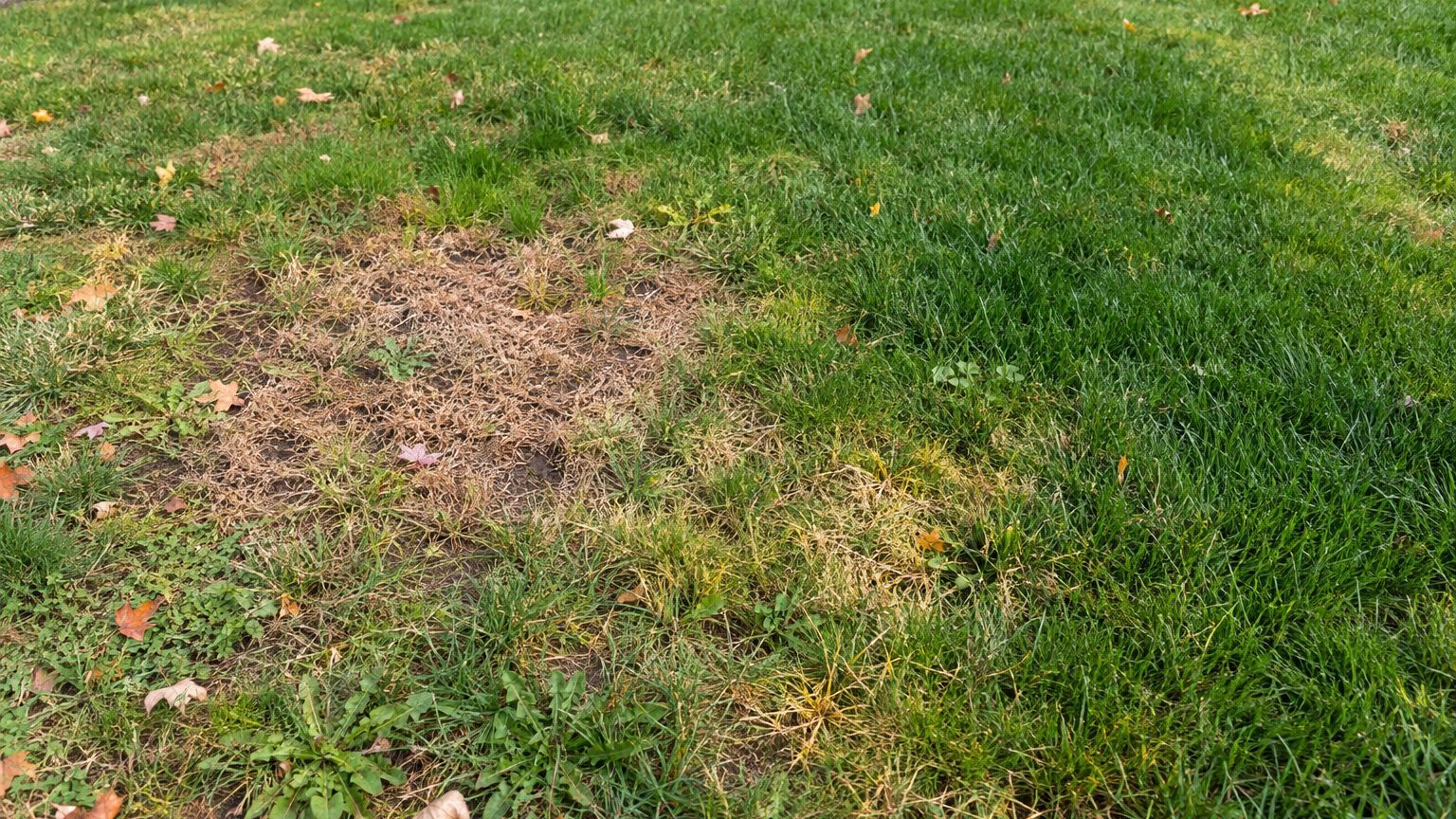
Small, sunken, bleached spots about the size of a silver dollar are the sign, sometimes joining into larger patches. Tan lesions with a darker edge appear across individual blades. Dollar spot is common on lean, dry-at-the-roots lawns that stay damp on top at night.

Water deeply and early in the day, and fertilize on schedule. A well-fed lawn shakes it off.

Brown Patch in Midsummer

Brown Patch makes irregular tan to brown rings, often with a dark smoky edge on grass that is wet at dawn. It favors tall fescue and ryegrass during hot, muggy nights and gets worse with heavy nitrogen in summer.

Skip summer feeding, water only in the morning, and mow with a sharp blade so the cuts dry quickly.

White Grubs Under Browning Turf

Grubs are fat, C-shaped, creamy white larvae that chew grass roots. The giveaway is turf that lifts like a loose rug, with no roots holding it down, often followed by skunks or crows tearing up the lawn.

Peel back a corner of the damaged sod and look at the soil. Healthy, deeply rooted grass tolerates some grub feeding, so late-summer seeding and September aeration make a real difference.

How to Tell Which Lawn Problem You Have

Looks alone are rarely enough. Pair what the patch looks like with where it sits, when it appeared and whether the grass pulls up. Give a suspect patch a gentle tug and look at the roots before you buy anything.

What you see Where and when Likely problem
Sod lifts, no roots Late summer, sunny turf White grubs
Brown ring, dark edge Hot humid nights, tall fescue Brown Patch
Small bleached spots Late spring into summer, lean soil Dollar spot
Pink threads on blades Cool, damp weather Red thread
Coarse sprawling clumps Bare, sunny edges Crabgrass
Thin turf, green moss Shade, compacted soil Low light, not disease

Spongy lawn that feels bouncy underfoot points to thatch, and a layer up to 1/2 inch thick is healthy. Above that, dethatch or core aerate in September, or in May if fall slips by. Dead grass that pulls up easily is a root problem, while grass that stays rooted is usually a leaf disease or drought.

Where Lawn Problems Are Worst in Massachusetts

Conditions change from the harbor to the hills, and so does the problem list.

  • Boston and the harbor coast: The waterfront is generally milder than inland areas, so spring often starts earlier here. Crabgrass and brown patch can get going early here, and warm, humid summers keep disease pressure steady.
  • Cape Cod and the Islands: Sandy, fast-draining soil dries out quickly, so drought stress and dollar spot show up more than rot. Deep, infrequent watering and compost help the soil hold moisture.
  • Worcester County and inland suburbs: Frost comes earlier in fall and lingers longer in spring, which shortens the window for seeding and delays crabgrass germination.
  • The Berkshires: Cooler and shorter-seasoned, with slower soil warm-up. Red thread and snow-related issues matter more than summer heat diseases.

Wherever you live, shade and compacted soil can compound problems caused by the regional climate.

Lawn Care Mistakes That Invite Problems in Massachusetts

Mowing Too Short

Scalped grass has less leaf to feed deep roots, lets crabgrass seed see sunlight and dries out fast in July. Raise the deck, keep the blade sharp and leave the clippings where they fall.

Mowing is a task for April through November, so a consistent routine matters more than any one cut.

Watering a Little Every Day

Frequent shallow sprinkles keep the surface wet, which is exactly what brown patch and dollar spot want, and they train roots to stay near the top. Water deeply but less often in the morning during June, July and August, and let the soil dry between sessions.

Fertilizing at the Wrong Time

Feeding in May and September builds roots and thickness. A heavy dose in midsummer pushes soft growth that disease loves. Massachusetts rules (330 CMR 31.05) bar fertilizer on frozen, snow-covered or saturated ground, and on drought-dormant, cold-dormant or brown turf.

If you miss September, October and November still work while the grass is green and growing.

Where to Get Lawn Advice in Massachusetts

UMass Extension publishes lawn guidance written for New England soils and weather, and its staff can help identify what is going wrong in your yard.

  • Its website has turf management guides, so check it before you buy treatments for a problem you have not confirmed.
  • Ask your local extension contact whether staff can examine a sample of damaged turf before the patch spreads.
  • A soil test through the extension program tells you what the lawn needs, so send one in before the September feeding.

Common Questions

Can You Seed a Lawn in Massachusetts in Spring?

You can, and May is the workable spring window. August and September are better because soil is warm, weeds are slowing and young grass can root before winter. Spring seedlings must compete with crabgrass and summer heat.

When Should You Aerate a Massachusetts Lawn?

September is the time, ideally just before overseeding. May works if you missed fall. Aerating relieves compaction and helps water reach roots, so it also reduces disease-friendly puddling.

Do You Stop Mowing When Frost Arrives?

Not necessarily. Around Boston, the first fall frost tends to arrive between November 3 and November 14, and inland yards see it sooner. Grass growth follows soil warmth, so keep mowing until it truly stops growing.

Massachusetts Lawn Care Schedule, Month by Month

Massachusetts Lawn Care Schedule, Month by Month

Soft green grass under the last patches of April snow, then a thick lawn by June: in Massachusetts that is the work of a few well-timed jobs. Crabgrass preventer goes down in spring, fertilizer in May and September, and seed, aeration and dethatching in late summer and early fall. Each task has its own window, and missing one usually has an easy fix.

What to Do Each Month in a Massachusetts Lawn

Most of the work lands in spring and early fall, with a long quiet stretch in winter. Cool-season grasses do their best growing when nights are mild and the soil is moist, so the calendar leans on April, May and September.

Month In the lawn
January Rest. The grass is dormant. Keep foot traffic and plowed snow piles off the turf where you can.
February Rest. Nothing to apply. After a thaw, look for matted gray or pinkish patches where snow sat the longest.
March Still dormant, with the ground often soft. Rake out winter debris lightly and stay off soggy turf, since wet soil compacts under footsteps.
April Mowing starts as the grass greens up. This is the month for crabgrass preventer, before the weed seed sprouts. If you miss it, May still works.
May Feed the lawn now while growth is strong. Core aeration, dethatching and seeding also work this month if fall got away from you. Crabgrass preventer still works early in the month.
June Mow regularly and begin watering when rain falls short. Deep soakings push roots down before the heat arrives.
July Keep mowing and watering. Cool-season grass slows in the heat, and a lawn that turns tan is often resting, not dead.
August Seeding season opens as the nights cool. Water new seed so it never dries out, and keep watering established turf through dry spells.
September The busiest month: core aerate, dethatch, seed and fertilize. Warm soil and cool air give new grass the best start.
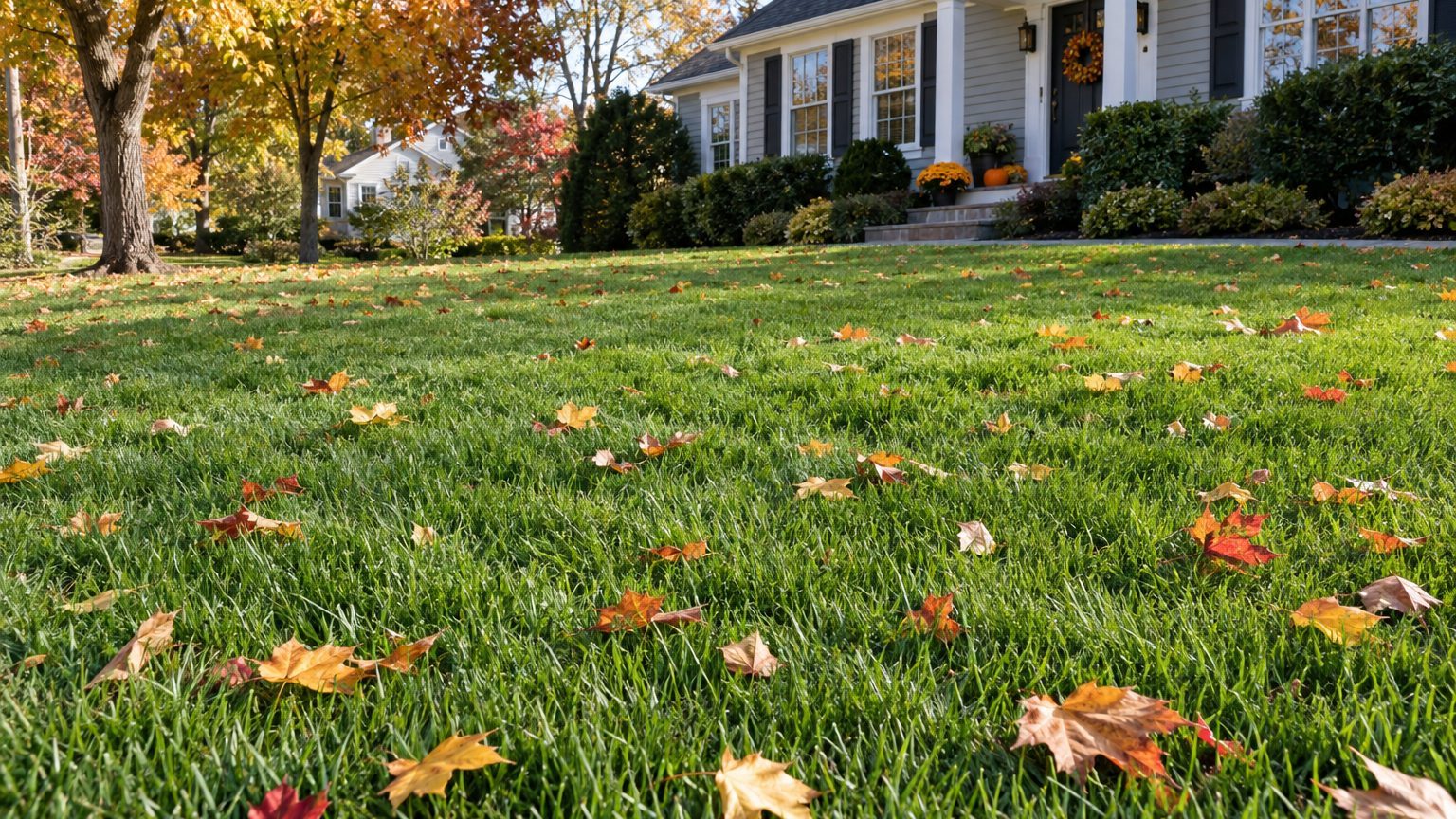
October Keep mowing and clear fallen leaves so they do not smother the grass. If you missed September, fertilizing still works now.
November Mow until growth stops. Fertilizing still works while the grass is green, but Massachusetts rules bar fertilizer on frozen, snow-covered or saturated ground, and on dormant or brown turf.
December Rest. The grass is dormant, so clean and store the mower and keep salt and snow piles off the turf.

Fall does the heavy lifting here. A lawn that gets its September work usually needs far less rescuing the next spring.

When Does the Lawn Season Start and End in Massachusetts?

Grass wakes up when the soil warms, not when the last frost passes. Cool-season grasses such as Kentucky bluegrass, fescues and ryegrass germinate when the soil sits at 50 to 65 °F, which is why seed sown in August and September sprouts quickly and spring seed in cold ground just sits.

Frost dates matter mostly for young grass. In Boston, the last spring freeze usually falls between April 1 and April 8, and seedlings sown ahead of that can be nipped. Inland towns and the hills get their last freeze later, so give them extra patience.

Fall works the same way in reverse. Around Boston, the first freeze tends to arrive between November 3 and November 14, but the lawn slows well before that as days shorten. Mowing carries on into November, and the season ends only when the blades stop growing.

How the Lawn Calendar Shifts Across Massachusetts

The state is small, yet a lawn in the Berkshires lives a different season from one on Cape Cod, so shift the calendar by how soon your soil warms and cools.

  • The Berkshires: Cold air pools in the hills and valleys, so the lawn greens later and goes dormant earlier. Lean toward the later side of spring tasks and start fall seeding at the front of its window.
  • Worcester County and the central hills: Elevation keeps spring cooler than in the east. Wait a little longer before spring applications, and do not delay fall seeding.
  • Greater Boston and the North and South Shores: The harbor and ocean soften the cold, so spring comes sooner and fall lingers. The dates fit Boston’s waterfront most closely, while nearby yards may differ.
  • Cape Cod and the Islands: Surrounding water keeps autumn mild, which gives late seeding extra time to root. Sandy soil dries fast, so summer watering matters more here.

When in doubt, let conditions in your own yard guide the timing within these windows.

Lawn Care Timing Mistakes to Avoid in Massachusetts

Crabgrass Preventer Applied Too Late

Crabgrass Preventer Applied Too Late — Massachusetts Lawn Care Schedule, Month by Month

Preventer works by blocking crabgrass seed as it sprouts, so it does nothing once the weeds are up. Put it down in April, and treat May as the backup. After that, you are pulling plants by hand or fighting them all summer.

Fertilizing Cold, Waking Grass

A March feeding looks tempting when the lawn starts to green, but the roots are still sluggish and much of the fertilizer washes away. It also pushes soft leaf growth over a weak root system. Wait for May, when the grass can use it.

Seeding After the Window Closes

Seed sown in June or July faces heat, dry spells and weeds before it can root. Seed sown too late in fall may not mature before winter. Aim for August and September, and use May only as a fallback when you must.

Where to Get Lawn Advice in Massachusetts

Local guidance fits your soil better than general rules. UMass Extension publishes turf guidance written for Massachusetts conditions, and your town or county may have further help.

  • Its lawn care guidance covers routine practices and fertilizer rules, and it is worth checking before the spring and fall work begins.
  • Your nearest county or regional extension contact can point you to a soil test, which is worth doing before you fertilize or seed.

Common Questions

Is Brown Grass in August Dead?

Not necessarily. If the blades are tan but the crown at the base is still firm and the turf resists a tug, the lawn is resting in summer heat. If the grass pulls up easily like loose carpet, grubs or true dieback are likelier, and a closer look is worth it.

Should You Rake Leaves Off the Lawn in Fall?

Yes, when they pile up thick enough to hide the grass. A heavy mat blocks light and holds moisture against the blades. A light scattering can be mowed into small pieces and left in place.

What Causes Gray, Matted Patches After the Snow Melts?

Snow mold is the usual suspect when you see matted gray or pinkish rings in spots where snow lay deepest. Rake the patches gently to let air in, and the grass normally recovers as spring growth picks up.

Massachusetts Lawn Care: What to Do and When

Massachusetts Lawn Care: What to Do and When

Crabgrass shows up in July lawns across Massachusetts, but the work that stops it happens back in April, when the soil is still cold and the lawn looks barely awake. Most of the yard’s year hinges on a few dated moments like that one, and the grass you grow decides how forgiving they are.

Frost Dates and Growing Season in Massachusetts

Massachusetts Lawn Care: What to Do and When

Massachusetts spans USDA hardiness zones 5a to 7b, and the Boston waterfront is the mildest corner of that range. There, the last spring frost usually falls between April 1 and April 8, while the first fall frost arrives between November 3 and November 14. Inland suburbs and the Berkshires frost later in spring and earlier in fall, so treat those dates as the gentle end. Grass grows when the soil warms, not when frost ends, so the year runs like this:

  • In early spring, frost can still return after mowing begins, so wait to seed until conditions suit germination.
  • Once the soil warms in April and May, crabgrass preventer goes down, and mowing starts between April and November as the grass wakes up.
  • Through June, July and August, growth slows in the heat, and watering becomes the main job during that stretch.
  • Late summer favors seeding as cool nights return; wait until September to aerate or dethatch, while the turf can recover.
  • In October and November, you can still feed your lawn if you missed the best window, and the last mowings wrap up the season as growth fades.

A seedling that sprouts too close to the first fall frost may not toughen up in time, which is why the seeding window closes well before November.

Cool-Season or Warm-Season Grass in Massachusetts?

Cool-season grasses are the ones that last here. They handle the hard winters across zones 5a to 7b and grow strongest in spring and fall, then slow down or go dormant in summer heat and drought.

Warm-season grasses struggle with long cold winters and are not what extension recommends for lawns in the state. The lawn grasses suited to the state are all cool-season types.

Grass How it does in Massachusetts Why
Kentucky bluegrass Dense, self-repairing turf in sun Spreads by underground stems and handles cold winters
Fine fescues (creeping red, chewings, hard) Good in lighter shade and poorer soil Tolerates low fertility and needs less feeding
Perennial ryegrass Sprouts quickly, often mixed with other seed Fast to establish, which helps cover bare spots
Tall fescue Stands up to summer dryness Deep roots reach moisture below the drying surface

Most home lawns do well with a blend or mix because the grasses can balance their different weaknesses.

When to Seed, Fertilize and Aerate a Lawn in Massachusetts

The big jobs cluster in spring and early fall, when cool-season grass is growing hard and the weather is mild. September is the busiest month, since seeding, aerating and dethatching all peak then.

State law limits when you can feed the lawn. Massachusetts regulation 330 CMR 31.05 bars fertilizer on frozen, snow-covered or saturated ground, and on turf that is drought-dormant, cold-dormant or brown.

Task Best months in Massachusetts Why then
Seeding August to September (May also works). Warm soil and cooler air let seedlings root before winter
Fertilizing May and September (October and November also work). Grass is actively growing and can use the nutrients
Core aeration September (May also works). Holes open soil while the grass can recover quickly
Dethatching September (May also works). Turf fills in fast after the thatch is pulled
Crabgrass preventer April (May also works). Goes down before crabgrass seed germinates

Watering matters most from June through August, when rain falls short and cool-season grass is under heat stress. Mowing runs from April through November.

Lawn Problems to Watch for in Massachusetts

Brown Patches in Midsummer

Brown Patches in Midsummer — Massachusetts Lawn Care: What to Do and When

Cool-season grass slows down in July and August heat, and a dry stretch can turn a whole lawn straw-colored. The grass is often dormant rather than dead. Water deeply and regularly during June through August, and mow high so the blades shade the soil.

Crabgrass in Thin Spots

Crabgrass in Thin Spots — Massachusetts Lawn Care: What to Do and When

Crabgrass moves into bare or thin turf once summer warms the soil, and it dies with the first frost, leaving gaps behind. Apply preventer in April, then thicken the lawn with seed in August or September so less sunlight reaches the soil next year.

Thin Grass Under Trees

Shade from maples and oaks, plus competing roots, leaves grass sparse and mossy. Fine fescues cope better with shade than bluegrass does. Overseed in late summer, and consider mulch or groundcover where grass will not hold.

How Lawn Care Dates Change Across Massachusetts

The state is small, but the season still shifts from the ocean to the western hills, and the dates above lean toward the mild end.

  • Boston and the coast: The ocean keeps spring and fall milder, so frost comes later in fall and leaves earlier in spring, and the season runs a little longer.
  • Worcester County and inland suburbs: Frost arrives sooner in fall and lingers longer in spring, so seeding should happen toward the early side of its window.
  • The Berkshires: Higher ground and colder winters shorten the season, so spring tasks start later and September seeding should not wait.

Soil that feels cold and wet in spring is a sign to hold off, wherever you live.

Where to Get Lawn Advice in Massachusetts

UMass Extension publishes turf guidance written for New England soils and weather, and it can point you to local help for a diagnosis.

  • Its turf resources explain lawn practices for the state, useful before you buy seed or fertilizer.
  • Your local extension contact can advise on a soil test, best taken before any spring or September feeding.
  • A sample of the problem grass helps with a diagnosis when patches appear in summer.

Common Questions

Can You Put Down Grass Seed in Spring in Massachusetts?

Yes, May works too. Seedlings must handle summer heat soon after, so water them carefully, and expect better results from August or September seeding.

Do You Need to Fertilize Every Month?

No. Feeding is best in May and September, with October and November also working if you miss those, and extra applications mostly encourage growth the lawn cannot use.

Is It Too Late to Mow in November?

Not necessarily. Mowing continues through November, so keep cutting while the grass is still growing.

Hydrangeas That Grow Well in Massachusetts

Hydrangeas That Grow Well in Massachusetts

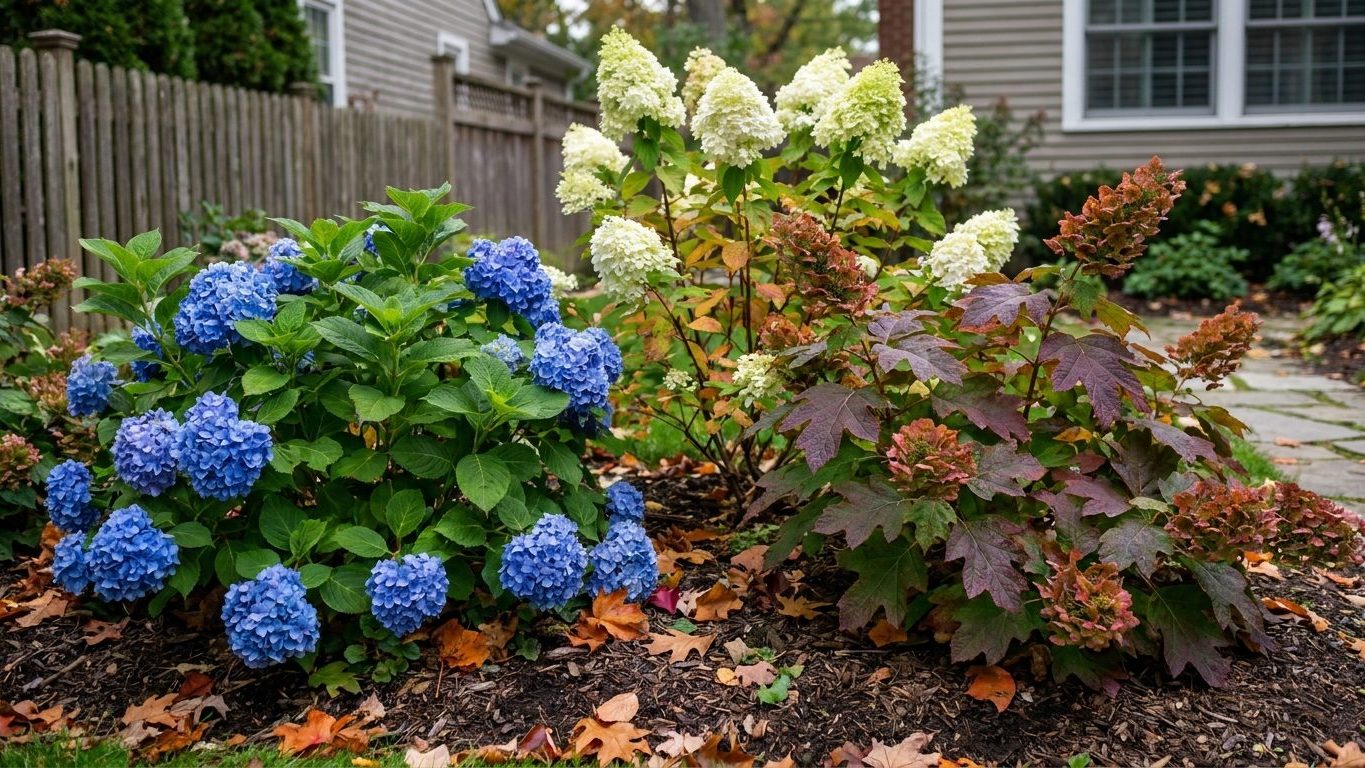
Six hydrangea types handle Massachusetts winters and summers well, though not equally. Panicle and smooth hydrangeas take the state’s cold in stride, oakleaf and mountain hydrangeas do fine in most yards, and bigleaf hydrangea is the one that disappoints homeowners most often, especially inland, where flower buds don’t survive a hard freeze the way the plant itself does.

Hydrangeas that grow well in Massachusetts: The Short Answer

Boston sits on the mild edge of the state’s zone 5a to 7b range on the USDA Plant Hardiness Zone Map, and that range decides which hydrangeas hold up here.

Its frost window runs April 1 to April 8 in spring and November 3 to November 14 in fall, long enough for panicle and smooth hydrangeas but tight for bigleaf’s early buds.

Panicle Hydrangea

Panicle Hydrangea — Hydrangeas That Grow Well in Massachusetts

This is the safest bet in the state. It blooms on new wood, so a hard freeze that reaches the colder inland pockets doesn’t touch next summer’s flowers, and it takes full sun better than any other type here.

Smooth Hydrangea

Smooth Hydrangea — Hydrangeas That Grow Well in Massachusetts

Also a new-wood bloomer, so it recovers from winter dieback without losing a season of flowers. It handles the clay-heavy soils common around Worcester and the Pioneer Valley better than most hydrangeas do.

Oakleaf Hydrangea

Oakleaf Hydrangea — Hydrangeas That Grow Well in Massachusetts

Reliable through most of the state, with fall color most hydrangeas skip entirely. It struggles only in the coldest inland valleys, where a hard winter can knock back the buds set the year before.

Mountain Hydrangea

Mountain Hydrangea — Hydrangeas That Grow Well in Massachusetts

A close relative of bigleaf hydrangea bred for tougher winters. Its buds survive more of the state’s cold snaps than bigleaf’s do, though it still flowers best where winters stay closer to the coast.

Reblooming Bigleaf Hydrangea

Reblooming Bigleaf Hydrangea — Hydrangeas That Grow Well in Massachusetts

These push a second round of buds on new wood after a rough winter, so a yard near Boston still gets some color even when the old-wood buds don’t make it. Inland, it can still skip a year.

Bigleaf Hydrangea

Bigleaf Hydrangea — Hydrangeas That Grow Well in Massachusetts

The riskiest name on this list. It blooms only on old wood, and the state’s frost swings kill those buds often enough that many yards get healthy green shrubs with few or no flowers most summers.

How to Work Out the Dates for Your Own Yard

Work out your own planting and pruning windows by starting from the frost dates for your yard, not the calendar month alone.

  1. Find your last spring frost: NOAA NCEI 1991-2020 Climate Normals put Boston’s window at April 1 to April 8, so anyone inland or in the Berkshires should push that range back by a week or two before trusting bare soil.
  2. Count forward to the plant window: the state’s plant window opens in April and runs into May, then picks up again in September and October, giving roots time to settle before summer heat or winter cold arrives.
  3. Mark the first fall frost: Boston’s window runs November 3 to November 14, and that date decides whether a fall-planted hydrangea gets enough weeks to root before the ground locks up.
  4. Time the first feeding: fertilize in March, again in May, and a third time in July, spacing feedings around the plant’s active growth rather than the calendar page.
  5. Hold pruning until June or July: that’s the only window for pruning bigleaf hydrangea here, since cutting earlier removes the buds already set from the fall before.

Panicle hydrangea shrugs off a late frost swing since it blooms on new wood, while a bigleaf hydrangea planted in that same spot can lose its flowers most years for the same reason. A gardener in Worcester or the Pioneer Valley should treat every one of these windows as running later in spring and earlier in fall than Boston sees.

Massachusetts North to South: How the Dates Shift

Elevation and distance from the coast move these dates more than latitude does within a state this size.

  • The Berkshires (Berkshire County, zone 5a): the highest, coldest corner of the state pushes both frost dates outward, so spring planting waits longer and fall cleanup starts sooner.
  • The Pioneer Valley and Central Massachusetts (Hampden, Hampshire, and Worcester counties): valley floors trap cold air on clear nights and often frost before the higher ground around them does.
  • Greater Boston and the North Shore (Suffolk, Essex, and Middlesex counties): urban heat and the harbor keep this corner on the milder end of the state’s range.
  • Cape Cod and the Islands (Barnstable, Dukes, and Nantucket counties): the ocean on three sides delays both the first frost and the last one, stretching the growing season longest here.

Check your own town against the state guide before trusting any single date as gospel for your particular yard.

Mistakes Massachusetts Punishes

Pruning bigleaf hydrangea in fall

Cutting back stems in October or November removes the very buds meant to open next summer, since bigleaf sets its flowers on old wood. Wait for the June to July window the state’s calendar allows, and only remove dead wood before that.

Planting too close to the fall frost

NOAA NCEI 1991-2020 Climate Normals put Boston’s first fall frost at November 3 to November 14, and a hydrangea planted in late October has only a few weeks to root before that window closes. Move fall planting earlier, into September or early October, instead.

Leaving bigleaf hydrangea unprotected inland

Yards away from the coast swing colder than Boston’s numbers suggest, and an exposed bigleaf hydrangea there loses its buds most winters. Mulch heavily at the base going into winter, or plant a mountain or panicle hydrangea instead.

Massachusetts Extension Offices and County Contacts

Boston’s frost window and the state’s zone range are a starting point, not the last word for your yard. The USDA NIFA Land-Grant University Extension directory lists the University of Massachusetts Extension as the state’s go-to source for local soil and pest differences.

  • UMass Extension: county-level soil test results, pest alerts, and planting advice, available at ag.umass.edu.
  • Your county extension office: local frost data and hands-on diagnosis for a shrub that isn’t blooming.
  • Your state guide: the full Massachusetts hydrangea calendar and pruning window for where you live.

Call before the June pruning window opens if a bigleaf hydrangea in your yard didn’t flower this year, since a county agent can tell you in one visit whether it’s the cold or something else.

Common questions

Will bigleaf hydrangea ever bloom reliably in Massachusetts?

Not every year, and not in every yard. Coastal spots near Boston see it bloom more years than not, but inland yards should expect a skipped season now and then, and reblooming types close that gap somewhat.

What is the safest hydrangea to plant near the coast?

Panicle hydrangea holds up best across the whole state, coast or inland, because it flowers on new wood and doesn’t depend on buds surviving a hard freeze.

Can I still plant hydrangeas in October?

Early October works in most of the state, but push planting into September if you’re inland or in the Berkshires, since the ground there locks up sooner than it does near Boston.

Hydrangea Pests and Diseases in Massachusetts

Hydrangea Pests and Diseases in Massachusetts

In Boston, the two problems homeowners call me about most are bud blast on bigleaf hydrangeas after a late frost and powdery mildew during humid July stretches. Everything else, from Japanese beetles to lime-induced yellowing, follows a fairly predictable order tied to the region’s frost windows and USDA zones 5a to 7b.

Hydrangea pests and diseases Massachusetts: The Short Answer

Bud blast and powdery mildew top the list for Boston-area yards, with aphids, Japanese beetles, cercospora leaf spot, and lime-induced chlorosis rounding out the season. NOAA NCEI 1991-2020 Climate Normals puts Boston’s last spring frost at April 1 to April 8, and that single window explains why so many bigleaf hydrangeas skip flowering some years while looking perfectly healthy otherwise.

No flowers on a healthy shrub

No flowers on a healthy shrub — Hydrangea Pests and Diseases in Massachusetts

Bud blast happens when a late cold snap after bud swell kills the flower buds inside the stems. The last frost window runs April 1 to April 8, so anything colder after that damages tissue. Mulch stems in fall and skip pruning past July, see the calendar page.

Aphids clustering on new growth

Small green or black insects cluster on tender shoot tips in May and June, curling new leaves and leaving a sticky residue behind. Ants often tend them for the honeydew. A strong water spray knocks most colonies off, and ladybugs usually finish the job within a week or two.

Leaves scorched on the sunny side

Scorch shows up as brown, papery patches on leaves facing full afternoon sun during July heat spikes. It is a water stress signal, not a disease, and it worsens in sandy or compacted soil. Deep water once weekly and mulch to hold moisture through the July feeding window.

Powdery mildew film on leaves

Powdery mildew film on leaves — Hydrangea Pests and Diseases in Massachusetts

A gray-white coating on top leaf surfaces spreads fastest during muggy stretches in June and July, right when bigleaf pruning is due. Crowded shrubs with poor airflow show it worst. Space plants, prune for airflow during that same window, and avoid overhead watering in the evening.

Japanese beetles skeletonizing leaves

Japanese beetles skeletonizing leaves — Hydrangea Pests and Diseases in Massachusetts

These metallic green beetles chew leaves down to the veins from early to mid July, leaving a lace-like skeleton behind. They cluster in groups and feed fastest in full sun. Hand-pick them into soapy water each morning, since sprays rarely keep pace with a fresh wave.

Cercospora leaf spot climbing the stem

Cercospora leaf spot climbing the stem — Hydrangea Pests and Diseases in Massachusetts

Small purple-brown spots start on lower leaves in August and climb upward as the season cools toward the November 3 to November 14 frost window. Wet foliage spreads the fungus fast. Remove and discard spotted leaves rather than composting them, and water at the soil line only.

Yellow leaves with green veins

This chlorosis pattern points to iron lockup in alkaline soil, common near foundations and driveways where lime leaches in over time. It is not a pest or a fungus, just a pH problem. A soil test through your county extension office settles it before you spend money on fertilizer.

How to Work Out the Dates for Your Own Yard

Boston’s frost windows are a starting point, not a fixed schedule, so I walk my own yard through this sequence every year before deciding what to spray, prune, or simply leave alone.

  1. Mark your last frost window: NOAA NCEI 1991-2020 Climate Normals puts Boston’s last spring frost at April 1 to April 8, so treat any date inside that range as still risky for swollen buds.
  2. Scout for blackened bud tips two weeks later: by mid to late April, damaged buds turn brown and mushy while healthy ones stay firm and green to the touch.
  3. Watch airflow once pruning starts: the bigleaf pruning window runs June and July, and shrubs spaced out during that stretch see less powdery mildew by late summer.
  4. Check leaves weekly through the July feeding window: aphids and beetle damage both show up fastest on the soft new growth that follows a July feeding.
  5. Reassess in September as growth slows: cercospora spots that were only on lower leaves in August often climb higher on the stem by this point, telling you it is fungal rather than sun scorch.
  6. Stop treating and mulch before the first fall frost: that window lands November 3 to November 14, and anything still active on the shrub after that becomes a next-spring problem, not a this-year one.

None of these steps move because a neighbor’s shrub looks different, since a warmer microclimate near brick or pavement can push every stage a week or two earlier than a yard in open ground.

Massachusetts North to South: How the Dates Shift

The USDA Plant Hardiness Zone Map puts the coldest pockets of the state near zone 5a and the mildest coastal edge closer to 7b, and that spread changes when each problem in this guide shows up.

  • Coastal Boston and Cape Cod (zones 7a to 7b): the ocean’s moderating effect keeps frost windows late and short, so mildew and beetle season simply runs longer than it does inland.
  • MetroWest and the Worcester Hills (zones 6a to 6b): frost arrives sooner in fall and lingers later in spring, tightening the bud blast risk window described above.
  • Pioneer Valley and the Connecticut River lowlands (zones 6a to 6b): cold air drains off the valley floor on clear nights, giving a brief reprieve even as the surrounding hills freeze first.
  • The Berkshires and western uplands (zones 5a to 5b): the shortest frost-free stretch in the state pushes every timeline in this guide roughly two to three weeks earlier in fall and later in spring.

None of that changes which problems show up, only when, so lean on the state hydrangea guide for the frost dates that anchor your own yard.

Mistakes Massachusetts Punishes

Pruning bigleaf in fall

Cutting stems back after summer removes the very buds already set for next year’s blooms, since bigleaf hydrangea flowers only on old wood laid down the previous season. The safe window runs June and July, nothing later. Wait until then, and check the calendar page for the exact months every year.

Feeding past July

A late feeding pushes soft new growth right as the first fall frost approaches, landing November 3 to November 14 in most years around Boston. That tender growth freezes first and invites stem dieback all winter. Stick to the March, May, and July feeding months and stop there completely.

Skipping mulch before winter

Bare soil around the crown lets root-zone temperatures swing hard through a Massachusetts winter, especially where the state’s hardiness range runs as cold as zone 5a inland. A three-inch mulch ring holds soil temperature steadier and protects the same buds that a late frost would otherwise catch.

Massachusetts Extension Offices and County Contacts

Boston’s frost dates are a regional starting point, and the real answers for your yard sit with your county extension office and UMass Extension, which track local pest pressure and soil results all season long.

  • Your state page: the frost dates and the hardiness zone range for every part of Massachusetts in one place.
  • Which ones hold up here: the bigleaf, panicle, and smooth hydrangea varieties that actually take a Massachusetts winter.
  • UMass Extension: soil testing, pest identification, and the county office list at ag.umass.edu.

Common questions

Do deer eat hydrangeas in Massachusetts?

Deer browse bigleaf and smooth hydrangea leaves and buds readily, especially in suburban yards near wooded edges. Panicle hydrangea gets bothered less often. A simple fence around young plants through the first few winters solves most of the damage.

When should I stop worrying about frost killing new buds?

Once you’re past the last frost window of April 1 to April 8 by a couple of weeks, new growth is generally out of danger for the season. Watch the forecast closely in that stretch rather than trusting the calendar date alone.

Can I treat powdery mildew organically?

Yes, a homemade spray of water with a small amount of horticultural oil or baking soda works on light cases if applied early. Spacing plants for airflow and watering at the soil line matter more than any spray, organic or not.

When to Prune Hydrangeas in Massachusetts

When to Prune Hydrangeas in Massachusetts

Massachusetts hydrangeas go into the ground twice a year: a short stretch in spring once frost risk clears, and a longer, gentler run in fall before the ground closes up. Boston anchors the state’s timing, though gardeners west of Worcester and up in the Berkshires work on a delayed clock. Get the window right and roots take hold before either summer heat or winter cold tests them.

When to prune hydrangeas in Massachusetts: The Short Answer

In Boston, NOAA NCEI 1991-2020 Climate Normals put the last spring frost between April 1 and April 8, and gardeners here plant hydrangeas once that window closes, typically the back half of April into May, then again in fall before the first frost between November 3 and November 14.

  • March: Fertilize with a slow-release feed once the ground thaws, well ahead of the last frost window. Keep the winter mulch in place a while longer.
  • April: Plant new hydrangeas once frost risk has passed, typically toward the back half of the month. This opens the first of the state’s two planting stretches.
  • May: Keep planting, and fertilize a second round now that new growth is pushing hard. Soil has warmed enough for roots to take hold quickly.
  • June: Prune bigleaf hydrangeas now, once the earliest bloom flush fades, since this opens the state’s two-month pruning window. Cut spent flower heads back to the first strong bud.
  • July: Finish any bigleaf pruning before the window closes, and give a third and final fertilizer application. Anything cut later risks the buds already set for next year.
  • August: Hold off on fertilizer and pruning both, and keep the soil evenly moist through the hottest stretch. New growth needs time to harden before fall.
  • September: The second planting window opens, and cooler nights make this the gentler of the state’s two stretches for putting hydrangeas in the ground.
  • October: Keep planting into the first half of the month, well ahead of the earliest fall frost date. Roots still have time to establish before soil cools further.
  • November: Mulch heavily once leaves drop, since first frost lands somewhere in the state’s fall window depending on where you sit. This is protection, not pruning.
  • December: Leave the shrub alone through dormancy, and resist any urge to prune bigleaf types now. Old wood is already carrying next year’s flower buds.
  • January: Check for snow load bending branches, and brush off heavy, wet snow by hand. No feeding, no cutting, no planting this month.
  • February: Plan next year’s spots and order stock, since the ground is still frozen for planting. This is a paperwork month, not a shovel month.

Every date here follows Boston’s frost record. Inland and up in elevation, both windows close and open later, so treat these months as a starting point rather than a fixed rule.

How to Work Out the Dates for Your Own Yard

Boston’s frost record is a reference point, and the real dates for your yard depend on how far you sit from that station.

  1. Start from the frost window: NOAA NCEI 1991-2020 Climate Normals set Boston’s last spring frost at April 1 to April 8, and the first fall frost at November 3 to November 14.
  2. Push planting a week past the thaw: aim for the tail end of the spring window or later, since a hydrangea set in still-cold soil sits and sulks instead of rooting.
  3. Match your spot to the state’s plant months: April, May, September, and October are the four months the calendar keeps open, so anything outside those falls outside the safer range.
  4. Watch for your microclimate: a low spot that collects cold air, or a yard west of Worcester, runs on a clock roughly one to two weeks behind Boston’s.
  5. Save bigleaf pruning for June and July: cut outside that stretch and you risk the wood that is already holding next year’s buds.

None of this replaces a local check. A frost app or a call to your county office confirms whether this particular week is safe, since Boston’s numbers are an average, not a guarantee for every yard in the state.

Massachusetts North to South: How the Dates Shift

Massachusetts covers more climate variation than its size suggests, and four rough regions each nudge the calendar in their own direction.

  • Greater Boston and the South Shore (Suffolk, Norfolk, Plymouth counties): the mildest ground in the state, closest to the frost dates above, and often the first spot where spring planting is safe.
  • Cape Cod and the Islands (Barnstable, Dukes, Nantucket counties): surrounded by ocean, so both frosts arrive later than the mainland average, stretching the safe planting stretch on both ends.
  • Central Massachusetts (Worcester County): sits inland and higher, so spring frost lingers past the state’s early dates and fall frost arrives sooner.
  • The Berkshires and the Connecticut River Valley (Berkshire, Franklin, Hampshire counties): the coldest, highest ground in the state, running toward the harder end of the USDA hardiness range and demanding the latest spring planting of anywhere in Massachusetts.

None of these shift the calendar by more than a couple of weeks, but that couple of weeks decides whether a new hydrangea roots before summer heat or gets caught by one more frost.

Mistakes Massachusetts Punishes

No flowers on a healthy shrub

No flowers on a healthy shrub — When to Plant and Prune Hydrangeas in Massachusetts

Cutting bigleaf hydrangeas outside June and July removes wood that has already set next year’s flower buds, since these varieties bloom on growth from the previous season. The fix is simple, prune only inside that two-month stretch, and if you missed it, wait until next year.

New growth burned by a late frost

New growth pushed by a warm early spring gets caught when frost slides as late as April 8 in Boston, and later still inland. Keep frost cloth or a bucket ready through early April, and don’t strip winter mulch until the window has closed.

Shrub planted and gone by winter

A hydrangea planted after October has too little time to root before Massachusetts winter sets in, and one planted in the dead of summer just bakes instead of establishing. Stick to April, May, September, and October, the four months the state’s calendar keeps open.

Massachusetts Extension Offices and County Contacts

Boston’s frost window is a starting point, not a rule. County offices and UMass Extension track local variation the state map cannot, from the Berkshires’ shorter season to Cape Cod’s later frost.

  • Your state page: the frost dates and the pruning window where you live.
  • Which hydrangeas hold up here: the varieties suited to Massachusetts winters.
  • Call before you plant: county extension offices and UMass Extension confirm this year’s frost timing before you dig.

Common questions

Can I plant hydrangeas in Massachusetts in the fall?

Yes. The state’s planting window includes September and October, both well ahead of the first fall frost, which lands between November 3 and November 14 depending on where you are.

What USDA zone is Massachusetts for hydrangeas?

The USDA Plant Hardiness Zone Map puts Massachusetts across zones 5a to 7b, warmer near Boston and colder up in the Berkshires and higher elevations.

When should I stop fertilizing hydrangeas in Massachusetts?

The calendar keeps three fertilizing months open: March, May, and July. Stop after July so new growth has time to harden before fall frost arrives.

The almanac, state by state. Every date on this site comes from a state’s own frost facts and its extension service’s calendar — and says where it comes from.