Skip to content

When to Plant Hydrangeas in Saskatchewan: Dates and Varieties

When to Plant Hydrangeas in Saskatchewan: Dates and Varieties

Hydrangeas can grow in Saskatchewan, but only the cold-hardy, new-wood bloomers make it through a winter this severe. Saskatoon’s growing season runs from an average last frost on May 18 to an average first frost on September 18, inside a Canadian zone 3a rating, and that four-month gap decides which varieties bloom and which ones just survive.

Hydrangeas Care Calendar for Saskatchewan

Growing Hydrangeas in Saskatchewan: Dates and Varieties

In Saskatoon, the last spring frost falls on average May 18 and the first fall frost on average September 18, according to Environment and Climate Change Canada’s climate normals for the Saskatoon SRC station, leaving roughly four months for a hydrangea to leaf out, bloom, and shut down before the ground locks up again.

  • Dormancy: from the first hard freeze through early April is the one stretch to move or divide a plant with its roots undisturbed.
  • Planting: wait two to three weeks past the May 18 average, into early June, before setting a new hydrangea into open ground.
  • Mulching: lay four inches of shredded bark or leaves right after planting to buffer shallow roots against prairie swings.
  • Pruning: cut back new-wood types in early spring, well before the May 18 average, while stems are still bare.
  • Feeding: apply a balanced fertilizer once in late May or early June, as new leaves unfold.
  • Watering: soak the root zone weekly through July and August, the driest stretch of the short season.
  • Winter prep: mound mulch over the crown by early September, ahead of the September 18 average, to protect next year’s buds.

Every one of these windows narrows or shifts depending on how close a yard sits to Saskatoon’s climate station, so treat May 18 and September 18 as a midpoint, never a guarantee.

Best Hydrangeas for Saskatchewan

Saskatchewan’s hydrangea math starts with zone 3a, the Canadian hardiness rating Natural Resources Canada assigns Saskatoon under its 1991-2020 normals, a figure built from seven climate variables rather than the single-variable USDA scale used south of the border.

The types that bloom on new wood shrug off a winter that kills the top growth, because they simply regrow and flower the same year. The types that set their buds on last year’s wood lose the whole show if that wood freezes.

Kind Flowers on Verdict in zone 3a Sun
Panicle New wood Reliably hardy Full sun to part shade
Smooth (Annabelle type) New wood Reliably hardy Full sun to part shade
Bigleaf Old wood, mostly Dies back to the ground most winters Part shade
Oakleaf Old wood Rarely survives without heavy winter cover Part shade
Climbing Old and new wood Borderline, needs a sheltered wall Part sun

Lacecap and mountain hydrangea carry the same old-wood risk as bigleaf here, so the other kinds are on their own pages.

When to Plant, Prune and Feed Hydrangeas in Saskatchewan

Three windows decide whether a Saskatchewan hydrangea earns its keep, when it goes into the ground, when it gets cut back, and when the crown gets tucked in for winter. Each one counts from Saskatoon’s average frost dates, the May 18 and September 18 figures Environment and Climate Change Canada publishes for the region.

The four-month gap between those two dates compresses everything, so feeding has to happen early and watering has to taper off in time for new growth to harden before the cold returns.

Task Window here Counted from
Planting Early to mid June Two to three weeks after the May 18 average
Pruning new-wood types Late March to mid April Well before the May 18 average
Feeding Late May to early June Right at or just after the May 18 average
Winter mulching Early to mid September Just ahead of the September 18 average

Growers running bigleaf or oakleaf here would normally prune right after bloom, but with that wood dying back most winters, the call rarely comes up.

Hydrangeas Problems in Saskatchewan and What Causes Them

No flowers on an otherwise healthy shrub

Bigleaf and oakleaf hydrangeas set next year’s buds on the current season’s wood, and in a zone 3a winter those buds usually don’t survive, even when the crown itself lives on. Choose a new-wood bloomer instead, the kind covered on the which-ones-hold-up-here page.

New growth blackened after a late frost

Because May 18 is only an average, roughly half of Saskatchewan springs bring a colder night after that date, and tender new leaves blacken overnight. Hold off pulling winter mulch until the soil itself has warmed, not just when the calendar turns.

Leaf edges scorched by midsummer

Prairie wind pulls moisture out of shallow hydrangea roots faster than a short summer can replace it, especially once the frost-free stretch turns hot in July. A four-inch mulch ring and a weekly deep soak keep the scorch off leaf margins.

Saskatchewan North to South: How the Dates Shift

Saskatoon’s May 18 and September 18 dates sit near the middle of a province that stretches for hundreds of miles, and the frost calendar shifts hard in both directions from that midpoint.

  • The northern forest fringe (Prince Albert, La Ronge, Meadow Lake): frost lingers later in spring and returns earlier in fall, so the safe planting window opens later and closes sooner than around Saskatoon.
  • The southern grain belt (Regina, Moose Jaw, Weyburn): winters run a touch milder and the frost-free stretch runs a bit longer, giving new-wood bloomers a better shot at a full flush.
  • The river valleys (the South Saskatchewan, the Qu’Appelle): cold air pools at night on low ground, so a hydrangea planted at the valley bottom often meets frost before one planted on the rim above it.

None of these shifts come with their own published frost-date average, so treat Saskatoon’s May 18 and September 18 as the province’s best available midpoint and adjust by feel for elevation and shelter.

Saskatchewan Extension Offices and County Contacts

Saskatoon’s zone 3a rating and its May 18 to September 18 frost window are a province-wide starting point, not a guarantee for any one yard, so a local check is worth the five minutes it takes.

  • Saskatchewan’s agriculture business page: the province’s agribusiness and horticulture contacts for growers across Saskatchewan.
  • Your local municipal office or garden club: the closest read on frost pockets and wind exposure for your own street.
  • This month’s task: check the mulch depth over any hydrangea crown before the ground locks up for winter.

Common questions

Can hydrangeas survive winter in Saskatchewan without extra protection?

New-wood bloomers like panicle and smooth hydrangea can, since a killed top simply regrows from the roots. Bigleaf and oakleaf types typically die back to the ground in zone 3a and rarely bloom without heavy cover.

What hydrangea type blooms best in Saskatchewan gardens?

Panicle and smooth hydrangeas hold up best here because they flower on the current season’s growth, so a hard winter costs them height, not blooms.

When is it safe to plant hydrangeas outdoors in Saskatchewan?

Aim for early to mid June, two to three weeks past Saskatoon’s May 18 average last frost, once the soil has had time to warm.
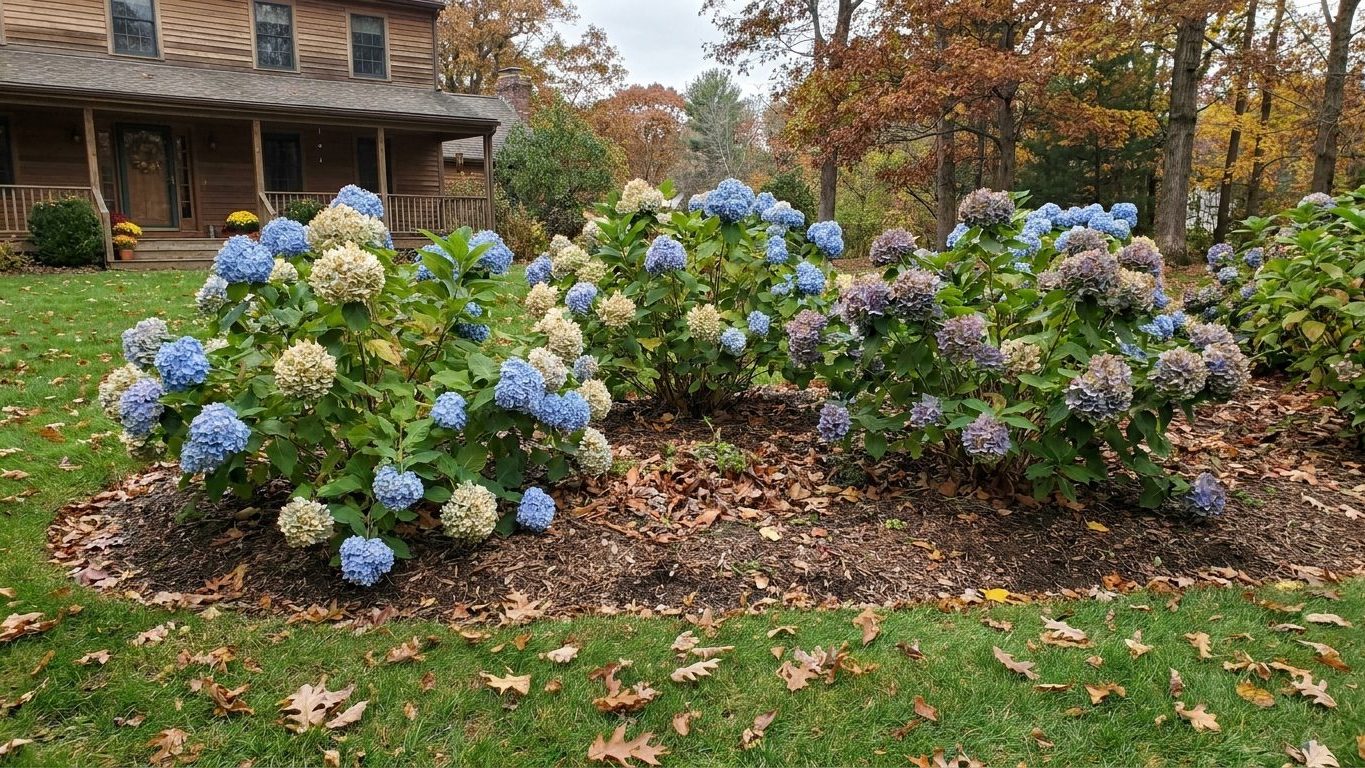
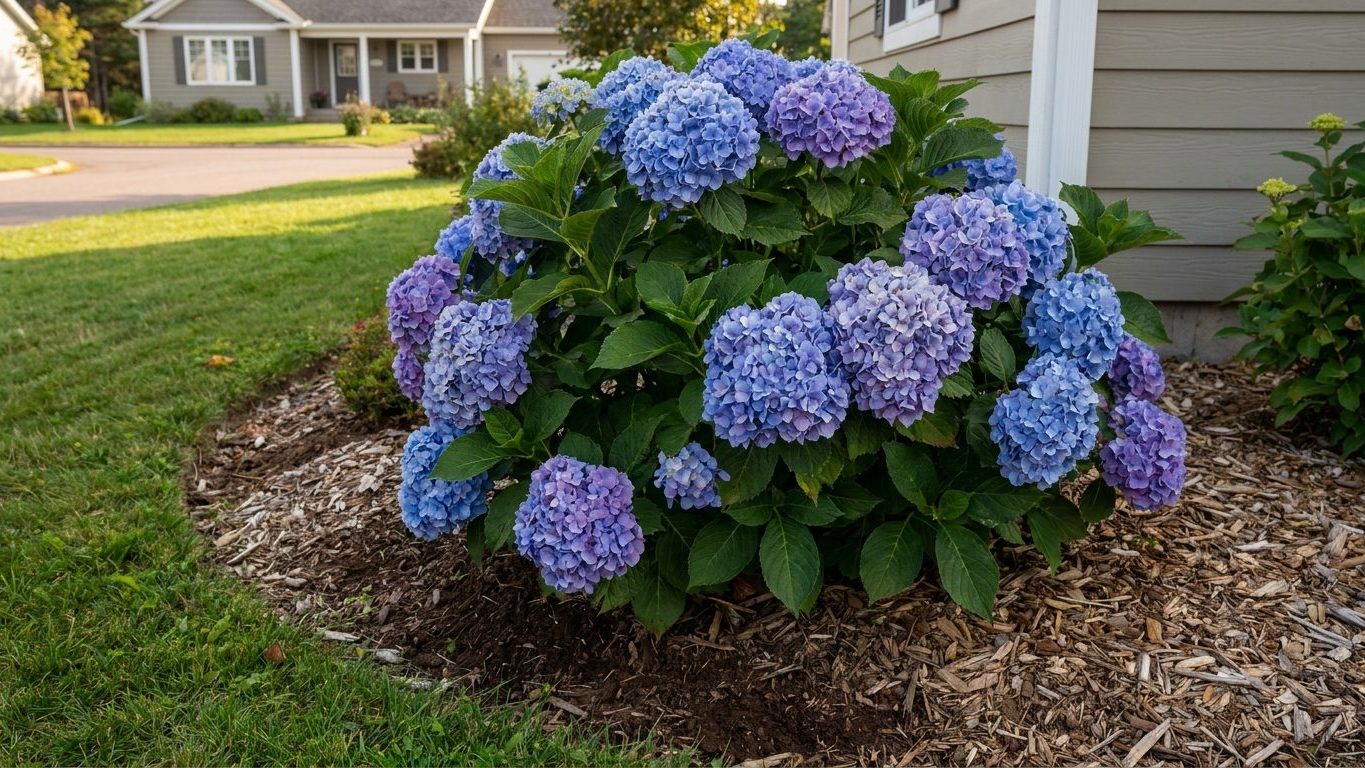
When to Plant Hydrangeas in Rhode Island: Dates and Varieties

When to Plant Hydrangeas in Rhode Island: Dates and Varieties

Hydrangeas grow well across most of Rhode Island, where a Zone 6a to 7b climate and a frost-free stretch of roughly six months give bigleaf, panicle, smooth and oakleaf types enough season to root, bloom and harden off before winter. Coastal towns run milder than inland valleys, and both planting and pruning windows trace back to the same two dates: last spring frost and first fall frost.

Hydrangeas Care Calendar for Rhode Island

Growing Hydrangeas in Rhode Island: Dates and Varieties

In Providence, NOAA NCEI’s 1991-2020 Climate Normals put the last spring frost between April 7 and April 17 and the first fall frost between October 24 and November 3. The USDA Plant Hardiness Zone Map places the state at Zone 6a to 7b, mild enough for most common hydrangea types.

  • Dormancy: from late fall through late winter is the one stretch to dig, split or move a hydrangea without disturbing its roots.
  • Planting: set new shrubs in the ground two to three weeks after the last spring frost, once the soil has warmed and drained.
  • Bud break: new leaves push out through April, the signal that the plant has cleared winter dormancy.
  • First feeding: a light dose of fertilizer goes down as soon as leaves unfurl, not before.
  • Summer bloom and water: from June through August, a deep soak once a week keeps flower heads from wilting in the heat.
  • Pruning: timing depends on the type, right after bloom fade for old-wood bloomers, late winter for new-wood ones.
  • Frost prep: once the first fall frost lands, ease off watering and mulch the base to protect next year’s buds.

Coastal towns run a week or two milder than these Providence dates, inland valleys colder, so treat this ribbon as the state’s middle ground and check your own county before committing a shrub to the ground.

Best Hydrangeas for Rhode Island

Not every hydrangea shrugs off a Rhode Island winter the same way. The split that matters most is where next year’s flowers form, on last year’s stems or on wood the plant grows fresh each spring.

The state’s Zone 6a to 7b range, drawn from the USDA Plant Hardiness Zone Map, means winter lows can dip cold enough to kill old wood in an average year, especially away from the coast. That single fact decides which types bloom reliably here.

Kind Flowers on Verdict here Why
Panicle (H. paniculata) New wood Best bet statewide Blooms even after a hard prune, tolerant of the full 6a to 7b range
Smooth (H. arborescens) New wood Solid statewide choice Dies back in cold winters but rebuilds and flowers the same year
Bigleaf (H. macrophylla) Mostly old wood Reliable near the coast, risky inland Old wood buds can be killed by an inland cold snap
Oakleaf (H. quercifolia) Mostly old wood Fine in the milder 7b pockets Stems and buds can suffer dieback in harder winters

Climbing hydrangea can work too on a sheltered, warm wall, the other kinds are on their own pages with the fuller picture on which cultivars perform best.

When to Plant, Prune and Feed Hydrangeas in Rhode Island

Three dates decide the hydrangea year in Rhode Island, and all three trace back to the same frost window NOAA NCEI’s 1991-2020 Climate Normals report for Providence, April 7 to April 17 in spring and October 24 to November 3 in fall.

Old-wood bloomers like most bigleaf and oakleaf types skip the spring pruning window entirely, since a spring cut removes the very buds set to flower that summer.

Task Window here Counted from
Planting Late April into early May Two to three weeks after last spring frost
Feeding Early to mid May Three to four weeks after last spring frost, once leaves unfurl
Pruning new-wood types Late February into March Four to six weeks before last spring frost
Fall mulch and winter prep Mid to late October One to two weeks before first fall frost

The month-by-month version of this same ribbon, with deadheading and mulch depth included, lives on Rhode Island’s hydrangea calendar page.

Hydrangeas Problems in Rhode Island and What Causes Them

No flowers on an otherwise healthy shrub

An old-wood type that looks fine but skips blooming usually lost its buds to a late freeze near the April 7 to April 17 frost window, not to disease. Skip the spring pruning shears, let it recover, and check the which-ones page before replacing it.

Old wood dead after a cold winter

Inland gardens sitting toward the colder end of the state’s Zone 6a to 7b range can lose stems outright in a hard winter. Cut dead wood back to live tissue in spring and expect a lighter bloom that season on old-wood types.

New growth blackened by an early frost

A first fall frost arriving as early as October 24 can catch soft new growth still pushing from a late-summer prune or feeding. Hold off on fertilizer and pruning by late summer so the plant has time to harden off before that date.

Rhode Island North to South: How the Dates Shift

Rhode Island is small, but the coast and the inland hills don’t run on quite the same calendar.

  • The coast (Newport, Westerly, Narragansett): mild air off the water keeps this stretch on the warmer end of the state’s zone range, letting old-wood buds survive winters that would kill them a few miles inland.
  • Providence and the inland valleys (Providence, Cranston, Warwick): sits closest to the reference frost dates, a fair middle ground for planting and pruning.
  • The northern hills (Woonsocket, Chepachet, Glocester): colder pockets where old-wood bigleaf and oakleaf types are the most likely to lose buds over winter.

None of these local shifts change the state’s overall frost-free math by much, but they do decide how confidently a coastal versus inland gardener can lean on old-wood bloomers.

Rhode Island Extension Offices and County Contacts

The Zone 6a to 7b figure and the Providence frost dates above are a starting point, not a guarantee for every yard in the state.

  • University of Rhode Island Cooperative Extension: the state’s land-grant service for soil tests, disease diagnosis and local advice.
  • Your county’s extension office: often the fastest way to confirm frost dates for your exact town rather than the airport average used here.
  • Rhode Island’s hydrangea calendar page: the month-by-month version of the windows outlined above, sorted by task.

This month, that call is simple: stop feeding, keep watering through any dry stretch, and leave the pruning shears in the shed until after next summer’s blooms fade.

Common questions

Can I plant hydrangeas in Rhode Island in fall?

Yes, as long as it happens well before the first fall frost, which lands between October 24 and November 3 in Providence. Aim for at least six weeks of root growth before that date, earlier is safer inland.

Do Rhode Island winters kill hydrangeas outright?

Rarely for panicle or smooth types, which regrow from the roots even after a hard dieback. Bigleaf and oakleaf shrubs can lose their flower buds in a cold winter without losing the whole plant.

Why didn’t my hydrangea bloom this year?

The most common cause in this state is a late spring freeze or an ill-timed prune that removed old-wood buds. Check the timing of your last cutback before assuming the plant is sick.

When to Plant Hydrangeas in Prince Edward Island: Dates and Varieties

When to Plant Hydrangeas in Prince Edward Island: Dates and Varieties

Hydrangeas can grow on Prince Edward Island, but the choice of kind decides whether they bloom. With Charlottetown’s frost season running from an average May 16 last frost to an average October 17 first frost, and the reference city rated Canadian zone 5b, panicle and smooth hydrangeas are the reliable picks, while bigleaf varieties often lose their flower buds to winter cold.

Hydrangeas Care Calendar for Prince Edward Island

Growing Hydrangeas in Prince Edward Island: Dates and Varieties

Environment and Climate Change Canada’s Canadian Climate Normals for Charlottetown A put the average last spring frost at May 16 and the average first fall frost at October 17, with the reference city rated Canadian hardiness zone 5b. That May date is a mean, not a safe line: frost arrives later half the time.

  • Dormancy: the safest window to plant or move a shrub falls before buds swell, in the weeks ahead of May 16.
  • Planting: wait two to three weeks past the average last frost, once mild nights hold steady rather than trusting the date itself.
  • Frost watch: new leaves that open before May 16 can still blacken overnight, so keep a sheet ready.
  • Steady growth: the stretch between May 16 and October 17 is roughly the whole frost-free season this reference city gets.
  • Last feeding: stop well before fall so new stems have time to toughen ahead of the October 17 average.
  • Shutdown: as nights cool toward that October date, ease off pruning and let the plant close down on its own schedule.

Treat both frost dates as the middle of a range, not a wall calendar entry, and lean later if your yard sits low, inland, or away from the coast.

Best Hydrangeas for Prince Edward Island

Natural Resources Canada’s Plant Hardiness Site rates Charlottetown at Canadian zone 5b, a scale built on seven climate variables rather than the single measure behind the USDA zones used elsewhere on this site. The two numbers don’t convert to each other.

The split that decides is where each shrub sets its flower buds. Kinds that bloom on new wood shrug off a hard winter, kinds that bloom on last year’s wood can lose the whole show to one cold snap.

Kind Flowers on Verdict here Why
Panicle hydrangea New wood Good fit Winter cold can’t erase buds that haven’t formed yet.
Smooth hydrangea New wood Good fit Dies back hard some winters and still rebounds and blooms.
Bigleaf hydrangea Old wood Risky Zone 5b winters often kill last year’s buds outright.
Oakleaf hydrangea Old wood Marginal Borderline hardiness, needs a sheltered spot to set buds.
Climbing hydrangea Old wood Slow but possible Hardy vine, but takes years on a wall before it flowers.

Reblooming bigleaf cultivars exist and can push a few flowers on new growth after a rough winter, but that’s not a sure thing at this zone. The finer differences between these kinds live on their own pages.

When to Plant, Prune and Feed Hydrangeas in Prince Edward Island

The two frost dates from Environment and Climate Change Canada’s Canadian Climate Normals for Charlottetown A, May 16 and October 17, set every gardening window on the Island.

Each task counts backward or forward from one of those two dates, since the calendar page turns the same numbers into all twelve months.

Task Window here Counted from
Planting Two to three weeks after May 16 Average last spring frost
Pruning new-wood kinds Late winter into early spring, before May 16 Ahead of the average last frost
Last feeding Eight to ten weeks before October 17, roughly mid to late August Average first fall frost

Old-wood bloomers like bigleaf hydrangea take a lighter hand. Skip a hard prune, and just clear dead wood once new leaves show which stems made it through winter.

Hydrangeas Problems in Prince Edward Island and What Causes Them

No flowers on an otherwise healthy shrub

Bigleaf hydrangea sets its flower buds on the previous year’s stems, and Charlottetown’s zone 5b winters, per Natural Resources Canada’s Plant Hardiness Site, run cold enough to kill those buds outright most years. Choose a new-wood bloomer instead, or mound mulch over the base each fall.

New growth blackened after a late frost

The May 16 last-frost date is a mean, so frost lands later in about half of all years, catching tender new leaves unprotected. Hold off planting until a run of mild nights, and keep frost cloth handy for a surprise cold snap.

Leaves scorched on the sunny side

Coastal wind and salt spray are common across the Island, and a bigleaf’s broad leaves catch both more than a panicle’s narrower foliage does. Plant on the sheltered side of a building or hedge, and water deeply through dry stretches.

Prince Edward Island North to South: How the Dates Shift

Small as Prince Edward Island is, the water on each shore still shifts the season enough for a hydrangea to notice.

  • North Shore, facing the Gulf of St. Lawrence: colder water lingers into spring, so frost can hang on later here than the Charlottetown average suggests.
  • South Shore, along the Northumberland Strait: this water warms earlier in the year, easing new growth out a bit sooner than the north side.
  • Inland and central parishes: away from either shore, spring nights run colder and fall frost can arrive ahead of the coastal average.
  • Sheltered village gardens: a fence, hedge, or building wall can buy a shrub extra weeks on either end of the season, regardless of which shore it sits near.

None of that moves the two reference dates, it just means a garden ten miles from Charlottetown can run early or late against them, so use the calendar page to adjust for your own shore.

Prince Edward Island Extension Offices and County Contacts

Charlottetown’s frost dates and zone 5b rating are a province-wide starting point, not a guarantee for every parish, so local guidance still matters.

  • Prince Edward Island’s Department of Agriculture: the province’s agriculture page for programs and local contacts beyond this site.
  • The hydrangea calendar for this province: month-by-month timing built from these same two frost dates.
  • Which ones hold up here: a longer look at bigleaf, panicle, smooth, and oakleaf under zone 5b winters, and, right now, a reminder to hold off on fertilizer so new growth can harden before the October 17 average first frost.

Common questions

Can bigleaf hydrangea survive winter on Prince Edward Island?

The shrub itself often survives, but the flower buds it set the previous fall frequently don’t, given the cold that comes with Charlottetown’s zone 5b rating. Expect green leaves most springs and flowers in fewer of them, unless the base gets heavy mulch cover each fall.

Is it too late to plant hydrangeas in September?

A shrub planted now has roughly a month of mild soil before the average October 17 first frost, which isn’t much time to establish roots. Waiting for the safer spring window after May 16 gives it a full season to settle in first.

Which hydrangea blooms most reliably on the Island?

Panicle and smooth hydrangeas set their buds on new wood each spring, so a hard winter can’t erase a flower season that hasn’t formed yet. That’s the main reason they outperform bigleaf types at this zone.

When to Plant Hydrangeas in Pennsylvania: Dates and Varieties

When to Plant Hydrangeas in Pennsylvania: Dates and Varieties

Pennsylvania homeowners can grow hydrangeas successfully across the state’s USDA zones 5a to 7b, but the safe bet changes by county. Panicle and smooth hydrangeas bloom reliably from the Alleghenies to Philadelphia. Bigleaf hydrangeas need a sheltered spot and winter protection outside the state’s mildest pockets, where a late frost still nips old wood most springs.

Hydrangeas Care Calendar for Pennsylvania

Growing Hydrangeas in Pennsylvania: Dates and Varieties

In Philadelphia, the mildest corner of Pennsylvania, NOAA NCEI’s U.S. Climate Normals 1991-2020 puts the last spring freeze at March 29 to April 6 and the first fall freeze at November 5 to November 16, while the northern tier and the Alleghenies run two to four weeks later in spring.

  • Dormancy: from late fall through late winter the plant sits leafless, and this is the one safe window to transplant or divide without disturbing new growth.
  • Planting: set new hydrangeas in the ground two to three weeks after the last spring freeze, so mid to late April near Philadelphia, once soil has warmed.
  • Spring leaf-out: buds swell and leaves unfurl through April and May, and a late cold snap inside that window can still nip bigleaf flower buds.
  • Bud set on old wood: bigleaf and oakleaf hydrangeas form next year’s flowers by mid to late summer, so any hard pruning has to happen before that window closes.
  • Feeding: a light feed goes down once spring growth is underway and again by early summer, never later.
  • Fall hardening: growth should slow on its own three to four weeks before the first fall freeze, roughly October near Philadelphia, and feeding should stop well before then.
  • Winter protection: once the first freeze passes, mid-November near Philadelphia, mulch the root zone and cage bigleaf types with dry leaves.

Every one of these windows shifts later the farther a yard sits from Philadelphia’s mild river valley.

Best Hydrangeas for Pennsylvania

The USDA Plant Hardiness Zone Map, built on 1991-2020 normals, spans Pennsylvania from 5a in the northern tier and the Alleghenies to 7b along the Philadelphia corridor. That range decides which species reliably survive winter unassisted.

Panicle and smooth hydrangeas bloom on new wood, so a hard winter that kills the top growth still leaves flowers the following summer. Bigleaf and oakleaf types set buds on old wood, which makes them the riskiest bet outside the mildest zone.

Kind Flowers on Verdict here Why
Panicle New wood Reliable statewide Blooms even after a hard winter kills the top growth
Smooth New wood Reliable statewide Native to the eastern U.S. and tolerant of the state’s cold snaps
Bigleaf Old wood Best near Philadelphia only Flower buds are the first thing a late frost or a harsh winter kills
Oakleaf Old wood Worth trying in a sheltered spot Hardier than bigleaf but still sets buds on wood that can freeze

Climbing hydrangea and mountain hydrangea are the other kinds worth a look for a Pennsylvania yard, and each gets its own page on which ones hold up here.

When to Plant, Prune and Feed Hydrangeas in Pennsylvania

Planting, pruning and feeding all key off the frost dates NOAA NCEI’s Climate Normals set for Philadelphia: last spring freeze March 29 to April 6, first fall freeze November 5 to November 16.

Pruning timing depends on which kind is planted, since bud location decides whether cutting in spring removes the coming season’s flowers or simply clears the way for new ones.

Task Window here Counted from
Planting Mid to late April near Philadelphia Two to three weeks after the last spring freeze
Pruning panicle and smooth Late winter, before buds swell Ahead of the last spring freeze
Feeding cutoff Late September near Philadelphia Six weeks before the first fall freeze

Bigleaf and oakleaf pruning follows the bloom, not the frost, so cut spent flowers right after they fade and never in fall or early spring.

Hydrangeas Problems in Pennsylvania and What Causes Them

No flowers on a healthy, green shrub

No flowers on a healthy, green shrub — Growing Hydrangeas in Pennsylvania: Dates and Varieties

This is almost always winterkill or bad timing, not disease. A late frost inside the March 29 to April 6 window can kill bigleaf flower buds that already survived winter, and pruning old wood in fall removes next summer’s blooms entirely.

Leaves scorched on the sunny side

Pennsylvania’s humid summer heat scorches bigleaf leaves planted in full sun, especially in the Philadelphia corridor where afternoons run hottest. Moving new plants to part shade or afternoon shade fixes most cases within a season.

Stunted growth after a hard winter

In the state’s colder zone 5a pockets in the north and the Alleghenies, stems can die back to the ground even when roots survive. Cutting dead wood in spring and mulching heavier each fall reduces the damage the following year.

Pennsylvania North to South: How the Dates Shift

Pennsylvania’s frost dates and bloom windows shift by more than latitude alone, and the gap between the Philadelphia corridor and the northern counties can run close to a month.

  • The Philadelphia corridor and the southeast (Philadelphia, Chester, Bucks counties): the mildest ground in the state, closest to the March 29 to April 6 last-frost window, and the safest place to try bigleaf without heavy winter protection.
  • The Alleghenies and south-central ridges (Somerset, Bedford, the Laurel Highlands): elevation pushes both frost dates two to four weeks later, which shortens the bloom season for old-wood types.
  • The northern tier (Erie, Potter, Bradford counties): the coldest ground in the state, where panicle and smooth hydrangeas are the dependable choice and bigleaf struggles most years.
  • The Lake Erie shore: the lake moderates spring cold snaps somewhat, which can nudge the local last frost earlier than nearby inland counties at the same latitude.

The month-by-month calendar page breaks each of these windows down further for a specific county.

Pennsylvania Extension Offices and County Contacts

The state’s 5a to 7b range from the USDA Plant Hardiness Zone Map is a starting point, and a county extension office fills in the rest with local frost data and pest alerts.

  • Your county extension office: local frost dates, soil test results and pest alerts specific to a yard.
  • Penn State Extension: the state’s land-grant program for home garden questions, reachable at extension.psu.edu.
  • The state calendar page: month-by-month planting, pruning and feeding windows, including the mulching push before the first fall freeze lands in Pennsylvania this November.

Common questions

Can I plant hydrangeas in Pennsylvania in fall?

Yes, fall planting works well here as long as it happens at least six weeks before the first fall freeze, which falls between November 5 and November 16 near Philadelphia, giving roots time to establish before the ground cools.

Do hydrangeas need winter protection in Pennsylvania?

Panicle and smooth types don’t need it anywhere in the state. Bigleaf and oakleaf types benefit from a mulch cage in the colder zone 5a and 6a counties, and can often skip it in the milder 7a to 7b pockets near Philadelphia.

Why didn’t my hydrangea bloom this year in Pennsylvania?

The most common reason is a late frost inside the March 29 to April 6 window killing bigleaf flower buds, followed closely by pruning old wood at the wrong time of year.

When to Plant Hydrangeas in Ontario: Dates and Varieties

When to Plant Hydrangeas in Ontario: Dates and Varieties

Yes, hydrangeas grow well in Ontario, especially panicle and smooth types that shrug off a hard winter. Bigleaf and oakleaf need a more sheltered spot, since a late cold snap can wipe out the flower buds they carry over from last year. Timing everything to the province’s frost dates and hardiness zone is what separates a full summer of blooms from a shrub that only leafs out.

Hydrangeas Care Calendar for Ontario

Growing Hydrangeas in Ontario: Dates and Varieties

Environment and Climate Change Canada’s Canadian Climate Normals set the average last spring frost at April 30 and the first fall frost at October 16 for the Toronto Pearson station, and that roughly five-and-a-half-month stretch is what the whole hydrangea year here is built around.

  • Dormancy: late fall through early spring is the one stretch when a hydrangea can be dug up or moved with its roots undisturbed.
  • Planting: hold off until two to three weeks past the April 30 average last frost, putting the safer window in mid to late May.
  • Pruning old-wood bloomers: cut back spent flower heads in late winter, while the plant is still bare, never once new leaves have opened.
  • First feed: work in a balanced fertilizer once the soil has warmed past the last frost, usually the same week as planting.
  • Bloom watch: color and cluster size build through July and August, the payoff for any buds that made it through spring.
  • Last feed: stop feeding by midsummer so new growth has time to harden before the October 16 average first fall frost.
  • Winter prep: mound mulch over the crown of a tender variety before the ground locks up, using mid-October as the cue to act.

That April 30 date is a mean, not a promise, so in roughly half of all years frost lands later, and a gardener who plants right on the average is betting on the other half going in his favor.

Best Hydrangeas for Ontario

Natural Resources Canada’s Plant Hardiness Site puts Toronto at zone 7a in the Canadian system, a rating built from seven climate variables rather than the single winter-low reading behind the US scale, so it does not convert directly to a USDA number.

Panicle and smooth hydrangeas flower on new wood grown after the last frost, so an Ontario winter rarely costs them a bloom season, while bigleaf and oakleaf set next year’s buds on old wood that a hard cold snap can kill outright before spring even arrives.

Kind Flowers on Verdict here Why
Panicle New wood Reliable Buds form after the last frost, so winter cold never reaches them
Smooth New wood Reliable Dies back hard some winters but regrows and blooms the same year
Bigleaf Old wood Uneven A late frost after leaf-out can erase the whole year’s flowers
Oakleaf Old wood Borderline Exposed stems can die back to the snow line in a bad winter

Climbing hydrangea shows up occasionally in sheltered corners, but it and the other less common kinds are on their own pages, worth checking before a whole bed rides on one shrub.

When to Plant, Prune and Feed Hydrangeas in Ontario

Environment and Climate Change Canada’s Canadian Climate Normals anchor every window below to the same two Toronto Pearson averages, an April 30 last spring frost and an October 16 first fall frost.

Counting forward from one date and back from the other turns those two averages into three practical windows instead of a single date circled on a calendar.

Task Window here Counted from
Planting Mid to late May Two to three weeks after the April 30 average last frost
Pruning old wood Late winter, before leaf-out Ahead of the April 30 average, while the plant is still dormant
Last feeding By early August About ten weeks before the October 16 average first frost

New-wood bloomers like panicle and smooth types tolerate a later planting than that if a spring gets away from you, since a missed window only delays the first bloom, not the plant’s survival.

Hydrangeas Problems in Ontario and What Causes Them

No flowers on an otherwise healthy shrub

A bigleaf or oakleaf hydrangea that leafs out fine but skips flowering usually lost its buds to a cold snap after the April 30 average last frost, since those kinds carry flowers over on last year’s wood. A repeat over two winters is worth switching to a panicle or smooth variety instead.

Stems dead back to the ground

Winter injury shows up as blackened, brittle stems come spring, most common on a tender bigleaf variety pushed past its comfort in Canadian zone 7a. The plant often resprouts from the base by June, but that fresh growth won’t flower the same season on an old-wood bloomer.

Leaves scorched right after planting

Foliage that browns at the edges soon after going in the ground is usually transplant stress meeting a cold, drying wind before the roots have caught hold, more likely the closer planting sits to the April 30 average. Water deeply and hold off on fertilizer until new leaves appear.

Ontario North to South: How the Dates Shift

The April 30 and October 16 averages describe the milder band around Toronto, and the season stretches or shrinks the farther a yard sits from Lake Ontario and Lake Erie.

  • The Golden Horseshoe and Niagara (Toronto, Niagara-on-the-Lake, Hamilton): lake-warmed air tends to push the last frost earlier and the first frost later than the provincial average, the easiest strip here for bigleaf hydrangeas.
  • Eastern Ontario and the Ottawa Valley (Ottawa, Kingston, Cornwall): a more continental climate brings colder winter lows, favoring panicle and smooth types over anything that blooms on old wood.
  • Northern Ontario (Sudbury, North Bay, Thunder Bay): frost lingers weeks longer into spring and returns weeks earlier in fall, squeezing the safe planting window from both ends.

None of that changes which shrub survives so much as the calendar wrapped around it, so narrow down to a local forecast.

Ontario Extension Offices and County Contacts

Zone 7a and the Toronto Pearson frost dates above are a starting point, not a substitute for what a particular county actually sees through the year.

  • Ontario Ministry of Agriculture, Food and Rural Affairs: the provincial agriculture and food page, a starting point for local growing contacts.
  • Your county or region: local staff can confirm frost and soil detail that a province-wide average cannot.
  • This month’s gesture: check the calendar above and mulch or plant accordingly before the ground makes the decision for you.

Common questions

Can bigleaf hydrangeas survive Ontario winters?

Often, but not every year. Because bigleaf carries its flower buds through the winter on old wood, a hard cold snap in Canadian zone 7a can kill next summer’s blooms even while the plant itself lives on.

When is the safest time to plant a hydrangea in Ontario?

Wait until two to three weeks after the April 30 average last spring frost, landing in mid to late May, since that date is a mean and frost can still arrive later in any given year.

Do hydrangeas need winter protection in Ontario?

Panicle and smooth types generally do not, since they rebuild their flowers on new wood each spring. Bigleaf and oakleaf benefit from a mulch mound over the crown before the ground freezes, ahead of the October 16 average first frost.

When to Plant Hydrangeas in Oklahoma: Dates and Varieties

When to Plant Hydrangeas in Oklahoma: Dates and Varieties

Hydrangeas grow across Oklahoma, but which kind survives depends on where the spring frost lands. The state’s 6a to 8a hardiness range and its swinging spring cold snaps favor panicle and smooth hydrangeas over bigleaf, unless bigleaf gets a sheltered, morning-sun spot. Get the frost dates right and the rest of the calendar follows.

Hydrangeas Care Calendar for Oklahoma

Growing Hydrangeas in Oklahoma: Dates and Varieties

NOAA NCEI’s 1991-2020 climate normals put Oklahoma City’s last spring frost between March 28 and April 10, its first fall frost between October 29 and November 8, and the growing season in between sits inside the state’s 6a to 8a hardiness range.

  • Dormancy: the safest window to dig up or move an established hydrangea falls in the dead of winter, well before the last spring frost window opens.
  • Planting: set new nursery stock two to three weeks after the last spring frost window closes, once the soil has warmed.
  • Spring flush: leaves push out fast through the weeks right after that last frost window, and a light feed here helps the flush along.
  • Bud set: flower buds form through early summer, right as the heat starts building toward July.
  • Pruning: old-wood bloomers like bigleaf get cut back right after their flowers fade, while new-wood types wait until late winter dormancy.
  • Fall prep: mulch two to three weeks before the first fall frost window opens in late October to protect the root zone through winter.

Match each step to your own yard’s microclimate, since the reference dates above come from one city’s airport station, not your backyard.

Best Hydrangeas for Oklahoma

Oklahoma’s spread runs from zone 6a in the panhandle to zone 8a in the southeast, per the USDA Plant Hardiness Zone Map, and that swing decides which hydrangea species holds up without babying.

Shrubs that bloom on new wood shrug off a late frost inside the March 28 to April 10 window, while old-wood bloomers can lose a whole season’s flowers to that same cold snap.

Kind Flowers on Verdict here Why
Panicle (H. paniculata) New wood Reliable statewide Buds form after the frost risk passes and it shrugs off summer heat.
Smooth (H. arborescens) New wood Reliable statewide Native to the eastern half of the region and tolerant of Oklahoma’s clay.
Bigleaf (H. macrophylla) Old wood, mostly Borderline A frost inside the March 28 to April 10 window can kill buds before they open.
Oakleaf (H. quercifolia) Old wood Good in part shade Native to the region and tolerant of dry summer stretches once rooted in.

Climbing hydrangea gets little traction in Oklahoma gardens and stays on its own page rather than a row here, since it needs more structure and shade than most yards offer.

When to Plant, Prune and Feed Hydrangeas in Oklahoma

Three dates matter more than the rest of the calendar, and all three count backward or forward from the same frost windows NOAA NCEI’s climate normals set for Oklahoma City.

Get the planting window right and the pruning cuts fall into place on their own, since both track the same last frost date.

Task Window here Counted from
Plant Two to three weeks after the last spring frost window closes The April 10 end of Oklahoma City’s frost window
Prune bigleaf and oakleaf Right after bloom fades, before next year’s buds set Old-wood bloomers, not the frost date
Prune panicle and smooth Late winter, while still dormant Before the last spring frost window opens
Feed First round at the last frost window, second six to eight weeks later The March 28 to April 10 window

Skip fall pruning altogether, since a cut made close to the first fall frost window in late October invites dieback right at the cut.

Hydrangeas Problems in Oklahoma and What Causes Them

No blooms on an otherwise healthy shrub

A frost landing inside the March 28 to April 10 window kills old-wood buds on bigleaf hydrangeas before they ever open, and a late prune cutting off next year’s buds does the same. Switch to a new-wood bloomer, or check pruning timing against the variety page.

Leaves scorched by midafternoon

Full west sun paired with Oklahoma’s zone 6a to 8a summer heat burns leaf edges fast, especially on a plant still settling into new ground. Site the shrub for morning sun and afternoon shade, and mulch to keep root temperatures down.

Wilting despite regular watering

Oklahoma’s clay holds water at the surface but drains slowly around the root ball, so a hydrangea can wilt in soil that still feels wet on top. Amend the planting hole with compost, and check the state’s problem page for what else goes wrong.

Oklahoma North to South: How the Dates Shift

The frost dates above are anchored to Oklahoma City, and the rest of the state leans earlier, later, colder or milder depending on where you sit.

  • The Panhandle and Northwest (near the Kansas and Texas panhandle borders): higher, more open ground runs colder in winter and later on the last frost, so bigleaf is a bigger gamble here than panicle or smooth.
  • Central Oklahoma (around Oklahoma City and Norman): this is the reference-city zone described above, the fairest match for the state’s overall 6a to 8a range.
  • Southeast Oklahoma (toward the Arkansas and Texas borders): more humidity and a milder winter loosen the frost windows on both ends, which favors oakleaf and bigleaf.

Check the state page’s frost map for the county-level detail this section only sketches.

Oklahoma Extension Offices and County Contacts

Oklahoma State University Extension, at https://extension.okstate.edu/, runs a county office across the state, and its staff read local soil and pest conditions the state-level figures above cannot.

  • Your state page: the frost dates and pruning window for where you live in Oklahoma.
  • Which ones hold up here: the full variety breakdown, kind by kind.
  • Call your county office: before you plant this fall, ask about a soil test and local frost risk.

Common questions

Do hydrangeas need full shade in Oklahoma?

Not full shade. Morning sun with afternoon shade works best across the state’s zone 6a to 8a range, since afternoon shade cuts the leaf scorch that comes with Oklahoma summer heat.

Can bigleaf hydrangeas survive Oklahoma winters?

They can, but a frost inside the March 28 to April 10 window can take out a season’s buds. Plant bigleaf against a sheltered wall, or choose panicle or smooth types instead.

When is the best time to plant hydrangeas in Oklahoma?

Two to three weeks after the last spring frost window closes, once the soil has warmed, gives roots the best start before summer heat arrives.

When to Plant Hydrangeas in Nunavut: Dates and Varieties

When to Plant Hydrangeas in Nunavut: Dates and Varieties

Growing hydrangeas outdoors year-round in Nunavut is not realistic. Rankin Inlet’s Canadian hardiness zone of 0a and a frost-free stretch of under three months rule out any variety left in the ground through winter. Every hydrangea here lives as a container plant, moved out for summer and back inside before the first fall frost.

Hydrangeas Care Calendar for Nunavut

Growing Hydrangeas in Nunavut: Dates and Varieties

Rankin Inlet’s mean last frost falls June 19 and the mean first fall frost falls September 13, per Environment and Climate Change Canada’s Canadian Climate Normals. Natural Resources Canada rates the area Canadian hardiness zone 0a, the coldest class on the scale, which rules out any hydrangea wintering in open ground here.

  • Dormancy: the safe window to repot or move a plant, roots undisturbed, runs through the cold months before growth starts near June 19.
  • Planting: wait two to three weeks past the mean last frost of June 19, once both the ground and the container mix have warmed.
  • Growth spurt: from late June into July the plant pushes new leaves fast, racing the short season.
  • Budding: buds set in July on whichever wood the variety uses, with barely six weeks of warmth to work with.
  • Bloom watch: flowers, if they come, open in August, well ahead of the mean first fall frost of September 13.
  • Frost prep: bring every pot indoors before September 13, since that date is only an average and an early frost can land sooner.
  • Winter storage: hold the dormant plant in a cool, frost-free space until the cycle starts again.

None of this works in open ground. With under three months between frosts and a Canadian zone of 0a, every hydrangea in Nunavut is a container plant, moved indoors for roughly nine months of the year.

Best Hydrangeas for Nunavut

Every widely sold hydrangea assumes a milder winter than Rankin Inlet’s, which Natural Resources Canada rates Canadian hardiness zone 0a, and a longer season than the run between the June 19 and September 13 mean frosts. None of the usual garden types are hardy outdoors this far north.

Type still matters, though, because it decides how a plant gets cut back and stored each winter, and whether it might actually rebloom on a windowsill or in a heated porch.

Kind Flowers on Verdict in Nunavut Why
Bigleaf Last year’s wood Container only, unreliable bloom Overwintered buds rarely survive the move indoors and back out
Panicle New wood Container, best odds Blooms on new growth, so a hard winter setback doesn’t cost the flowers
Smooth New wood Container, best odds Tolerates cold well and rebuilds fast from the base each spring
Oakleaf Old wood Not recommended Needs a longer warm season than the roughly twelve weeks between frosts
Climbing Old wood Not practical Needs years of established wood a yearly container cycle can’t provide

Panicle and smooth types tolerate cold best and rebloom most reliably indoors, which makes them the practical picks here. Oakleaf and climbing hydrangeas need more established wood than a yearly container cycle allows, and the other kinds are on their own pages.

When to Plant, Prune and Feed Hydrangeas in Nunavut

Environment and Climate Change Canada’s Canadian Climate Normals put Rankin Inlet’s mean frost dates at June 19 in spring and September 13 in fall, and those two dates set every task below.

With roughly twelve weeks between them, there’s no slack for a task done late, especially the move indoors ahead of the first fall frost.

Task Window here Counted from
Plant or repot Early to mid-July Two to three weeks after the June 19 mean last frost
Feed Late June through mid-July Right after new growth starts, stopped well before September 13
Prune Late August, before frost Two to three weeks ahead of the September 13 mean first frost

Skip a hard cutback this far north. A plant already surviving on a short season doesn’t need less wood to rebuild before it goes back indoors for winter.

Hydrangeas Problems in Nunavut and What Causes Them

No blooms on a healthy plant

The season between June 19 and September 13 leaves barely enough warmth for old-wood buds to form and open before frost. Choose a new-wood type instead, and check the page on which ones hold up here before buying.

Stems dead to the base each spring

Canadian zone 0a cold kills wood left outside past the mean first frost. Bring the whole container in before September 13 rather than waiting for a hard freeze, and see the calendar page for the exact window.

Weak, stretched growth over winter

Warm rooms and short daylight push soft, leggy stems on a dormant plant that should be resting. Move it to the coolest bright spot in the house and cut back on water until spring growth starts.

Nunavut North to South: How the Dates Shift

Rankin Inlet’s numbers are one station’s average, and Nunavut runs far wider than that single point on the map.

  • Coastal communities (near Hudson Bay and the Arctic coast): sea ice keeps spring cooler and pushes the safe planting window later than Rankin Inlet’s own dates.
  • Inland and higher ground: shorter, colder summers than a coastal reading suggests, with less margin before the first fall frost.
  • The far north of the territory: a shorter frost-free run than Rankin Inlet’s, which already sits under three months.

Check the territory page for how these local shifts play out where you are.

Nunavut Extension Offices and County Contacts

Rankin Inlet’s dates are a starting point, not a guarantee for every community in the territory. Agriculture and Agri-Food Canada is the federal contact point where a provincial or territorial office isn’t reachable online.

This month, the one gesture that matters is checking the calendar before moving anything outside or back in.

Common questions

Can a hydrangea survive winter outdoors in Nunavut?

No. Canadian hardiness zone 0a at Rankin Inlet is far below what any garden hydrangea tolerates in open ground, so container growing with an indoor winter is the only workable approach.

How short is the growing season really?

The mean last spring frost falls June 19 and the mean first fall frost falls September 13, a gap of roughly twelve weeks, and either date can shift since it’s an average, not a guarantee.

Which hydrangea type is easiest to keep alive here?

Panicle and smooth types, since they bloom on new wood and rebuild quickly each year even after a rough winter indoors, unlike types that depend on last year’s growth.

When to Plant Hydrangeas in Nova Scotia: Dates and Varieties

When to Plant Hydrangeas in Nova Scotia: Dates and Varieties

Hydrangeas grow well across Nova Scotia as long as the variety matches a Canadian zone 6b winter and a growing season that runs from an average last frost near May 7 to an average first frost near October 18. Panicle and smooth types bloom reliably here. Bigleaf and oakleaf types, which set buds on last year’s wood, face real odds of winter bud kill.

Hydrangeas Care Calendar for Nova Scotia

Growing Hydrangeas in Nova Scotia: Dates and Varieties

Environment and Climate Change Canada’s Canadian Climate Normals put Halifax’s average last spring frost at May 7 and average first fall frost at October 18, inside Canadian hardiness zone 6b, and that mean date is a midpoint, not a guarantee: half of all years bring frost later.

  • Dormancy: the safe window to move a plant sits in the weeks before May 7, while roots stay dormant and undisturbed.
  • Planting: put new hydrangeas in the ground two to three weeks after May 7, once the soil has warmed enough to work.
  • Feeding: a first feed lands four to six weeks after May 7, timed to new leaf growth rather than the calendar page.
  • Deep watering: through the height of summer, roughly ten to twelve weeks after May 7, when the plant is drinking hardest.
  • Deadheading: spent blooms come off through late summer, anywhere from twelve to sixteen weeks after May 7.
  • Mulching for winter: pile mulch two to three weeks before October 18, ahead of the first hard freeze.
  • Wrapping tender types: burlap or a cage goes up in the week bracketing October 18, once leaves have dropped.

None of these windows is a promise. A late May frost or an early October one can shift every step by two weeks in either direction, so the plant’s own buds are the better clock.

Best Hydrangeas for Nova Scotia

Natural Resources Canada’s Plant Hardiness Site places Halifax in Canadian zone 6b, a system built on seven climate variables rather than the single one behind USDA maps, so it never converts directly onto that other scale.

That distinction matters here because winter, not summer heat, decides which hydrangea blooms. Types that flower on new wood shrug off a hard freeze. Types that rely on last year’s growth gamble every single year.

Kind Flowers on Fares in zone 6b Why
Bigleaf (Hydrangea macrophylla) Old wood Marginal Winter often kills the flower buds even when the stems live
Panicle (Hydrangea paniculata) New wood Reliable Blooms each year on fresh growth no matter how far it died back
Smooth (Hydrangea arborescens) New wood Reliable Dies back hard some winters and rebounds by midsummer regardless
Oakleaf (Hydrangea quercifolia) Old wood, mostly Marginal to poor An old-wood bloom habit meets a winter that can strip the buds

Mountain hydrangea and climbing hydrangea can work in a sheltered courtyard, but the other kinds are on their own pages. For a first shrub in an open Nova Scotia yard, new-wood bloomers save a season of disappointment.

When to Plant, Prune and Feed Hydrangeas in Nova Scotia

Environment and Climate Change Canada’s Canadian Climate Normals put Halifax’s average last frost at May 7, and everything below counts forward or back from that one mean date.

The window is wider than it looks. Since frost falls later than average in half of all years, treat these ranges as a starting point checked against your own ground.

Task Window here Counted from
Planting Two to three weeks after May 7 Average last spring frost
Pruning new-wood types Roughly ten to twelve weeks before May 7, in late winter, before growth starts Average last spring frost, counted backward
Feeding Four to six weeks after May 7 Average last spring frost
Last safe pruning cut Six to eight weeks before October 18 Average first fall frost, counted backward

The month-by-month calendar page breaks all twelve months down in full. These three windows are the ones that actually move the needle.

Hydrangeas Problems in Nova Scotia and What Causes Them

No blooms after a mild-looking winter

Bigleaf types set next year’s flowers on old wood, and a Canadian zone 6b winter can kill those buds even when the stems survive. Skip old-wood bloomers or wrap them in fall, and lean on the new-wood kinds listed above.

New growth blackened in spring

The May 7 last-frost date is a mean, not a promise, so in roughly half of all years frost arrives after new leaves have already pushed out and burns them black. Hold off feeding until growth looks settled, and expect a second flush.

Stems dying back to the snowline every year

A short season between May 7 and October 18 leaves little time for new wood to harden off before the first frost, so soft growth is the first casualty of winter. Choose kinds that flower on new wood, since dieback barely costs them a season.

Nova Scotia North to South: How the Dates Shift

Halifax’s frost dates are one station’s average, and the rest of the province leans earlier or later depending on the coast, the hills, and the distance from open water.

  • The Annapolis Valley (Kings, Annapolis counties): the mildest pocket in the province, sheltered by hills on both sides, tends to leaf out a little ahead of the Halifax mean.
  • The Atlantic coast (Halifax, the South Shore, the Eastern Shore): ocean fog keeps spring cool and delays leaf-out, but it also buffers the hardest cold, easing bud kill on old-wood types.
  • Cape Breton and the interior highlands (Inverness, Victoria counties): elevation and distance from the coast push spring frost later and fall frost earlier, shortening the whole season.

None of that changes the province-wide averages, only where your yard sits inside them.

Nova Scotia Extension Offices and County Contacts

The Canadian zone 6b figure and the May 7 to October 18 frost window come from Halifax, and your yard may run earlier or later. Nova Scotia’s Department of Agriculture keeps county-level contacts for gardeners who want a local check before planting.

  • The Nova Scotia calendar page: all twelve months laid out, not just the three windows covered here.
  • Which ones hold up here: a closer look at bigleaf, panicle, smooth, and oakleaf side by side.
  • What goes wrong here: the pests and diseases tied to Maritime humidity and salt air.

Whatever the source, the first move stays the same: check the ground before the calendar.

Common questions

Can hydrangeas survive winter in Nova Scotia?

Yes. New-wood types like panicle and smooth handle a Canadian zone 6b winter reliably, dying back and regrowing each spring, while old-wood bigleaf types are hit or miss from one year to the next.

When is the best time to plant hydrangeas in Nova Scotia?

Two to three weeks after the average May 7 last frost at Halifax, once the soil has warmed, gives roots the longest run before the average October 18 first frost.

Do hydrangeas need winter protection in Nova Scotia?

Old-wood bloomers benefit from mulch and a burlap wrap before the ground freezes solid. New-wood types generally skip that step, since they flower regardless of how far they die back.

When to Plant Hydrangeas in North Dakota: Dates and Varieties

When to Plant Hydrangeas in North Dakota: Dates and Varieties

Panicle and smooth hydrangeas are the two kinds that reliably survive winter in North Dakota, where the USDA rates hardiness at zone 3a to 4b. Plant either one two to three weeks after Fargo’s last spring frost, typically May 4 to 15, and skip bigleaf and oakleaf types, which rarely make it through an open winter here.

Hydrangeas Care Calendar for North Dakota

Growing Hydrangeas in North Dakota: Dates and Varieties

Fargo’s growing season is short and boxed in by real cold on both ends, and that box is what a hydrangea calendar here has to work around.

  • Dormancy: from late fall through winter, roots sit still and pruning waits, since NOAA NCEI U.S. Climate Normals 1991-2020 puts Fargo’s last spring frost between May 4 and May 15.
  • Planting: hold off until two to three weeks after that window closes, landing roughly in late May into early June.
  • Root establishment: the six to eight weeks right after planting matter most, since a shrub moved into North Dakota soil needs that stretch before summer heat sets in.
  • Bud set and bloom: through midsummer, whichever kinds tolerate this zone push their buds and open, on a compressed timeline compared to gardens further south.
  • Pruning: the right timing depends on the kind, and getting it wrong can wipe out a whole season of flowers, which the planting and pruning section below sorts out.
  • Fall prep: four to six weeks before the first fall frost, which lands between September 25 and October 5, feeding stops and mulch goes down.
  • Winter protection: once the ground freezes, a deep mulch layer over the crown is often what decides whether a shrub returns, given a statewide hardiness range of 3a to 4b.

Every window here shifts with your own county, so treat Fargo’s dates as the starting point rather than the final word.

Best Hydrangeas for North Dakota

The USDA Plant Hardiness Zone Map 2023 places North Dakota at 3a to 4b, and that range does most of the deciding here. Anything rated no hardier than zone 5 struggles to make it through winter outdoors in this state.

Two kinds handle this cold without extra fuss, and both flower on new wood, which matters when winter routinely kills stems back to the ground anyway.

Kind Verdict here Why
Panicle Reliable Cold-hardy well into this range, blooms on new wood so dieback doesn’t cost flowers
Smooth Reliable Native-range cold tolerance, also flowers fresh from the ground each year
Bigleaf Not reliable Sets buds on old wood that rarely survives a North Dakota winter
Climbing Marginal Needs years of established growth that winter dieback keeps resetting to zero

Oakleaf hydrangea runs into the same old wood problem as bigleaf, and it gets its own fuller writeup on the page covering which kinds hold up in this state.

When to Plant, Prune and Feed Hydrangeas in North Dakota

Three dates carry most of the weight in a North Dakota hydrangea year, and all three count backward or forward from the same two frost windows.

Missing any one of them costs a season, whether that means a shrub planted too soon or a pruning cut made at the wrong point in its cycle.

Task Window here Counted from
Planting Late May into early June Two to three weeks after the last spring frost of May 4 to 15
Pruning, panicle and smooth Late winter into early spring, before new growth While still dormant, ahead of the May 4 to 15 frost window
Feeding Stops by late summer Six to eight weeks before the first fall frost of September 25 to October 5

Because bigleaf and oakleaf blooms rely on old wood that rarely survives here, their pruning calendar is mostly academic for a North Dakota yard.

Hydrangeas Problems in North Dakota and What Causes Them

No flowers despite a healthy shrub

Old wood buds carried through a North Dakota winter usually die at zone 3a to 4b cold, so a bigleaf or oakleaf shrub can green up fine and still skip flowers entirely. Switching to a panicle or smooth type, covered above, sidesteps the problem for good.

New growth blackened in late spring

Tender leaves that push out before Fargo’s last frost window of May 4 to 15 get nipped and turn black almost overnight. Holding off on uncovering or feeding until that window closes protects the new growth underneath.

Stems that never harden off before winter

Growth pushed too late in the season, often from feeding past the cutoff, stays soft going into the first fall frost of September 25 to October 5 and dies back further than it should. Stopping fertilizer six to eight weeks ahead of that date gives stems time to toughen up.

North Dakota North to South: How the Dates Shift

  • The Red River Valley (Fargo, Grand Forks): the flattest, lowest ground in the state, and typically the first spot to see a killing frost lift in spring.
  • The northern tier (Bottineau, Rugby, near the Canadian border): expect both frost dates to arrive later in spring and earlier in fall than Fargo’s own.
  • Western North Dakota (Dickinson, Williston, into the Badlands): higher elevation and drier air compress the growing season further, with more open exposure for a shrub planted without windbreak.
  • The southeast corner (Wahpeton, near the South Dakota and Minnesota lines): closest to Fargo’s own dates, since it shares similar elevation and latitude.

None of that changes the state’s overall hardiness range, which the USDA Plant Hardiness Zone Map 2023 sets at 3a to 4b, but it does mean checking your own county’s frost record before trusting Fargo’s dates outright.

North Dakota Extension Offices and County Contacts

North Dakota’s statewide hardiness range of 3a to 4b, from the USDA Plant Hardiness Zone Map 2023, is a useful starting point, but your county agent knows what last winter actually did to shrubs nearby.

  • Your state page: the frost dates and pruning window gathered for North Dakota in one place.
  • Which ones hold up here: the fuller rundown of hydrangea types worth planting in this zone.
  • NDSU Extension: reach your county office for a local read on winter damage before you plant or prune.

Common questions

Can hydrangeas survive winter outdoors in North Dakota without protection?

Panicle and smooth types generally can, given the state’s 3a to 4b hardiness range, though a mulch layer over the crown improves the odds. Bigleaf and oakleaf types typically need pot culture or heavy winter protection to make it through.

When is it safe to plant a new hydrangea in North Dakota?

Wait two to three weeks after Fargo’s last spring frost of May 4 to 15, which usually lands in late May into early June, before setting a new shrub in the ground.

Why didn’t my hydrangea bloom this year even though it looks healthy?

If it’s a bigleaf or oakleaf type, the old wood buds most likely died over winter in this cold, leaving healthy leaves but no flowers. A new wood bloomer like panicle or smooth avoids that outcome entirely.

When to Plant Hydrangeas in North Carolina: Dates and Varieties

When to Plant Hydrangeas in North Carolina: Dates and Varieties

Hydrangeas grow well across most of North Carolina, from the mountain counties in USDA zone 5b to the coastal plain in zone 8b, as long as the type matches the cold. Charlotte’s frost calendar, roughly March 23 to April 5 in spring and October 30 to November 8 in fall, sets the planting and pruning windows. The hydrangea growing guide covers what applies everywhere.

Hydrangeas Care Calendar for North Carolina

Growing Hydrangeas in North Carolina: Dates and Varieties

Charlotte’s last spring frost lands between March 23 and April 5, and NOAA NCEI’s U.S. Climate Normals (1991-2020) push the first fall frost out to October 30 through November 8, framing a long season for hydrangeas to root, leaf and set next year’s buds.

  • Dormancy: from late fall through midwinter is the safe window to move or divide a hydrangea, before new growth starts.
  • Planting: two to three weeks after the last frost, once soil has warmed, is the safest time to set a new hydrangea in the ground.
  • First flush: bigleaf and oakleaf types push new leaves within a month of the last frost date, provided the old wood came through winter intact.
  • Bloom window: color usually runs from late spring through midsummer, six to ten weeks after the last frost depending on the type.
  • Pruning: right after bloom fades for mophead and oakleaf hydrangeas, since both set next year’s buds on the current season’s wood by late summer.
  • Feeding: once in spring after new growth shows, and again in early summer, never past eight weeks before the first fall frost.
  • Frost prep: mulch heavier as nights near the October 30 to November 8 window, protecting buds already set for next spring.

Every one of those windows shifts west toward the mountains and east toward the coast, covered further down. The full month-by-month version lives on the calendar page for this state.

Best Hydrangeas for North Carolina

USDA’s Plant Hardiness Zone Map (2023, based on 1991-2020 normals) spreads North Carolina from 5b in the high peaks to 8b near the coast, with Charlotte’s frost dates above marking the milder middle of that range.

That spread is why a shrub built to bloom on old wood struggles in the mountains but thrives on the coastal plain, while a new-wood bloomer shrugs off a late frost almost anywhere in the state.

Kind Verdict here Why
Bigleaf (mophead/lacecap) Reliable in the Piedmont and east Zone 6a-8b covers Charlotte and the coastal plain, but old-wood buds can lose flowers to a late frost
Oakleaf Strong statewide Native to the Southeast, tolerates the humidity and clay soils common across the state
Panicle Best in the mountains Blooms on new wood, so a late freeze in the Blue Ridge can’t touch the flower set
Smooth (Annabelle type) Solid backup everywhere Also blooms on new wood and tolerates the zone 5b cold pockets in the high mountains

Climbing hydrangea and mountain hydrangea (Hydrangea serrata) are on their own pages, since neither is common enough here to rate a full row. Full rankings, with more types and more detail, live on the which ones hold up here page.

When to Plant, Prune and Feed Hydrangeas in North Carolina

NOAA NCEI’s Climate Normals put Charlotte’s last frost between March 23 and April 5, and that single window is the anchor every date in this table counts from.

Planting, pruning and feeding don’t share one calendar. Each task answers to a different part of the plant’s year, and pushing any of them late costs flowers or hardiness.

Task Window here Counted from
Plant Early to late April Two to three weeks after the last frost (March 23-April 5)
Prune Mid to late summer, right after bloom Before next year’s buds set on old wood
Feed Mid-April through early July From two weeks after last frost to eight weeks before first fall frost (October 30-November 8)

Push that fall feeding later than early July and the new growth it triggers won’t harden before frost returns.

Hydrangeas Problems in North Carolina and What Causes Them

No flowers on an otherwise healthy shrub

Old-wood bloomers lose their buds when a freeze lands after growth has already started, and Charlotte’s last frost can arrive as late as April 5. Hold off uncovering mulch until that window passes. Pest-driven bud loss is covered on the what goes wrong here page.

Buds killed at the cold edge of the range

In the higher mountains, where the zone drops to 5b, winter lows below what bigleaf tolerates kill flower buds outright even while the shrub itself survives. Panicle or smooth types sidestep the problem entirely at that elevation.

Bloom season ending abruptly

Once nights start hitting the October 30 to November 8 range, color that was still holding can brown overnight. Cutting flowers for drying before that window closes keeps the display from ending on a frozen stem.

North Carolina North to South: How the Dates Shift

Charlotte’s numbers above describe the Piedmont, the wide middle band where most of the state’s hydrangeas grow, but North Carolina climbs to 5b in the west and drops to 8b at the coast within the same afternoon’s drive.

  • The Blue Ridge west (zones 5b-6b): last frost lands weeks later than Charlotte’s March 23-April 5 window, so bigleaf planted here needs extra frost cover into late spring.
  • The Piedmont (zones 7a-7b): Charlotte’s dates above apply almost directly, the mildest reliable middle for both old-wood and new-wood types.
  • The coastal plain and Outer Banks (zones 8a-8b): frost breaks earlier and holds off later, stretching the bloom season by several weeks over the mountains.

For a colder comparison, Maine’s hydrangea page covers zones two full steps colder than Charlotte. For county-level detail inside this state, the North Carolina hub goes further.

North Carolina Extension Offices and County Contacts

NC State Extension answers hydrangea questions by county, and every county in the state has an office reachable through the main directory below.

  • Extension Master Gardener helpline: NC State Extension can confirm your county’s frost dates before you plant.
  • Soil testing: your county office can check pH before you decide whether to push blooms toward blue or pink.
  • This month’s task: call ahead before you plant this week, since a follow-up frost can still reach the Piedmont into early April.

Common questions

Can I grow bigleaf hydrangeas in the North Carolina mountains?

It’s risky above the Piedmont. Winter lows in the zone 5b pockets of the Blue Ridge can kill flower buds even when the shrub survives, so panicle or smooth types are the safer pick at that elevation.

What is the last safe frost date to plant hydrangeas in North Carolina?

Around Charlotte, the last frost falls between March 23 and April 5, so planting two to three weeks after that gives roots time to settle before summer heat arrives. Mountain gardens should add extra weeks.

Do hydrangeas need pruning every year in North Carolina?

Old-wood types like mophead and oakleaf need a yearly cut right after bloom, timed before next year’s buds set. New-wood types like panicle and smooth tolerate a late winter cut instead and skip that risk entirely.

The almanac, state by state. Every date on this site comes from a state’s own frost facts and its extension service’s calendar — and says where it comes from.