Skip to content

Hydrangeas That Grow Well in New Mexico

Hydrangeas That Grow Well in New Mexico

Panicle and smooth hydrangeas are the safest choices for New Mexico’s high desert, holding up through Albuquerque’s wide hardiness range and intense sun. Bigleaf and climbing hydrangea are the riskiest, punished by late spring freezes and alkaline soil that locks up bloom color. The order below runs from sturdiest to most demanding, with the reasoning behind each one.

Hydrangeas that grow well in New Mexico: The Short Answer

New Mexico’s high desert doesn’t do plants any favors. Intense sun, alkaline soil, and swings between freeze and thaw sort hydrangeas fast. The varieties below run from the ones that shrug off this climate to the ones that need real coddling to survive it.

Panicle hydrangea

Panicle hydrangea — Hydrangeas That Grow Well in New Mexico

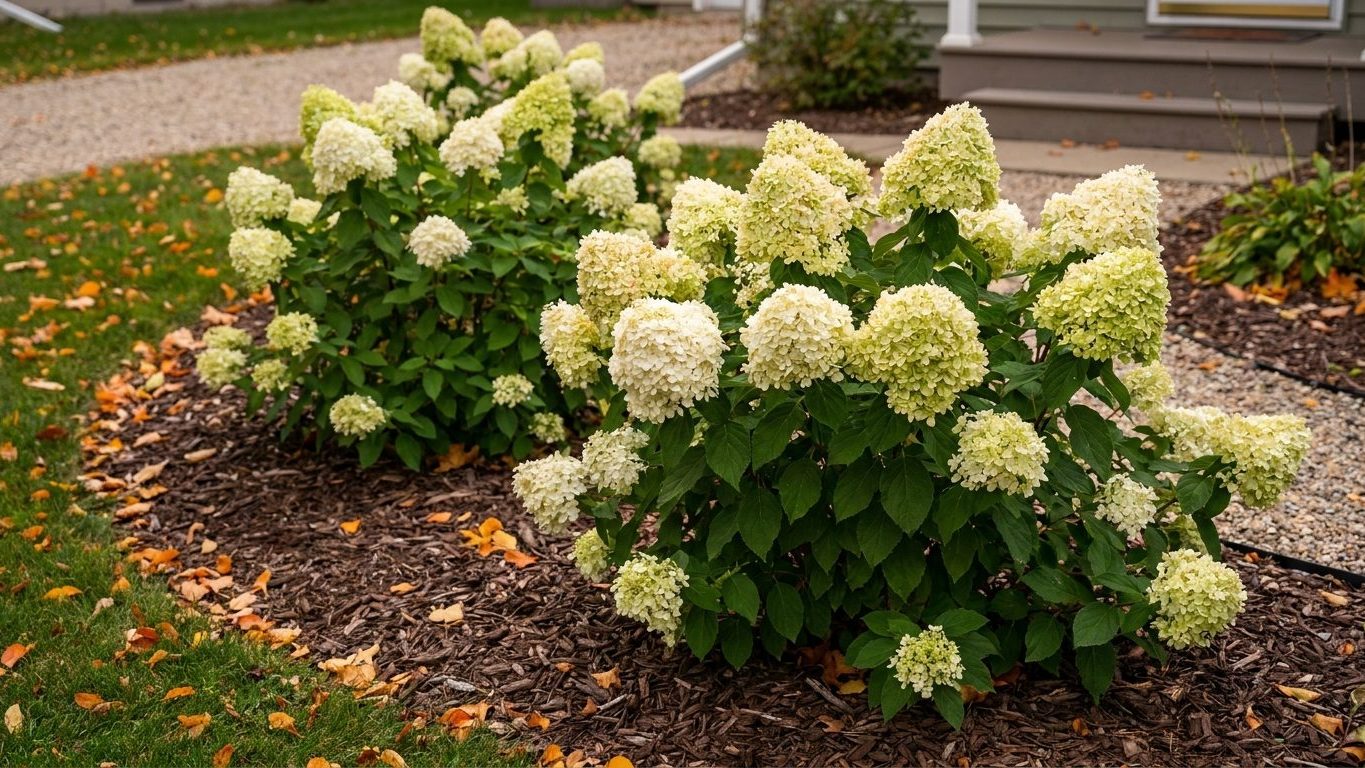
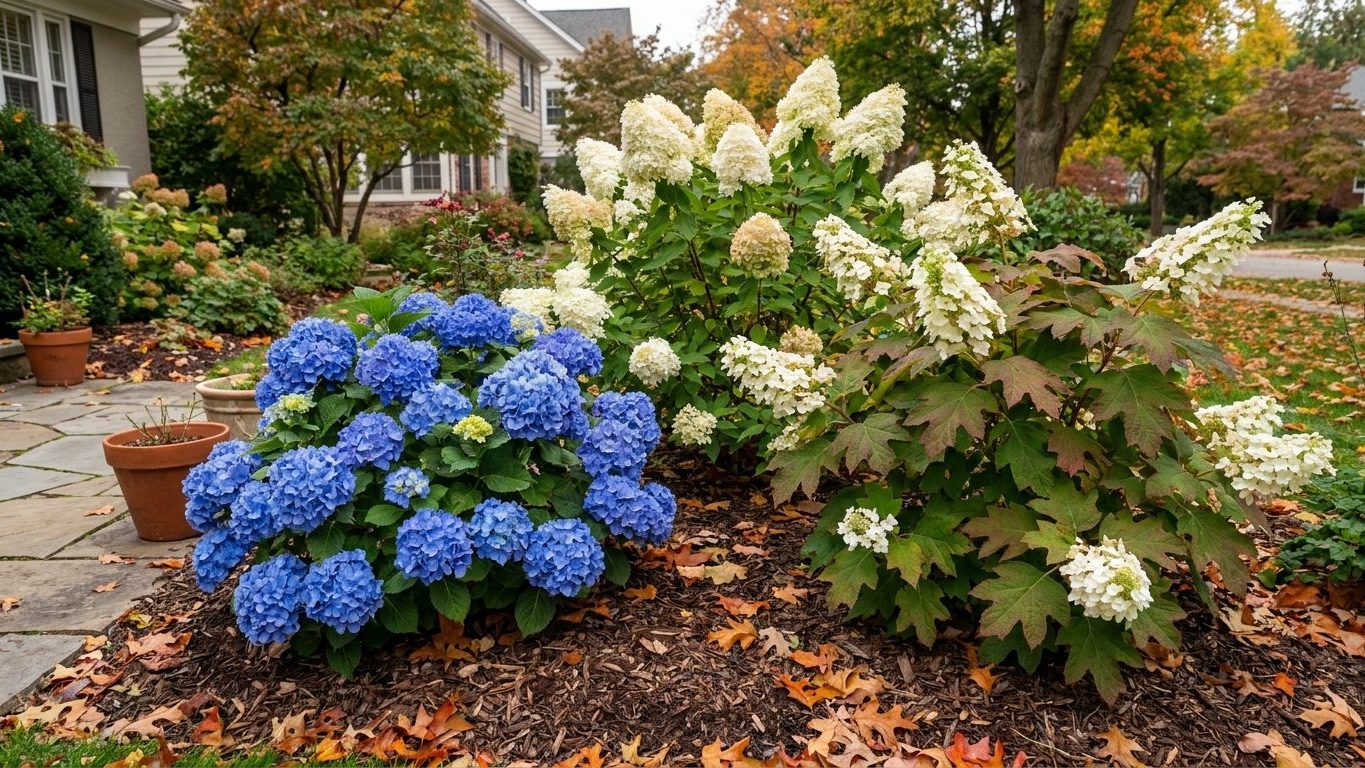
Panicle hydrangea (Hydrangea paniculata) is the one to plant first here. The USDA Plant Hardiness Zone Map puts Albuquerque’s range at 4b to 9a, and panicle types cover that entire spread. They bloom on new wood, so a late spring freeze that nips the tips doesn’t erase the season’s flowers.

Smooth hydrangea

Smooth hydrangea — Hydrangeas That Grow Well in New Mexico

Smooth hydrangea (Hydrangea arborescens), native across much of the eastern and central US, tolerates New Mexico’s dry air better than most. It also flowers on new wood, and its roots recover fast after a hard winter. Give it afternoon shade and it holds up through summer heat too.

Oakleaf hydrangea

Oakleaf hydrangea — Hydrangeas That Grow Well in New Mexico

Oakleaf hydrangea (Hydrangea quercifolia) takes sun better than its glossy-leaved cousins, and its foliage colors up in fall. It still needs a wind-sheltered spot, since dry gusts scorch the broad leaves before the plant can recover.

Mountain hydrangea

Mountain hydrangea — Hydrangeas That Grow Well in New Mexico

Mountain hydrangea (Hydrangea serrata), a smaller and tougher relative of bigleaf hydrangea, takes cold reasonably well. But it still sets buds on old wood, so a late frost after growth starts can wipe out that year’s flowers even while the shrub itself survives.

Bigleaf hydrangea

Bigleaf hydrangea — Hydrangeas That Grow Well in New Mexico

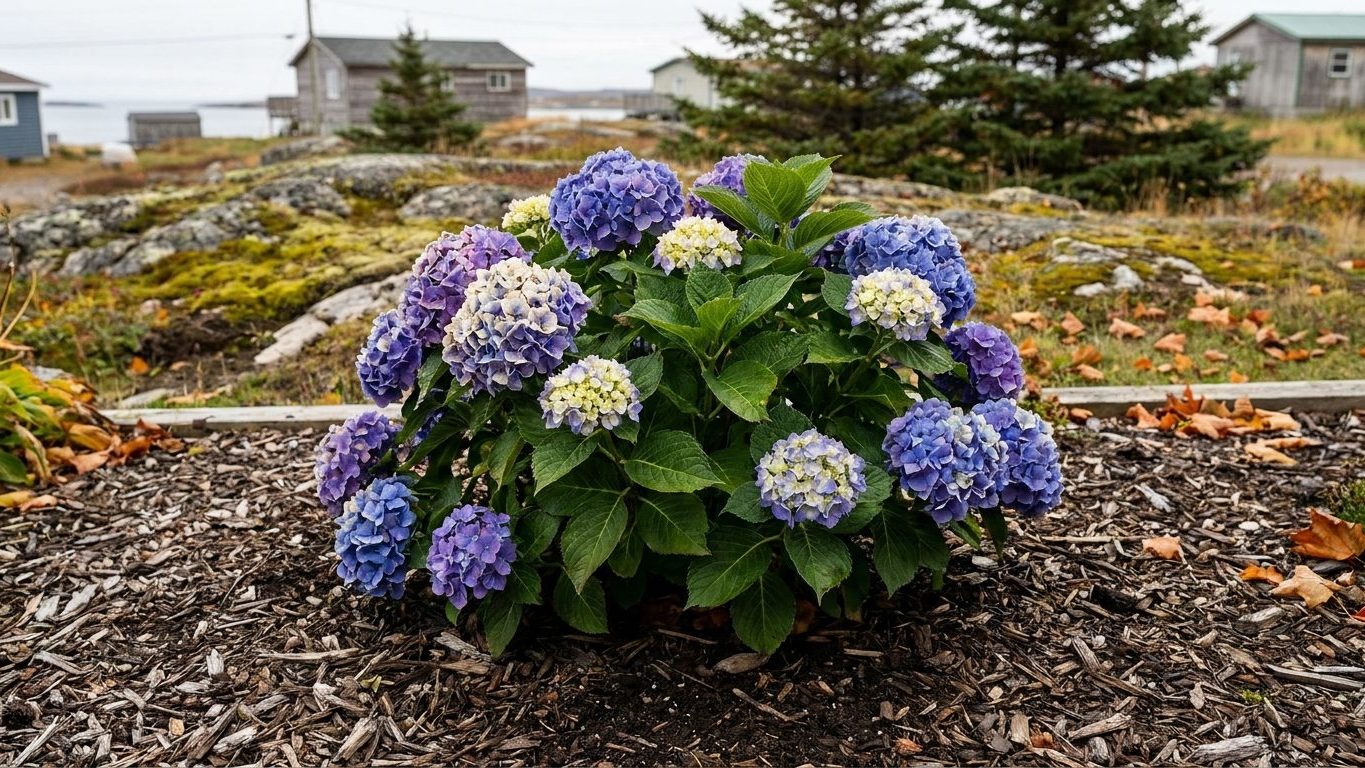
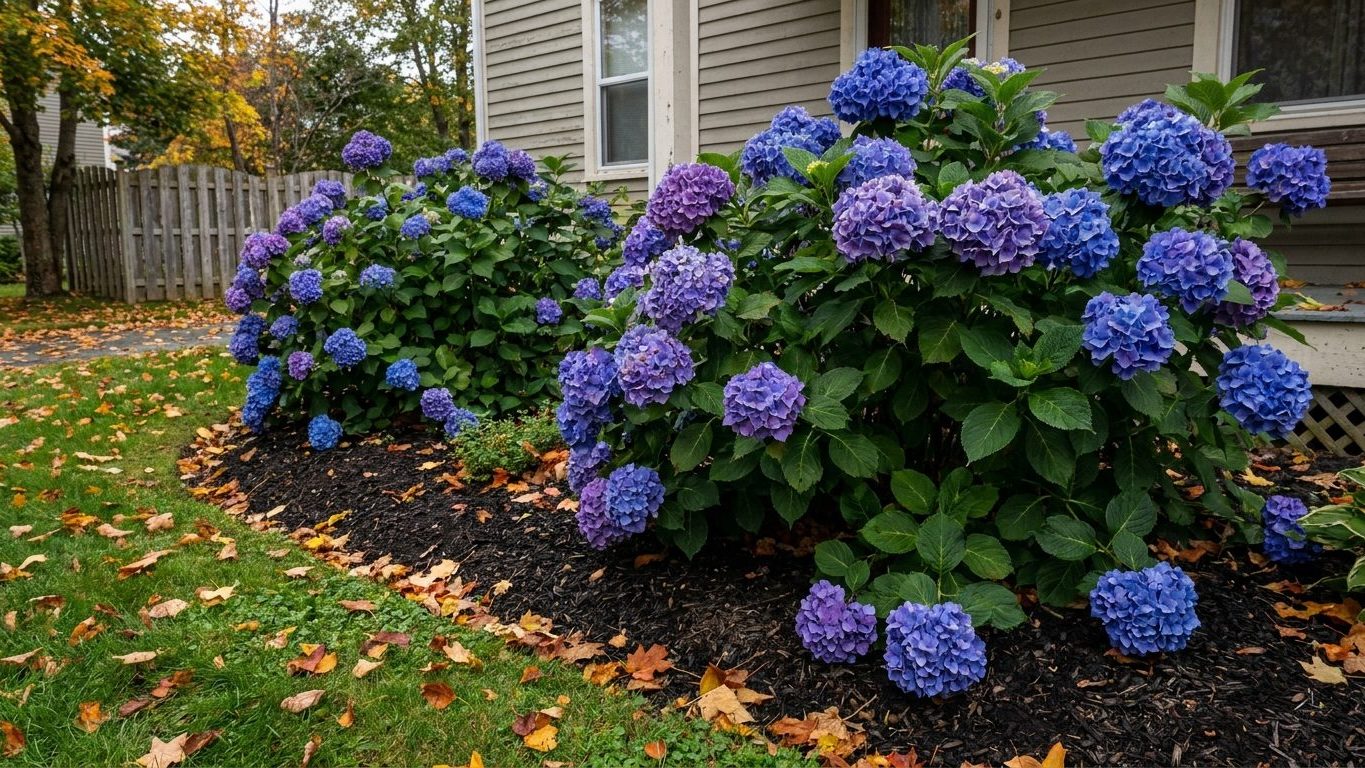
Bigleaf hydrangea (Hydrangea macrophylla) is the variety most homeowners picture, and it struggles here. Old-wood buds get caught by New Mexico’s freeze-thaw swings, and alkaline soil locks up the aluminum that turns blooms blue, leaving flowers a washed-out pink no matter the intent.

Climbing hydrangea

Climbing hydrangea — Hydrangeas That Grow Well in New Mexico

Climbing hydrangea (Hydrangea anomala subsp. petiolaris) is the riskiest pick on this list. It wants steady moisture and dappled shade, two things this high desert rarely offers on its own, and it can take years to establish even under ideal care.

How to Work Out the Dates for Your Own Yard

Albuquerque’s frost window is the starting point, not the final word, since suburban and rural yards often run colder in spring and warmer into fall than the airport gauge that sets it.

NOAA NCEI’s U.S. Climate Normals put Albuquerque’s last spring freeze between March 31 and April 12, and the first fall freeze between October 29 and November 9. Count backward from those windows and forward past them to plan the year around your own hydrangeas.

Subtract about two weeks from that spring window if you want to start hardening off container-grown hydrangeas outdoors, and you land in the second half of March for most Albuquerque-area yards. Push it later at elevation.

  1. Mark your county’s frost pattern first: if you garden above the valley floor or away from the river, push both windows a week or two earlier in fall and later in spring.
  2. Choose new-wood bloomers for the coldest pockets: panicle and smooth hydrangea set buds after the last freeze has passed, so they don’t gamble on the exact date.
  3. Hold off on bigleaf unless you have a sheltered courtyard: its old-wood buds already formed by late winter, so prune only in June or July if you must, after last frost risk fully clears.
  4. Plant in the windows the calendar marks: March, April, August, and September give roots time to settle before either extreme arrives.
  5. Fertilize only in the months marked for it: March, May, and July feed active growth without pushing tender new shoots into a late frost.
  6. Add mulch before the first fall freeze arrives: a few inches down by late October buffers shallow roots against the swings that come with November.

Panicle hydrangea survives an Albuquerque winter without any protection. Climbing hydrangea, needing steady shade and moisture this high desert rarely supplies on its own, often doesn’t make it past its second summer here.

New Mexico North to South: How the Dates Shift

Elevation moves these dates harder than latitude does in New Mexico, and it pushes them in both directions across a single state.

  • Northern mountains and high country (Santa Fe, Taos, Los Alamos): elevation above 7,000 feet pushes the last spring frost later and the first fall frost earlier, shortening the safe window on both ends.
  • Rio Grande Valley and central corridor (Albuquerque, Belen, Socorro): this is the band the reference frost dates above describe, milder than the mountains but still wide between day and night temperatures.
  • Southern desert and the Bootheel (Las Cruces, Deming, Lordsburg): lower elevation and a longer frost-free stretch favor oakleaf and bigleaf types that need more growing season, though summer sun still demands afternoon shade.
  • Eastern plains (Clovis, Roswell, Tucumcari): flatter, windier terrain dries soil fast, another reason to lean on drought-tolerant panicle and smooth types out there.

Check the state guide’s elevation notes for the pocket closest to your own yard before locking in a planting date.

Mistakes New Mexico Punishes

Planting bigleaf hydrangea in open sun

Bigleaf hydrangea’s broad leaves wilt fast under New Mexico’s intense UV and low humidity, even when the soil underneath stays moist. Plant it only where afternoon shade breaks the sun by early afternoon, or switch to panicle or smooth hydrangea instead.

Ignoring the alkaline soil

Most New Mexico soils run alkaline, which locks up iron and aluminum and leaves hydrangea leaves yellow between the veins while blooms stay a flat pink. Work in sulfur or an acidifying soil amendment before planting, and test again the following spring.

Skipping mulch before winter

Bare soil around the root zone freezes and thaws repeatedly through New Mexico’s wide day-to-night swings, heaving shallow roots right out of the ground. A few inches of mulch applied in fall evens out that swing and protects the buds panicle and smooth types are setting for spring.

New Mexico Extension Offices and County Contacts

New Mexico State University’s Cooperative Extension Service runs a county office network that fills in what one statewide hardiness number can’t answer, from local frost pockets to soil test results.

  • Your state page: the frost dates and hardiness range for New Mexico gathered in one place.
  • The New Mexico hydrangea calendar: month-by-month planting, fertilizing, and pruning windows already matched to this climate.
  • What goes wrong with hydrangeas in New Mexico: the pests and problems specific to this state, and how to spot them early.

Start at aces.nmsu.edu to find the office covering your county, and ask them to confirm your own soil’s pH before you plant.

Common Questions

Do hydrangeas need afternoon shade in New Mexico?

Most do. The intensity of high-desert sun scorches leaves by midday even when soil moisture is fine, so morning sun with afternoon shade suits nearly every variety on this list better than full-day exposure.

Can I get blue blooms on bigleaf hydrangea here?

Rarely without heavy soil amendment. New Mexico’s alkaline soil locks up the aluminum that produces blue color, so blooms tend toward pink or a muddy lavender unless the soil is acidified and retested seasonally.

Which hydrangea needs the least water in New Mexico?

Smooth and panicle hydrangea tolerate dry stretches better than bigleaf, oakleaf, or climbing types, though none of them are true drought plants and all still need regular water through the hottest weeks of summer.
Hydrangeas That Grow Well in Newfoundland and Labrador

Hydrangeas That Grow Well in Newfoundland and Labrador

Panicle and smooth hydrangeas are the two safe bets for a Newfoundland and Labrador yard: both flower on new wood, so a hard winter that kills the top growth doesn’t cost you the blooms. Bigleaf, mountain, climbing, and oakleaf hydrangeas can grow here too, but each asks for more shelter, more patience, or more luck than the first two.

Hydrangeas that grow well in Newfoundland and Labrador: The Short Answer

Natural Resources Canada’s Plant Hardiness Site puts St. John’s, the province’s reference city, at Canadian zone 6a, with an average last spring frost of May 30 and an average first fall frost around October 17. That short growing season, bracketed by two frost dates that are averages rather than guarantees, is the reason some hydrangeas thrive here while others just limp along.

Smooth hydrangea (Hydrangea arborescens)

Smooth hydrangea (Hydrangea arborescens) — Hydrangeas That Grow Well in Newfoundland and Labrador

Native to cold parts of eastern North America, it dies back to the ground most winters without any real damage. It blooms on new growth every year, so it’s the safest name on this list for a Newfoundland and Labrador yard.

Panicle hydrangea (Hydrangea paniculata)

Panicle hydrangea (Hydrangea paniculata) — Hydrangeas That Grow Well in Newfoundland and Labrador

Just as tough as smooth hydrangea and just as reliable, since flowers form on wood the plant grows fresh each spring. A hard winter or a late frost barely touches the summer bloom show.

Climbing hydrangea (Hydrangea anomala subsp. petiolaris)

Climbing hydrangea (Hydrangea anomala subsp. petiolaris) — Hydrangeas That Grow Well in Newfoundland and Labrador

A hardy vine that takes a few seasons to settle in before it flowers well. Give it a sheltered wall or fence and the short season here stops being a problem once the roots catch on.

Mountain hydrangea (Hydrangea serrata)

Mountain hydrangea (Hydrangea serrata) — Hydrangeas That Grow Well in Newfoundland and Labrador

Hardier than its bigleaf cousin, but it still sets some buds on old wood, which a rough winter can kill. Mulch and a sheltered corner improve the odds, though bloom stays a gamble most years.

Bigleaf hydrangea (Hydrangea macrophylla)

Bigleaf hydrangea (Hydrangea macrophylla) — Hydrangeas That Grow Well in Newfoundland and Labrador

Buds form on last summer’s growth, and a Canadian zone 6a winter regularly kills them before spring. The shrub often survives and leafs out fine, it just skips flowering more years than it flowers.

Oakleaf hydrangea (Hydrangea quercifolia)

Oakleaf hydrangea (Hydrangea quercifolia) — Hydrangeas That Grow Well in Newfoundland and Labrador

Built for a longer, warmer season than this coast offers, so foliage scorch and stem dieback are common complaints. It’s the riskiest name here, worth a try only in the mildest, most sheltered yard you have.

How to Work Out the Dates for Your Own Yard

The zone number on a plant tag is a starting point, not a verdict, and a few minutes of checking narrows it down for your own patch of ground.

  1. Check the wood it blooms on: a hydrangea that flowers on new wood, like panicle or smooth, only needs the roots to survive winter, not the stems.
  2. Count back from your last frost: Environment and Climate Change Canada’s Canadian Climate Normals put St. John’s at an average last spring frost of May 30, so treat any date before early June as a real risk for young growth.
  3. Walk your yard for wind: a spot open to the harbour or the open sea strips buds faster than a spot behind a fence or a house wall.
  4. Test the soil for drainage: hydrangeas planted where water sits over winter lose roots before spring, no matter what the zone number says.
  5. Watch the fall frost date: an average of October 17 means new growth pushed too late in September rarely has time to harden off.
  6. Match the variety to the wall: a bigleaf or mountain hydrangea against a south-facing wall gets extra weeks of warmth the open lawn never sees.

Panicle hydrangea passes this test easily in an open yard here. It roots fine through a Canadian zone 6a winter and blooms on wood it grows fresh each spring.

Bigleaf hydrangea fails the same test in that same open, wind-exposed spot. Its buds formed the summer before rarely survive an unprotected winter, so it leafs out but skips flowering more often than not.

Newfoundland and Labrador North to South: How the Dates Shift

The zone 6a figure for St. John’s is a single point on a very long coastline, and the rest of the province runs colder or milder depending on how close it sits to open water.

  • The Avalon Peninsula (St. John’s, Conception Bay, the southern shore): the mildest part of the province, with the ocean holding back the coldest air and keeping the last frost close to the provincial average.
  • Central Newfoundland (Gander, Grand Falls-Windsor): more continental once you’re away from the coast, with colder nights and a shorter frost-free stretch than St. John’s sees.
  • Western Newfoundland (Corner Brook, the Bay of Islands): fjord-sheltered pockets can run milder than the map suggests, though open stretches of the west coast still take a hard winter wind.
  • Labrador (Happy Valley-Goose Bay, the north coast): a much shorter growing season and a harder winter than the island, where even the toughest hydrangeas struggle without heavy shelter.

None of this changes the hardiness zone printed on a plant tag, but it changes how much you should trust that number for your own address.

Mistakes Newfoundland and Labrador Punishes

Planting bigleaf without shelter

Bigleaf hydrangea sets its flower buds the summer before, and Natural Resources Canada’s Plant Hardiness Site puts St. John’s winters at Canadian zone 6a, cold enough to kill those buds most years in an open yard. Choose panicle or smooth hydrangea instead, or plant bigleaf against a sheltered, south-facing wall with heavy mulch each fall.

Pruning bigleaf in the fall

Cutting bigleaf hydrangea back after summer removes the buds set to overwinter into next year’s blooms. This province’s pruning window for bigleaf runs June and July, right after flowering and well before the first frost, so save the shears for those two months only.

Planting into September without a plan

A hydrangea set in the ground in late September has only weeks before the average first fall frost on October 17 near St. John’s. Stick to the May, June, and August planting windows here, treating September as a last resort with heavy mulch.

Newfoundland and Labrador Extension Offices and County Contacts

Natural Resources Canada’s Plant Hardiness Site puts St. John’s at Canadian zone 6a, and that number is only a starting point, since the province’s own extension contact fills in the rest, from soil questions to local pest reports.

  • Newfoundland and Labrador Forestry and Agrifoods: the provincial office to call for site-specific planting advice and local pest alerts.
  • Your regional calendar page: the month-by-month frost and pruning windows for this province, laid out in order.
  • What goes wrong here: the pests and problems this province’s climate actually produces, and how to spot them early.

Common questions

Can bigleaf hydrangeas survive winter in Newfoundland and Labrador?

Some do, especially against a sheltered wall with heavy mulch, but zone 6a winters kill flower buds most years. Expect green growth without blooms more often than not, and plant panicle or smooth hydrangea if flowers matter every summer.

When should I plant a hydrangea in this province?

Stick to the May, June, August, and September windows, and avoid late fall planting so roots have time to establish before the average October 17 first frost arrives.

Do hydrangeas need winter protection here?

Panicle and smooth hydrangeas need none. Mulch helps bigleaf and mountain hydrangea’s buried buds survive, and wrapping stems in burlap adds another layer of protection on wind-exposed sites.

Hydrangea Pests and Diseases in Nova Scotia

Hydrangea Pests and Diseases in Nova Scotia

Insects rarely bother a hydrangea in a Halifax-area yard. The real trouble here is climate and moisture: a late frost that kills bigleaf flower buds, powdery mildew and leaf spot in a damp August, botrytis rot on open blooms after a cool wet spell, and deer stripping stems once the leaves drop each fall.

Hydrangea pests and diseases Nova Scotia: The Short Answer

No flowers after a late frost

Bigleaf hydrangea sets its flower buds the previous fall, so a frost landing after spring growth resumes kills them outright. Environment and Climate Change Canada’s Canadian Climate Normals put the average last spring frost in Halifax at May 7, and swelling buds are tender before that date. Cover the crown with frost cloth through April.

Aphids on new growth

Aphids cluster on tender spring shoots and curl new leaves, leaving behind a sticky honeydew that sooty mold later colonizes. They rarely weaken an established shrub, and a strong jet of water knocks most colonies off within a few days, so spraying is seldom worth doing in a home garden.

Four-lined plant bug damage

Four-lined plant bug shows up in early summer and punches round, sunken spots into leaves within a day or two, then moves on before anyone even spots it on the shrub. Damage looks alarming but stays cosmetic, and clearing leaf litter from under the shrub each fall removes the eggs it overwinters in.

Powdery mildew on leaves

A white, flour-like coating on the upper side of the leaves shows up during a humid Halifax summer, especially where air can’t move freely between crowded shrubs. It rarely kills the plant outright, but thinning out stems and watering the soil instead of the foliage keeps the fungus from spreading further.

Cercospora leaf spot

Cercospora leaf spot starts as small purple-brown circles on the lower, older leaves during wet stretches, and it can strip a shrub bare from the ground up by late summer if ignored. Raking up and discarding fallen leaves each fall, rather than composting them, breaks the cycle before next spring.

Botrytis blight on blooms

Botrytis blight on blooms — Hydrangea Pests and Diseases in Nova Scotia

Botrytis blight turns open flower heads brown and mushy after a stretch of cool, wet weather right at bloom time, and it can spread down into the stem below if left alone. Snipping off spent or damaged blooms and giving shrubs room for airflow are the two moves that actually help.

Deer browsing in fall and winter

Deer strip buds and bark once other browse dies back in late fall, and a hydrangea’s soft new growth makes an easy target through a long Nova Scotia winter. A physical barrier fitted around the shrub works far better here than any repellent spray on the market.

Root rot in heavy clay soil

Hydrangeas set into heavy, poorly drained Nova Scotia clay develop yellowing leaves and a soft, blackened base as the roots sit wet and start to rot. Working compost into the planting hole and setting the root ball slightly high, so it drains, prevents most of this from the start.

How to Work Out the Dates for Your Own Yard

Most of what looks like a mystery problem on a hydrangea is actually just timing, and matching the symptom to the calendar sorts out cold, feeding, and disease faster than a photo search does.

  1. Rule out cold first: Environment and Climate Change Canada’s Canadian Climate Normals put Halifax’s average last spring frost at May 7, so buds that vanish before that date are almost always cold damage, not a pathogen.
  2. Respect the prune window: Nova Scotia’s own prune-bigleaf window falls in June and July, so a shrub that looks bare in May hasn’t necessarily failed, it just hasn’t shown its surviving wood yet.
  3. Watch the fertilize months: yellowing that shows up between the state’s two fertilize windows, May and July, often clears once feeding catches up, rather than pointing straight to root disease.
  4. Check the planting record: a shrub set into the ground outside the plant windows of May, June, August, or September is more likely dealing with transplant stress than an active infection.
  5. Time it against fall frost: symptoms appearing after Halifax’s average first fall frost of October 18 usually point to early winter injury, since most leaf fungi have already shut down by then.
  6. Bring a sample if still unsure: a leaf or stem in hand settles more arguments than a description over the phone.

None of this replaces a lab test, but lining the symptom up against the calendar narrows a mystery hydrangea problem down to one or two likely causes before you spend money on a spray.

Nova Scotia North to South: How the Dates Shift

A province this shaped by coastline and elevation doesn’t run on one set of dates, and the same hydrangea problem shows up on a different schedule depending on where the yard sits.

  • The Annapolis Valley (Kentville, Wolfville, Bridgetown): the orchard-country microclimate warms earlier and holds heat longer, easing the risk of the late frosts that blast bigleaf buds.
  • Halifax and the South Shore (Halifax, Lunenburg, Bridgewater): the ocean smooths out the sharpest cold snaps but adds the humidity that feeds powdery mildew and leaf spot.
  • Cape Breton and the northern mainland (Sydney, Antigonish, Amherst): higher ground and a longer winter push the frost-free window later in spring and earlier in fall, tightening the season overall.

The province-wide calendar page carries the county-level numbers for wherever the shrub actually grows.

Mistakes Nova Scotia Punishes

Pruning bigleaf in fall

Cutting a bigleaf hydrangea back in fall or early spring removes the wood that was about to flower, since it sets buds on the previous year’s growth. Nova Scotia’s prune window falls in June and July, once you can tell which stems survived winter. Cutting earlier trades this year’s blooms for tidiness.

Planting outside the window

Setting a hydrangea into the ground in October, after the plant window closes, leaves roots too little time to establish before Halifax’s average first fall frost around October 18 arrives. The shrub spends its first winter under-rooted and often shows dieback by spring that gets blamed on disease. Stick to May, June, August, or September instead.

Skipping wind and salt protection near the coast

A hydrangea set close to open water takes a beating from winter wind and salt spray that looks exactly like fungal leaf scorch by spring. A burlap screen on the windward side through the coldest months prevents the browning, and it costs less than replacing the shrub.

Nova Scotia Extension Offices and County Contacts

Nova Scotia doesn’t run its extension service by county the way many US states do, so the province’s own agriculture department is the practical starting point for a second opinion on a sick shrub.

  • Your state page: the frost dates and pruning window for the whole province in one place.
  • Which ones hold up here: the hydrangea types worth planting in this zone, and the ones to skip.
  • Nova Scotia’s Department of Agriculture: the provincial contact for a sample or a second opinion before spraying anything.

Common questions

Do I need to spray hydrangeas for pests in Nova Scotia?

Rarely. Aphids and four-lined plant bug damage both stay cosmetic on an established shrub, and a water jet or a fall leaf cleanup usually does more good than a pesticide.

Why didn’t my hydrangea bloom this year?

On a bigleaf variety, the most common cause in a Canadian zone 6b garden is a spring frost landing after the buds have already broken, or pruning during the wrong months and cutting the flowering wood away by accident.

Can hydrangeas survive a Nova Scotia winter without protection?

Panicle and smooth hydrangeas generally do, since they flower on new wood each year. Bigleaf types are the risk, and a mulch collar plus a wind screen near the coast makes the difference most winters.

Hydrangeas That Grow Well in North Dakota

Hydrangeas That Grow Well in North Dakota

Two hydrangea species handle a North Dakota winter without any special protection: smooth hydrangea and panicle hydrangea, both suited to the coldest end of the state’s zone 3a to 4b range. Bigleaf, oakleaf, and climbing types can survive in a sheltered yard, but they rarely flower here. The safest picks bloom on new wood, so winter dieback never costs you the flowers.

Hydrangeas that grow well in North Dakota: The Short Answer

USDA Plant Hardiness Zone Map puts North Dakota at zone 3a to 4b, and Bismarck, the state’s reference city, sits well inside that cold range. Only a handful of hydrangeas are built for a Bismarck winter, and the list below runs from the safest bet to the one most gardeners end up disappointed by.

Smooth hydrangea (Hydrangea arborescens)

Smooth hydrangea (Hydrangea arborescens) — Hydrangeas That Grow Well in North Dakota

This native shrub survives Bismarck winters at ground level and pushes fresh stems every spring, since it flowers on new wood. Cold kills the top growth most years, but the roots don’t care, and blooms still open by midsummer. It’s the safest choice for a North Dakota yard.

Panicle hydrangea (Hydrangea paniculata)

Panicle hydrangea (Hydrangea paniculata) — Hydrangeas That Grow Well in North Dakota

Panicle hydrangea handles the same zone range as smooth hydrangea and blooms on new wood too, so a hard freeze in January doesn’t cost the flower show in August. It also tolerates more sun and wind than most hydrangeas, which matters on an open prairie lot.

‘Annabelle’ hydrangea

'Annabelle' hydrangea — Hydrangeas That Grow Well in North Dakota

‘Annabelle’ is the arborescens cultivar most nurseries stock in Bismarck, prized for basketball-sized white blooms that hold up to prairie wind better than some newer smooth hydrangea cultivars. Cut it back hard each spring and it rewards you with flowers by July.

‘Limelight’ hydrangea

'Limelight' hydrangea — Hydrangeas That Grow Well in North Dakota

‘Limelight’ is a paniculata cultivar bred for cold hardiness, and its lime-to-pink blooms hold color through a North Dakota fall better than most panicle types. It needs almost no winter protection here beyond a layer of mulch.

Oakleaf hydrangea (Hydrangea quercifolia)

Oakleaf hydrangea (Hydrangea quercifolia) — Hydrangeas That Grow Well in North Dakota

Oakleaf hydrangea is rated for warmer zones than Bismarck sits in, so it only survives here in a sheltered spot against a south-facing wall with heavy mulch. Expect dieback most winters and skip the fall color you’d get farther south.

Bigleaf hydrangea (Hydrangea macrophylla)

Bigleaf hydrangea (Hydrangea macrophylla) — Hydrangeas That Grow Well in North Dakota

Bigleaf hydrangea is the riskiest pick for a North Dakota yard, since it sets flower buds on old wood the previous fall, and Bismarck’s winters kill those buds almost every year. The shrub itself often survives, but count on foliage without blooms unless it winters in a pot indoors.

How to Work Out the Dates for Your Own Yard

Frost, not the calendar, decides when a hydrangea goes into the ground or breaks dormancy in a Bismarck yard.

  1. Start from the frost window: NOAA NCEI U.S. Climate Normals 1991-2020 puts Bismarck’s last spring frost at May 4 to May 15, so anything planted before that range risks losing tender new growth to a hard freeze.
  2. Give the soil two more weeks: roots on panicle or smooth hydrangea establish faster once soil has warmed past that frost window, usually by late May here.
  3. Check the fall side too: the first fall frost arrives September 25 to October 5, so a plant going in during August has roughly six to eight weeks to root before the ground locks up.
  4. Match the bloom habit to that math: panicle hydrangea builds flower buds on wood grown after the frost window closes, so winter dieback still leaves you a bloom by late summer.
  5. Rule out old-wood bloomers: bigleaf hydrangea sets buds the previous fall, and those buds rarely survive a Bismarck winter, which is why it flowers so unreliably here.

Your own yard may run a week or two later than the airport station these dates come from, especially in a low spot that collects cold air, so treat the range as a starting point rather than a guarantee.

North Dakota North to South: How the Dates Shift

Nothing about frost timing in North Dakota is flat, and a hydrangea planted in the Red River Valley faces a different clock than one on the Missouri Slope.

  • The Red River Valley (Fargo, Grand Forks): flatter land and air moderated by the river tend to push the last frost a touch later into spring than Bismarck sees, so gardeners there often wait a few extra days to plant.
  • The Missouri Slope and west (Bismarck, Dickinson): drier air and more wind exposure stress hydrangeas planted in open, unshaded spots.
  • The far north (near the Canadian border): a shorter frost-free stretch favors panicle and smooth hydrangea over any old-wood type, since the growing season leaves less room for recovery.
  • The south central counties (near the South Dakota line): slightly warmer summer nights can help oakleaf hydrangea hold on in a sheltered bed, though it still needs winter protection most years.

Check the North Dakota hydrangea planting calendar for the closest match to your own county before you commit a shrub to the ground.

Mistakes North Dakota Punishes

Planting bigleaf and expecting blooms

Bigleaf hydrangea sets its flower buds on old wood, and Bismarck’s cold kills those buds most winters, so the shrub leafs out but stays bare of flowers. Plant panicle or smooth hydrangea instead, and see the varieties above for names that bloom on new wood.

Pruning in fall instead of spring

Cutting stems back in September or October removes the new-wood buds a panicle or smooth hydrangea needs for next summer’s flowers. Wait until June or July, inside the pruning window, and cut only stems that show no green.

Skipping mulch before the first hard freeze

Bare soil around a hydrangea’s crown lets deep cold reach the roots, which kills stems all the way to ground level even on hardy types. Pile mulch a few inches deep before the first fall frost hits, and pull it back once new growth appears in spring.

North Dakota Extension Offices and County Contacts

A statewide hardiness zone is only a starting point, and a county extension agent can confirm what actually survives on your block.

  • North Dakota hydrangea planting calendar: the month-by-month planting, fertilizing, and pruning windows for the full season.
  • What goes wrong with hydrangeas in North Dakota: the winter damage and pest patterns local growers report most.
  • NDSU Extension: county offices that can answer soil and hardiness questions specific to your yard.

Common questions

Can bigleaf hydrangea survive in North Dakota at all?

It can survive as a plant, since the roots often live through winter under mulch, but it rarely flowers because the buds it needs form the fall before and don’t survive Bismarck’s cold. Growing it in a large pot that winters indoors is the more reliable route.

Which hydrangea blooms most reliably here?

Panicle hydrangea and its cultivars, including ‘Limelight’, bloom the most consistently across zone 3a to 4b because they set flower buds on new wood grown after winter dieback.

Do North Dakota hydrangeas need winter protection?

Smooth and panicle types generally don’t need more than a layer of mulch over the root zone, while oakleaf and bigleaf need heavier protection and still may not flower well.

Hydrangea Pests and Diseases in Nunavut

Hydrangea Pests and Diseases in Nunavut

Rankin Inlet, the reference station Environment and Climate Change Canada uses for Nunavut, posts an average last spring frost of June 19 and a first fall frost near September 13, a stretch too short for hydrangea wood to hold enough insects or fungus to matter. The real threat here is cold injury, not a bug or a blight.

Hydrangea pests and diseases Nunavut: The Short Answer

Rankin Inlet sits in Canadian hardiness zone 0a, and at that reading a hydrangea almost never overwinters outdoors long enough to build the kind of tissue an aphid colony or a fungal spore needs to settle in. What a homeowner in Iqaluit or Cambridge Bay reads as disease is, nearly every time, frost. The Nunavut hydrangea guide lays out the growing calendar behind these numbers.

No new growth after planting

No new growth after planting — Hydrangea Pests and Diseases in Nunavut

Soil at Rankin Inlet barely warms before the average last frost of June 19 passes, so roots set out too early just sit cold and stall. Hold new stock in a container until nights clear, then plant fast inside the June to August window. The planting calendar spells out the exact months.

Stems black by midsummer

What looks like a stem canker in July is usually a late frost bite from a spring that ran past June 19, the mean date, in one year out of two. Cut back to live wood once new leaves show and skip any fungicide, there is no blight to treat here.

Leaf edges yellowing in July

Marginal yellowing reads like a nutrient problem but is more often root chill, since soil temperature lags air temperature by weeks this far north. Feed only during the May or July windows, never later, so no soft new growth sits exposed before the first fall frost.

No flower buds at all

No flower buds at all — Hydrangea Pests and Diseases in Nunavut

Old wood rarely survives a Nunavut winter to set buds, so a shrub that never blooms is not diseased, it simply lost its bud wood to the cold. Pick a variety that flowers on new growth, covered on the varieties page, rather than search for a fungal cause that is not there.

Powdery white coating indoors

Powdery white coating indoors — Hydrangea Pests and Diseases in Nunavut

True powdery mildew needs humid, still air, conditions found only in a greenhouse or sunroom here, never outdoors in a season this short. Improve air flow between pots and water at the base, since Rankin Inlet’s outdoor air is too dry and too brief for the fungus to establish outside.

Sticky residue on leaves

Sticky residue on leaves — Hydrangea Pests and Diseases in Nunavut

Aphids need weeks of mild weather to build a colony, and the gap between June 19 and September 13 rarely gives them that long. A light patch found on greenhouse-raised stock washes off with a hard spray of water, no insecticide is needed for a problem this short-lived.

How to Work Out the Dates for Your Own Yard

Work backward from the frost window instead of a fixed date, since Rankin Inlet only gives an average, not a guarantee.

  1. Anchor the last frost first: Environment and Climate Change Canada’s average of June 19 for Rankin Inlet is a midpoint, so half of all years run later, treat anything before late June as risk.
  2. Plant only in the open window: set hydrangeas out during June, July, or August, the three months this territory’s calendar allows, never earlier.
  3. Prune bigleaf wood in June or July: those are the only two months the calendar gives for pruning, cut later and new growth has no time to harden before fall.
  4. Feed inside May or July: fertilizing outside those two months pushes soft growth toward the September 13 average first frost, which then reads as disease.
  5. Match the variety to zone 0a: a panicle type bred to bloom on new wood tends to outlast a bigleaf type bred for old wood, check the varieties page before buying.
  6. Recheck symptoms after frost, not before: anything that appears after the first fall frost is almost always cold damage, not a pest needing treatment.

None of these dates move because a neighboring yard sits in a hollow or on a windy point, the next section covers that shift.

Nunavut North to South: How the Dates Shift

Nunavut spans three administrative regions, and none of them match Rankin Inlet’s numbers without some adjustment.

  • Kivalliq (Rankin Inlet, Arviat, Baker Lake): this is the reference region itself, so the frost window above applies closest to home here, though inland stations often run colder.
  • Qikiqtaaluk (Iqaluit, Pond Inlet, Cape Dorset): farther north and often coastal, expect the frost-free stretch to open later and close sooner than the reference window.
  • Kitikmeot (Cambridge Bay, Gjoa Haven, Kugluktuk): western Arctic exposure pushes both frost dates further apart from the reference window, shortening the usable season again.

Whichever region a yard sits in, the territory-wide hydrangea guide is the place to start before adjusting for local exposure.

Mistakes Nunavut Punishes

Planting before the window opens

Setting hydrangeas out in May, before the calendar’s June start, exposes roots to soil that has not caught up with air temperature, and a late cold snap near the June 19 average finishes them off. Wait for the June through August planting window instead.

Pruning outside June or July

Cutting bigleaf wood in August or later leaves fresh wounds with no time to callus before the September 13 average first frost, and the whole cut stem often dies back. Keep pruning inside June and July, the only two months the calendar allows.

Fertilizing into late summer

A feeding in August pushes soft new growth right into the fall frost, and that dieback then gets mistaken for a fungal disease. Stick to the May and July feeding windows only, and let anything after that go unfed.

Nunavut Extension Offices and County Contacts

Rankin Inlet’s numbers are a starting point, not the final word, and Nunavut has no county extension network, so the federal agriculture department is the closest official contact for a territory this size.

  • Your state page: the frost dates and the pruning window for the whole territory, gathered on the Nunavut hydrangea guide.
  • Which ones hold up here: the varieties page ranks options from safest to riskiest for zone 0a.
  • Agriculture and Agri-Food Canada: agriculture.canada.ca is the federal contact point, since the provincial office’s own site could not be verified.

Common Questions

Can hydrangeas actually survive winter in Nunavut?

Outdoors, rarely past a single season, since Canadian hardiness zone 0a at Rankin Inlet sits far below what any hydrangea type is bred to handle. Most gardeners here treat them as container plants brought indoors before the first fall frost.

What does frost damage look like versus a real disease?

Frost damage shows as sudden blackening or wilting right after a cold night, while true disease spreads gradually and often carries spots, powder, or a slow yellowing pattern. In Nunavut’s short season, sudden and sitewide almost always means cold.

Which pests are the biggest threat to container hydrangeas indoors?

Aphids and spider mites show up occasionally on plants wintered inside a heated sunroom, drawn by the same warm, still air that keeps the shrub alive. A hard rinse under the tap handles most early infestations without any spray.

Hydrangeas That Grow Well in Nunavut

Hydrangeas That Grow Well in Nunavut

None of the classic garden hydrangeas survive a winter outdoors in Nunavut. Rankin Inlet sits in Canadian hardiness zone 0a, and the frost-free window between June 19 and September 13 leaves barely enough summer for a container plant to leaf out, let alone root a shrub in open ground. Every variety named below is a container plant here, not a permanent border shrub.

Hydrangeas that grow well in Nunavut: The Short Answer

Natural Resources Canada’s Plant Hardiness Site rates Rankin Inlet, the reference city for this territory, at Canadian zone 0a, the coldest class the country maps. No hydrangea sold at a garden center is bred to finish a winter in that zone, so every plant has to live as a container specimen, moved indoors before the ground freezes.

Smooth hydrangea (Hydrangea arborescens)

Smooth hydrangea (Hydrangea arborescens) — Hydrangeas That Grow Well in Nunavut

This is the toughest of the group farther south, and it is the one worth trying first in a large pot. It dies back hard even in mild climates, so a Nunavut freeze that kills the top growth is not fatal as long as the roots spend winter somewhere that never drops below freezing.

Panicle hydrangea (Hydrangea paniculata)

Panicle hydrangea (Hydrangea paniculata) — Hydrangeas That Grow Well in Nunavut

It blooms on new wood, which matters here because a plant that regrows from the base each spring can still flower the same summer. It still needs the coldest months indoors, since Rankin Inlet’s climate sits far below anything the species handles outdoors.

Mountain hydrangea (Hydrangea serrata)

Mountain hydrangea (Hydrangea serrata) — Hydrangeas That Grow Well in Nunavut

Bred as a hardier cousin of the bigleaf types, it carries a reputation for slightly more cold tolerance in trials farther south. That reputation was built in places with a real autumn, not a three-month summer, so treat it as a sunroom plant that visits the porch in July.

Bigleaf hydrangea (Hydrangea macrophylla)

Bigleaf hydrangea (Hydrangea macrophylla) — Hydrangeas That Grow Well in Nunavut

This is the hydrangea most homeowners picture, with mophead or lacecap blooms, and it is also the least equipped for this climate. It flowers on old wood, so any stem that freezes over winter takes next year’s blooms with it, and here that means nearly the whole plant.

Oakleaf hydrangea (Hydrangea quercifolia)

Oakleaf hydrangea (Hydrangea quercifolia) — Hydrangeas That Grow Well in Nunavut

Grown for its cone-shaped blooms and fall color farther south, it needs a longer, warmer season than the one bounded by June 19 and September 13 to mature its wood before frost. Expect a plant that survives indoors but rarely flowers on the Nunavut calendar.

Climbing hydrangea (Hydrangea anomala subsp. petiolaris)

Climbing hydrangea (Hydrangea anomala subsp. petiolaris) — Hydrangeas That Grow Well in Nunavut

This woody vine wants years of undisturbed growth on a wall or trellis to reach blooming size, which makes it the least practical of the six for a plant that lives in a pot and moves indoors each fall. Try it only once the other five are already established.

How to Work Out the Dates for Your Own Yard

The two mean dates from Environment and Climate Change Canada’s Canadian Climate Normals give you a starting point, not a guarantee, so work through your own yard before you trust a pot to the outdoors.

  1. Start from the mean, not a calendar square: the average last spring frost at Rankin Inlet falls on June 19, but that is a midpoint, so in half of all years frost lands later.
  2. Add a margin for your own site: if you garden away from Rankin Inlet, on higher ground or farther from open water, push that date back a week or two before moving a container outside.
  3. Work backward from the fall mean the same way: the average first fall frost lands September 13, and again it arrives earlier in half of all years, so bring pots in at the first cold snap rather than waiting for the calendar.
  4. Time feeding and pruning to the same short season: fertilize in May and again in July, and prune a bigleaf plant only in June or July, while it still has weeks of light to recover before it goes back inside.

Of the six varieties above, smooth hydrangea gets through a Nunavut summer because it flowers on wood it grows fresh each June, matching the outdoor window exactly. Climbing hydrangea does not get through even one season here, since it needs years of undisturbed stem growth that a plant carried indoors every September never allows.

Nunavut North to South: How the Dates Shift

Nunavut is not one climate, and the Rankin Inlet dates describe only the Kivalliq region around it.

  • The Kivalliq coast (Rankin Inlet, Arviat, Whale Cove): nearby open water keeps the shoulder seasons a touch milder than inland sites at the same latitude, which is the only reason a container plant gets any outdoor time at all.
  • The Kitikmeot region (Cambridge Bay, Gjoa Haven, Kugluktuk): farther west of the reference station, expect the safe outdoor window to run shorter than the Rankin Inlet dates suggest.
  • The Qikiqtaaluk region (Iqaluit, Pond Inlet, Pangnirtung): this stretch covers the territory’s most southerly and most northerly communities at once, so a Baffin Island yard can sit closer to or far colder than the Kivalliq mean depending on exactly where it sits.

None of this changes the bottom line, it only changes how much margin to build in before trusting a pot to the outdoors.

Mistakes Nunavut Punishes

Planting a hydrangea straight into garden soil

The mistake comes from treating a Nunavut yard like a temperate one, where a shrub roots in and stays. At Canadian zone 0a, an in-ground hydrangea does not survive its first winter, so keep every plant in a pot that can move under cover before the season turns.

Trusting the fall date as a hard deadline

The mean first frost is not a promise, and in half of all years it lands earlier than the chart suggests. Watch the forecast instead of the calendar, and bring containers indoors at the first cold snap rather than waiting for a date to arrive.

Pruning a bigleaf plant in August

Cutting back old wood outside the June or July window leaves fresh cuts with no time to callus before the plant goes back indoors. Stick to the June or July pruning window, and leave August growth alone until the next cycle.

Nunavut Extension Offices and County Contacts

Rankin Inlet’s numbers are a starting point, and the federal department fills in what a single weather station cannot tell you about your own yard.

  • Agriculture and Agri-Food Canada: the federal department’s site, since Nunavut does not run its own public gardening line.
  • Your state page: the frost dates and the pruning window gathered in one place for Nunavut.
  • What goes wrong here: the pests and problems specific to growing a hydrangea in this climate.

Common questions

Can any hydrangea survive outdoors year-round in Nunavut?

No. Canadian zone 0a at Rankin Inlet is colder than any hydrangea species is bred to handle outdoors, so every plant needs to spend winter under cover.

Which hydrangea is the best starting point for a Nunavut container garden?

Smooth hydrangea, since it flowers on wood it grows fresh each June and tolerates a hard dieback better than the other five varieties named above.

How long is the outdoor growing season for a potted hydrangea in Nunavut?

The mean window runs from June 19 to September 13 at Rankin Inlet, and since that is an average, some years give less time and some give more.

When to Prune Hydrangeas in North Dakota

When to Prune Hydrangeas in North Dakota

In North Dakota, plant hydrangeas May through August, after Fargo’s last spring frost clears, typically between May 4 and May 15. Prune bigleaf types in June or July, right after bloom, never later. The sections below cover the month-by-month calendar, how to adjust for your own county, and the mistakes this climate won’t forgive.

When to prune hydrangeas in North Dakota: The Short Answer

Every calendar here keys off Fargo, where NOAA NCEI’s 1991-2020 Climate Normals put the last spring frost between May 4 and May 15 and the first fall frost between September 25 and October 5, so treat both as ranges tied to that one station, not a guarantee for your yard.

  • January: the ground is frozen solid in Fargo, hydrangeas sit dormant under whatever mulch went down in fall. Nothing to plant or prune, just check that snow cover hasn’t blown off the crown.
  • February: still deep winter, weeks away from any frost-free stretch. Leave the shrub alone and watch for wind-burned tips above the snow line.
  • March: the last frost is still six to eight weeks out. Soil is too cold and wet to dig, so this is a planning month, not a planting one.
  • April: frost risk stays open until mid-May at the earliest. Hold new plants in their pots a little longer rather than trusting one warm afternoon.
  • May: the plant window opens and the first fertilizer round goes down. Wait until the frost has actually cleared your yard, not just the calendar date.
  • June: still inside the plant window, and the first pruning month for bigleaf hydrangeas. Cut spent blooms and dead wood once flowering has finished.
  • July: the last full month to plant with confidence, plus a second fertilizer round. Finish any bigleaf pruning before the month closes.
  • August: the final plant month on the calendar. New roots need this stretch to settle before fall cooling starts.
  • September: the first fall frost can arrive as early as the 25th. Stop feeding and give a deep watering before that first cold snap.
  • October: frost has usually landed by the 5th. Once the ground starts to firm up, pile on mulch for winter.
  • November: the hard freeze sets in for good. Finish mulching and wrap exposed stems if the yard sits open to wind.
  • December: full dormancy across the state. There’s nothing to do now but let the shrub ride out winter.

Everything below adjusts these twelve months for where you actually live, from the valley floor to the edge of the badlands.

How to Work Out the Dates for Your Own Yard

Fargo’s frost dates are the reference point, the steps below translate them into a schedule that fits wherever you actually garden.

  1. Find your county’s frost dates: call your local extension office or check a county-level frost map, since Fargo’s May 4 to May 15 window can run a week or two later once you’re away from the airport station that measures it.
  2. Wait for the soil, not just the calendar: hydrangea roots stall in cold, wet ground, so hold off even after the plant month opens if the soil is still slow to warm.
  3. Match the plant window to your own last frost: the state’s May through August plant window only pays off once your county’s last frost has passed, planting too early risks a stray freeze on new growth.
  4. Prune only after bloom, inside June or July: bigleaf hydrangeas set next year’s buds on this year’s wood, so pruning outside that two-month window costs you flowers the following summer.
  5. Count back from the first fall frost: stop fertilizing roughly six weeks before your county’s fall frost so new growth has time to harden instead of freezing soft.
  6. Mulch once the ground starts to freeze: USDA’s Plant Hardiness Zone Map puts North Dakota at 3a to 4b, cold enough that an unprotected crown can die back to the ground over a single hard winter.

Run through these six checks before you dig, and the state’s broad window turns into a date that actually fits your yard.

North Dakota North to South: How the Dates Shift

Fargo sits in the Red River Valley, the lowest and often mildest ground in the state, so everywhere else tends to run colder on one end of the season or the other.

  • Red River Valley (Fargo, Grand Forks, Wahpeton): the flattest, lowest elevation in the state, frost usually behaves closest to the numbers above.
  • South central and the Missouri Plateau (Bismarck, Mandan, Dickinson): higher and drier ground pushes the last spring frost a little later and the first fall frost a little earlier than the valley sees.
  • The northern tier near the Canadian border (Devils Lake, Rugby, Minot): the growing season runs shorter on both ends, treat Fargo’s window as the generous edge, not the rule.
  • The western badlands and higher ground (Dickinson, Medora): elevation and wind exposure shave off more growing days, so a spot sheltered by a wall or windbreak matters more here than almost anywhere else in the state.

Check the state guide for the full county breakdown before committing a bigleaf hydrangea to open ground anywhere outside the valley.

Mistakes North Dakota Punishes

No flowers the summer after pruning

Bigleaf hydrangeas set their buds on old wood, so pruning in September or October, when the shrub still looks tidy, cuts off next year’s blooms before they even form. Keep pruning inside the June or July window and skip it entirely in fall.

Leaves blackened days after planting

Setting hydrangeas out in April, ahead of Fargo’s last frost window of May 4 to May 15, invites a freeze that blackens new leaves overnight. Wait until the plant window opens in May and the soil has actually warmed.

Stems dead to the ground by April

A bare crown left unmulched through a 3a to 4b winter often comes back as roots only, with every stem killed above the soil line. Pile several inches of mulch over the base once the ground starts to freeze, and pull it back gradually as new growth appears.

North Dakota Extension Offices and County Contacts

Fargo’s frost window is a starting point, not the final word. North Dakota State University Extension and your county office carry the block-by-block detail your yard actually needs.

  • Your state page: the frost dates and pruning window for North Dakota, plus the hardiness zone range that decides what’s worth planting.
  • Which ones hold up here: the varieties bred for a 3a to 4b winter, ranked from safest to riskiest.
  • What goes wrong: the pests and problems that show up on North Dakota hydrangeas, in the order they appear each season.

Common questions

Can hydrangeas survive North Dakota winters at all?

Some can, some can’t. Panicle and smooth types handle the state’s 3a to 4b range without much trouble, while bigleaf varieties often lose their flower buds to a hard winter even when the shrub itself survives. Check which ones hold up here before choosing one for an exposed spot.

What happens if I plant hydrangeas in April?

You’re gambling against Fargo’s last frost window, which runs May 4 to May 15, so an April planting can still get hit by a freeze that blackens new leaves or kills the plant before roots establish. Wait for the May through August plant window instead.

Do I need to prune hydrangeas every single year?

Not necessarily. Bigleaf types only need pruning in June or July to remove spent blooms and dead wood, and skipping a year rarely hurts them. Panicle and smooth varieties tolerate a harder late-winter cut if you’d rather shape them then.

When to Prune Hydrangeas in Nunavut

When to Prune Hydrangeas in Nunavut

In Nunavut, the honest window to plant hydrangeas runs June through August, with Rankin Inlet as the reference point. Frost breaks around June 19 on average and returns by September 13, so the growing season for anything woody stays short and unforgiving. Pruning bigleaf types, if you attempt them at all, falls in June and July only.

When to prune hydrangeas in Nunavut: The Short Answer

Environment and Climate Change Canada’s Rankin Inlet A normals put the average spring frost at June 19 and the first fall frost at September 13, so this month-by-month list treats those two dates as the pivot for every gesture below.

  • January: Ground stays frozen solid across Nunavut, so no planting or pruning gesture applies here. Order stock now if you plan to try a hardy shrub once the short summer arrives.
  • February: Frost still holds tight, weeks before the June 19 average breakup. Use the quiet month to research whether any hydrangea can survive zone 0a at all.
  • March: Snowpack usually still covers beds this far north. Hold off on any soil work until the ground visibly thaws around you.
  • April: The average spring frost remains nearly two months out. Check containers and winter shelters for damage before the short season starts.
  • May: The fertilize window opens this month, ahead of frost breaking. Feed only shrubs already established in a sheltered spot, never a new transplant.
  • June: Frost breaks on average around June 19, and the plant window opens the same month. Prune bigleaf hydrangeas now too, since this is the first of only two months the calendar allows it.
  • July: Planting continues, the second fertilize window opens, and bigleaf pruning finishes this month. This is the busiest stretch of the entire hydrangea year here.
  • August: The plant window closes by month’s end. Anything going into the ground this late needs the rest of summer to root before frost returns.
  • September: The first fall frost lands on average September 13. Wrap or bring in anything still exposed well before that date arrives.
  • October: Frost has already returned across most of the territory. Mulch roots heavily now and stop watering entirely.
  • November: Daylight shrinks fast and the ground refreezes for good. There is no gesture left to make outdoors this month.
  • December: Dormancy is complete territory-wide. Use the quiet month to plan next year’s sheltered planting spot.

Four months out of twelve carry any real gesture at all, and that scarcity is the actual answer to when to plant hydrangeas in Nunavut, with Rankin Inlet as the benchmark.

How to Work Out the Dates for Your Own Yard

The average dates only work as a starting point, and translating them onto your own lot takes a few extra steps beyond the calendar table above.

  1. Find your zone first: Natural Resources Canada rates Rankin Inlet at zone 0a, the coldest classification the country’s plant hardiness system uses, so start every decision from that number.
  2. Count backward from the mean spring frost: nothing goes into the ground before June 19 on average, and a colder microsite on your own lot can push that later still.
  3. Check your fall exposure next: work back from the September 13 mean fall frost to see how few weeks a young shrub actually has to root before cold returns.
  4. Match the shrub to that season length: with barely three months between the two averages, only the hardiest names are worth trying at all in this territory.
  5. Read your own site, not the average: a spot near open water or against a south wall can run days ahead of Rankin Inlet, while a low or shaded yard runs behind it.

None of these steps replace the calendar table. They just tell you where on that calendar your own yard actually sits, which can shift by more than a week either way.

Nunavut North to South: How the Dates Shift

Nunavut spans three vast administrative regions, and none of them soften the average dates the way lower latitudes do elsewhere.

  • Kivalliq (Rankin Inlet, Arviat, Baker Lake): this is the reference region the June 19 and September 13 averages come from, and even here a rough year pushes both dates further from summer.
  • Qikiqtaaluk (Iqaluit, Pond Inlet, Cape Dorset): sitting further north and closer to open Arctic water, this region tends to hold onto spring cold longer and see fall cold arrive sooner than Rankin Inlet does.
  • Kitikmeot (Cambridge Bay, Gjoa Haven, Kugluktuk): the most continental of the three, with a short, intense thaw that can compress the whole growing window even tighter than the Kivalliq average suggests.

Whichever region you garden in, treat every other part of the territory as running behind, not ahead, of the Rankin Inlet dates carried on the calendar above.

Mistakes Nunavut Punishes

Planting right on the average frost date

June 19 is a mean, not a guarantee, so a shrub planted that exact week can still meet a late frost. Push planting a week or two later into the June through August window, and give it every extra day of soil warmth available.

Choosing a shrub rated for a milder zone

Natural Resources Canada already places Rankin Inlet at zone 0a, the coldest rating the system uses, so a hydrangea bred for a warmer zone has almost no chance outdoors here. Check the varieties page before buying anything for this yard.

Pruning outside June and July

The calendar allows bigleaf pruning only in June and July, and cutting into a shrub before or after that stretch removes wood the plant needs to survive the next freeze. Wait for the window, prune once, then leave the shrub alone.

Nunavut Extension Offices and County Contacts

Rankin Inlet’s frost dates are only a starting point, and questions about your own soil or site need someone who has seen the ground firsthand. Agriculture and Agri-Food Canada keeps a working federal page since the territorial department’s own site cannot always be verified.

  • Your state page: the frost dates and the pruning window for Nunavut in one place.
  • Which ones hold up here: the varieties worth trying at zone 0a, and the ones to skip entirely.
  • What goes wrong here: the pests and problems this territory’s cold actually produces.

Common questions

Can hydrangeas actually survive outdoors in Nunavut?

Zone 0a is the coldest rating in the Canadian hardiness system, and most hydrangea varieties are not built to survive it unprotected. Most growers here treat them as sheltered or container plants brought indoors well before the average September 13 frost.

What is the shortest safe planting window in Nunavut?

The calendar for this territory only opens the plant gesture in June, July, and August, and frost returns on average by September 13. That leaves less than three months of open, workable ground.

Where does the June 19 frost date come from?

It comes from Environment and Climate Change Canada’s Rankin Inlet A station, using the 1981 to 2010 climate normals. It is a mean date, so in about half of all years the real frost falls later than that.

Hydrangeas That Grow Well in Nova Scotia

Hydrangeas That Grow Well in Nova Scotia

Panicle and smooth hydrangeas are the safest bets for a Nova Scotia yard, since both bloom on new wood and shrug off the freezes that hit Halifax, the province’s reference city for hardiness data. Bigleaf types survive too, but only the reblooming cultivars are worth the gamble here. Zone 6b, in the Canadian system, is the number that decides most of this.

Hydrangeas that grow well in Nova Scotia: The Short Answer

Natural Resources Canada’s Plant Hardiness Site puts Halifax at zone 6b in the Canadian system, a rating built from seven climate variables rather than the single minimum-temperature figure the USDA uses south of the border.

That distinction matters here: a shrub that blooms on last year’s wood can lose every bud to a Halifax winter even where the average low sounds mild, while one that blooms on the current season’s growth just starts over each spring.

That single mechanic, old wood versus new wood, sorts the six varieties below from safest to riskiest for this province.

Panicle hydrangea

Panicle hydrangea — Hydrangeas That Grow Well in Nova Scotia

Hydrangea paniculata blooms on new wood, so a hard Halifax winter never touches next summer’s flowers. It tolerates full sun better than any other type on this list and shrugs off zone 6b lows without a scratch. This is the shrub to plant if the yard has failed with anything else.

Smooth hydrangea

Smooth hydrangea — Hydrangeas That Grow Well in Nova Scotia

Hydrangea arborescens, the native behind the Annabelle types, is even hardier than panicle since it grows wild well north of Halifax. It blooms on new wood, so a late frost only delays flowering. Heavy blooms can flop after rain, but that is a staking problem, not a survival one.

Climbing hydrangea

Climbing hydrangea — Hydrangeas That Grow Well in Nova Scotia

Hydrangea anomala subsp. petiolaris tolerates zone 6b once established against a wall or fence that blocks the worst wind. It is slow, often taking three or four seasons before it flowers at all. Patience is the real cost here, not winter damage.

Reblooming bigleaf hydrangea

Reblooming bigleaf hydrangea — Hydrangeas That Grow Well in Nova Scotia

Hydrangea macrophylla normally sets its buds on old wood, which a Halifax winter can kill outright. The reblooming cultivars, bred to also flower on new growth, recover from a hard freeze instead of sitting bare all summer. Plant one against a wall with southern exposure and mulch the crown heavy each fall.

Mountain hydrangea

Mountain hydrangea — Hydrangeas That Grow Well in Nova Scotia

Hydrangea serrata behaves like a smaller, tougher cousin of bigleaf, with buds that survive slightly colder snaps. It still blooms mostly on old wood, so a severe Halifax winter can wipe out a season’s flowers even though the plant itself lives on. Treat it as a bonus bloomer, not a sure thing.

Oakleaf hydrangea

Oakleaf hydrangea — Hydrangeas That Grow Well in Nova Scotia

Hydrangea quercifolia sits at the edge of what zone 6b allows, and a Halifax winter without reliable snow cover can kill it back to the ground. It needs a sheltered spot, a thick mulch blanket, and some luck. Gardeners further inland or at higher elevation should expect more dieback than those near the coast.

How to Work Out the Dates for Your Own Yard

Halifax’s frost window sets the boundaries, but a shrub’s own biology decides how much of that window it actually needs. The six steps below turn a mean frost date into a working plan for one specific yard.

  1. Check the frost window first: Environment and Climate Change Canada’s Canadian Climate Normals put the last spring frost at Halifax Stanfield around May 7 on average and the first fall frost around October 18, with either date landing later in half of all years.
  2. Push tender planting past the mean: wait two to three weeks past May 7 for anything not fully hardy, since half of all years bring frost after that date.
  3. Match the shrub to the season length: a panicle or smooth hydrangea planted anywhere in that stretch has the full run of the season to root in, while a reblooming bigleaf wants the earlier half of the window so its new wood has time to harden before October arrives.
  4. Use the planting months on the calendar: plant in May, June, August, or September, since those four months line up with cooler soil and steadier moisture, and skip July for anything going into open ground.
  5. Prune bigleaf on its own clock: June and July are the only pruning months for bigleaf types, done right after bloom so next year’s buds have time to form before frost.
  6. Fertilize on the two-month plan: May and July feedings cover the season, and nothing applied later, since a fall feeding pushes soft growth into the first freeze.

Panicle hydrangea can use this entire span and comes through reliably near Halifax. Oakleaf hydrangea, planted on the same calendar, often needs a second try, since its buds are already old wood by the time an early fall frost arrives.

Nova Scotia North to South: How the Dates Shift

Halifax’s frost window is a coastal reading, and the actual dates for hydrangeas shift earlier or later once you move inland, gain elevation, or tuck into a sheltered valley.

  • The Atlantic coast (Halifax, Lunenburg, Yarmouth): ocean air moderates winter lows and delays spring warmth, so buds often survive storms that would kill the same shrub a short drive inland, though the same damp air also feeds more fungal spotting late in the season.
  • The Annapolis Valley (Kentville, Wolfville, Middleton): hills on both sides trap warmth, letting the valley floor start spring earlier and hold summer heat longer, which favors reblooming bigleaf and oakleaf types that struggle everywhere else in the province.
  • Cape Breton and the northern mainland (Sydney, Antigonish, Amherst): colder air settles in first and clears out last, narrowing the safe window for anything that sets its buds on old wood and rewarding the toughest panicle and smooth cultivars instead.
  • Inland and upland pockets (Truro, inland Colchester and Cumberland counties): distance from the moderating ocean lets frost pool in low ground on clear nights even during months the coast would call safe.

Weigh these differences against Halifax’s numbers before trusting them for a yard thirty miles inland or up a hillside.

Mistakes Nova Scotia Punishes

Pruning bigleaf in fall

Cutting back Hydrangea macrophylla in September or October removes the old wood that already carries next year’s flower buds, and Halifax’s mean frost date of October 18 leaves no season left to regrow anything lost. Prune bigleaf hydrangeas only in June or July, right after the blooms fade, and never later.

Fertilizing after midsummer

A feeding applied in August or September pushes soft new growth toward the season’s first frost instead of toward dormancy, and that tender growth never hardens off before the cold arrives. Stick to the two windows that work here, May and July, and stop feeding after that.

Skipping crown mulch on tender types

Oakleaf and standard bigleaf hydrangeas planted without a thick mulch blanket over the crown often die back to the ground here, since a Nova Scotia winter without reliable snow cover leaves roots exposed to cold the plant did not evolve for. A four-inch layer laid before the ground freezes replaces that missing snow cover.

Nova Scotia Extension Offices and County Contacts

Halifax’s zone number is a starting point, not the final word, and the province’s agriculture office fills in what a single reference station cannot.

  • Nova Scotia Department of Agriculture: novascotia.ca/agri lists extension contacts and horticulture resources for growers across the province.
  • Your county’s agricultural resource coordinator: local staff can confirm whether a shrub tolerates the microclimate of a specific valley, coastline, or upland pocket.
  • This province’s hydrangea calendar: check it before the ground freezes, since fall is when most county coordinators book spring consultations.

Common questions

Can bigleaf hydrangea survive winter in Nova Scotia?

Standard bigleaf hydrangea often loses its flower buds in a Halifax winter, since those buds form on the previous year’s stems and zone 6b cold routinely kills them back. Reblooming cultivars recover because they also set buds on new growth, which is why they show up higher on the safe list here.

What is the best month to plant hydrangeas in Nova Scotia?

May, June, August, and September are the planting months that work in this province, giving roots time to establish before summer heat or fall frost. Avoid planting in the heart of July, when a fresh root ball has to fight both dry heat and transplant stress at once.

Does Nova Scotia’s hardiness zone match the US zones on this site?

No. Natural Resources Canada rates Halifax at zone 6b using seven climate variables, while the USDA system used for American states relies on one, average minimum winter temperature. The two numbers cannot be converted directly, so a Canadian 6b is not the same growing reality as a US 6b.

When to Prune Hydrangeas in Nova Scotia

When to Prune Hydrangeas in Nova Scotia

Nova Scotia’s planting calendar runs May through September, with a pause between spring and late-summer windows built around Halifax’s frost dates. If you garden near Halifax Stanfield International Airport, the reference station for the whole province, the short version is this: plant in May, June, August, or September, and save bigleaf pruning for June and July, after the last frost has passed and the flower buds have shown themselves.

When to prune hydrangeas in Nova Scotia: The Short Answer

Environment and Climate Change Canada’s Canadian Climate Normals put Halifax’s mean last spring frost at May 7, and its mean first fall frost at October 18, the two dates every gesture below works around.

  • January: the ground stays frozen and hydrangeas sit fully dormant. Leave any winter mulch or burlap in place and skip fertilizer or pruning entirely.
  • February: deep dormancy continues across the province. Order new plants or research varieties now, but keep the shovel put away until the ground softens.
  • March: frost is still the rule, weeks ahead of the May 7 average. Cut out only wood that’s obviously dead and brittle, and leave anything showing a hint of green.
  • April: the last frost is close but hasn’t passed. Hold off on planting, and don’t touch bigleaf hydrangea buds, which are already swelling toward bloom.
  • May: both the plant and fertilize windows open. Once your yard’s frost has cleared the May 7 average, this is the month to set new hydrangeas in the ground and feed established ones.
  • June: planting continues and bigleaf pruning begins. Cut back spent or damaged wood on bigleaf types now, right after bloom starts, never in fall.
  • July: the second fertilize window overlaps the tail end of pruning. Feed again, and finish any bigleaf cuts before next year’s flower buds start to set.
  • August: a planting month, with soil still warm enough for roots to settle in before fall. New shrubs going in now have real time to establish.
  • September: the last planting window of the year. Get plants in the ground early in the month so roots have time to grow before the mean fall frost.
  • October: the mean first fall frost lands October 18. Stop planting, water deeply before the soil cools, and start building winter protection for bigleaf hydrangeas.
  • November: hydrangeas head into dormancy for good. Mound mulch over the root zone and wrap or cage bigleaf types to protect next year’s flower buds.
  • December: full dormancy across the province. There’s no planting, fertilizing, or pruning gesture this month, and the calendar picks back up in spring.

Natural Resources Canada rates Halifax at zone 6b in its Canadian hardiness system, a seven-variable scale that doesn’t convert to a USDA number, so treat it as a local reference, not a match for a US zone elsewhere on this site.

How to Work Out the Dates for Your Own Yard

Halifax’s averages are a starting point, not a guarantee for your particular yard, so the real work is counting backward and forward from them.

  1. Find your local frost pattern: compare how your yard behaves each spring against the Halifax Stanfield average, since inland and low-lying spots often run later than May 7.
  2. Add a buffer past the mean last frost: wait beyond May 7 before setting out new bigleaf hydrangeas, since a late frost can still nip fresh growth after the average date passes.
  3. Count backward from the mean first frost: work back from October 18 to make sure a September planting gets real root time before the ground cools.
  4. Match the gesture to the open window: plant only in May, June, August, or September, and prune bigleaf only in June or July, since nothing outside those months belongs on this calendar.
  5. Read your own microclimate: watch how snow melts and frost lingers in your yard compared with a neighbor’s, since a low spot or a north-facing bed can lag the average by real time.

None of this changes the calendar above, it just tells you where you sit inside it. A shrub planted in a sheltered dooryard bed behaves differently from the same shrub on an open, windswept lot barely a few miles away.

Nova Scotia North to South: How the Dates Shift

Nova Scotia’s coastline, its inland valleys, and its highlands don’t warm or cool at the same pace as Halifax.

  • The Atlantic coast and harbor towns (Halifax itself, the South Shore, the Eastern Shore): the ocean holds its heat longer, so spring often arrives a touch later and fall frost holds off a touch later too, softening both ends of the calendar.
  • The Annapolis Valley and inland lowlands: sheltered by hills and farther from open water, this belt tends to warm faster in spring and can see an earlier fall chill than the coast does.
  • Cape Breton and the northern highlands: higher elevation and a shorter frost-free stretch push both windows later in spring and earlier in fall than anything read at Halifax Stanfield.

For the province-wide numbers these regional shifts adjust, the Nova Scotia hydrangea guide carries the frost dates and hardiness zone in full.

Mistakes Nova Scotia Punishes

No flowers on a healthy shrub

No flowers on a healthy shrub — When to Plant and Prune Hydrangeas in Nova Scotia

Pruning bigleaf hydrangeas in fall or winter cuts off next year’s flowers, since this variety sets its buds on old wood the summer before. Keep every cut inside the June-to-July window this calendar gives, and check the guide to which varieties hold up here if you’re not sure what’s growing.

Bud damage after a mild stretch in late winter

A warm run in February or March coaxes bigleaf buds to swell early, then a hard frost kills them before summer starts. Leave winter mulch and any burlap wrap in place until real spring warmth holds, not just a few mild days in a row.

New plants set out too late in September

Environment and Climate Change Canada puts the mean first fall frost at October 18, and a hydrangea planted right before that date hasn’t had time to root before the ground cools. Get September plantings in early in the month, and treat August as the safer end of the fall window.

Nova Scotia Extension Offices and County Contacts

The Halifax numbers are a province-wide starting point. For soil-specific advice, Nova Scotia’s provincial agriculture office and county contacts carry the local detail.

  • Nova Scotia Department of Agriculture: the provincial extension service for soil testing, pest identification, and local advisories.
  • Which ones hold up here: the companion guide to hydrangea varieties suited to this province’s zone and coastline.
  • What goes wrong here: the guide to the pests and problems this climate actually produces.

Common questions

Can I plant hydrangeas in Nova Scotia in early spring?

The calendar’s earliest plant window opens in May, after the mean last frost of May 7 has usually passed. Planting in March or April risks new growth meeting a frost that, in half of all years, falls even later than that average.

Is Nova Scotia’s zone 6b the same as a USDA zone?

No. It’s a Canadian hardiness zone built on seven climate variables rather than the single minimum-temperature measure the USDA scale uses, and Natural Resources Canada doesn’t offer a simple conversion between the two systems.

What’s the latest I can plant a hydrangea before winter?

September is the last month on this calendar, and getting it in early in the month matters, since the mean first fall frost lands October 18 and roots need real time to settle before the ground cools.

The almanac, state by state. Every date on this site comes from a state’s own frost facts and its extension service’s calendar — and says where it comes from.