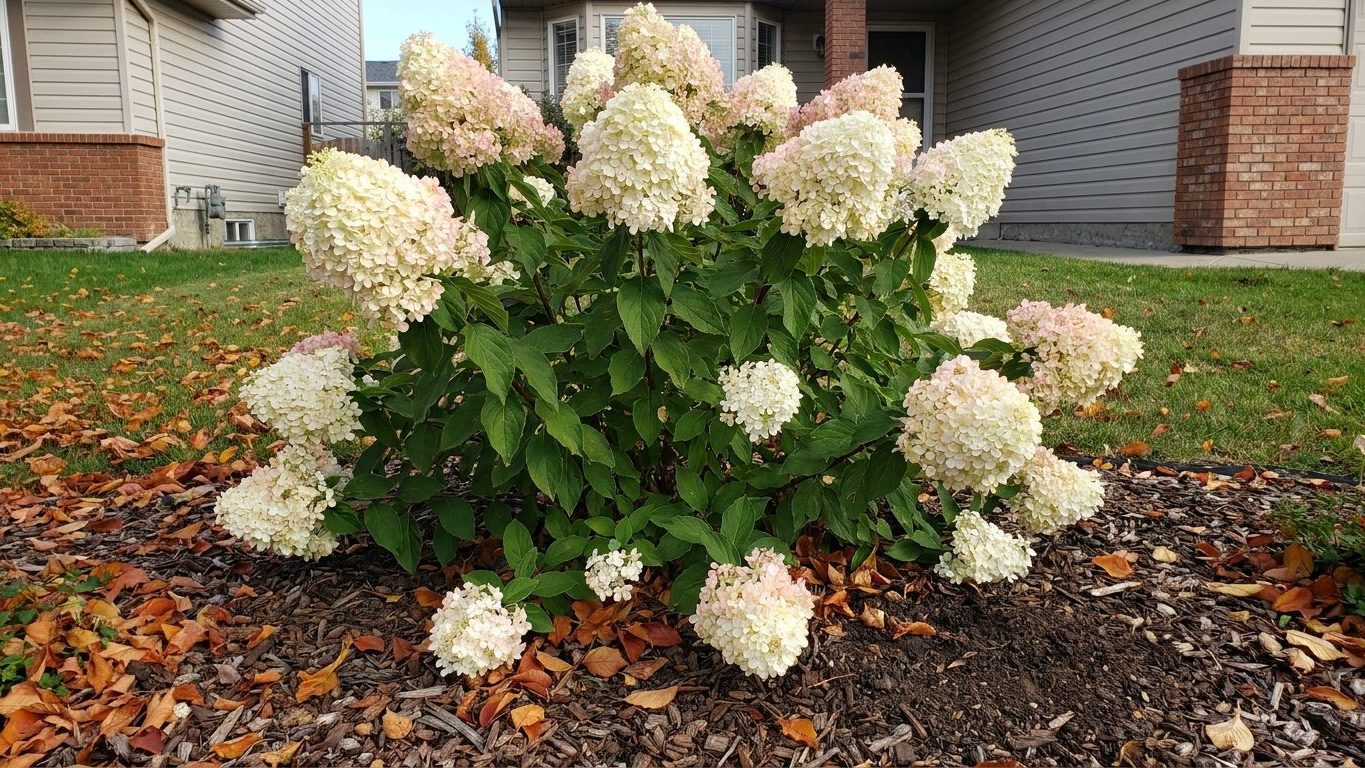
In Calgary, the short answer is that hydrangeas fight winter more than they fight bugs. Zone 4a winters kill unprotected flower buds and scorch leaves before any insect gets a chance, while powdery mildew, aphids, and botrytis only show up after a wet or crowded summer.
Hydrangea pests and diseases Alberta: The Short Answer
Bark stripped near the ground
Voles and rabbits tunnel under deep snow all winter and gnaw the bark at the base, girdling the stem below where next year’s growth should start. Wrap the lower foot of each shrub in hardware cloth before the first real snowfall, because bark chewed all the way around usually kills that stem outright.
No flower buds after winter

Natural Resources Canada’s Plant Hardiness Site puts Calgary at zone 4a, cold enough that an unprotected bigleaf hydrangea loses its old wood flower buds in most winters. Pick a reblooming or panicle variety instead, or pile mulch over the crown before the ground freezes solid, so next spring’s blooms come from wood that actually made it through.
Leaf edges scorched brown in spring

Dry chinook winds pull moisture out of exposed leaves faster than frozen roots underneath can replace it, leaving a papery brown edge by the time growth resumes in spring. Wrap the shrub in burlap or pile loose mulch around it to break the wind, and skip fall pruning that would expose more stem to that drying air.
Yellow leaves with green veins

Alberta’s alkaline prairie soil locks up iron before hydrangea roots can use it, turning new leaves yellow while the veins stay noticeably dark green. A simple soil test tells you the actual pH, and a chelated iron drench applied to the roots usually greens the leaves back up within a few weeks.
Sticky curled new leaves
Aphids cluster on tender spring growth and leave behind a sticky honeydew residue that curls the newest leaves inward. A strong jet of water from the hose knocks most of them off, and insecticidal soap handles the rest without hurting the bees working the blooms later in summer.
Purple-brown spots scattered on leaves

Cercospora leaf spot shows up as small purple-brown spots scattered across older leaves after a stretch of humid weather, sometimes causing early leaf drop. Rake up and discard fallen leaves each fall instead of composting them, and water the soil rather than the leaves to keep the fungus from spreading further.
White powdery coating on leaves
Powdery mildew builds up on leaves crowded together in humid August air with poor circulation between the branches. Space plants for airflow, water the soil instead of the foliage, and snip off the worst affected leaves so spores do not spread to the rest of the shrub.
Brown mushy flower clusters after rain
Botrytis blight moves into flower heads that stay wet after a summer storm, turning the petals brown and slimy within a day or two. Cut the affected blooms off right away, and water at the base of the plant instead of overhead so the flowers stay dry.
Alberta — the year and the numbers
- State
- Alberta
- Hardiness zones
- 4a
- Last spring frost
- May 21
- First fall frost
- September 16
- Annual rain
- 17 in
- Lawn zone
- cool-season
- Source
- Environment and Climate Change Canada — Canadian Climate Normals 1981-2010, station CALGARY INT'L A · Calgary
How to Work Out the Dates for Your Own Yard
I work backward from Calgary’s own frost window instead of trusting a bag tag, and most of these problems sort themselves out by the calendar rather than by guesswork.
- Mark the average last frost: Environment and Climate Change Canada’s Canadian Climate Normals put Calgary’s mean last spring frost at May 21, but that is a midpoint, since frost lands later than that in half of all years.
- Wait two extra weeks before judging leaf scorch: brown edges that show up before early June are almost always winter desiccation, not disease, since fresh growth has not even had time to get infected yet.
- Scratch the bark in late April: green underneath means the stem is alive even with no visible buds, so hold off on cutting anything back until new growth actually appears.
- Check new growth by June for aphids: curled, sticky leaf tips this early point to insects, while spotting or powder this early is rare before the air turns humid.
- Watch for the first fall frost: the same station puts the average at September 16, so any fertilizing after July risks new growth that never has time to harden off.
- Test soil pH once a season: a reading above 6.5 explains yellow leaves faster than any pest search does, and it points straight at the fix.
None of these dates are a guarantee, they are the middle of a range, and the actual day in your yard depends on the microclimate around your house as much as the calendar.
Alberta North to South: How the Dates Shift
Calgary’s numbers are one point on a large map, and moving across the province shifts every date in this guide by weeks in either direction.
- Southern Alberta and the Chinook belt (Lethbridge, Medicine Hat, Calgary): frequent winter thaws break dormancy early and then refreeze it, which raises the desiccation and bud kill risk above rather than lowering it.
- Central Alberta (Red Deer, Edmonton): colder, steadier winters without the same thaw and freeze swings mean less scorch, but the frost free season itself runs shorter, so bud survival is not any easier.
- Northern Alberta and the Peace Country (Grande Prairie, Peace River): an even shorter frost free stretch and drier air keep powdery mildew rare, while winter dieback stays the dominant problem all the way north.
- The foothills and mountain valleys (Canmore, Banff): elevation adds harder, earlier frosts on top of the provincial averages, making bud loss and bark damage the two problems to plan around first.
Check the Alberta guide page for this province’s own frost dates before deciding how much winter protection your yard actually needs.
Mistakes Alberta Punishes
Planting bigleaf without any winter cover
Bigleaf hydrangea blooms on the previous year’s wood, and Calgary’s zone 4a winters kill that wood if it sits exposed. Choose a panicle or smooth variety instead, or commit to mounding mulch over the crown every fall, since skipping this step is the single biggest reason for a shrub with leaves but no flowers.
Pruning bigleaf in September or October
Cutting back bigleaf stems in fall removes next year’s flower buds along with the growth, since this variety only flowers on wood grown the year before. Keep pruning inside the June and July window instead, and remove only what is clearly dead once new growth shows where it stopped.
Fertilizing after the July window closes
A late feeding pushes soft new growth that has no time to harden before frost, and Environment and Climate Change Canada’s Canadian Climate Normals put Calgary’s average first fall frost at September 16. Stick to the May and July fertilizing windows only, and let the plant slow down naturally through August.
Alberta Extension Offices and County Contacts
Calgary’s frost dates and zone 4a rating are a province wide starting point, not a diagnosis for your particular yard. Alberta Agriculture and Irrigation and your county’s horticulture desk fill in the rest, from a soil test to a look at whatever is eating your leaves.
- Alberta Agriculture and Irrigation: the provincial extension service for soil testing, pest identification, and horticulture questions specific to your county.
- Your province guide: the frost dates and hardiness zone for wherever you garden in Alberta.
- The Alberta planting calendar: month by month planting, fertilizing, and pruning windows for this province.
Bring a photo of the actual leaf or stem when you call, it settles the diagnosis faster than any guide ever will.
Common questions
Do hydrangeas survive Alberta winters without protection?
Bigleaf types rarely do, since Calgary sits at zone 4a and its old wood buds are not built for that cold. Panicle and smooth hydrangeas, which flower on new wood each year, come through far more reliably without a wrap.
What is the most common hydrangea problem in Alberta?
Winter dieback and the resulting lack of flowers show up far more often here than any insect or fungal issue, simply because so many winters dip past what bigleaf wood can take.
When should I check for pest damage versus winter damage?
Wait until at least the average last frost in mid to late May before judging a shrub, since anything showing before then is almost certainly cold and wind, not insects or disease.