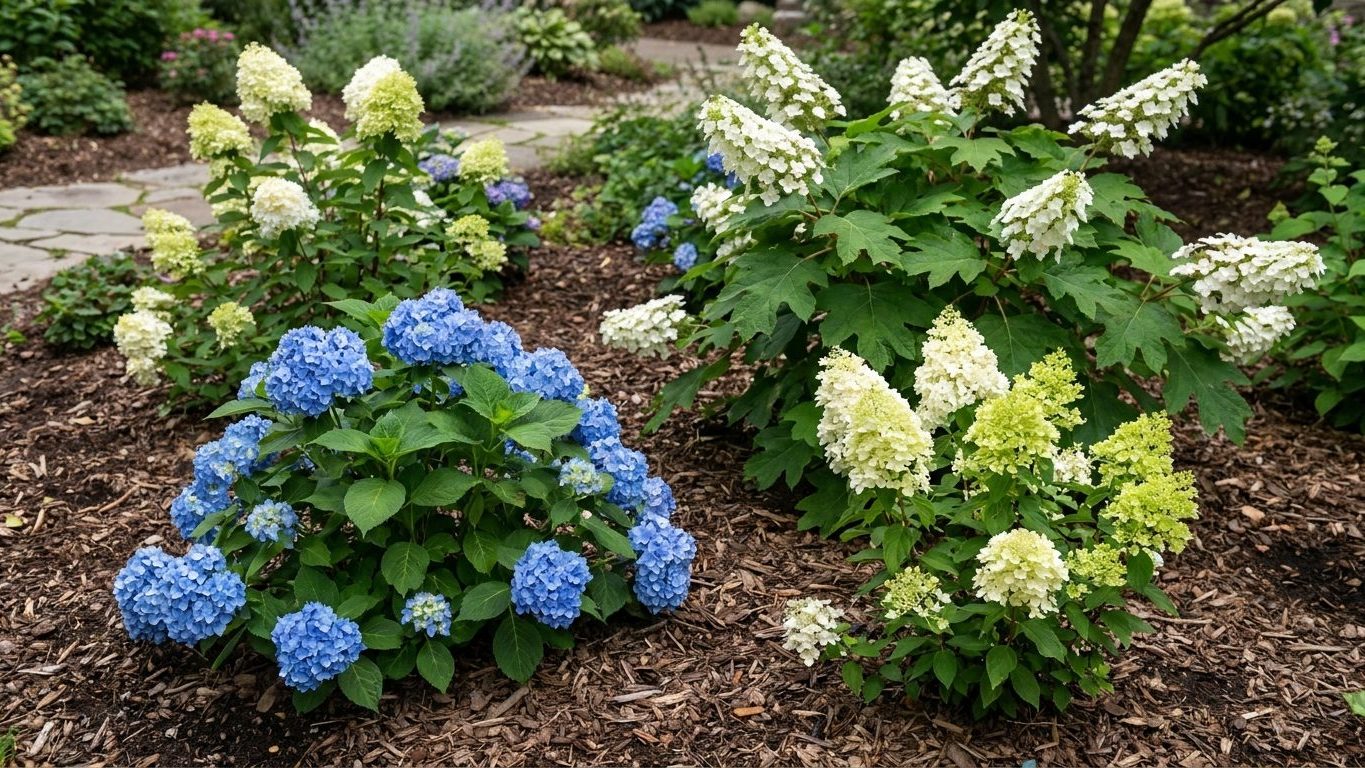
Panicle hydrangea and oakleaf hydrangea are the two safest bets for an Arizona yard, tolerating the reflected heat and alkaline soil that define the low desert around Phoenix. Bigleaf hydrangea, the variety most people picture, struggles here without heavy shade and constant water. The right pick depends less on frost, which barely touches Phoenix, and more on how much afternoon sun your bed actually gets.
The Short Answer
The USDA Plant Hardiness Zone Map puts Arizona’s growing range at 4b to 10b, and Phoenix, the state’s low-desert reference city, sits at the hot end of that scale with a frost-free season that stretches through nearly the entire year. That combination of intense heat and alkaline soil, more than cold, decides which hydrangea makes it through summer here.
Panicle Hydrangea

Panicle hydrangea is the safest choice for Arizona because it blooms on new wood and tolerates full sun better than any other type, even in alkaline soil that yellows other hydrangeas. It handles low-desert heat with deep, regular watering and holds up at higher elevation too.
Oakleaf Hydrangea

Oakleaf hydrangea comes from the humid Southeast, but it copes with Arizona’s dry heat once its roots are established. It wants morning sun and afternoon shade in the low desert, and rewards that placement with fall color few other hydrangeas offer here.
Smooth Hydrangea

Smooth hydrangea, the type behind old-fashioned ‘Annabelle’, tolerates more cold than heat, which makes it a better fit for Flagstaff and the high country than for Phoenix. In the low desert it needs a shaded courtyard and steady moisture to avoid wilting by early afternoon.
Mountain Hydrangea

Mountain hydrangea is a smaller relative of bigleaf hydrangea and shares its dislike of reflected heat and alkaline soil. It can work in a shaded, irrigated bed at higher elevation, but the low desert around Phoenix pushes it past its limit most summers.
Bigleaf Hydrangea

Bigleaf hydrangea is the variety most people picture when they hear the word hydrangea, and it’s the hardest to keep alive in Arizona. Its shallow roots and broad, thin leaves scorch in reflected heat, and alkaline desert soil locks up the iron it needs, turning leaves yellow between the veins.
Climbing Hydrangea

Climbing hydrangea needs steady moisture and a cool root run to establish, conditions that are hard to offer anywhere below the high country. It’s the riskiest of the six for Arizona, and it usually fails before it ever climbs anything.
Arizona — the year and the numbers
- State
- Arizona
- USDA zones
- 4b-10b
- Frost
- none in an average year
- Annual rain
- 7 in
- Lawn zone
- warm-season
- Source
- NOAA NCEI 1991-2020 Climate Normals + NOAA RCC ACIS daily records, station USW00023183 — https://www.ncei.noaa.gov/access/services/data/v1?dataset=normals-annualseasonal&stations=USW00023183 · Phoenix
How to Work Out the Dates for Your Own Yard
Matching a hydrangea to an Arizona yard starts with three questions, not one date on a calendar.
- Find your zone on the map: the USDA Plant Hardiness Zone Map puts Arizona anywhere from 4b in the high country to 10b in the low desert around Phoenix.
- Count your hours of afternoon sun: past four hours of direct west sun in the low desert pushes bigleaf and mountain hydrangea past what they can handle.
- Test your soil pH: desert soil runs alkaline, and a hydrangea that needs acid soil to hold iron will yellow between the veins within a season.
- Plan the water: panicle and oakleaf tolerate a missed watering, smooth and bigleaf wilt by afternoon and rarely bounce back the same day.
- Pick the exposure: north or east-facing beds, or afternoon shade from a wall or tree, are where any hydrangea has a real chance below the high country.
Panicle hydrangea survives an Arizona summer because it flowers on new wood and shrugs off heat once its roots are established. Bigleaf hydrangea rarely survives the same yard, since its shallow roots and thin leaves scorch before the first bloom opens.
Arizona North to South: How the Dates Shift
Elevation changes the entire hydrangea conversation in Arizona, shifting the limiting factor from heat back toward real cold the higher you go.
- High Country (Flagstaff, the Mogollon Rim, the White Mountains): far above the desert floor, elevation brings genuine winter freezes back into play, which favors panicle and smooth hydrangea over anything more heat-adapted but cold-tender.
- Central Highlands (Prescott, Payson, Sedona): mid-elevation towns split the difference, cooler than Phoenix through summer without the hard freeze of the high country, which widens the choice to oakleaf and panicle both.
- Low Desert (Phoenix, Tucson, Yuma): the reference part of the state for the hardiness range, where summer heat rather than any frost date decides which hydrangea makes it through July.
The state guide breaks down exactly where a given yard falls between these three, and how that shifts the pruning and watering routine.
Mistakes Arizona Punishes
Bigleaf hydrangea in full afternoon sun
Bigleaf hydrangea’s broad, thin leaves scorch fast under reflected desert heat, especially against a west-facing wall or fence. The fix is exposure, not variety loyalty: move it to morning sun with afternoon shade, or replace it with panicle hydrangea, which tolerates the same spot without scorching.
Yellow leaves with green veins
Desert soil runs alkaline, and alkaline soil locks up the iron a hydrangea needs, showing up as yellow leaves with the veins still green. Sulfur or chelated iron treats the symptom for a season, but choosing panicle or oakleaf hydrangea, both far more tolerant of alkaline soil, solves it for good.
Wilting every afternoon on autopilot
An irrigation timer set once in spring rarely keeps up with July heat, and a hydrangea that wilts every afternoon on the same schedule is asking for more water, not a different spot. Check the timer monthly through summer, and add a second cycle before assuming the plant itself is failing.
Arizona Extension Offices and County Contacts
The USDA Plant Hardiness Zone Map’s 4b to 10b range for Arizona is a starting point, not a yard-specific plan. County offices of the University of Arizona Cooperative Extension fill in the rest, from soil test results to local pest alerts.
- Your state page: the frost dates and the full growing guide for Arizona hydrangeas.
- What goes wrong here: the pests and disorders that show up on Arizona hydrangeas, in season order, and what actually works.
- University of Arizona Cooperative Extension: county-by-county contacts, soil testing, and local planting advice.
Common questions
Do hydrangeas need afternoon shade in Arizona?
In the low desert around Phoenix, yes, for most types. Panicle hydrangea is the exception that tolerates more direct sun, but even it appreciates relief once temperatures peak in summer.
Can hydrangeas grow in Phoenix without a real frost?
Phoenix rarely freezes, so frost isn’t the obstacle it is for most of the country. The obstacle is a frost-free season so long and so hot that summer heat, not winter cold, sets the limit on which hydrangea survives.
Which hydrangea handles Arizona’s dry heat best?
Panicle hydrangea and oakleaf hydrangea both tolerate the low desert with less fuss than bigleaf, mountain, smooth, or climbing hydrangea, especially once their roots are established and they’re given some relief from the most intense afternoon sun.