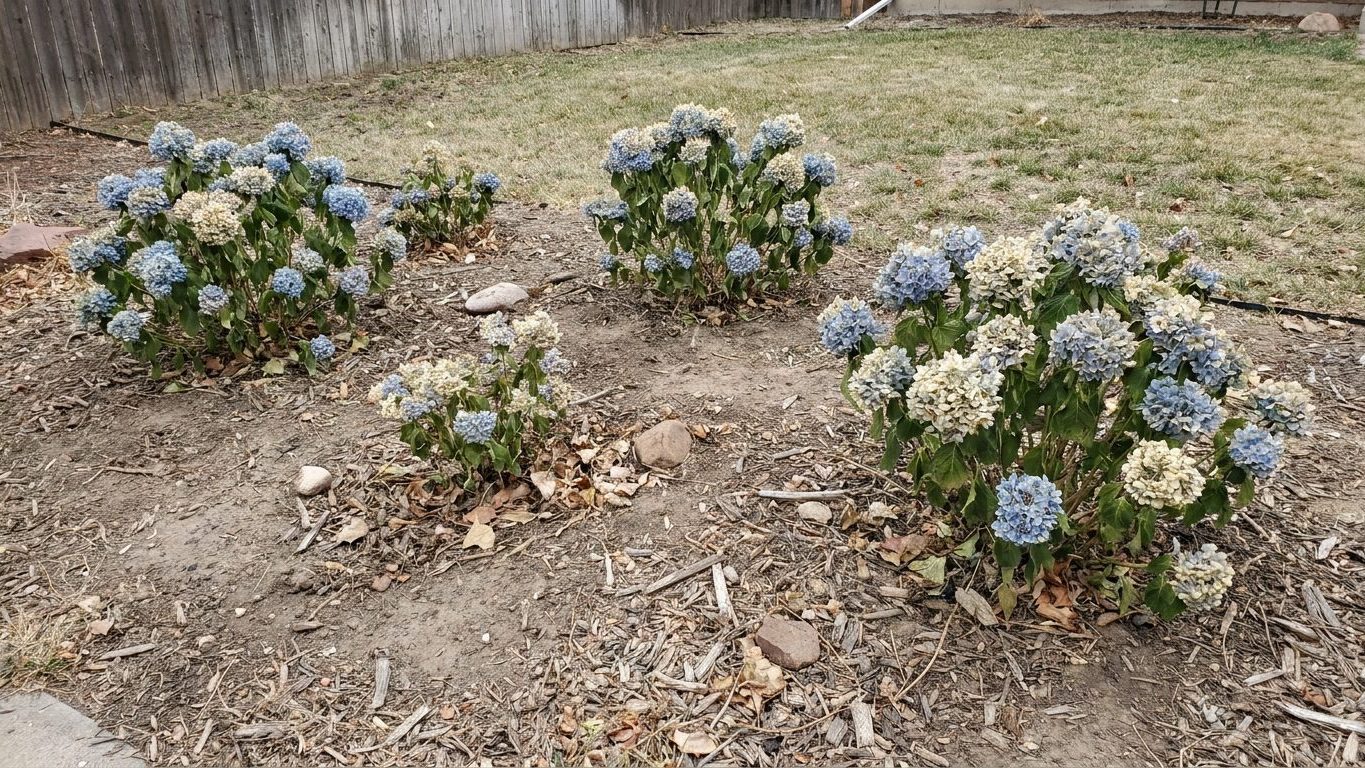
Hydrangeas grow across Illinois, but the window is tighter than gardeners moving from warmer states expect. Chicago’s last spring frost falls April 11 to April 22, the first fall frost arrives October 24 to November 3, and the state spans USDA zones 5a to 7b. That gap decides planting dates, pruning cuts, and which kind of hydrangea actually blooms here.
Hydrangeas Care Calendar for Illinois

Chicago’s frost record, tracked by NOAA NCEI 1991-2020 Climate Normals, runs from a last spring freeze of April 11 to April 22 to a first fall freeze of October 24 to November 3, and that stretch is what a hydrangea planted in Illinois has to work with.
- Dormancy: the one safe window to move a plant, roots undisturbed, runs from the first fall freeze through late winter.
- Planting: set new hydrangeas in the ground two to three weeks after the last spring frost, once the soil has warmed past bare mud.
- Leaf-out: buds break within a month of that planting window, and this is when an old-wood bloomer can still get caught by a late freeze.
- Bud set: by early summer, panicle and smooth types are already pushing flower buds on this year’s growth, safe from any spring frost.
- Peak bloom and watering: through the hottest weeks before the first fall frost, a deep weekly soak matters more than any fertilizer.
- Pruning: cut new-wood types back in late winter, before growth starts, well ahead of the April frost window.
- Fall prep: stop feeding six to eight weeks before the first fall frost so new growth has time to harden off.
Miss the planting window by a few weeks and the shrub usually survives anyway, it just spends its first year catching up instead of blooming.
Illinois — the year and the numbers
- State
- Illinois
- USDA zones
- 5a-7b
- Last spring frost
- April 11 to April 22
- First fall frost
- October 24 to November 3
- Annual rain
- 38 in
- Lawn zone
- cool-season
- Source
- NOAA NCEI 1991-2020 Climate Normals, 32F freeze probabilities · Chicago
Best Hydrangeas for Illinois
Illinois spans USDA zones 5a to 7b, and Chicago’s frost window, from NOAA NCEI 1991-2020 Climate Normals, closes the growing season by early November most years. That combination favors hydrangeas that set flower buds fresh each spring rather than ones that need last year’s stems to survive.
Panicle and smooth hydrangeas do exactly that, which is why they show up on so many Illinois yards. Bigleaf and oakleaf can work too, mostly toward the state’s milder southern counties, but they need real winter protection farther north.
| Kind | Flowers on | Verdict here | Why |
|---|---|---|---|
| Panicle | New wood | Reliable statewide | Buds form after the last frost, so a late freeze cannot erase the season’s flowers. |
| Smooth | New wood | Reliable statewide | Same new-wood habit, and it tolerates the state’s clay soils well. |
| Bigleaf | Mostly old wood | Risky north of I-80 | Winter buds can die back in a hard Chicago-area winter, skipping bloom entirely. |
| Oakleaf | Old wood | Better toward the south | Needs the milder winters found closer to the state’s zone 7b end. |
Climbing hydrangea and reblooming bigleaf cultivars are the other kinds worth knowing, and they get their own page since they lean more on microclimate than on the state number alone.
When to Plant, Prune and Feed Hydrangeas in Illinois
Three dates carry more weight than the other fifty weeks combined, and all three trace back to Chicago’s frost window from NOAA NCEI 1991-2020 Climate Normals.
Planting waits for soil to warm, pruning happens before growth starts, and feeding has to stop early enough for new wood to toughen up before the cold returns.
| Task | Window here | Counted from |
|---|---|---|
| Planting | Two to three weeks after last frost, so roughly late April into May | Last spring frost, April 11 to April 22 |
| Pruning new-wood types | Late winter, before buds swell, ahead of the April thaw | Last spring frost |
| Last feeding | Six to eight weeks before first frost, so by early to mid September | First fall frost, October 24 to November 3 |
Old-wood pruning follows a different, narrower rule, right after bloom instead of late winter, and that gets its own explanation on the calendar page for this state.
Hydrangeas Problems in Illinois and What Causes Them
No flowers after a mild-looking winter

An old-wood variety set its buds the previous fall, and a hard freeze anywhere in that April 11 to April 22 window can kill them before they ever open, leaving healthy green leaves and no blooms.
Buds killed by a late frost

New growth pushes early during a warm stretch, then a frost lands inside Chicago’s normal spring range and burns the tender tips, a risk that new-wood types mostly avoid by budding later in the season.
Wilting in heavy clay soil

Illinois clay holds water long after rain, and roots sitting wet through a cool spring rot before summer heat even arrives, a problem solved more by raised planting than by extra watering.
Illinois North to South: How the Dates Shift
The frost numbers above come from one Chicago-area station, and the rest of the state does not match them exactly.
- Northern Illinois (Chicago, Rockford, DeKalb): closest to the reference station, with the coldest end of the state’s zone range and the shortest safe planting stretch.
- Central Illinois (Springfield, Bloomington, Peoria): frost typically breaks a little earlier in spring and holds off a little later in fall than the northern counties.
- Southern Illinois (Carbondale, Cairo, Marion): closest to zone 7b, with winters mild enough that bigleaf and oakleaf hydrangeas have a fair shot at keeping their old-wood buds alive.
Anyone gardening outside the Chicago area should treat these numbers as a starting point and check the frost dates for their own county before setting a calendar.
Illinois Extension Offices and County Contacts
The zone range and frost dates above cover the whole state, but a county office knows the ground down the road.
- University of Illinois Extension, listed by USDA NIFA’s Land-Grant University Extension directory, connects to county offices with local soil and frost advice.
- Your county office: the closest source for a frost date specific to your yard rather than the airport station.
- This month’s task: check the calendar section above and match it to whatever is dormant, budding, or blooming outside right now.
Common questions
Can hydrangeas survive an Illinois winter without protection?
Panicle and smooth types generally do, since they rebuild their flowering wood every spring. Bigleaf and oakleaf types are the ones that need mulch or a protected spot, especially north of the state’s midsection.
What is the best month to plant hydrangeas in Illinois?
Aim for two to three weeks after the last spring frost, which lands roughly in late April to May depending on how close a yard sits to the Chicago reference station or farther south.
Why did my hydrangea leaf out but never flower?
The most common cause in Illinois is a spring freeze killing buds that formed on old wood the previous fall. Switching to a new-wood variety like panicle or smooth usually solves it for good.