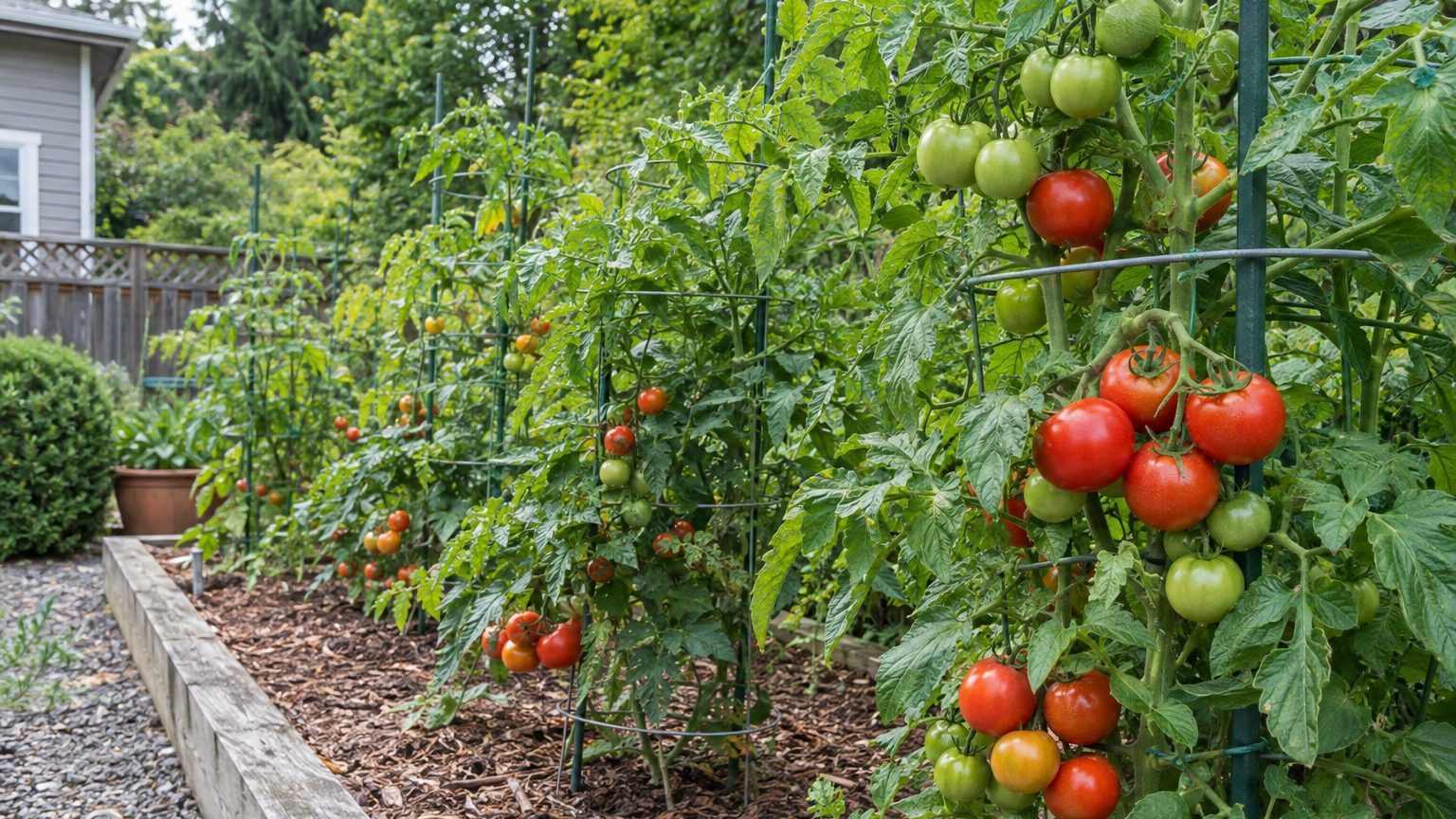
Tomato plants in a coastal British Columbia bed face cool nights early in the season and warm spells later, so one variety rarely suits every month. Cherry types, early cold-tolerant varieties and heat-tolerant later ones give the most reliable crops.
Best Tomatoes to Grow in British Columbia

Small-fruited cherry and saladette tomatoes, blight-resistant cultivars and a mix of early and late varieties hold up in this province. Cool starts and warm spells in summer reward gardeners who plant more than one kind. The following types and varieties are named for good reasons.
Cherry and Saladette Tomatoes

Small, round fruit resists blossom end rot, which makes these types dependable in beds that stay on the dry side. They also cope well with uneven watering. Plant a few of them as insurance next to your bigger slicers.
Early and Late Varieties

Cold-tolerant early varieties set fruit while nights are still cool. Heat-tolerant later varieties keep going when summer warms up. Growing one of each spreads the risk across the season and guards against a poor crop from a single weather swing.
Siletz
Siletz is reliable and has good flavor, and it ripens in 70-75 days. It suits eating fresh from the vine. It is not resistant to late blight, so give it airy spacing and watch the leaves closely.
Legend
Legend is a determinate variety that resists late blight. That makes it a sound pick if blight has hit your garden before or may show up in damp weather. It is on a short list of determinate tomatoes that also includes Better Bush, Celebrity, Early Girl Bush, Clear Pink Early, Taxi and Sophie’s Choice.
Red Cherry and Sweetie
Both cherry cultivars resist late blight, which suits wet spells on the coast. Sweet 100 has an improved relative with the same sweet red fruit and added disease resistance, so look for it if you like that classic flavor.
British Columbia — the year and the numbers
- State
- British Columbia
- Hardiness zones
- 9a
- Last spring frost
- March 18
- First fall frost
- November 10
- Annual rain
- 47 in
- Lawn zone
- transition-season
- Source
- Environment and Climate Change Canada — Canadian Climate Normals 1981-2010, station VANCOUVER INT'L A · Vancouver
How to Choose Tomatoes for Your British Columbia Garden
Start with the problem your garden has, then match the plant to it. A cool spring, a hot spell, a damp patch and a dry bed each call for something slightly different.
The planting dates for the province follow the nearest comparable climate, so confirm local timing with a garden centre, a garden society or a provincial gardening group.
| Your situation | What suits it in British Columbia | Why |
|---|---|---|
| Cool start to the season | Cold-tolerant early varieties | They keep growing and set fruit while nights are cool |
| Hot spells in summer | Heat-tolerant later varieties | They keep setting fruit when summer warms up |
| Blight in a damp garden | Legend, Red Cherry or Sweetie | All three resist late blight |
| Dry beds with little watering | Cherry and saladette types | Small round fruit resists blossom end rot |
| Fresh eating off the vine | Siletz | Good flavor and reliable, though prone to late blight |
| Compact determinate plants | Better Bush, Celebrity or Taxi | Determinate varieties are common choices for home beds |
If space is tight, choose from the determinate list. If blight is your worry, Legend is the one that covers both needs.
Tomato Buying Mistakes to Avoid in British Columbia
Buying Only One Kind of Tomato
A single variety is exposed to whatever the weather does that season. Choosing an early cold-tolerant type and a later heat-tolerant one spreads the risk. That way a cool spell or a hot stretch will not take the whole crop.
Planting Out Too Soon
Vancouver’s average last spring frost falls on March 18, and in one year out of two frost arrives later than that. Northern and upland districts run weeks behind. A pot that looks ready in a garden centre can be killed by a late frost, so hold seedlings back until the garden is ready.
Buying a Pot Without Knowing Its Size
A tag that does not say determinate or indeterminate leaves you guessing at the adult plant. Determinate varieties stay more contained than vining ones, which need tall stakes or cages. Read the tag before you buy, and ask the garden centre if it is blank.
Where to Get Tomato Advice in British Columbia
Canada has no county extension office, so local advice comes from the provincial agriculture ministry and from gardeners nearby.
- The provincial agriculture ministry offers general guidance on growing food in the province, so check it before you plan your bed.
- A local master gardener group or garden society can tell you how spring behaves in your own district, so ask in late winter.
- A neighborhood garden centre knows which varieties it stocks do well locally, so ask before you buy.
Common Questions
When Should You Start Tomato Seeds Indoors in British Columbia?
March is the usual month, and February works too. Start seedlings indoors 6 to 8 weeks before they go into the garden so they are sturdy when the weather warms.
When Do Tomatoes Go Outside in British Columbia?
May is the usual month, and it can also be done in April or June. Wait until all danger of frost has passed and the soil has warmed to about 16°C (60°F).
Do Tomato Seedlings Need Hardening Off?
Yes. Set seedlings outdoors for 1 to 2 weeks before planting so the leaves toughen to wind and direct sun.