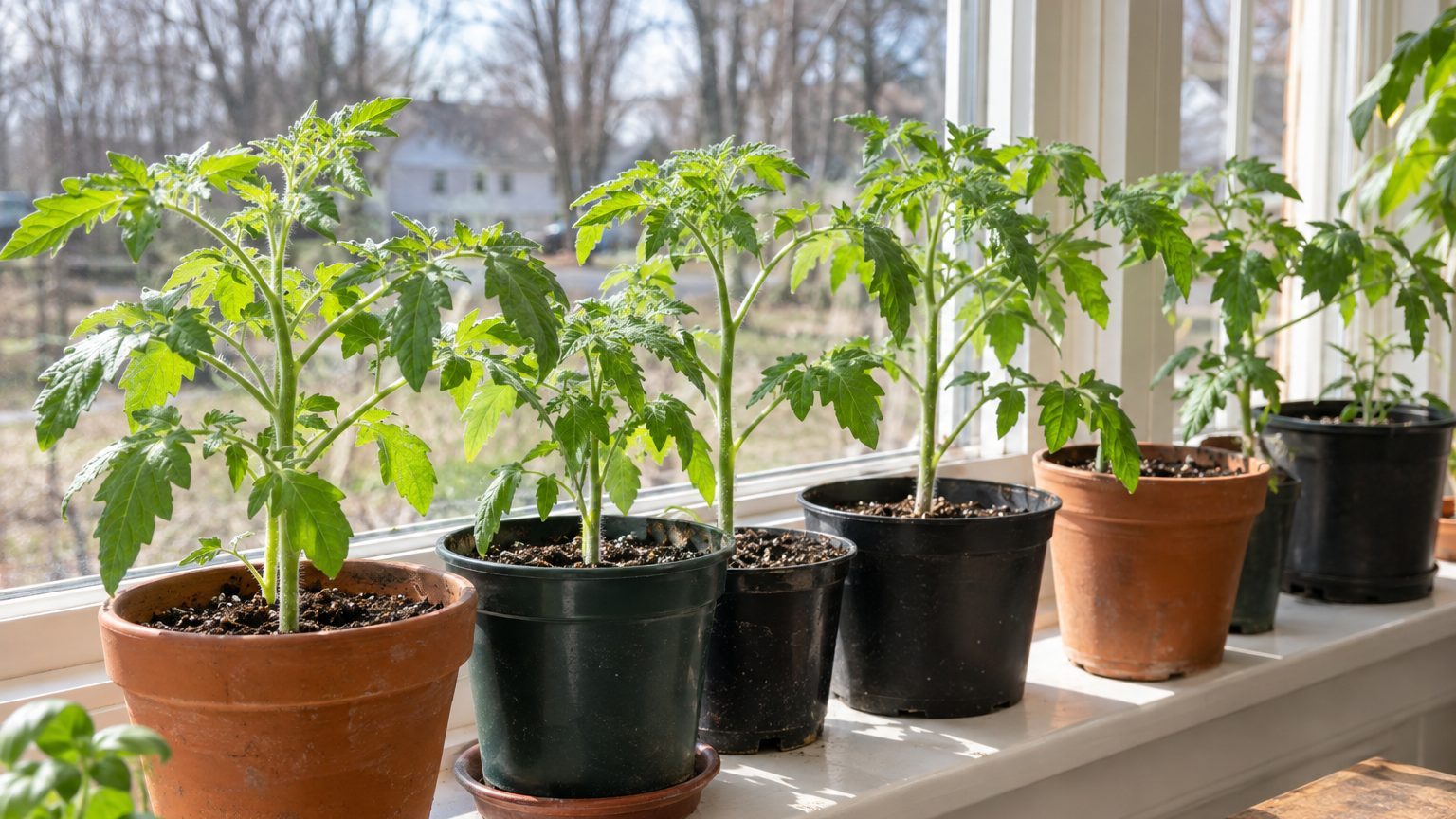
Tomato seedlings on a sunny windowsill in the weeks before spring are a welcome sign that a Texas garden season is starting. The sowing date depends on when the plants will go outdoors, and in Texas that date shifts a lot from the Panhandle to the Gulf Coast. Count backward from your planting date.
When Should You Start Tomato Seeds in Texas?

Start seeds indoors about six to eight weeks before the transplants go into the garden. For spring tomatoes in Central Texas, planting runs from March to April, so sowing happens well ahead of that, indoors, in the cooler months.
A colder spot like the Panhandle plants later and a warm one like the Gulf Coast can plant earlier, so the sowing date moves with them.
| Step | When in Texas | Why |
|---|---|---|
| Sow seeds indoors | Six to eight weeks before planting out | Seedlings reach a good size just as the garden is ready for them |
| Harden off | One to two weeks outdoors before planting | Plants adjust to wind, sun and cooler nights before they face the garden |
| Plant spring tomatoes | March to April | The danger of frost is behind us and the soil has warmed up enough for planting. |
| Plant fall tomatoes | July to August | Fruit has time to ripen before the first expected frost, about 100 days away |
Potting up has no set date. It happens when the seedlings outgrow their first cells. For a fall crop, the same six to eight weeks of indoor growing applies before the July to August planting.
Texas — the year and the numbers
- State
- Texas
- USDA zones
- 6a-10a
- Last spring frost
- February 4 to March 1
- First fall frost
- December 1 to December 19
- Annual rain
- 52 in
- Lawn zone
- warm-season
- Source
- NOAA NCEI 1991-2020 Climate Normals, 32F freeze probabilities · Houston
How to Start Tomatoes from Seed
The routine is simple, and each stage depends on the one before it. Work in this order through the season.
- At sowing time, fill clean containers with fresh seed-starting mix, moisten it and keep it in a warm spot, because tomato seed sprouts slowly in cool mix.
- As soon as the seedlings break the surface, move them under strong light or into your sunniest window so the stems stay short and sturdy.
- While they grow, water gently and regularly so the mix stays lightly moist but never soggy, which invites damping off.
- When the seedlings have their first true leaves and crowd their cells, pot each one into a larger container and bury the stem a little deeper, since tomatoes root along buried stems.
- For one to two weeks before planting, set the plants outside for a little longer each day, starting in shade, so the leaves toughen up.
- Once March to April arrives and the soil has warmed, move the plants into the garden, and use the same steps again for a fall crop planted from July to August.
Skipping the hardening stage is the most common reason for sunburned, stalled transplants.
What Happens If You Start Tomato Seeds Too Early
Seedlings started too soon get tall, thin and floppy while they wait for warm weather. They reach for the light, stretch out and fill their pots with roots. Once planted, they take longer to settle than a younger, stockier plant would.
Waiting for the garden also leaves you juggling pots when a late cold snap threatens. Younger seedlings are easier to move around and to protect.
Starting early still makes sense in Texas for one reason. In hot summers, large-fruited tomatoes keep flowering but stop setting fruit once nights stay around 80°F. Plants need to be in the ground early enough to set their crop before that heat arrives. The goal is a plant that is sturdy at planting time, not one that is simply large.
Where to Get Seed-Starting Advice in Texas
Local conditions vary across the state, so a nearby office can tell you what suits your area. Texas A&M AgriLife Extension covers every county with free, research-based gardening advice. The state’s extension service is built around exactly these questions.
- The Texas A&M AgriLife Extension site has tomato guides and variety lists, worth reading before you order seed.
- Your county extension office can tell you the planting window that fits your part of Texas, so call before you sow.
Common Questions
Which Tomato Varieties Do Well in Texas?
Extension variety lists for Texas include Bella Rosa, Bush Early Girl and Picus, a Roma type that sets fruit in the heat. All three carry disease resistance, which matters in soils where wilts and nematodes build up.
What Does Days to Maturity Mean on a Tomato Seed Packet?
Bush Early Girl is listed as a quick-maturing variety, which suits a short season. Bella Rosa needs longer to ripen its first fruit.
Do Resistant Tomato Varieties Avoid All Diseases?
No. Newer varieties resist tomato yellow leaf curl, but they can still catch other virus diseases. Look at the letters on the seed packet or plant tag to see which diseases a variety resists.