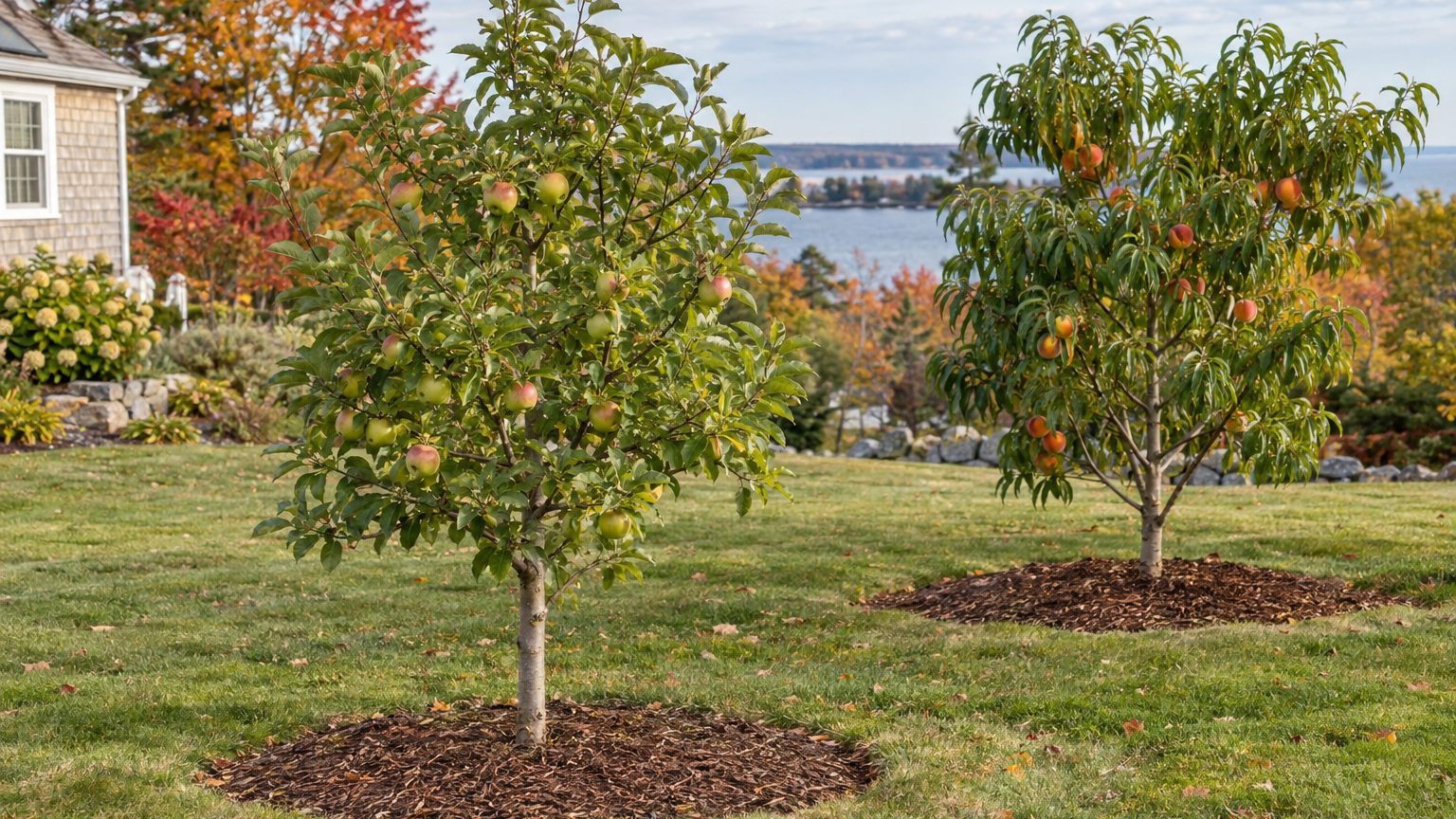
Fruit buds swell on the first mild days at the end of winter, and a hard freeze after that can undo a season’s crop. In Nova Scotia that swing between thaw and freeze decides which fruit trees are worth planting. Hardiness matters, but so does how a tree handles winter ending in fits and starts.
Best Fruit Trees to Grow in Nova Scotia

Apricot is hardy through the winter here, but it is tender once temperatures climb in late winter. Spring Satin, a plum-apricot hybrid, struggles with the freeze-thaw cycles that mark the end of the cold season. Winter itself is not too severe for fruit. Cold snaps that follow early warmth do the damage, so site and timing count as much as the tree you pick. The Canadian hardiness zone for Halifax is 6b, a rating built on seven climate variables that does not convert to a USDA zone.
Apricot
Apricot trees come through winter without trouble, which is what earns them a place in a Nova Scotia yard. Their weak point arrives when the days warm in late winter and the tree wakes early. Plant one where it gets the most even conditions you can offer, and expect the crop to depend on how the end of winter behaves.
Spring Satin Plum-Apricot Hybrid
Spring Satin has fruit that closely resembles a plum, and it is a fair choice for gardeners who like the idea of an apricot cross. The catch is that it does not tolerate the freeze-thaw cycles of late winter. In a Nova Scotia yard that sees repeated thaws, it is a variety to place carefully or to skip in exposed spots.
Apple
Apple trees are pruned first among the fruit trees, while they are dormant, in March or April. That puts the work early in the season, before the buds open, and makes apples a straightforward tree to keep in shape on a late-winter weekend.
Peach
Peach flower buds are easily hurt by cold, which is why peaches are pruned last, closest to bloom. In a province where late-winter cold returns after mild spells, leaving that job until the end of the dormant season lets you see which buds survived before you cut.
Nova Scotia — the year and the numbers
- State
- Nova Scotia
- Hardiness zones
- 6b
- Last spring frost
- May 7
- First fall frost
- October 18
- Annual rain
- 55 in
- Lawn zone
- cool-season
- Source
- Environment and Climate Change Canada — Canadian Climate Normals 1981-2010, station HALIFAX STANFIELD INT'L A · Halifax
How to Choose a Fruit Tree for Your Nova Scotia Yard
Start with how winter ends on your property. A sheltered spot that stays steadily cold in late winter suits a tender-budded tree far better than a sunny wall that warms early and then gets hit by frost.
Then think about when you can plant. Spring is the season for fruit trees here, so choose a tree you can have in the ground in April or May.
| Your situation | What suits it in Nova Scotia | Why |
|---|---|---|
| Late winter thaws followed by hard freezes | Apricot rather than Spring Satin | Spring Satin does not tolerate freeze-thaw cycles, while apricot is hardy through winter |
| Winters too cold for a young tree to settle in fall | Any fruit tree, planted in April or May | The winters are too cold for a newly planted fruit tree, so fall planting is skipped |
| Cold-sensitive flower buds | Peach, pruned last in March or April | The buds are easily hurt by cold, so pruning waits until closest to bloom |
Bare-root trees are the least expensive way to start and are planted while dormant, before the buds open. Container trees settle best in the dormant season too.
Fruit Tree Buying Mistakes to Avoid in Nova Scotia
Choosing a Tree That Hates Freeze-Thaw
A variety that cannot handle the freeze-thaw cycles of late winter will lose its buds or twigs in the very weather this province delivers. Spring Satin is the clear example. If you want the fruit, plant it in a protected spot, or choose apricot instead, since it holds through winter and only becomes tender as late winter warms.
Planting a Fruit Tree in Fall
Fall planting looks sensible, with cooler air and no summer stress, but a newly planted fruit tree does not manage the winters here. Wait for spring, April or May, as soon as the frost has left the ground. Bare-root trees go in during April or early May while they are still dormant.
Pruning at the Wrong Time
Pruning in fall or early winter invites new growth that may not harden before the cold. Keep your cuts for March and April, while the tree is dormant and before the buds swell. Apples go first and peaches last.
Where to Get Fruit Tree Advice in Nova Scotia
The province has no county extension office, so questions about local fruit growing go to the provincial agriculture department and to people who garden nearby. Timing for tree planting here follows the nearest comparable climate, so confirm local dates with someone who grows in your area.
- The Nova Scotia Department of Agriculture is the place to ask about fruit growing, and early spring is a good moment before you order trees.
- A local garden centre or garden society can tell you how late winter behaves in your district, so visit before you buy.
Common Questions
When Is the Last Spring Frost in Nova Scotia?
At Halifax, the average last spring frost falls on May 7. In one year out of two, frost comes later than that, and upland or northern districts run behind Halifax, so treat the date as the middle of a window.
What Hardiness Zone Is Nova Scotia In?
Halifax sits in Canadian zone 6b. That is the Canadian system, which cannot be swapped for a USDA zone, and it describes the reference city rather than the whole province.
Can You Plant a Container Fruit Tree in Summer?
Container trees can go in most of the year if you keep them watered, but summer is the hardest time to plant. Heat and dry soil stress the new roots, so wait for the April and May window.