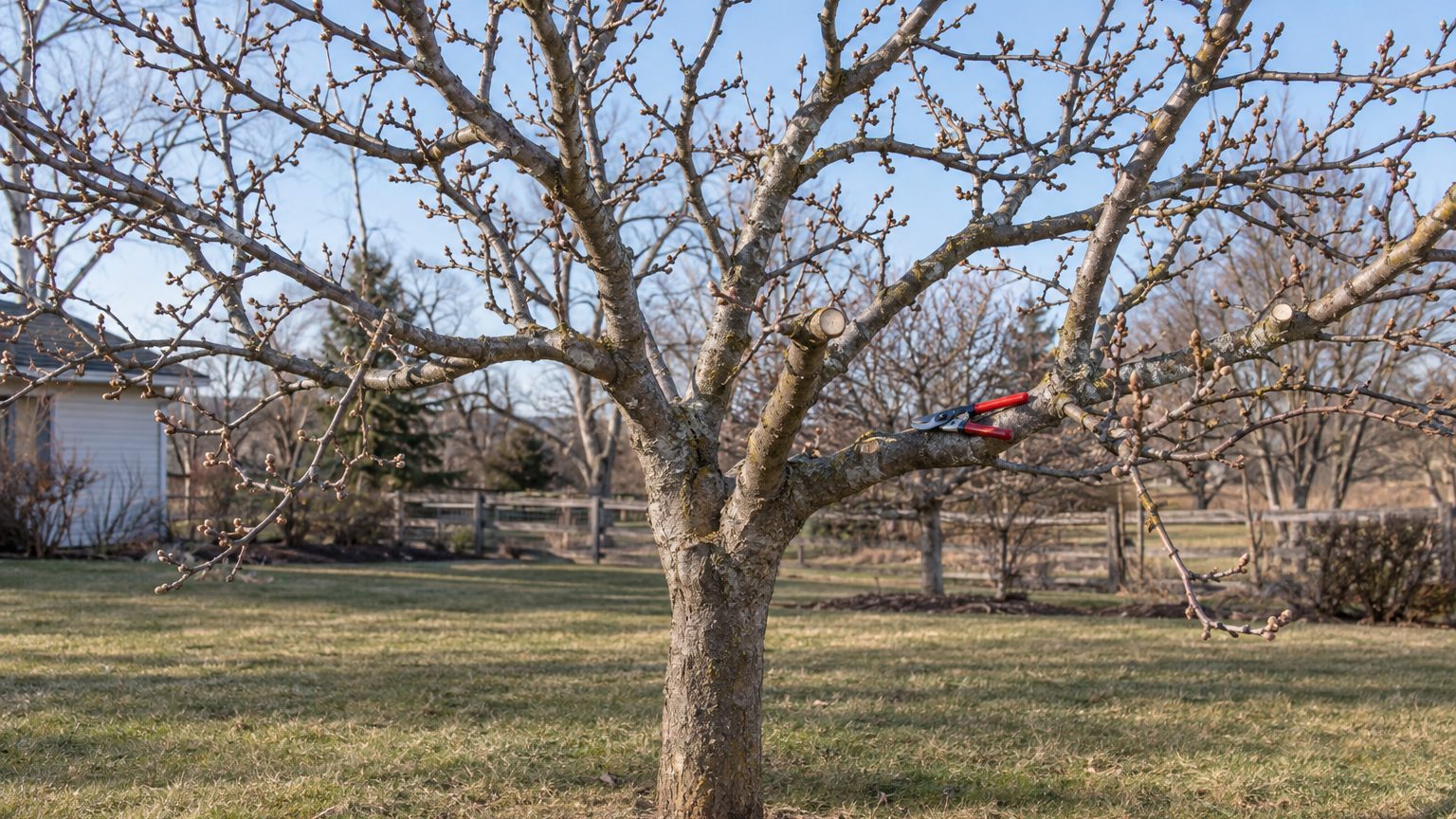
A fruit tree with bare branches against a gray sky is waiting for you, and the pruning saw is best picked up before the first buds swell. In Nova Scotia, that means the last weeks of winter and the first of spring, while the tree is still asleep.
When to Prune Fruit Trees in Nova Scotia

Prune fruit trees in March and April, from late winter into early spring, while the tree is dormant and before the buds open. Nova Scotia has no provincial tree calendar of its own, so these months follow the nearest comparable climate in New England. Confirm local timing with a garden centre or a garden society.
Pruning late in the dormant season costs the tree the least winter hardiness. Fall and early winter cuts are avoided, because new growth may not harden before the cold.
| Fruit tree | When to prune in Nova Scotia | Why |
|---|---|---|
| Apples and pears | March to April, while dormant. Apples go first. | Late winter cuts have little effect on winter hardiness and tree health. |
| Peaches and nectarines | April, last of all, closest to bloom. | Their flower buds are easily hurt by cold. |
| Cherries and plums | March to April, before the buds swell. | Dormant cuts heal before growth starts. |
| Young trees | March to April, after the first planting in April or early May. | Trees go in as the frost leaves the ground, and bare-root stock is planted while dormant. |
Summer pruning in late July or August is a second window, but only for light work, since severe cuts then weaken the tree. Most of the pruning belongs in winter or spring. Halifax Stanfield sees its average last spring frost on May 7, and half of all years run later, so a cold snap after pruning is always possible.
Nova Scotia — the year and the numbers
- State
- Nova Scotia
- Hardiness zones
- 6b
- Last spring frost
- May 7
- First fall frost
- October 18
- Annual rain
- 55 in
- Lawn zone
- cool-season
- Source
- Environment and Climate Change Canada — Canadian Climate Normals 1981-2010, station HALIFAX STANFIELD INT'L A · Halifax
How to Tell Your Fruit Trees Are Ready to Prune
The tree gives clear signals once you know where to look, and they matter more than any date on the calendar.
- Bare branches with no leaves mean the tree is dormant, which is the condition you want before any cut.
- Buds that are still tight and closed tell you there is time, since pruning belongs before they swell.
- Swelling buds on apples and pears mean the window is closing, so finish those trees first.
- Peach buds that are showing color or about to open point to the last days for peaches, which are pruned closest to bloom.
- Ground that is still frozen and a hard cold spell ahead suggest waiting a little, because the deepest part of winter is better left alone.
- Soft, bending new shoots signal that dormancy is over and heavy cuts should wait.
Walk the trees on a mild day in March, look closely at the buds, and let them set the order of work.
When to Prune Peach and Apple Trees in Nova Scotia
Apples can be pruned through the heart of the dormant season, in March and April. They tolerate the work well, so they go first on the list, long before bloom.
Peaches wait. Their flower buds are easily hurt by cold, so they are pruned last, close to bloom, once the worst of the late winter cold has passed. Cutting early exposes tissue that a hard freeze can damage.
Summer pruning in late July or August can be done on either tree, but keep it light. Severe cuts at that time weaken the tree, and the main structural work still belongs to winter and early spring.
Where to Get Fruit Tree Advice in Nova Scotia
Canada has no county extension offices, so questions about local timing go to the province and to nearby growers who know your district, which can run weeks behind Halifax.
- Nova Scotia Department of Agriculture, at Nova Scotia Agriculture, is the place for provincial guidance on orchard care before pruning season starts.
- A local garden centre or garden society can confirm timing for your own area in late winter, when the buds begin to show.
Common Questions
Can You Prune Fruit Trees in Fall in Nova Scotia?
Fall and early winter pruning is avoided, because the new growth it triggers may not harden before the cold arrives. Wait for late winter.
Can You Plant a Fruit Tree in Fall in Nova Scotia?
Fruit trees are planted in April or early May, as soon as the frost has left the ground. Winters here are too cold for a newly planted fruit tree to be set out in fall.
Which Fruit Trees Need Extra Care in Late Winter?
Apricots are generally hardy through winter but quickly become tender as temperatures rise in late winter. A plum-apricot hybrid called Spring Satin does not tolerate the freeze-thaw cycles of late winter, so protect both from sudden swings.