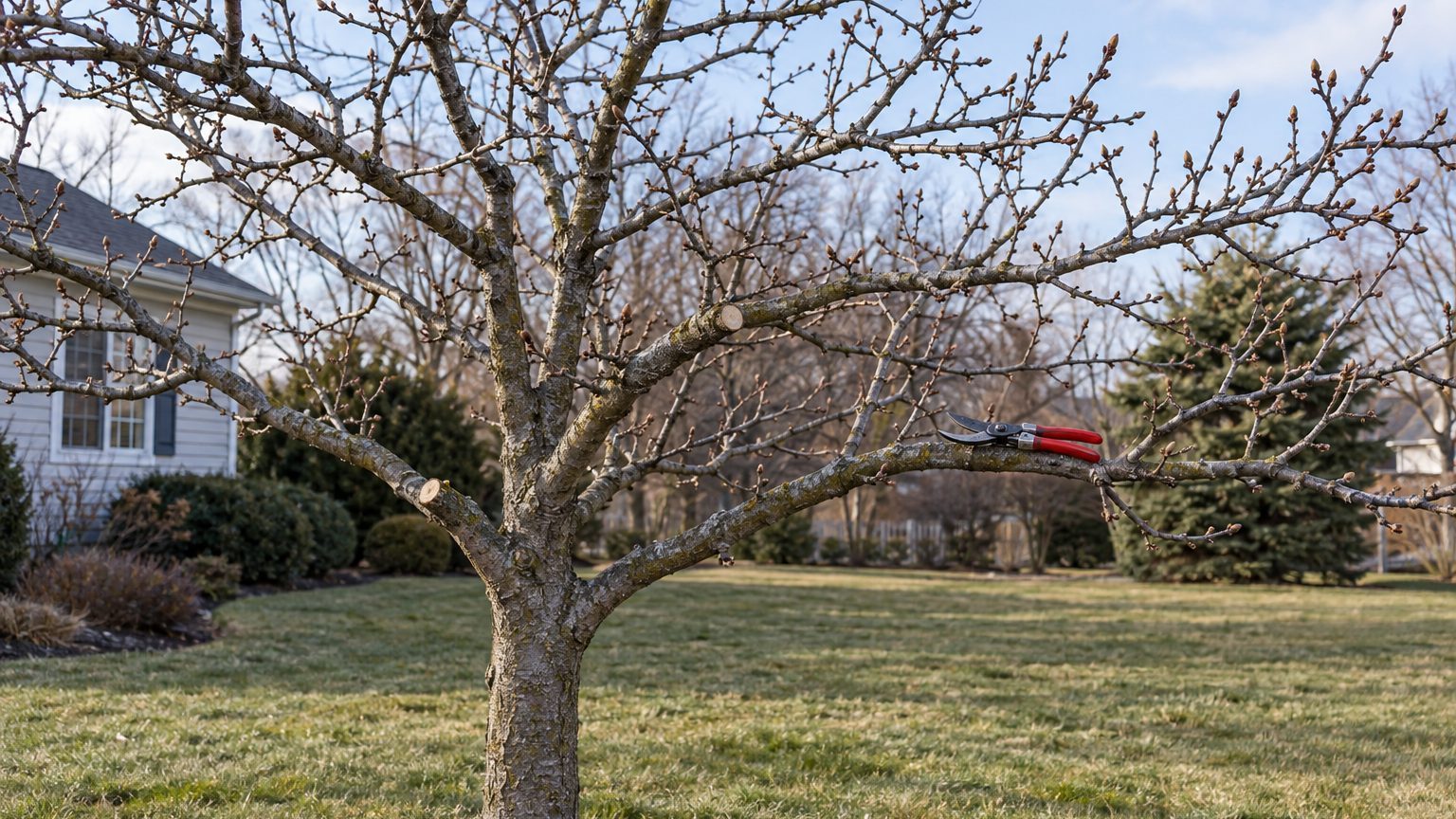
Bare branches against a gray late-winter sky are the cue to bring out the pruning saw. For fruit trees in Newfoundland and Labrador, the work happens before the first green shows, when the tree is still asleep and the cuts heal clean.
When to Prune Fruit Trees in Newfoundland and Labrador

Prune fruit trees while they are dormant, in March and April, from late winter into early spring. Cuts made then do the least harm to the tree’s winter hardiness and general health.
The province has no local timing guide of its own, so these dates follow the nearest comparable climate. Confirm local timing with a garden centre, a garden society or a provincial gardening group.
| Fruit tree | When to prune in Newfoundland and Labrador | Why |
|---|---|---|
| Apples and pears | March to April, early in the dormant window | The trees are fully at rest, so cuts heal before growth starts |
| Peaches | April, last in line and closest to bloom | Flower buds are easily hurt by cold, so the cuts wait |
Cherries and plums share the same March to April window, and young trees get their first shaping cuts then too. A tree that is leafless and still tight in the bud is ready. Once the buds swell, the window is closing.
Newfoundland and Labrador — the year and the numbers
- State
- Newfoundland and Labrador
- Hardiness zones
- 6a
- Last spring frost
- May 30
- First fall frost
- October 17
- Annual rain
- 60 in
- Lawn zone
- cool-season
- Source
- Environment and Climate Change Canada — Canadian Climate Normals 1981-2010, station ST JOHN'S A · St. John's
How to Tell Your Fruit Trees Are Ready to Prune
Spring in this province can arrive slowly, so the tree itself is a better guide than the date on the calendar.
- The leaves are gone and the tree is resting, which means pruning will not pull energy from active growth.
- The hardest cold of the winter has passed, so fresh cuts will not be exposed to a deep freeze.
- The buds are still tight and closed, which tells you the sap has not started to move.
- The bare branches show crossing limbs, dead wood and crowded centers clearly, so you can judge each cut from the ground.
- The ground and the weather are turning toward spring, the signal that pruning belongs to late winter and early spring and not to the months before.
If the buds have begun to swell, finish quickly and leave the later-flowering work for another day.
When to Prune Peach and Apple Trees in Newfoundland and Labrador
Apples go first. They are pruned in the heart of dormancy, early in the March to April window, when the tree is fully at rest. That timing gives the wounds the longest stretch of cool weather before growth picks up.
Peaches go last. Their flower buds are easily hurt by cold, so they are pruned closest to bloom, toward the end of the window. Waiting lets you see which buds came through the winter and cut with that in mind.
Summer is a second chance for light work. Trimming in late July or August can tidy a tree, but heavy cuts at that time weaken it. Most of the pruning belongs to winter and spring.
Where to Get Fruit Tree Advice in Newfoundland and Labrador
Canada has no county extension offices, so advice comes from the province and from local growers. The provincial Fisheries, Forestry and Agriculture department is the official starting point.
- The provincial department can point you to agriculture staff, so contact it in late winter, before the pruning window opens.
- A local garden centre knows which fruit trees survive in your district, so ask there when you buy and before you cut.
- A garden society or master gardener group can compare notes with you on timing in your own district, so join one before spring.
Common Questions
Can You Prune Fruit Trees in Fall or Early Winter?
Avoid it. Pruning in fall or early winter can push new growth that may not harden before the cold arrives, and that soft growth is the first to be damaged.
Can You Plant Fruit Trees in Fall in Newfoundland and Labrador?
No. The winters are too cold for a newly planted fruit tree. Plant bare-root trees in April or early May, while they are dormant and before the buds open, as soon as the frost has left the ground.
Does the Last Spring Frost Change When You Prune?
Not directly. At St. John’s, the average last spring frost falls on May 30, and in one year out of two it comes later. Pruning finishes well before then. Northern and upland districts run weeks behind St. John’s, so their frost risk lasts even longer.