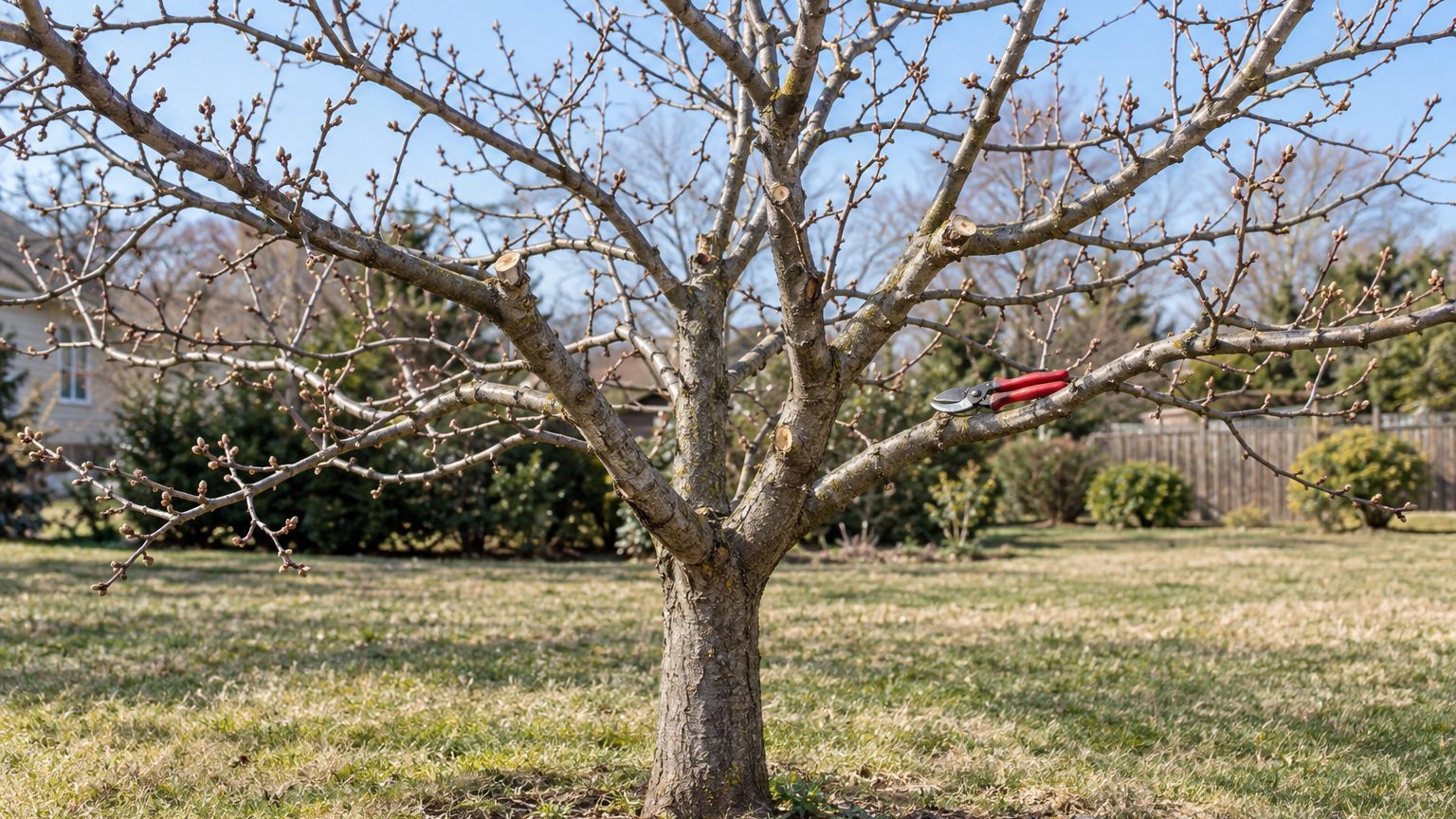
Bare branches in the yard are a sign that the pruning saw can come out. In Florida, deciduous fruit trees such as apples, pears, peaches and plums are pruned in late winter, while they rest and before the buds open.
When to Prune Fruit Trees in Florida

Dormant pruning of fruit trees falls in January and February. That is the stretch when the tree is asleep and has not yet pushed new growth, so cuts heal cleanly and nothing tender is lost to a cold snap. The calendar here fits north Florida, where winters bring real dormancy.
| Fruit tree | When to prune in Florida | Why |
|---|---|---|
| Apples and pears | January to February, early in the dormant period | Pome fruit goes first, while the tree is deeply at rest and buds are tight |
| Peaches and nectarines | Late in the window, closest to bloom | Flower buds are easily hurt by cold, so pruning waits as long as the dormant window allows |
| Cherries and plums | January to February | Deciduous fruit trees are pruned while dormant, in late winter |
| Young trees | January to February, after planting while dormant | Trees set out in December or January are shaped before spring growth begins |
Avoid pruning in fall or early winter. New growth triggered by a cut may not harden before the cold arrives. Container-grown trees can go in the ground most of the year if watered, but they settle best when planted during the dormant season.
Florida — the year and the numbers
- State
- Florida
- USDA zones
- 8b-11b
- Last spring frost
- February 16 to March 7
- First fall frost
- November 26 to December 13
- Annual rain
- 53 in
- Lawn zone
- warm-season
- Source
- NOAA NCEI 1991-2020 Climate Normals, 32F freeze probabilities · Jacksonville
How to Tell Your Fruit Trees Are Ready to Prune
Watch the tree itself, because it gives clearer signals than any date on the wall.
- The leaves have dropped completely, which means the tree has shut down for the winter and cuts will not draw sap.
- The coldest stretch of winter has passed, so a fresh cut will not be followed by a hard freeze that could damage the wood.
- The buds are still tight and closed, which tells you there is time to work before growth starts.
- Buds that look plump or swollen mean the window is closing, and peaches should be pruned last, closest to bloom.
- Bark and wood look firm and dry rather than green and active, a sign the tree is still resting.
If the buds have started to open, hold off on heavy cuts and remove only dead or broken wood.
When to Prune Peach and Apple Trees in Florida
Apples come first. They are pruned at the heart of the dormant period, in the early part of the January to February window, when the tree is fully at rest and the buds are still sealed.
Peaches wait. Their flower buds are easily hurt by cold, so they are pruned last, closest to bloom, once the worst of winter has passed. Cutting too early can expose buds that a late chill then damages, and you lose the crop before it starts.
Summer pruning is not part of the routine for these trees in Florida. Keep the structural work in the dormant window, and use the warm months only to snip off a broken limb or stray sucker as it appears.
Where to Get Fruit Tree Advice in Florida
Local conditions vary a great deal from the Panhandle to the southern tip, so a nearby expert saves guesswork. Two places are worth a call or a visit.
- The UF/IFAS Extension offers guides on fruit varieties and pruning, and it is useful to browse before winter arrives.
- Your county extension office can tell you which fruit trees suit your soil and part of the state, so contact it in late fall to plan the January pruning.
Common Questions
Can You Prune Fruit Trees in Summer in Florida?
Heavy cuts belong in the dormant window. In summer, limit yourself to removing dead, broken or crossing wood as you see it.
Which Fruit Trees Do Well in North Florida?
Loquat is well adapted to north-central Florida, with good cold hardiness and drought tolerance. Pome fruit such as apples, pears and the native mayhaw also does well, and cold-hardy fig cultivars like Celeste, Brown Turkey and Ischia are recommended.
Does the Pruning Calendar Apply in Central and South Florida?
No. Central and south Florida are effectively frost-free, and the growing calendar there runs differently, with the main season through winter. Ask your county extension office for timing that fits those trees.