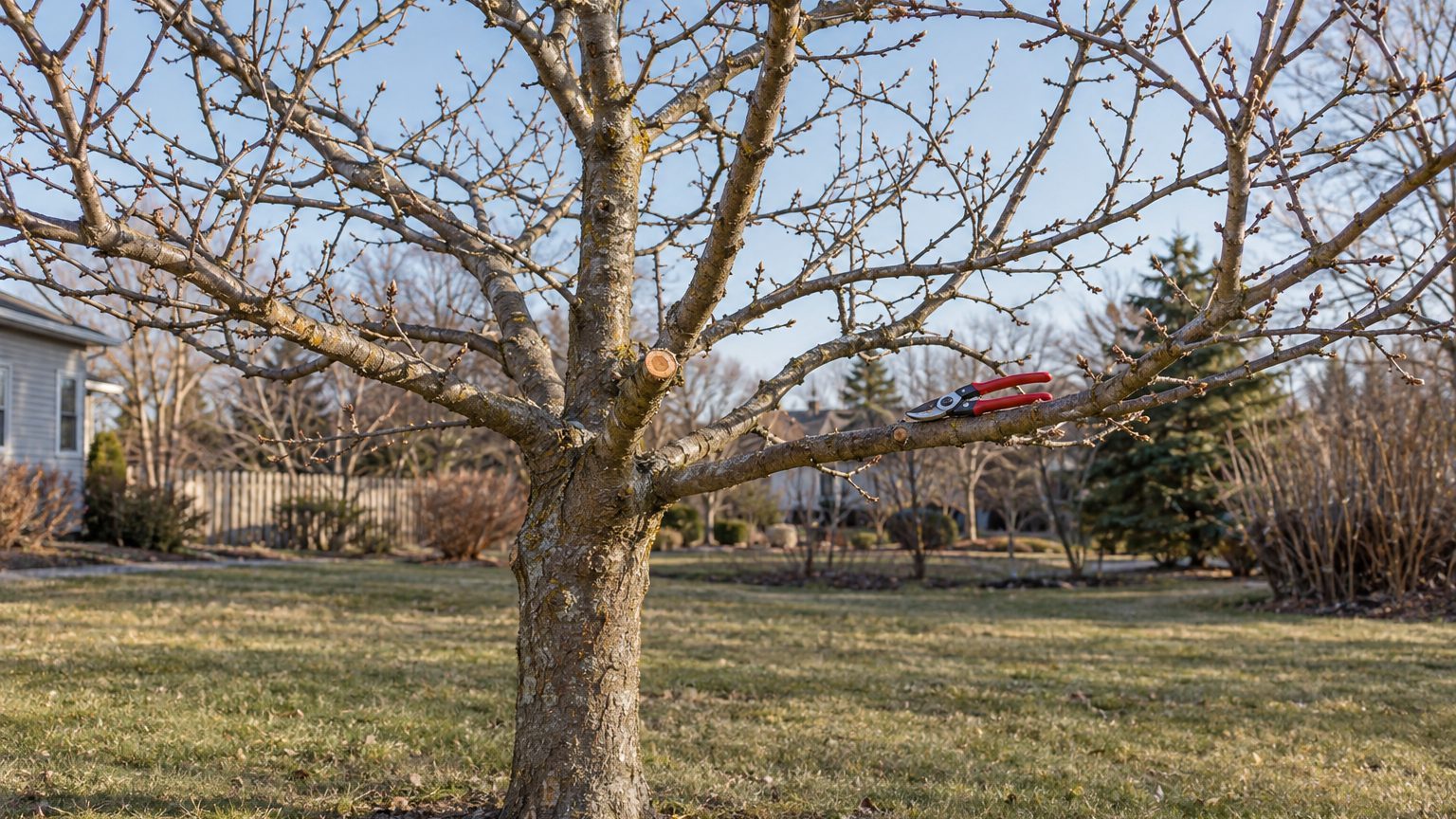
Bare branches against a gray winter sky are the cue for the pruning saw in a British Columbia orchard. Fruit trees here are pruned while they rest, once the worst of the winter cold has passed and before the buds open. That timing protects the cuts and sets up the season’s growth.
When to Prune Fruit Trees in British Columbia

Dormant pruning of apples, pears, peaches, cherries and plums is best in February and March, once the danger of winter freeze has passed and before growth begins in spring. The dates follow the comparable maritime climate of this province, so confirm local timing with a garden centre or a garden society.
| Fruit tree | When to prune in British Columbia | Why |
|---|---|---|
| Apples and pears | February to March, early in that window | Cuts heal as growth starts, and apples are pruned first |
| Peaches and nectarines | Late in the window, close to bloom | Flower buds are easily hurt by cold, so peaches are pruned last |
| Cherries and plums | February to March, while dormant | Pruning after the freeze danger and before spring growth limits cold damage |
| Young trees | February to March, planted bare-root while dormant | Bare-root trees go in before the buds open, and the first cuts follow the same dormant window |
Sweet cherries have an exception: they may be pruned in August, when the risk of bacterial infection is lower. Pruning in fall or early winter is avoided for every fruit tree, because new growth may not harden before the cold. Gardens in the Fraser Valley and on southern Vancouver Island sit in a mild zone (Canadian zone 9a at the reference city of Vancouver), but upland districts run colder.
British Columbia — the year and the numbers
- State
- British Columbia
- Hardiness zones
- 9a
- Last spring frost
- March 18
- First fall frost
- November 10
- Annual rain
- 47 in
- Lawn zone
- transition-season
- Source
- Environment and Climate Change Canada — Canadian Climate Normals 1981-2010, station VANCOUVER INT'L A · Vancouver
How to Tell Your Fruit Trees Are Ready to Prune
The tree itself gives better timing than any wall calendar, especially after a mild or a harsh winter. Look for these signs before you climb the ladder.
- The branches are bare, because a tree that has dropped its leaves is dormant and will take cuts with the least stress.
- The hardest freezes of winter have passed, since cuts made ahead of a hard freeze can leave wood exposed to injury.
- The buds are still tight and closed, which means growth has not begun and the tree has plenty of reserves to heal.
- Fat, plump buds on the tips of the twigs mean the window is closing, so apples and pears come first and peaches wait.
- Pink or white showing at the bud tips on a peach means you are too late for heavy cuts on that tree.
Spring frost can arrive after pruning, and the average last frost at the Vancouver reference station is March 18. In one year out of two the frost falls later, so treat that date as the middle of a window and not as a safe day.
When to Prune Peach and Apple Trees in British Columbia
Apple trees are pruned first, in the heart of the dormant season. Their wood tolerates cold well, and early cuts leave plenty of time to heal before leaves open. Apples are among the hardier fruits and withstand cold winter temperatures here, so they are the safest to start on while the weather is still cool.
Peaches are pruned last, closest to bloom. Their flower buds are easily hurt by cold, and a cut made too early can invite damage to wood and buds that a late freeze then finishes off. Waiting until the freeze danger is truly past lets you see which buds survived and prune accordingly. Resistant varieties such as Frost and Rosydawn can help with peach leaf curl, a disease that shows up on the new leaves.
Summer pruning is the exception, not the rule. Sweet cherries can be pruned in August to lower the risk of bacterial infection, while every other fruit tree here waits for the dormant season.
Where to Get Fruit Tree Advice in British Columbia
Canada has no county extension office, so local questions go to the province and to neighbors who grow fruit. The British Columbia Ministry of Agriculture and Food is the starting point for orchard and home-fruit guidance.
- The provincial agriculture pages cover fruit growing and pest questions, and they are worth reading in winter before pruning starts.
- A local garden centre or garden society can tell you how your district runs compared with the coast, so visit in late winter before the buds swell.
- Master gardener groups answer local questions about varieties and timing.
Common Questions
Can You Prune Fruit Trees in Summer in British Columbia?
Sweet cherries are the one fruit tree where summer pruning makes sense, and August is the month, because bacterial infection is less likely then. Other fruit trees wait for dormancy so the cuts heal as growth begins.
What Happens If You Prune Fruit Trees Too Early?
Pruning in fall or early winter can push new growth that may not harden before the cold. That tender growth is the part most likely to be damaged when a freeze arrives.
Should You Prune a Newly Planted Fruit Tree?
Bare-root fruit trees are planted in February or March, while dormant and before the buds open. Container trees can also go in during October. Make any first shaping cuts during the same dormant season.